Brian Gavin: Five ways to improve (yes, improve) hurling
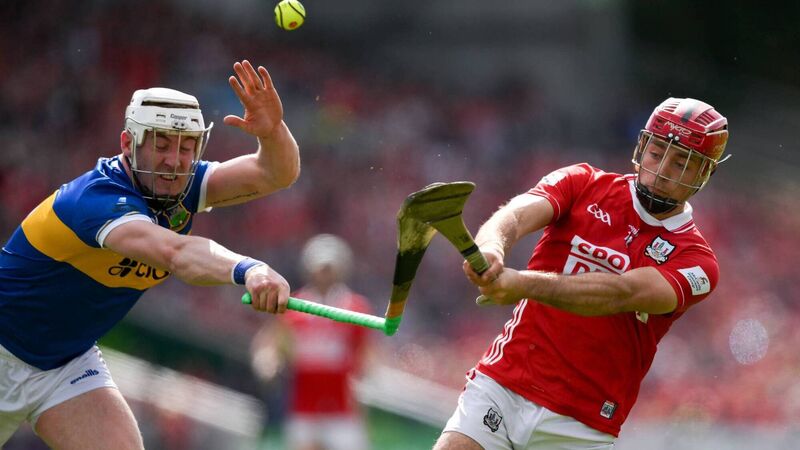
Hurling has never been as skilful as it is now but scores have never come cheaper because of the sliotar’s weight. Pic: Brendan Moran/Sportsfile

It’s a fear of mine that the fussier referees, those who tend to make the game about themselves at times, are going to make hay with the new 20-metre free rule for dissent from the sidelines. On Sunday in Thurles, Seán Stack followed it by booking a remonstrating Liam Cahill and bringing the ball forward but the Hurling Development Committee (HDC) really overcooked the rule by awarding such a heavy punishment for something as simple as a manager asking why a free was given.
A placed ball from a little further out the field would have been a more sensible option. It would have struck more of a balance between the bit of animation that should be allowed on the sideline and stamping out dissent and protecting the authority of the referee.
Hurling suffers from dissent just as much as football did before the new rules but this is a football cure for a football ill. A 20m free in hurling is the closest thing to a penalty. In football, it is a point and there is nothing more of it.
I sincerely hope the new hurling expert advisory group led by John Meyler and featuring former inter-county referee John Keenan and some members of the HDC make decisions for the benefit of hurling.
Read More
I trust the two Johns will agree with me in saying the ruck is the biggest blight on the game. Cutting down on those mass close encounters should be one of the fundamental principles of their work.
I would ask anyone reading this piece to put themselves in the boots of the referee and imagine trying to officiate instances where there are between eight to 14 players in a confined space holding, pushing, jostling, grappling and shoving for the ball. It is impossible.
The tackle may need to be redefined. If there is a way of incentivising ground hurling and providing an alternative to always having to take the ball to hand, then that would be great too. How far we have moved away from what we taught as children, that we should keep our two hands on the hurl.
For what they are worth, here are my five suggestions that I would like to see trialled in next year’s National League:
Isn’t it amazing that the size of the football pitch remains the same and yet there is more space now that the new rules are bedding down?
Hurling is not in need of as much surgery but a minimum length puck-out like the kick-out is required. It would obviously lead to more contests and turnovers but that is what the public want to see. Banning goalkeepers receiving the ball back from defenders after puck-outs could reduce the number of rucks too.
You see these one-twos between goalkeepers and defenders and the opposition team immediately sitting back to anticipate the longer delivery. It leads to unsightly massive pile-ups at the other end of the field.
In the recent League Division 1 final, Shane Hynes whistled Shane Barrett for not making a definite striking action when handpassing the ball to Brian Hayes. The goal was on for Cork but Barrett didn’t do enough to convince the referee that the ball had first left his palm.
We’re going to have to bite the bullet and reinforce the rule. People can talk about how the speedy hand-pass is a skill and a most-needed one in modern day hurling, but the rule is there in the Official Guide and it needs to be respected. Reminders in league games don’t go far enough.
Read More
Speaking of that Shane Barrett incident, the Cork forward was hit with a body collision by Mike Casey after he transferred the ball.
In hurling, that infringement is a yellow card offence but in football it is black and you can see how it has almost been driven out of the game completely. Wouldn’t players be more mindful of their tackling technique if there was a higher price to pay for being cynical or late?
I may sound old school on this, but apart from refereeing I’m involved in some coaching and can see from both perspectives that the ball is simply travelling too far.
The game has never been as skilful as it is now but scores have never come cheaper because of the sliotar’s weight. It is simply too light. Points are being scored from 80 metres and beyond.
We saw a goalkeeper score from a puck-out last year. That is not the game hurling was intended to be.
I would imagine the data coming back to Meyler and his group will show wides are up considerably in recent years because teams don’t have to put as much thought into their shooting. It’s very much being done on sight of the posts.
Yes, it would ape Gaelic football but hurling’s throw-in has needed attention for some time now. You have four men in there who often have more interest in laying down a marker than striking or gaining possession of the ball.
That pent-up anticipation and desperation to set a physical tone happens all over the field. We saw that in last year’s Cork-Tipperary Munster SHC round game where Darragh McCarthy was sent off and a highly-anticipated clash was ruined. It is one of a number of elements of hurling that can be tidied up.