Colin Sheridan: Michael Lyster did not just present Gaelic Games, he framed them
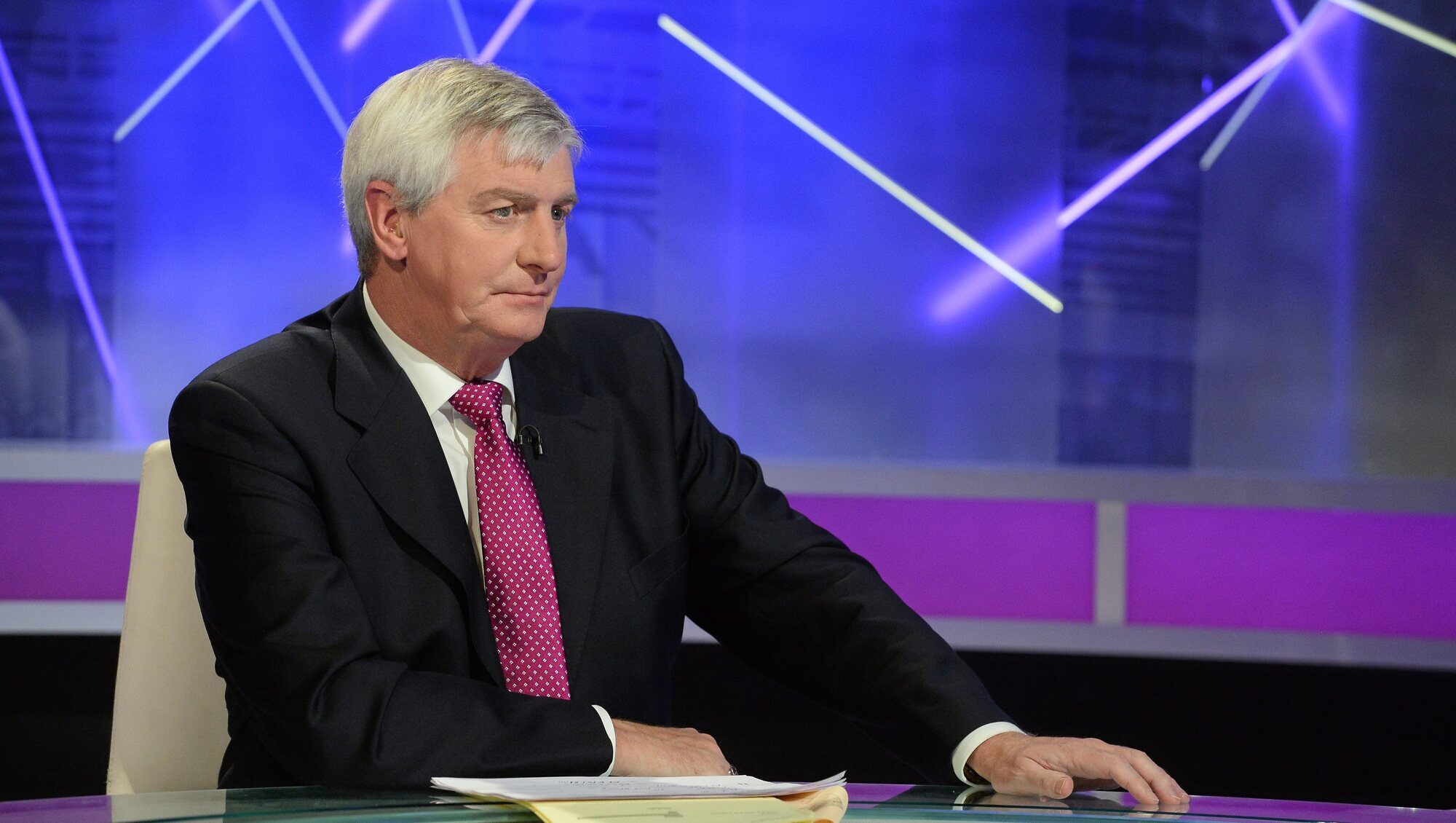
The Sunday Game presenter Michael Lyster in 2015 Pic: Brendan Moran / SPORTSFILE
There was something eerily profound, on the busiest Sunday of Gaelic Games so far this year, when every second county ground was alive with the first real pulse of spring, that news broke of the passing of veteran broadcaster Michael Lyster.
It came just as the final round of the National League was getting underway - the kind of afternoon that felt tailor-made for him, the kind he had presided over for decades with a quiet, unshakeable authority.
For so many, Lyster was not just a presenter but a constant. A steward of the games. On days like Sunday, when fixtures overlapped and storylines collided, he held more sway over his nationwide congregation than most parish priests. The ritual was familiar: the theme music, the panel assembled, the sense that whatever chaos might unfold on the pitch, there would be order in the studio. He was the anchor in every sense of the word.
Read More
Where Bill O'Herlihy had cultivated the warmth of a jovial uncle alongside Eamon Dunphy, Liam Brady and John Giles, Lyster operated in a different register entirely. His was not a fireside chat but a forum. A place where strong opinions were not only aired but tested, and rebuked if he saw fit. And he had no shortage of strong personalities to manage.
Across the years, his panels read like a roll call of Gaelic Games’ most forthright voices: Joe Brolly with his cutting certainties, Colm O'Rourke with his measured intellect, Pat Spillane with his righteous indignation. In hurling, the sharp minds of Ger Loughnane, Cyril Farrell and Anthony Daly brought their own combustible mix.
Lyster didn’t dominate them — he didn’t need to. What he did was far more difficult, and required a bespoke skillset. He moderated, and he guided. He let the conversation breathe just enough before stepping in, often with a single question that cut through the noise and demanded clarity.
He had a nose for nonsense. He could smell it instantly, and when he did, the tone shifted. There was a look, a pause, sometimes just the slightest tightening of the voice, and suddenly the room recalibrated.
He could flick the switch when required, turning lively debate into something approaching accountability. There was an almost judicial quality to it. While others performed, Lyster presided. He let the performers pontificate, each one preaching to their own agenda. Lyster saw fit to remind them that the Sunday Game was not a soapbox from which towncriers could build their brand. It was a sacred space, a national pulpit with an unquatifiable reach.
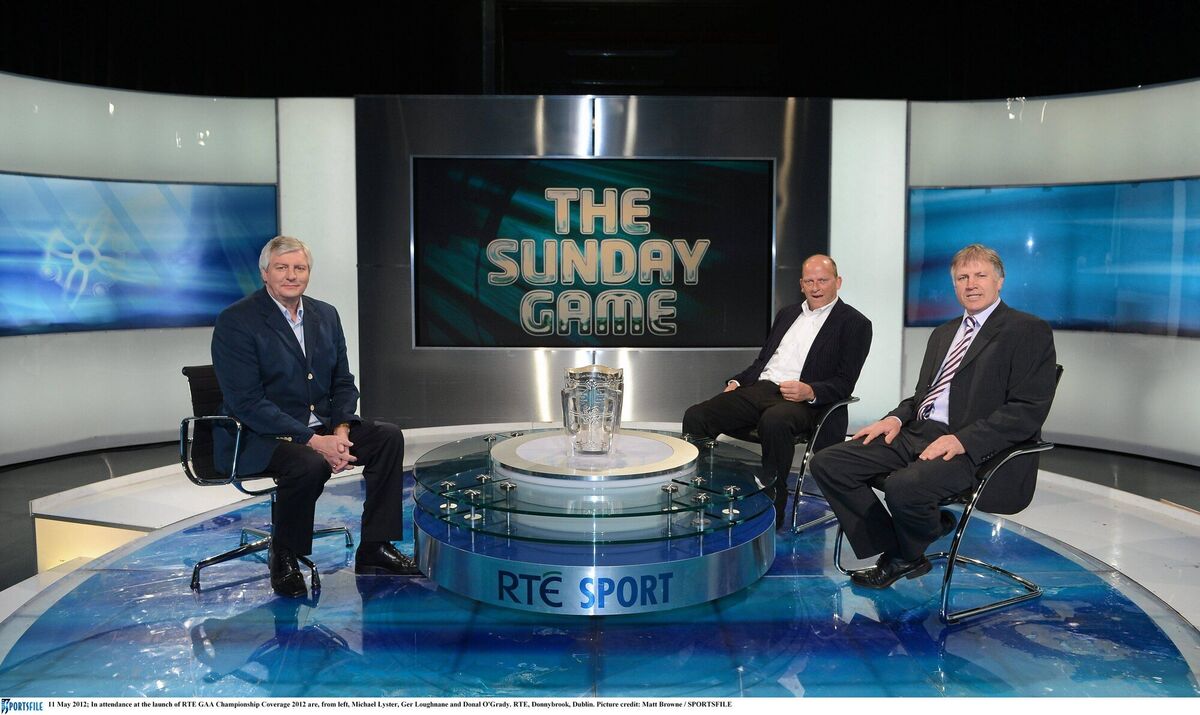
His style was deceptive. He might have dressed like an eccentric college professor — the tweed jackets, the slightly bookish air — but there was something of the school headmaster about him too. The kind you didn’t cross lightly. The kind you instinctively listened to, even when he spoke softly.
That quiet authority is what made him so effective. He never needed to shout. He never needed to insert himself unnecessarily. He understood that the role of presenter, at its best, is not to be the story but to shape how the story is told. And yet, for all that professionalism, there was something deeply human about his presence.
My own memories of Lyster speak to that. As Mayo prepared to play Meath in an All-Ireland final in 1996, Lyster came to Balla to interview the club’s representatives. It wasn’t a grand arrival.
There was no sense of ceremony, no entourage, no performance. In many ways, it was low-key. But his presence was immense. The mere fact that he was there — that this voice, this public figure — part celebrity, part barometer, had come to our place - made the occasion feel real in a way nothing else could.
He rubbeerstanced our arrival as a county and a people to be taken seriously. Mayo’s emergence as contenders crystallised in that moment. If Lyster was here, then this mattered. This was big.That was his gift. He lent weight to occasions without ever making himself the centre of them.
In a sporting landscape that has grown louder, faster and more performative, Lyster’s approach feels almost from another age. There was patience in his broadcasting, a willingness to let silence do its work, to allow analysis to unfold rather than be forced. He never seemed to be proving himself to anybody. He trusted both his pundits and his audience.
Perhaps that is why his passing feels so jarring on a day like this. Because the games go on, as they always do, but something foundational feels absent. Somewhere between the roar of the crowd and the analysis that follows, there is a space that once belonged to him.
And it is not easily filled.
Michael Lyster did not just present Gaelic Games — he framed them. He gave them context, gravity, and, when needed, appropriate scrutiny. He was the steady hand on the tiller during decades of change, guiding viewers through triumphs, controversies and everything in between.
On a Sunday when the country once again turned its attention to the fields of play, it felt only fitting — and deeply poignant — that the man who had narrated so many of those afternoons would take his leave.
Ar dheis Dé go raibh a anam.