Jack Anderson: Toss of a coin - Super Bowl headlines USA's betting frenzy
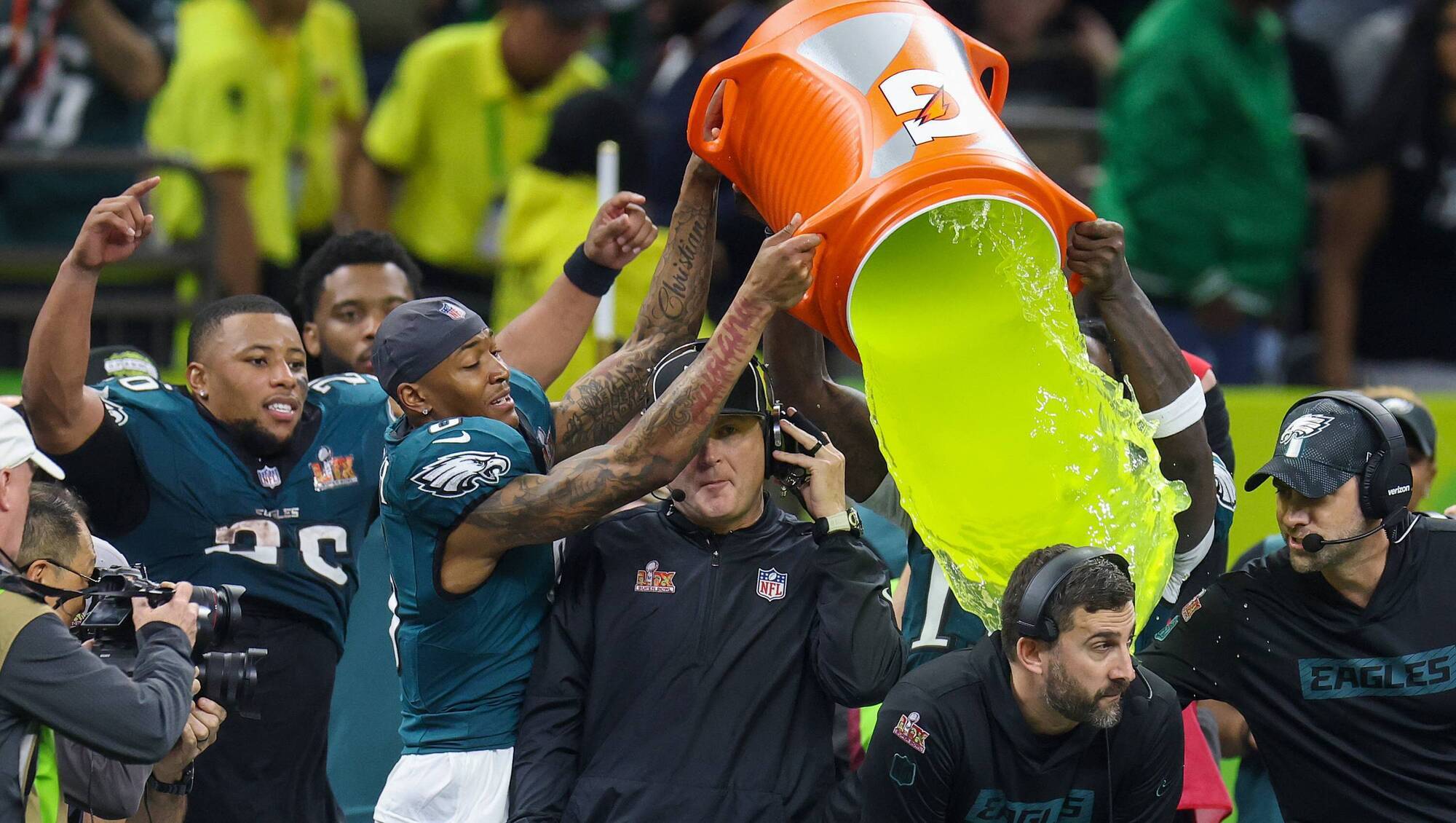
Head coach Nick Sirianni of the Philadelphia Eagles is showered with Gatorade in the fourth quarter against the Kansas City Chiefs during Super Bowl LIX at Caesars Superdome. Pic: Jamie Squire/Getty Images

The Super Bowl is this weekend. If you are looking for analysis, look elsewhere. This columnist is a New York Jets fan (Yankee cousins in Woodside, Queens etc). The Jets’ season is usually up before the Christmas decorations are down.
The Jets have, since 2000, been owned by billionaire Woody Johnson whose family (Johnson & Johnson) manufactured products such as Johnson’s Baby No More Tears Shampoo. But when it comes to the Jets, it’s been nothing but tears this century.
By the way, Johnson bought a 43% stake in Crystal Palace shortly after their FA Cup win last year – they’ve hardly won since. See what I mean.
In an NFL designed to promote competitive balance, the Jets are neither. They are a calamity. Recently Jets coaching staff said they were going to make greater use of AI to scout for talent.
Do not, the wags replied immediately, give anyone at the Jets access to AI, who knows what global damage they will do with it.
The Jets were even too unconventional for Aaron Rogers, which is like Ronaldo complaining that a club’s culture is too much about him.
As with Tottenham, if your team is on a run of bad form, then a game against Dr Jets will cure all. This season the Jets defence did not record a single intercept. The last time that happened, FDR had just become President.
The last and only time they made the Super Bowl, man hadn’t reached the moon. Musk will be on Mars by the time the Jets next get to play football in February.
In the last decade, a raft of good draft picks made their way to the Jets. In they strutted and, to paraphrase Emily Dickson, they were full of hope, that thing with feathers; soon they departed, strut to shuffle, their feathers well and truly plucked.
Tom Brady, generally a humourless mannequin, recently cracked a joke about Jets fans. On revealing a statue of himself outside the New England Patriots’ stadium, he said,
“In the end, this statue isn't just for Pats fans. It will also give Jets fans something to throw their beer at as they leave the stadium – probably in the second quarter,” Brady said. “Maybe the third.”
Brady’s career record against the Jets was 31-8. It ain’t bragging if you can do it.
Brady’s former team are back in the Super Bowl but are outsiders to the Seahawks. And there it is, the first mention of the game and, inevitably, it is accompanied by betting odds.
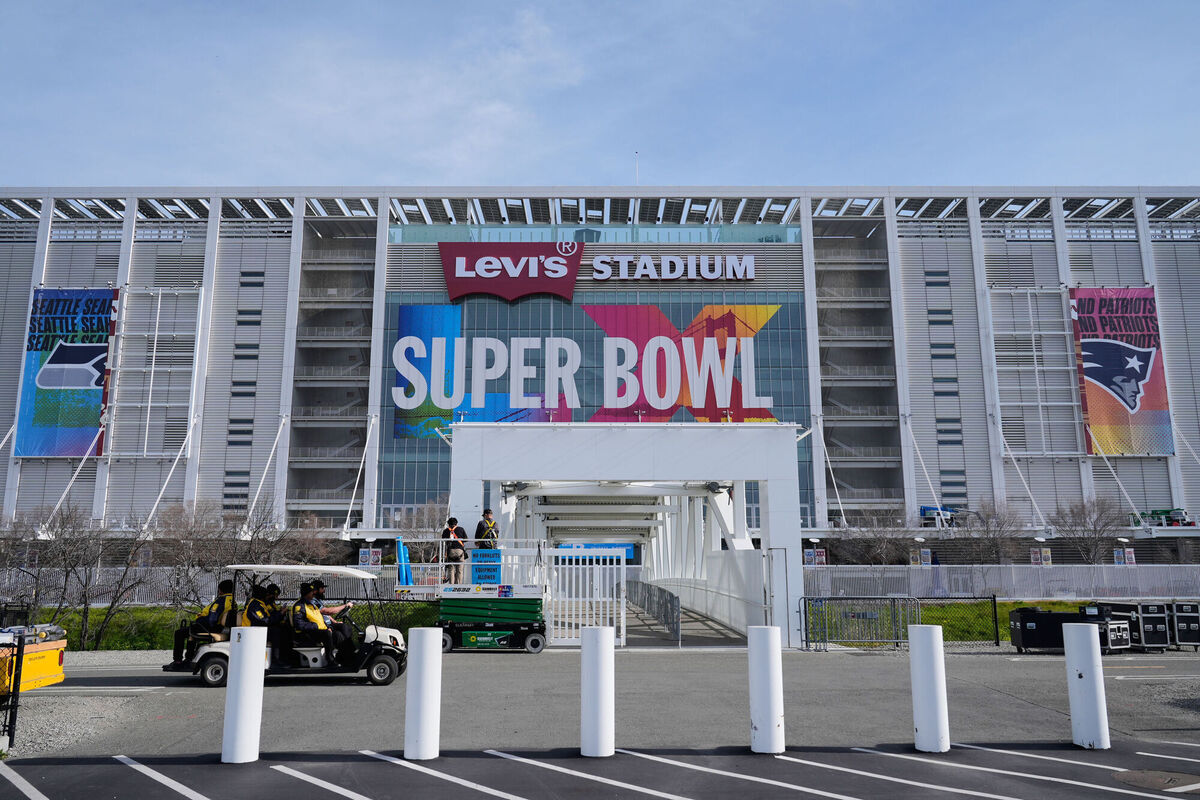
Americans will bet about €1.5billion on the Super Bowl (a whopping 27% increase since last year). Commenting on the increase, the observed simply “gambling continues to represent a huge part of the game’s fabric and viewing experience.”
In 2018 a US Supreme Court decision liberalised the country’s gambling regime, permitting individual states to regulate all forms of gambling. The industry has since boomed. In 2024, commercial gaming revenue alone was €60 billion in commercial gaming revenue of which €10billion came from sports betting.
The 2018 decision coincided with technological developments which allow all of us to carry a casino in our pocket. Constantly accessible smart phones, pinging social media which keeps us hyper-alert, easy-to-use betting apps and the drip of dopamine from all three, has created the perfect digital drug – online betting.
Online gambling also allows operators to collect a profile of personal data and preferences from punters and then hit them with targeted promotional marketing i.e., “free” bets.
Individual states in the US have enthusiastically signed up to their own dopamine hit – betting tax revenue. In the 39 states where sports betting is legal, most states tax sports betting revenue at 10% to 20% which then goes to a general state revenue pot to plug fiscal gaps.
Post-2018, major league sports were also quick to monetise gambling, charging operators with the right to bet on their sport and signing up to exclusive commercial deals with betting “partners”.
Like how the stock market ribbon rolls across business TV channels and the US economy is analysed by reference to what the markets are doing, game odds are a regular caption on sports broadcasts and the preamble to any analysis is what the sportsbooks are saying.
In the US, the relationship between sports and gambling has been transformed: not only has the means by which, where and how you can legally bet been altered; what you can bet on has also changed.
The proposition or prop betting market in the US is now hugely popular i.e., discrete, esoteric or “fun” bets on any aspect of a game. It’s estimated that about 60% of the total betting on the Super Bowl will be in this form.
There are markets on who will win the coin toss (the odds favour heads). One bookie is offering 30/1 on a player weighing 300 pounds scoring a touchdown.
One market that I haven’t looked up is the correct score, a fun NFL fact being that in the history of the league (18,000 games or so) no NFL game has ever ended 36-23. It’s what’s called a scorigami.
The usual prop bets are those familiar from other sports. Who will be game’s MVP, who will score the first touchdown, who will make the most yards/tackles etc There is a price to be paid for all of this. The first is the human cost.
Gambling addiction rates in the US have soared. The second is a sport’s integrity, including the temptation by players (sometimes with gambling debts or favours owed to criminals) to exploit their insider knowledge.
Already this year, the FBI has launched multiple investigations into such fraud with one particularly egregious scheme in basketball revealed in the week before the start of the NBA season in October.
The odd criminal indictment aside, gambling regulation at state level is light touch.
Last year, the US National Council on Problem Gambling reported that states invest just 0.0009 cents in gambling addiction support services for every dollar generated from gambling levies. At the federal level, there is little interest in intervening.
One of the reasons for this is that there is now a fine line between sports gambling, prediction markets, crypto, meme coins and other “grey” means of financial speculation, which, to be blunt, the Trump administration is an enthusiastic supporter of and speculator in.
There is also another worrying aspect and that is the American sporting public’s apparent willingness to accept the cost that closer ties to gambling entails.
FBI arrests for match fixing may have dominated media feeds in the week before the NBA’s season but that opening week in October was the NBA’s most watched since 2017.
Americans have long accepted, going back to the origins of baseball, that there is something necessarily flawed in professional sport – it’s a theme in the Great Gatsby.
Moreover, in a country that is politically polarised as never before (the odds are short on Trump boiling Bad Bunny’s half time show in a Truth Social pot), football fans on Sunday probably just want, for a while, to leave all that behind.
Happy to support their team if they’re in it and if not, to dream that maybe next year they’ll be there. Even a Jets fan can dream, but probably shouldn’t bet, on that.