Colin Sheridan: Allianz, the GAA, and a damning failure of courage
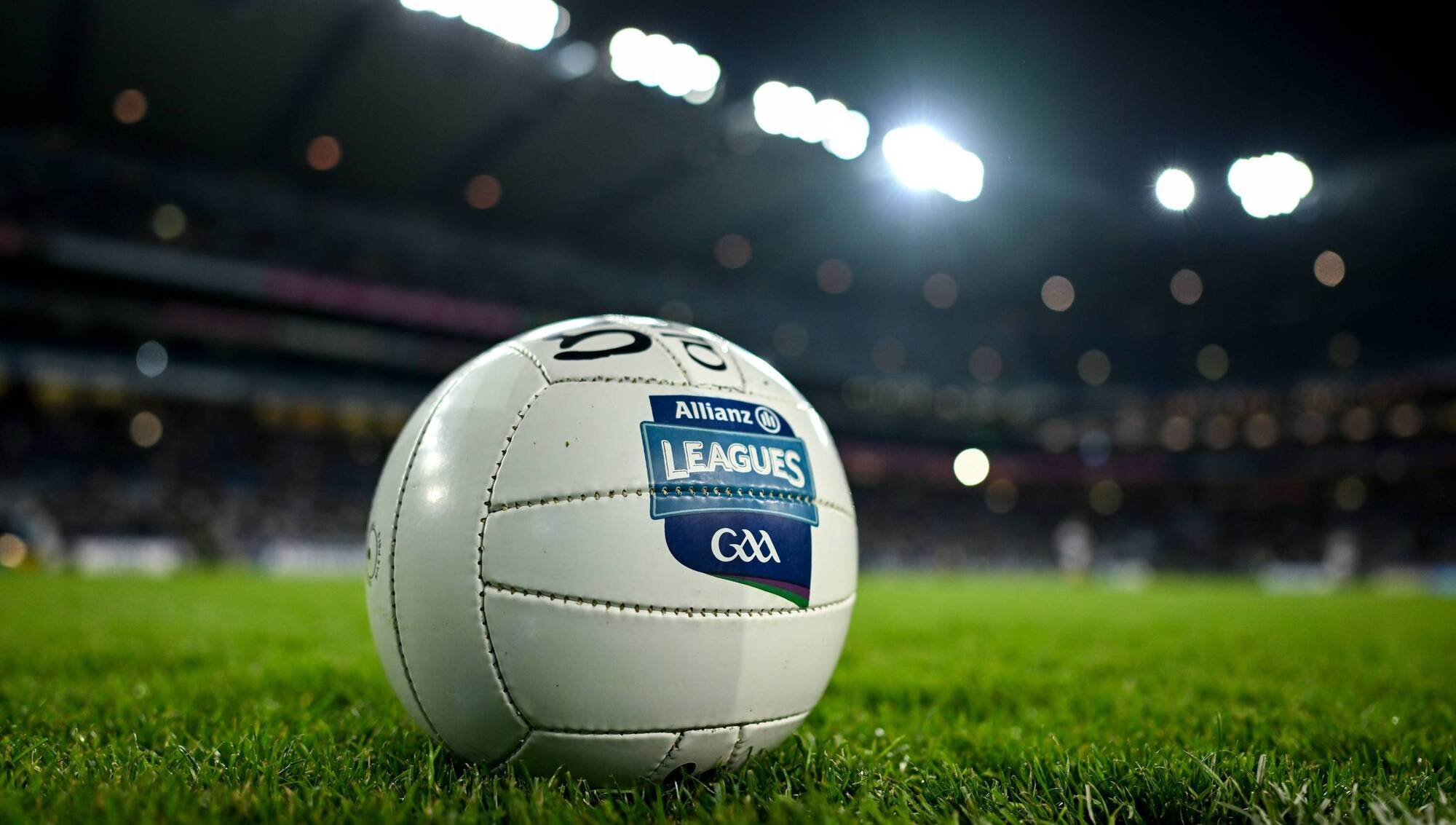
The GAA was never meant to be safe. It was meant to be just. Today, it sounds more like an insurance brochure. Pic: Brendan Moran/Sportsfile
Some columns write themselves. It's Christmas, so, in the spirit of the season, I’ll try to be as generous to the Gaelic Athletic Association as possible. I’ll try to ignore the politics of its founding fathers and the idealism of its socialist principles. I’ll try to suppress the profound sense of pride I feel when I watch my kids play an amateur sport, coached and cared for by volunteers, on fields curated by friends and neighbours. I’ll try, but…
Moments matter. And last week the GAA faced a moment that really mattered when it could have done the right thing. Not the easy thing. Not the tidy, lawyer-approved thing. The right thing. Instead, it chose corporate cowardice. The Gaelic Athletic Association, an organisation that never misses an opportunity to wrap itself in the language of community, solidarity and history, has decided that listening to its own members is less important than protecting a commercial relationship. In doing so, it has exposed an uncomfortable truth: the modern GAA speaks like a grassroots movement but acts like a multinational brand, terrified of upsetting the balance sheet.
For months, players, members and county boards have been asking the association to reconsider its relationship with Allianz. This was not a knee-jerk campaign or a bout of social-media outrage. It was grounded, organised, and driven by people who understand what the GAA claims to stand for.
At the centre of those concerns sits the report of Francesca Albanese, the United Nations Special Rapporteur on the Occupied Palestinian Territories. Her findings were not hedged. They were not dressed up in diplomatic ambiguity. They described, in plain and devastating language, how global capital - banks, insurers, asset managers - underwrites Israel’s war economy. She used the phrase ‘economy of genocide’ to describe the system at work, and she named the corporate actors implicated within it.
Among them was Allianz’s global corporate group, via its asset-management arm, identified in the report as a significant holder of Israeli government bonds - financial instruments which Albanese argues underpin a state responsible for mass civilian killing in Gaza.
For clarity, Allianz plc, which the GAA deals with, has no connection with these financial instruments, as the GAA stated in its reasoning: "Allianz plc has no involvement with the IDF or corporate entities involved in the war in Gaza. Any such relationship is with a 'sibling or cousin company."
But this is where the GAA had a choice. It did not need to adjudicate international law. It did not need to issue foreign-policy statements. It certainly didn't need to pretend it could stop a war. All it had to do was ask itself a single, moral question: Are we comfortable being commercially aligned with this?
Its own people answered with remarkable clarity. Hundreds of players - past and present. Motions passed by county boards. Clubs and members asking - respectfully but firmly - that the association live up to its stated values. This was the grassroots speaking to the centre, the very dynamic the GAA claims as its democratic heart.
Croke Park did not listen. Instead, we were treated to a familiar litany of deflection: contracts, legal advice, complexity, prudence. Much like the government obfuscation over the Occupied Territories Bill, members were told the hands of the association were tied. And yes, nobody was calling for reckless breach of contract or financial self-harm. But this is an organisation that has found moral clarity before - and not all that long ago.
The GAA reassessed its relationship with alcohol sponsorships when it recognised the contradiction between community wellbeing and commercial gain. It has, however tentatively, drawn lines around gambling. Ulster Rugby and golfer Shane Lowry cut ties with Kingspan amid the moral fallout from the Grenfell Tower disaster. There is precedence for conscience in corporate sponsorship - however retrospective.
In each case, it understood something fundamental: money is never neutral, and reputational damage is not an abstract PR concept but an erosion of trust between an organisation and its people. So why, when confronted with credible allegations of genocide, did that instinct vanish?
We are asked to believe this is different. Too big. Too sensitive. Too geopolitically fraught. Yet the GAA has shown no such hesitation in courting the National Football League, welcoming it into Croke Park with open arms. This, despite the NFL’s well-documented role as a glossy cultural extension of American military power - flyovers, salutes, camouflage uniforms, the seamless merging of sport and state violence. This is not accidental. It is a choice. And it sits uneasily with the GAA’s origin story.
The association was not founded as a neutral sporting body. It was an act of cultural defiance, rooted in anti-imperialism, nationalism and, yes, socialism. It was built by teachers, labourers and radicals who understood that games could be political, that culture could be resistance, and that community meant taking sides.
What would Michael Cusack have made of this moment? Or Maurice Davin? Men who saw sport not as a corporate platform but as a communal good, a way of asserting dignity against power. The GAA was never meant to be safe. It was meant to be just. Today, it sounds more like an insurance brochure.
Nobody is pretending this decision was easy. Leadership rarely is. But leadership is not tested in comfort or consensus. It is tested in moments like this - when doing the right thing costs money, complicates relationships, and invites criticism from powerful interests.
The GAA had options. It could have committed publicly to ending its Allianz association at the first legally prudent opportunity. It could have acknowledged the moral gravity of Albanese’s report. It could have said to its members, we hear you, and we take this seriously. Instead, it took the coward's choice, and it hid behind process.
History will not remember the clauses in a sponsorship contract. It will remember that when asked to stand with its own base - and with a people many now fear are facing annihilation - the GAA heard the cock crow, and said nothing. For an organisation that still trades on solidarity, that failure of courage is not just disappointing. It is damning.
There was a time when watching England be terrible at sport was one of life’s great, reliable pleasures. Like rain on a bank holiday or Wolves getting relegated, it was comforting in its predictability.
But watching England in this Ashes series in Australia has crossed a line. They’re not just losing - they’re speed-running humiliation, and frankly, it’s taking the fun out of it.
For Irish viewers settling in over Christmas, whiskey poured, television glowing like a festive hearth, this should have been the perfect background sport. Cricket in Australia is on at civilised hours for once, the commentary sounds like it’s coming from inside a barbecue, and England are meant to be putting up a fight. Instead, matches are ending so quickly you barely have time to argue about who finished the Quality Street.
Australia have already retained the Ashes, and England’s batting collapses have become so routine they should come with a health warning. Wickets fall like badly stacked pints. Catches are dropped with the casual air of someone refusing leaflets on Grafton Street. Bowlers send down deliveries that suggest they’ve only just been introduced to the concept of a straight line.
The problem - and this may sound odd coming from an Irish perspective - is that England being rubbish just isn’t as funny when they’re this rubbish. There’s a sweet spot. You want them confident, loud, convinced they’ve reinvented the sport, and then gently undone by reality. What we’ve got instead is England arriving with a revolutionary philosophy, discovering gravity still applies, and falling over almost immediately.
Even the Australians seem a bit embarrassed by it all. They’re winning so comfortably it’s begun to resemble a charity match, except the donations are coming entirely from England’s top order. Pre-series bravado has aged badly, like milk left out during a heatwave in Perth. And here’s the truly counter-intuitive truth: when England are good, you get more value for money. Five-day Tests that actually last five days. Tension. Drama. Late nights that feel earned. When they’re like this, the cricket’s over by tea and you’re left watching repeats of quiz shows, wondering where it all went wrong. So yes, England losing will always have its charm. But at Christmas, you want a slow burn - not a farce that ends before the trifle's finished.
For a growing section of the NFL audience, the fall of the Kansas City Chiefs has been met not with sympathy, but satisfaction. Dynasties, after all, are rarely mourned outside their own borders. This season’s collapse was sealed by the injury to Patrick Mahomes, a knee problem serious enough to raise uncomfortable questions about longevity rather than recovery timelines. Without him, the Chiefs looked mortal for the first time in years. Their dominance, fuelled by constant prime-time exposure and an air of inevitability, had bred fatigue among neutral fans. Success invites resentment; repetition hardens it. Watching Kansas City stumble feels, to some, like competitive balance finally being restored - even if it arrives banged up and on crutches.
For Irish supporters, the mood around the 2026 FIFA World Cup prompts an awkward question: what happens if the Republic of Ireland actually qualify? In Mexico, local fans are already finding themselves priced out by eye-watering ticket costs, while most matches are staged north of the border in the United States. If Irish fans were lucky enough to book flights and accommodation, they could still face thousands for basic seats, convoluted ticketing systems and a tournament shaped more by corporate hospitality than community. Add the political climate swirling around the US hosts, and the romance of a long-awaited World Cup return risks colliding with the reality of who global football is really for.