Blackpool's iconic Dulux site to become 1,000-home development
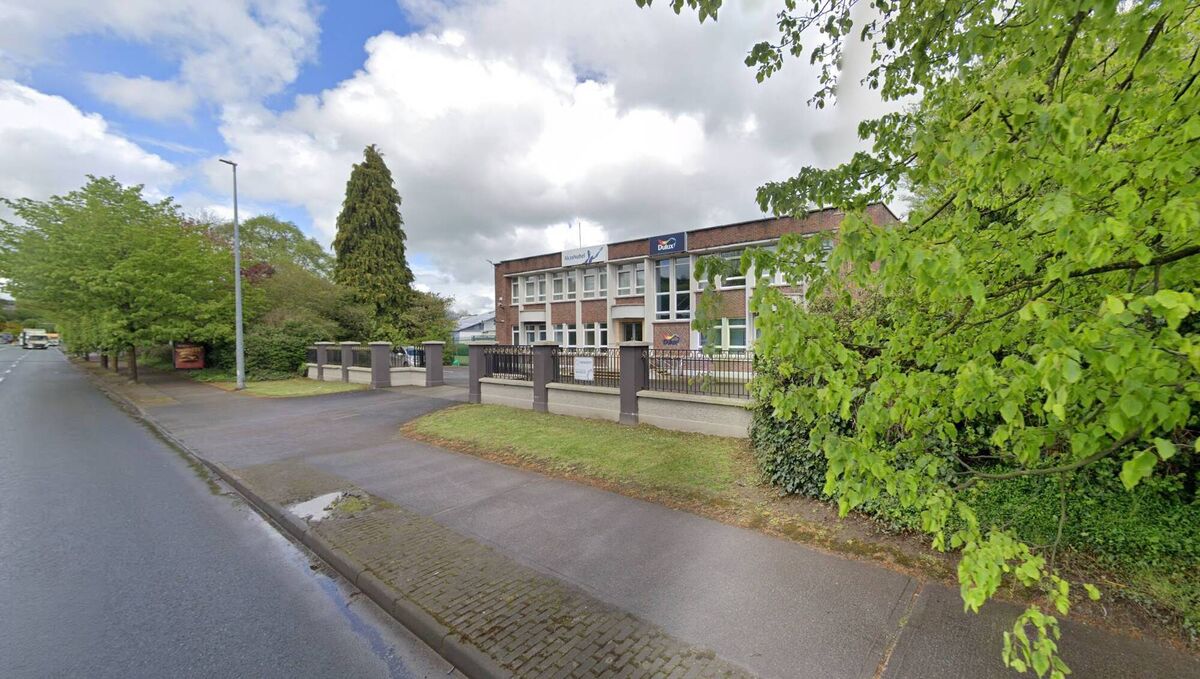
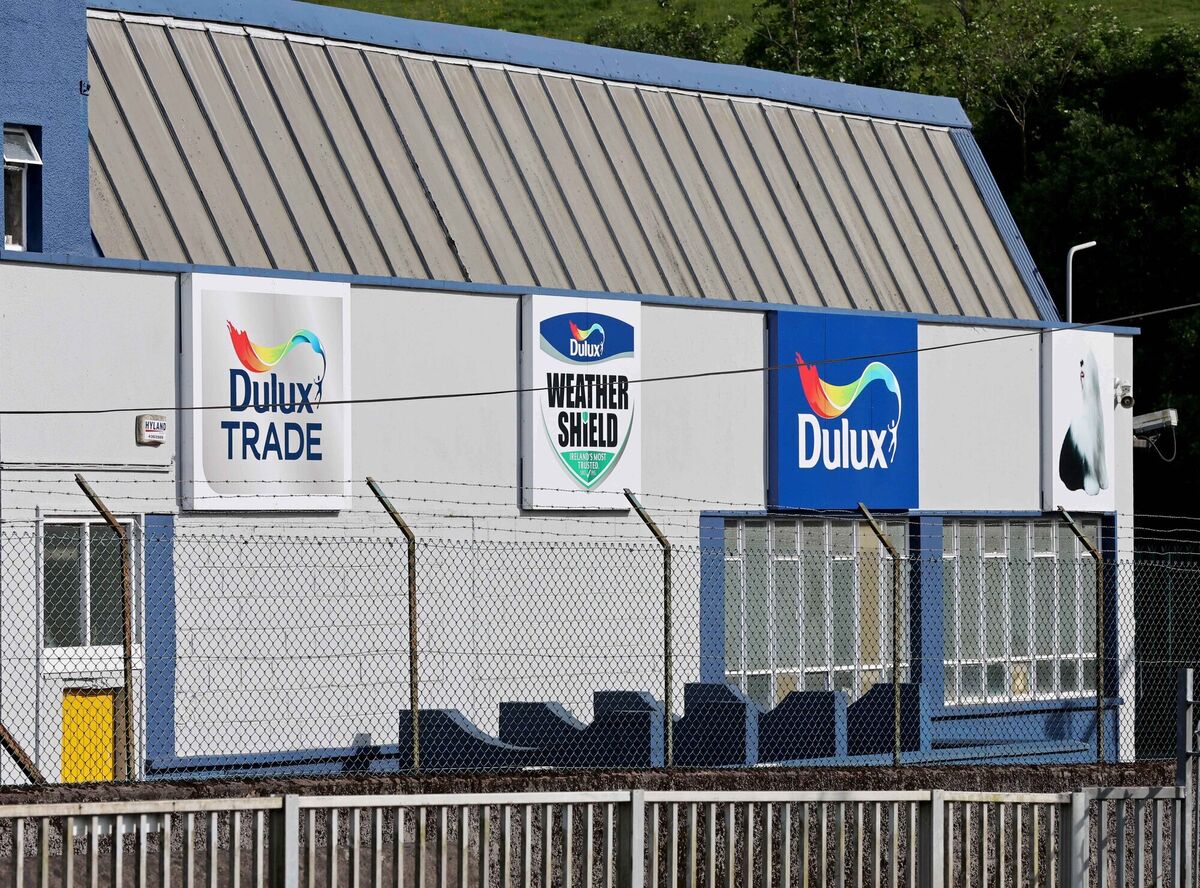
Dulux Paints site, Commons Road, Blackpool
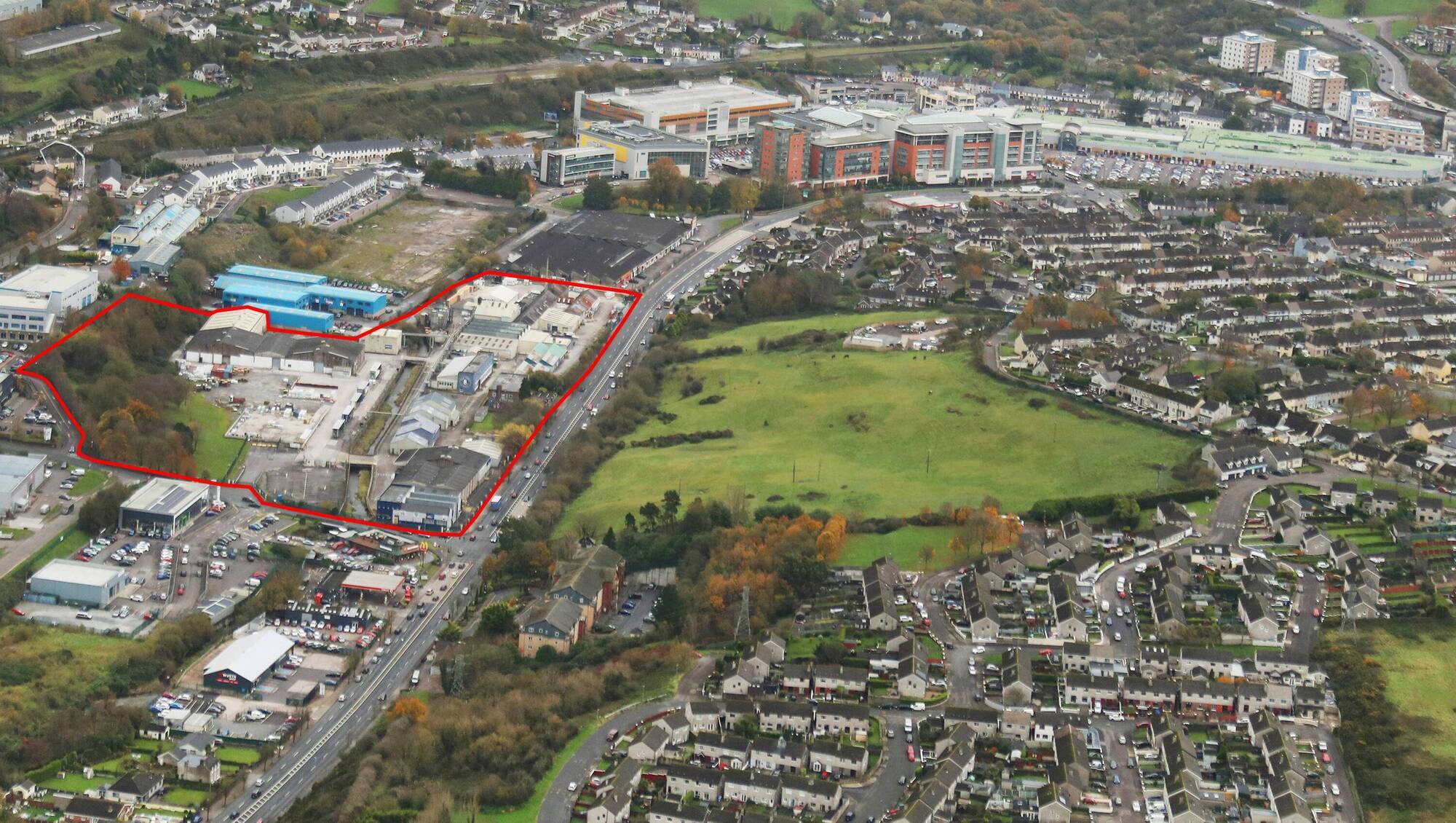
The former Dulux Paints factory site in Blackpool, Cork city, is set for major redevelopment, including up to 1,000 homes, following its acquisition by the Hallmark Developments-linked Reside Group, in a deal valued at around €10m.
The 14-acre site, one of the city’s best-known industrial landmarks, was bought off-market just before Christmas in a sale brokered by commercial real estate firm CBRE, and O’Connor LLP law firm acting for Dulux Paints.
The deal paves the way for a highly ambitious mixed-use scheme with up to 1,000 homes, opposite McDonald's on the Commons Rd — the first development of its kind and scale in the area.
Speaking exclusively to the Irish Examiner, Kieran Flynn, director, Reside Group, an affiliate of Hallmark Developments, said the acquisition “marks an exciting new chapter as this prominent gateway location is reimagined as a vibrant, high-quality residential community”.
Read More
“This is more than a residential project — it is a landmark regeneration that will finally give Blackpool and Commons Rd the gateway development it has long deserved. For the first time, residents will see high-density, architecturally ambitious homes delivered to the highest modern standards right here on their doorstep. We want every person who lives in or passes through Blackpool to feel genuine pride in what this site becomes,” Mr Flynn said.
The Mallow-based developer is currently undertaking preliminary site assessments and design evaluation, including flood risk assessment (the site flooded in 2012) which will inform the preparation of a planning application.
All going to plan, he hopes to break ground “in 18 to 24 months”, with “another year to first-phase delivery” with about 200 units per phase.
Development will “fully align with Cork City Council’s zoning objectives in terms of building form, density, height and the provision of high-quality recreational and amenity space”.
The acquisition of the Blackpool site by the Reside Group/Hallmark Developments marks a breakthrough for the developer as it’s their first site in Cork City. Development to date has been further afield in towns such as Mallow, Midleton, and Carrigaline, and areas such as Whitechurch.
“It’s a nice exciting one for us to get into the city and into an area not overly served by development and it has the potential to be a great gateway scheme,” Mr Flynn said. He added that there will be “a strong emphasis on cost-rental and affordable purchase options to meet the pressing housing needs of Cork families, workers, and first-time buyers”.
“It will be about getting price points right and we’d be expecting that the scheme could deliver up to 1,000 homes,” he said.
Homes will be available through private sale, with other options possible depending on future delivery partners, such as approved housing bodies or the Land Development Agency, if they were to get involved.
Alongside the homes, the development will also include, “carefully curated commercial, community and amenity spaces” which Mr Flynn said “will create a genuine sense of belonging and pride of place for local residents”.
One-, two-, and three-bed apartments as well as duplex units will be spread across a series of three- and four- storey blocks, bookended by taller buildings, including a seven-storey landmark corner unit at the entry side to the city. A creche will be part of the development, as well as commercial/retail units at ground level, which will create “active street frontage” along the River Bride, which cuts right through the site. Mr Flynn said the intention is to create a linear park on both banks of the river, with cycle and pedestrian connections right into Blackpool. There will be two access points to the site for residents, from the N20 Cork/Limerick road, and via the existing entry opposite McDonalds.
Traffic and transportation “form a central pillar of the design assessment,” he said.
“We are acutely aware that a large-scale development in this location must prioritise sustainable, active travel options. In this regard, the opening of Blackpool train station, together with the existing bus stops located directly outside the site, offer a unique opportunity to achieve meaningful modal shift and a significant reduction in car dependency — advantages rarely available to comparable urban regeneration projects,” the developer said.
Blackpool train station is part of the larger Cork Area Commuter Rail project and has been fast-tracked, along with Dunkettle, as the first of eight new stations planned for the Cork metropolitan rail network. If all goes to plan, construction should start next year with hopes to eventually run trains at 10-minute frequencies, which Mr Flynn said “would be a game-changer for Blackpool”.
His proposed development, the delivery of which could dovetail with the delivery of the new station, would be about a 10-minute walk away. It would also be close to decent employment hubs and would not require the displacement of existing operations, unlike the Docklands project.
Denis O’Donoghue, the agent who acted for Dulux Paints in the sale, said he was delighted to have found “a superb buyer” and that the proposed development was “a great news story for Cork”.
“Think the former Irish Glass Bottle site in Dublin,” he said, referring to the ambitious regeneration plan for Poolbeg West/Ringsend, where the intention is to create a new urban quarter.
Mr Flynn said they were keenly aware of the historic nature of the site “a familiar and fondly-remembered part of the northside skyline, employing hundreds of local people, and contributing to the proud industrial heritage of Blackpool and the wider Cork area” and that they were “committed to working closely with local residents, community groups and stakeholders to ensure the final scheme reflects the aspirations of Blackpool and delivers lasting positive change for the northside of Cork”.
The developer added that the “once-in-a-generation project represents a landmark moment for Blackpool — transforming a proud piece of Cork’s industrial past into a vibrant, inclusive, and high-quality new neighbourhood for the future”.
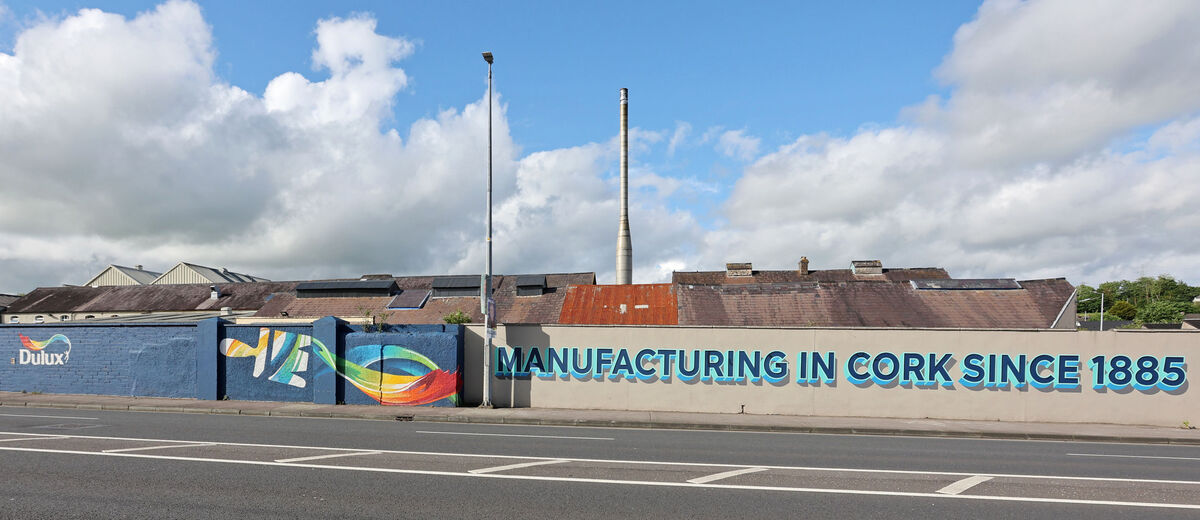
Paint manufacturing on the Blackpool site dates to about 1885, when William and Stanley Harrington began manufacturing paints and varnishes there, as well as agricultural products and even coffin paint. It later became known as Harrington, Goodlass & Wall (HGW), who developed a non-fading red pigment valued by the old Ford factory for car paint.
British chemical giant Imperial Chemical Industries (ICI) — who developed the Dulux brand — acquired the plant in 1988. In 2008, ICI was in turn acquired by Dutch coatings company AkzoNobel who decided in 2024 to move manufacturing for the Irish market to Britain, marking a major blow to Cork’s northside and the area’s industrial heritage.
The closure meant the loss of 45 jobs, albeit the site had been a much bigger employer historically, employing around 300 in the 1960s.
During the sale process, issues around title meant it wound up in the High Court, where Dulux was successfully represented by O’Connor LLP’s Katelin Toomey and John O’Connor.
CBRE’s Denis O’Donoghue saw the sale of the site through late last year. The same agent was behind the sale of 55 acres of former Mitsui Denman (Ireland) Ltd lands in Little Island to German discount retailer Lidl, who have planning permission for a 650,000sq ft distribution centre.
The Irish Examiner can reveal that the land sale is believed to have been worth in excess of €20m. The lands were purchased from John Cleary Developments.
CONNECT WITH US TODAY



Be the first to know the latest news and updates