Irish Examiner view: Mark Carney shows what it is to be a true statesman
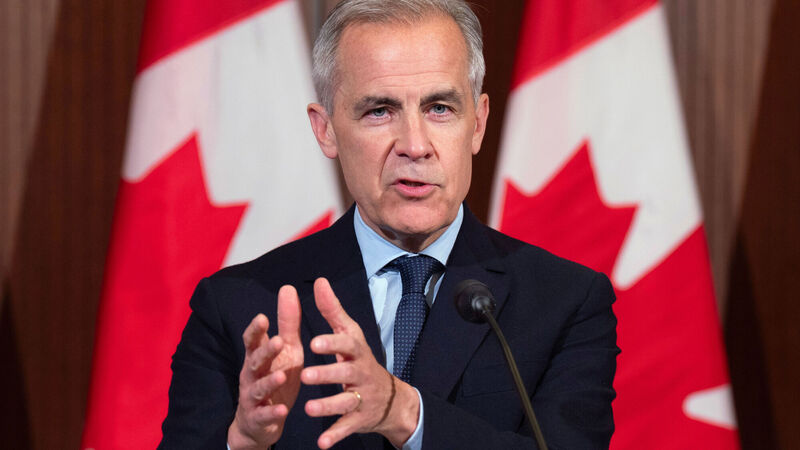
Canadian prime minister Mark Carney's speech was a 2,100-word deconstruction of US president Donald Trump's actions. File picture: Adrian Wyld/The Canadian Press/AP
These are the times, wrote Thomas Paine some 250 years ago, that try our souls.
On that occasion, he was protesting against the imperial swagger of an established superpower attempting to crush the fledgeling hopes for freedom of a people seeking nationhood.
So far, so very Hamilton. But it is worth recalling the phrasemaking of the British-born intellectual father of the American revolution as we contemplate the lessons of a week in modern history which has been like no other.
It is very rare in 2026 to be able to describe the contributions of a politician as statesmanlike.
Partly because such gender specificity rings hollow to contemporary ears, but even more so because high-profile examples of wisdom and sagacity are uncommon in the dangerous and febrile discourse which runs through our era.
Step forward, then, Mark Carney, whose 2,100-word deconstruction in Davos of the actions and statements of US president Donald Trump may prove to be the most influential moment in the tenure of the 47th leader of the US; when countries which imagined they were allies in the cause of democracy collectively recognised they were regarded as vassals.
Carney, speaking in French and English, described how the “middle powers” — countries such as Canada, Australia, those of the EU, Britain — should co-exist with the new great powers.
Quoting sources as diverse as Thucydides, the Athenian military leader and historian, and Václav Havel, the Czech writer and political leader who took his country out of Communist control, he warned that the accords and conventions which have served us well and brought prosperity for decades are “ruptured” and gone.
It is, said the Canadian prime minister, “the end of a pleasant fiction and the beginning of a harsh reality... where the large, main power, geopolitics, is submitted to no limits, no constraints”.
From the perspective of the non-US West, this is a watershed moment.
If anyone harboured doubts over whether to submit or resist, they can be swiftly removed by the dismissal of the blood sacrifice of other nations whose young men were called to action in support of the US in two decades of war through the Middle East and Afghanistan.
Trump’s grievously insulting suggestion that Nato forces “stayed a little off the front lines” has caused serious tensions in the alliance.
“We expect an apology for this statement,” Roman Polko, a retired Polish general and former special forces commander who served in Afghanistan and Iraq, told Reuters.
Trump has “crossed a red line”, he added. “We paid with blood for this alliance. We truly sacrificed our own lives.”
What lovers of democracy, and those of us who remain friends of America, must ask ourselves is whether what follows Trump could be even worse? Can matters become even more precarious?
For some it is a risk we cannot take. In a scathing speech, Ukraine’s Volodymyr Zelenskyy warned that Europe “loves to discuss the future but avoids taking action”.
Carney’s conclusion, also, was clear: “The powerful have their power. But we have something, too: the capacity to stop pretending, to name reality, to build our strength at home and to act together.”
For his troubles, Canada has been dropped from the list of potential members of the so-called “Board of Peace” which it is suggested will oversee the ceasefire between Hamas and Israel in Gaza. The Canadians are in reasonable company. Other non-participants include Norway, Sweden, France, and Britain.
It is long overdue that the “middle powers” heed the wake-up call.
As Carney said, those that are not at the table are on the menu. Greenland must not be the last instance where we act swift and fast against bullies.
What may be even more surprising is the source of more than two thirds of the activity — the busy gambling markets of Asia.
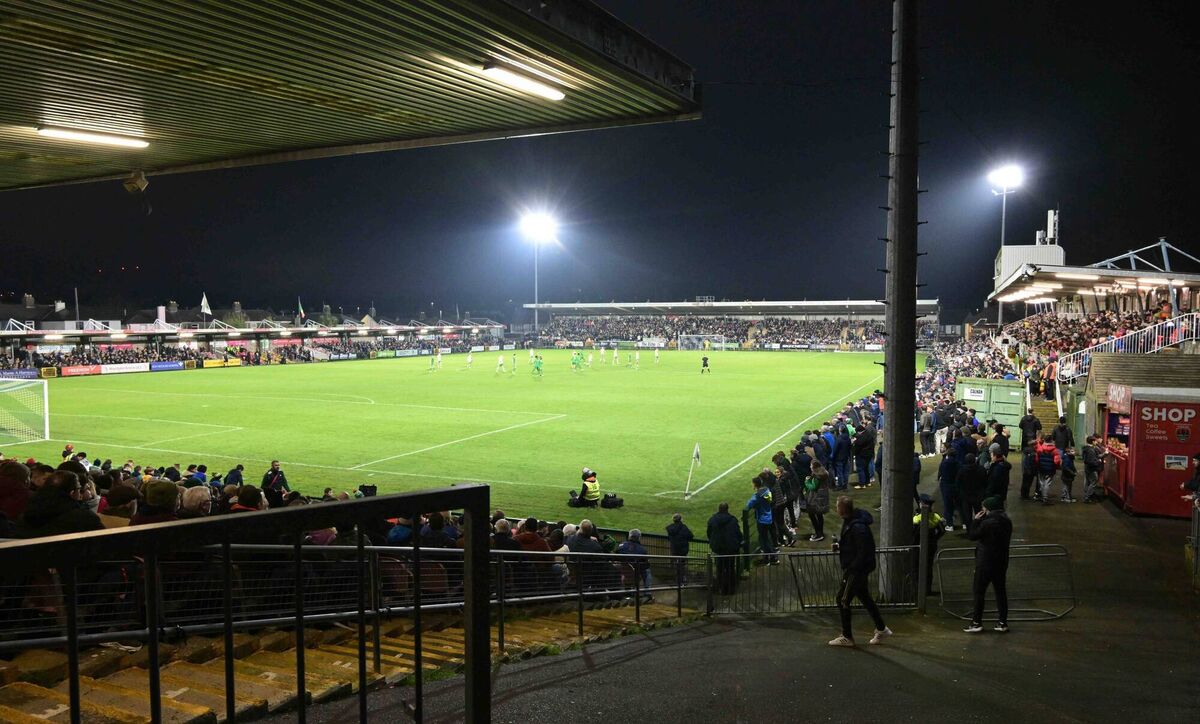
While it may be tempting to attribute this to the Irish diaspora the reality is that there is an appetite for news of Bohs, St Pat’s, and the Rebel Army in the native byways of Macau, Kuala Lumpur, and Manila.
News of this growth in interest was provided by the league’s director, Mark Scanlon, ahead of the new season, which kicks off on February 6, followed a week later by the First Division.
The impact of gambling on football is widely visible in other leagues, with 11 out of 20 English Premier League teams carrying front of shirt sponsors, though these will be voluntarily removed by clubs from next season onwards.
Another financial challenge for the sport here is that while revenues from streaming on the LOITV service are improving, nearly €1m is leaking away through piracy.
Such modern problems are a source of frustration but also indicate, to borrow a phrase from marketing, a demand for the ‘product’. Like punters in Asia, the hope is to make some money out of it.
With the death of Brian Crowley at the age of 61 after a year-long illness, Ireland has lost one of its most recognisable, and successful, political campaigners of the 21st century.
Mr Crowley, a former Fianna Fáil MEP for Ireland South and a native of Bandon, West Cork, passed at CUH early on Friday morning.
He was elected to the European Parliament five times between 1994 and 2014 before stepping down in 2019 after criticism over his lack of attendance due to illness and failure to cast votes.
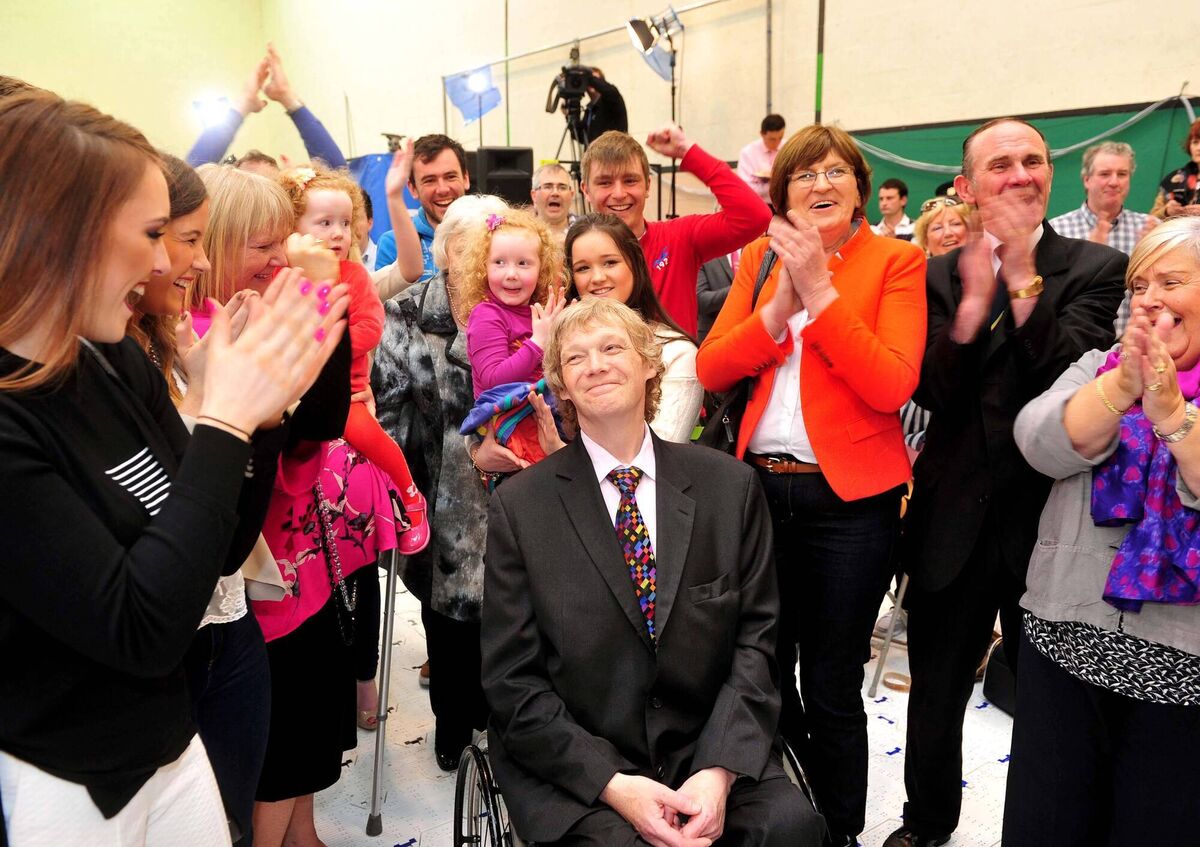
At his height he was a formidable, poll-topping, political force and the Taoiseach, Micheál Martin, paid generous tribute to his ballot box appeal.
“Without question, he was one of the great vote-getters of the modern political era. He had no equal,” Mr Martin said.
Mr Crowley was paralysed from the waist down after an accident at the age of 16 and after a spectacular performance in his fifth European election in 2014, his campaign team drew a comparison with the much admired US president Franklin Delano Roosevelt.
In a statement after the election, where he returned more than 180,000 first-count votes — double the support for Seán Kelly and more than three times the backing for Simon Harris, the Fine Gael candidates — his managers issued a victory statement which dwelled on the example of Roosevelt.
“After his death, his wife Eleanor remarked that his disability proved a blessing in disguise, giving him strength, an understanding of human suffering, and knowledge that it could be overcome.
“He also knew that with spiritual and physical courage, there is no situation that could not be met. Many people see Roosevelt comparisons with Brian Crowley and the future looks very exciting for this political phenomenon.”
It is worth revisiting that eulogy to remind ourselves that nothing is assured in politics. At one stage, in 2011, Mr Crowley harboured ambitions to become president but did not receive the necessary support within Fianna Fáil, which ultimately opted not to run a candidate, not the last time the party would get itself in a tangle over filling the vacancy at Áras an Uachtaráin. Michael D Higgins won the election that autumn with 39.6% of the first-preference votes.
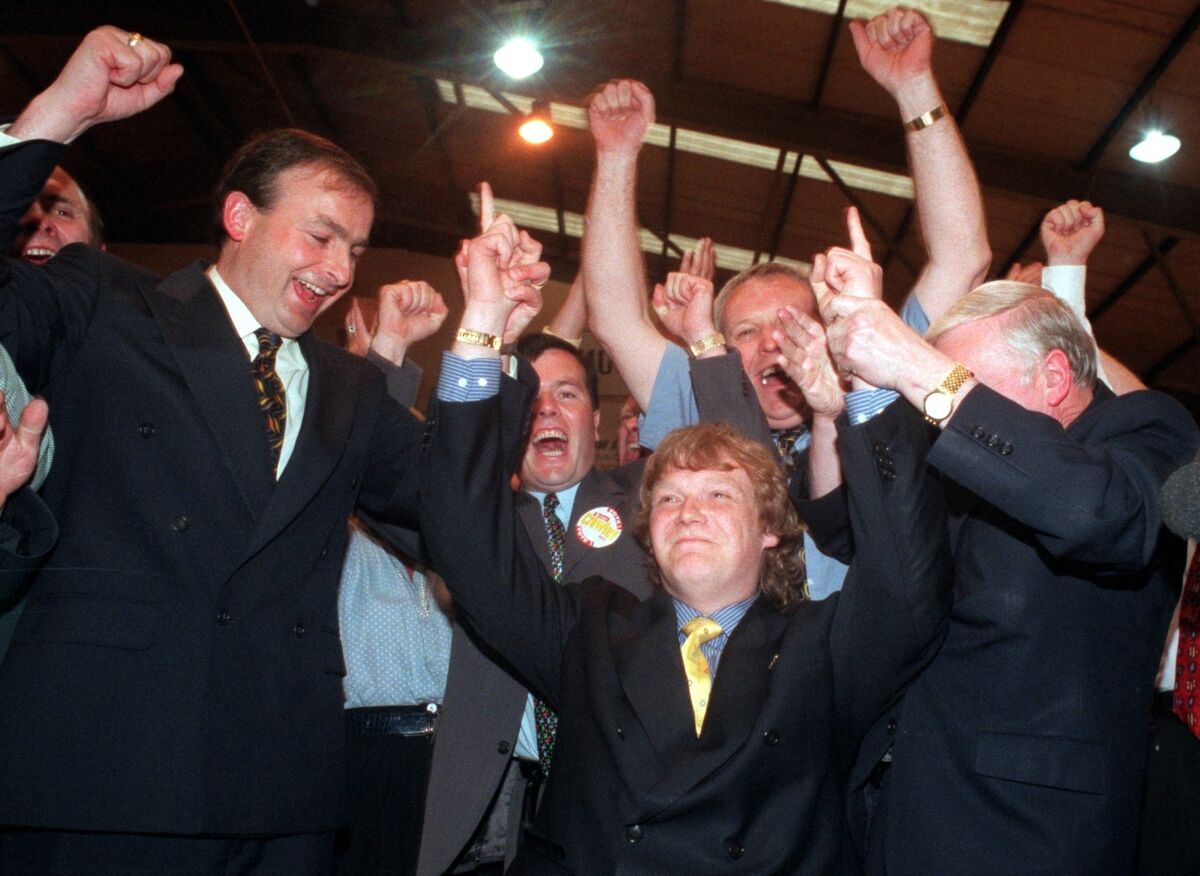
Remarkably, less than one month after his resounding European triumph of May 2014, Brian Crowley was defenestrated by Fianna Fáil after he resolved to join the right-leaning European Conservatives and Reformists Group.
Party policy at that time was to work with the liberal grouping in Brussels and Strasbourg.
Many found the speed of the expulsion inexplicable, with Michael McGrath — then his party’s finance spokesman, now European Commissioner for Democracy, Justice, the Rule of Law and Consumer Protection — observing: “It has left many of us scratching our heads.”
Mr Crowley, a son of the former Fianna Fáil TD Flor Crowley, is survived by his mother, Sally, and his siblings.
While he will be remembered for his outgoing personality, he also had the capacity to make disability a detail, rather than a dominant factor, of his life and work. At the peak of his powers that was an inspiration for many.
CONNECT WITH US TODAY



Be the first to know the latest news and updates