Irish Examiner view: Pope Francis left his mark on wider society
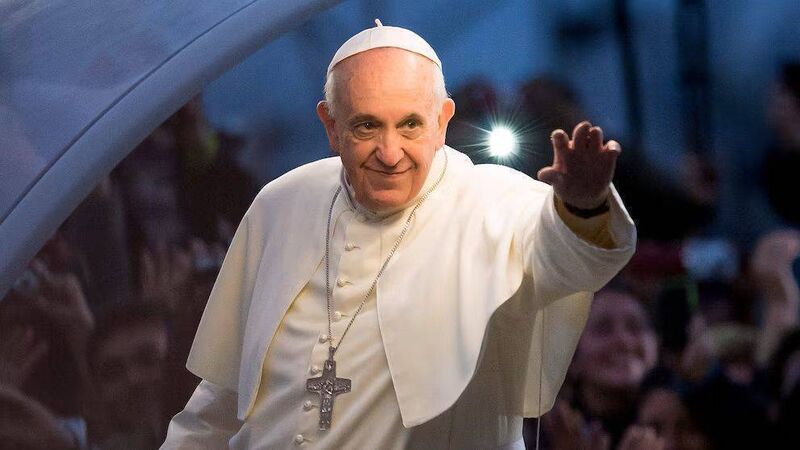
As the first non-European pontiff since 741AD — and the first Jesuit ever to accede to the post — the Argentinian, born Jorge Mario Bergoglio, rarely fitted the stereotypes that somehow always seemed to match the job profile.
The end came swiftly and unexpectedly and, in many ways, that summed up the reign of Pope Francis as the spiritual leader of the Roman Catholic Church: He was rarely predictable. Only hours after addressing the faithful in Rome and weeks after being in intensive care with double pneumonia, he passed away suddenly.
As the first non-European pontiff since 741AD — and the first Jesuit ever to accede to the post — the Argentinian, born Jorge Mario Bergoglio, rarely fitted the stereotypes that somehow always seemed to match the job profile.
Assuming the mantle of a church rattled by the abdication of Pope Benedict XVI, and reeling from a global series of revelations of rampant sexual abuse within the priesthood — not to mention the whiff of financial cordite which had dogged the Vatican for decades — Pope Francis had, what many believed, an impossible job on his hands.
Restoring the credibility of the Church — not to mention its authority over its 1.406bn adherents — was always going to be a tough ask for a man who was 76 when he was elected as the 267th head of the Catholic Church.
However, it was a job he took to with considerable zeal and no little humility and, in contrast to his predecessor, he focused his papacy on pastoralism and outreach rather than trying to reinforce doctrine.
His time in office was characterised by his adoption of the role of being a Good Samaritan and, as he grew into the job, an image emerged of a man doing an incredibly difficult balancing act — not as a scholar or a rules-based obsessive, but as someone who was a frontline cleric used to working with everyday people.
His previous pastoral work in the shantytowns of his native country gave him an “everyman” appeal, which he carried into his work as the leader of the Church.
Formerly taboo subjects such as marriage and divorce, whether or not homosexuals and transgender people were sons and daughters of God, not to mention a future in which women played a full role in the Church’s activities, were all grist to his mill.
Although he never fully addressed the latter thorny subject, he never ignored it either, but he will be remembered as being open-minded on the subject. As he was too when it came to LGBT+ issues. “If a person is gay and seeks God and has goodwill, who am I to judge?” he memorably replied when asked about gay priests. Stating in 2023 that “being homosexual is not a crime”, he upset many traditionalists.
That he shunned many of the hierarchical trappings of many of his predecessors — he eschewed limousine transport and the 10-room apartment reserved for him, preferring to hop on a Holy See minibus to get him to and from his digs in a humble boarding house — struck a chord with his flock.
He shone a light on the path forward for an institution sometimes hog-tied by its own conservatism and, while he might not have been as liberal as many Church radicals would have liked or shown the expected tenacity in atoning for the child abuse scandals, that his writings and statements brought a harsh rebuke from the doctrinally right wing in the Church left little doubt his heart was in the right place.
His legacy may take years to come clearly into focus, but Pope Francis left his mark not only on the organisation he led and its adherents but on a wider society for which his only ambition was to see justice, honesty, and equality.
That third-level institutions, educators, and student bodies are in harmony on the need to tackle the red tape and bureaucracy placed on sexual violence, as revealed in Jess Casey’s investigation here this week, is welcome and necessary if the problem is to be tackled successfully.
That there is widespread recognition of the need to update and modify the practices surrounding the reporting of sexual harassment or rape on campuses across the country to make them thoroughly “survivor-friendly” is a change of tack which has been needed.
What is important is the need for students to know that there are places that they can turn to for support, and that they can place their trust in the processes operational therein. If people want to pursue allegations, or whether they need counselling, or even whether they require anonymity, each option should be clearly open to them. It is timely that each sector works together to ensure that is the case.
As the annual teacher conferences got under way yesterday, there was a discernible feeling that the Government is treating several issues facing the profession with some urgency. This, many might argue, is not before time.
Teaching unions have long insisted that staffing issues among their ranks present possibly the single biggest threat to the education sector, forcing some schools to hire unqualified or “out of field” staff to fill gaps in their teaching rosters.
The inability of newly qualified teachers to secure a permanent contract until two years after they have qualified has been an inhibiting factor for many in joining the profession; it meant, for example, that despite securing work, they could not apply for a mortgage to buy a house even within a vague radius of their workplace.
By changing the rules to allow newly qualified teachers, many of whom will be starting work this coming September, to secure a permanent contract by the same month in 2026, is a start in getting our education system back on track. In addition, making it possible for teachers who qualified outside Ireland to complete their training here, encouraging many to return home, is another positive step on what will be a long road.
CONNECT WITH US TODAY



Be the first to know the latest news and updates