Irish Examiner view: Slowing down to survive bank holidays
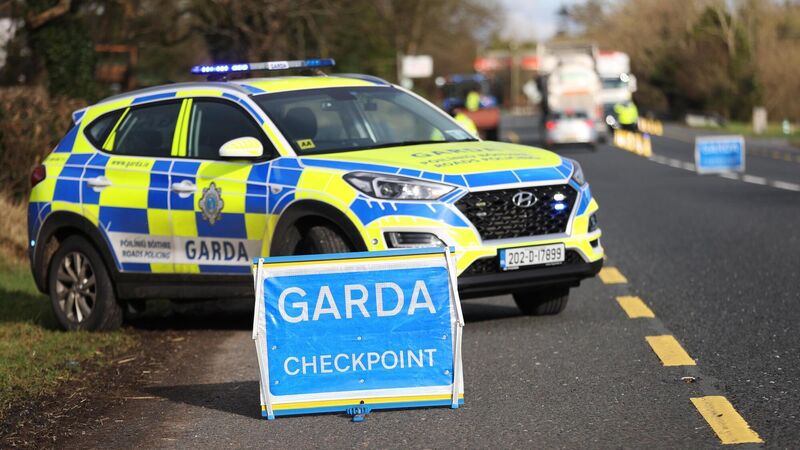
Gardaí have noted an increase in the number of collisions occurring on Fridays, Saturdays, and Sundays — with about double the five-year average happening on Fridays this year.
One of the more depressing statistics of recent weeks was that during national “Slow Down” day on Ireland’s roads, gardaí still managed to clock more than 125 drivers breaking the law.
And these were not just minor transgressions involving an errant few kilometres per hour, but pedal-to-the-metal breaches at dangerous speeds.
With the extended bank holiday, we enter one of the watershed weekends of the year for road traffic accident statistics with many thousands of people on the move.
And the figures so far in 2025 do not hold out promise for an improvement in behaviour.
The number of drivers and pedestrians killed on Irish roads in the first quarter of this year is above average when compared to the same period over the past five years.
Half of those fatally injured were driving, with two thirds of all fatal collisions involving a single vehicle.
Gardaí have also noted an increase in the number of collisions occurring on Fridays, Saturdays, and Sundays — with about double the five-year average happening on Fridays this year.
Almost a third of those killed on the roads so far were aged under 30.
And in the past six years the largest age group for fatal and seriously injured road users were aged 20 or younger.
Safety campaigners have been particularly shocked by an increase in fatalities among categories that they define as “vulnerable” — pedestrians, motorcyclists, pedal cyclists, and e-scooter/pillion passengers.
These amounted to 23 deaths, nearly half of the total.
When you drill down past the headline data there are harrowing stories.
Pensioners aged 70 and 80 knocked down near their homes; a nonagenarian cyclist in collision with a lorry; a five-year-old struck by a car; a 48-year-old jogger hit by an SUV; motorcyclists — an increasingly vulnerable group; a victim on a ride-on lawnmower.
Each and every example is a devastating tragedy, and a life changing episode for those who are left behind.
But what more can be done to the factors which influence road safety?
Senior police emphasise the contributions of speed, alcohol and drugs.
Some critics hold that there is insufficient regular enforcement of the rules of the road.
But some matters are beyond their influence.
Motor vehicles are significantly heavier and more powerful; many roads are inadequate, particularly in inclement weather; some are badly maintained, ill-lit, and poorly signposted.
Then there are human factors which are difficult to quantify.
Some experts and researchers claim that there is an “optimism bias” affecting drivers.
They know the risks, but also share the belief that bad things won’t happen to them.
There are more in-car distractions.
While it is illegal to make calls unless hands-free, mobile phones are still there delivering many gigabytes of data and acting as our real-time routefinder.
Many dashboard information and entertainment consoles would be at home in a space shuttle.
Cars carry sound systems with volumes which would not be out of place at a Pete Tong concert.
Have our driving tests kept pace with technology? Unlikely.
In years to come new drivers may have to be examined more regularly on the kind of multi-tasking techniques and quick decision-making that might have been seen in fantasy films involving characters with names like Maverick and Iceman.
But with a heightened sense of responsibility and consideration for fellow road users.
That characteristic must be the wild card, and carry more points towards licence qualification and retention.
Easter remains a time of Christian thought and reflection and the sharing of messages of support to other denominations and creeds.
Typically, we might expect words encouraging that principle in an Easter message from Pope Francis although he is operating in more trammelled circumstances due to his recent severe illness.
He nevertheless managed to greet some of the pilgrims in St Peter’s Square at the start of Holy Week as well as meeting privately with the king and queen of the United Kingdom.

The powerful account of the crucifixion and the resurrection has been maintained not only in written text but also the spoken word.
And to that end it is deeply disquieting to learn of the problems faced by Palestinian Christians attempting to visit the Church of the Holy Sepulchre in Jerusalem.
They require an Israeli military permit to attend this ancient holy site but since the Hamas terrorist attack of October 7, 2023, these have been increasingly hard to obtain.
In addition, pilgrims are not allowed to stay overnight.
Even in the modern Golgotha of Gaza it is important to remember that the message of Easter is ultimately one of hope.
And for that message to resonate, it has to be heard.
In an article for the magazine, the Rev Peter Mullen, an Anglican priest for more than 50 years, writes of the importance of delivering a sermon.
The art of preaching, he says, is not to sound as if you’re preaching, and to leaven your message with humour.
He cites an unusual, possibly apocryphal, example of the late Ian Paisley, fulminating from the pulpit: “Ye are all bound for damnation. There will be weeping and gnashing of teeth!”
From near the back, an old woman piped up: “And what about us what has no teeth?”
The preacher immediately thundered back: ‘Teeth will be provided!”
It’s the way you tell them.
No doubt there will be an audience for the next Netflix Irish/American true crime drama which will tell the story of the killing of the Limerick father-of-two Jason Corbett.
Mr Corbett, 39, was battered with a brick and baseball bat and found dead at his home in Lexington, North Carolina in August 2015.
His American wife Molly Martens, and her father, ex-FBI operative Tom Martens, were convicted of second degree murder two years later and jailed for terms of between 20 and 25 years.
The conviction was later quashed on appeal but the father and daughter struck a plea deal admitting voluntary manslaughter and served a total of four years and three months in jail.
Netflix says , which will air from May 9, will be a “chilling exploration of love and betrayal featuring interviews with those closest to the case”.
The documentary will feature “exclusive interviews” with Mr Corbett’s children, Sarah and Jack, as well as the two people convicted of killing him.
Sarah Corbett Lynch has written her own account of the experience — — which she hopes may offer support to others who may be going through difficult times.
True crime drama is a well-mined seam for the world’s largest streaming platform from the cases of Lyle and Erik Menendez who are awaiting a resentencing hearing in California for the murder of their parents; to OJ Simpson; to the Tinder Swindler and The Vanishing at the Cecil Hotel.
Memorably it carried in 2021 which retold the story of the murder of Sophie Toscan du Plantier, a case which continues to reverberate despite the death of Ian Bailey, the prime suspect, at his home near Bantry in January last year.
The format requires a mystery and participants or witnesses who are willing to give alternative versions of the history.
In this case, Sarah will be interviewed as will her brother Jack.
Molly and Tom Martens will also appear in the documentary which will be directed by Jessica Burgess and Jenny Popplewell who have experience in this genre of story-telling.
Netflix says it will cast “a bright light on the many questions that have lingered since the shocking events of that night”.
Critics, and there are many, who complain that such programmes are intrusive, voyeuristic and can perpetuate the suffering of relatives of victims, must also concede their popularity when measured by audience figures and that hoary old media adage: “If it bleeds it leads.”
When the came to measure its most successful premium online content of 2023, coverage of the Martens trial was among the most in demand.
While the story is complex and challenging it is one which continues to resonate.
And it will again next month.
CONNECT WITH US TODAY



Be the first to know the latest news and updates