Irish Examiner view: Speed cameras will now cast their gaze wider
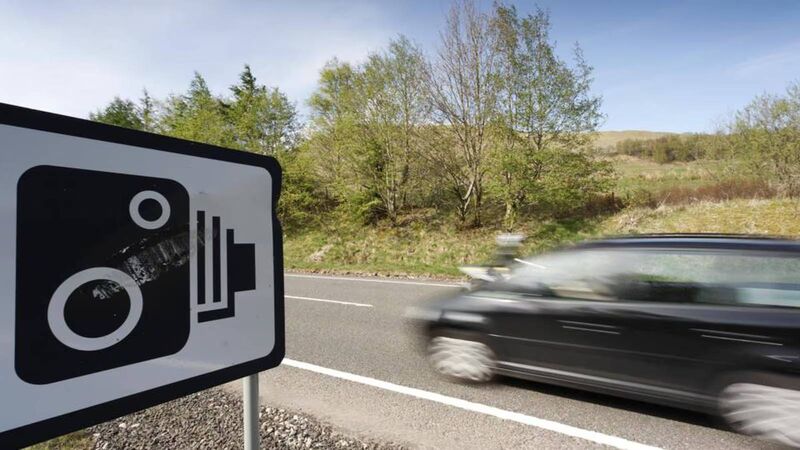
Nine new static speed cameras are to be installed at accident blackspots. Stock picture
It is good news, and probably overdue, that nine new static speed cameras are to be installed at accident blackspots in an attempt to stem the increase in fatalities so far this year.
The death toll gives every appearance of veering out of control. Up to Wednesday morning, 69 people had died on Irish roads in 2024 — 16 more than the same period last year. 2023 was the worst year for road deaths in more than a decade as 184 people lost their lives.
At current rates, well over 200 people will be killed this year.
The location of the new cameras is based on fatal and serious-injury collision data from the last seven years and speed statistics, as well as feedback from stakeholders such as safety groups and local authorities.
Clearly, we need a step change in behaviour from Irish motorists, but cameras may only be part of the solution if the Government is to stand any chance of reaching its targets under its Vision Zero programme. The initial goal is to halve the number of road deaths in the Republic of Ireland within seven years.
In other jurisdictions there is emphasis on reducing speed radically. Most streets in London are now 20mph (32kmph) and similar reductions are being imposed in Glasgow.
Wales, controversially, has made 20mph the default speed for all built-up areas, with transgressors at risk of accumulating fines and penalty points.
It is difficult to comprehend, also, why extreme examples of driving at speed should not result in a lifetime loss of an individual’s licence.
Last week, a motorist was clocked going at 192km/h on a stretch of the N22 where the limit is 100km/h. This is almost as fast as Ayrton Senna was travelling when he died at Imola 30 years ago.
Assistant commissioner Paula Hilman, the senior garda responsible, said: “Static speed safety cameras have been proven in other countries to be highly effective in changing driver behaviour and reducing speed, which is a key contributor to road deaths.
“Speed cameras slow drivers down. The lower speeds people drive at, the lower the number of road deaths.”
Enforcement of regulations is also vital, a view long held by AA Ireland. Given the pressure on Garda recruitment and retention, this speaks to inevitable further increases in monitoring by cameras and likely increases in investment and installation.
As we have chosen to go down this road, we must anticipate the consequences.
These will include the inevitable mission creep of organisations and planners who want to find new ways to raise revenues and correct public behaviour.
We need look no further than next door, where barely a stretch of road exists without its cameras to catch the unwary, the inattentive, the feckless, and the reckless.
Idling your vehicle close to a school? Gotcha. Turning into a low-traffic neighbourhood? Smile, you’re on camera. Entering a restricted box junction? You’re caught. Introduction of road tolling? Sure thing, linked to automatic number-plate recognition.
As the author William Gibson observed: “The future is already here. It’s just unevenly distributed.”
Among the many memories of the first performance of Riverdance, 30 years ago this week at the Eurovision Song Contest at Dublin’s Point Theatre, there was a telling insight from Michael Flatley, now aged 65.
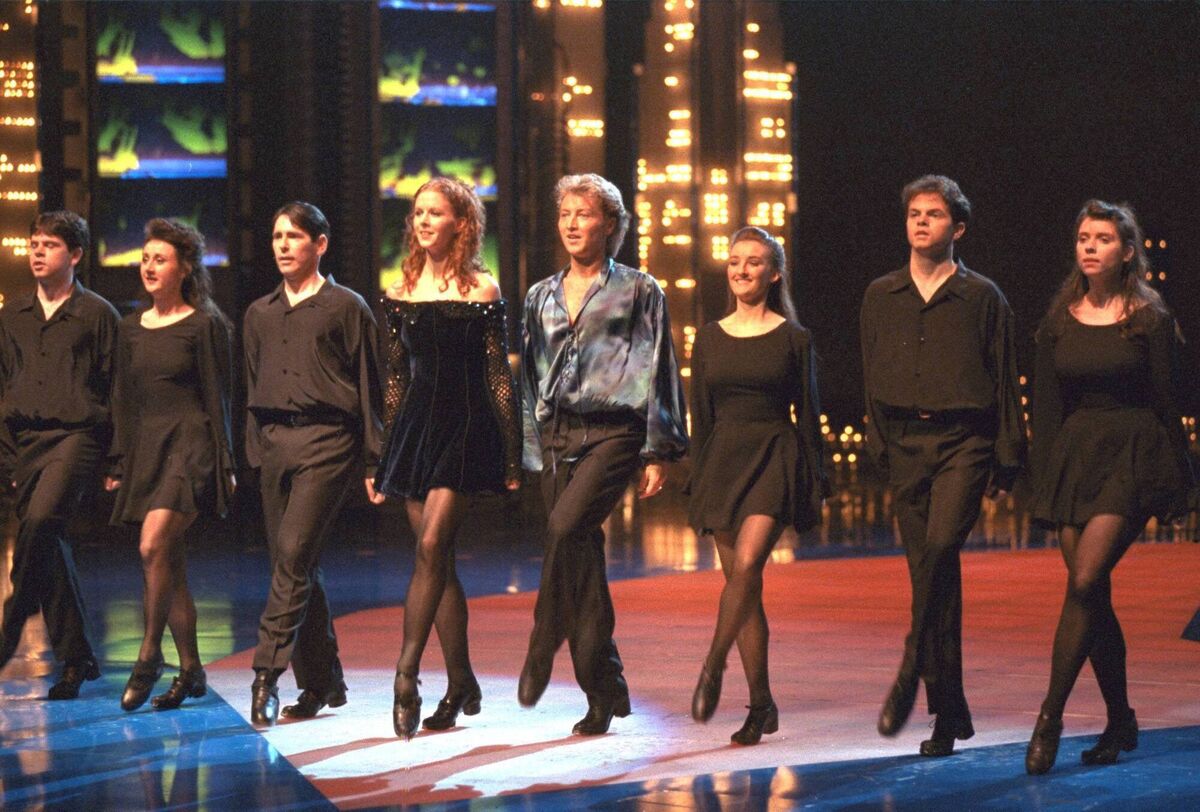
Flatley revealed that even as he was about to go on stage, he was being urged not to make a show of himself, and, by association, traditional Irish dancing.
The dancer caused a stir with a performance which broke strict rules about what was acceptable. Instead of a rigid upper body, with arms by his sides, he burst from the wings with his arms in the air.
Flatley told the BBC: “They came to me beside the stage and said: ‘We’re getting calls from all the dance teachers. Please don’t wave your arms around, you’re going to make us look ridiculous in front of the world, so can we just ask you this time, whatever happens, can you keep your arms down?’ And I said no.”
And a good job he did because the appearance of Flatley in his flowing green satin shirt, the elegance of his partner Jean Butler, and the stunning and rhythmic support of 24 other dancers marked the moment when being Irish and cool went mainstream in world culture.
Although Ireland won the Eurovision for the third consecutive occasion on that evening (‘Rock’n’Roll Kids’ performed by Paul Harrington and Charlie McGettigan) it is Riverdance that everyone remembers. A thrilled Cork Examiner’s headline on a special page of coverage proclaimed: ‘Standing ovation for stunning dance display.’ The triumph gave us, said our opinion writer, the chance to “impress with our technology, talent and joie de vivre”. Three decades later, we are still pulling those levers.
Is there anything much to be concluded from Thursday’s dismal Tory election performance in the UK other than noting that the Conservatives are completing one of the longest farewell tours in history? One that started around 2010 with David Cameron.
It is very possible to read too much into the results of polls to elect local council members, mayors, and police and crime commissioners (there are 37 of these in Britain being paid upwards of €100,000 each).
Voter turnout on such occasions can be less than half that of a general election and parochial issues can make a difference.
One of the areas of interest for us is that England has a raft of directly- elected mayors, some 24 in all.
Ireland will gain its first such office next month when Limerick chooses its preferred candidate on June 7 as part of the 2024 local elections. There are 14 declared runners, 11 from political parties and three Independents.
In England, it is the mayoral results that provide a more interesting narrative than the quantum of lost Tory seats.
Ben Houchen, a Tory poster boy representing what were once rustbelt areas in Tees Valley, was decisively returned yesterday. Andy Street, his fellow flag bearer within the ‘Red Wall’ constituencies which turned blue in 2020 because of antipathy to Jeremy Corbyn, will learn his fate tomorrow.
The highest-profile metro mayor, Sadiq Khan, will discover today whether he has, as expected, become a three-time winner in London despite his unpopularity with a significant section of the population for what are seen as anti-motorist policies and the extension of the ultra-low emission zone taking in the suburbs of the city.
The psephologists and rune readers are spending the weekend casting their eyes over the entrails to determine whether the signs are sufficiently damaging to prevent Rishi Sunak leading his party into the next general election, the timing of which is under his control.
And the answer is that Mr Sunak is likely to get away with this one, and that he will be the premier with whom Ireland has to deal for the next few months at least.
This was a relatively small set of results, covering 2,636 seats across 107 councils. In last year’s local elections, the Conservatives, who have been in charge nationally for 14 years, lost more than 1,000 seats, marking the nadir of Mr Sunak’s popularity after he attempted to stabilise the economy following Liz Truss’ 44-day tenure.
Even the result of the Blackpool South by-election was distorted by special circumstances.
The Conservative incumbent was involved in an unsavoury scandal over paid lobbying on behalf of gambling companies. He sat as an independent after being suspended by his party, before being suspended from the House of Commons.
For now, Mr Sunak can take some comfort from the words of the old Chumbawamba hit, ‘Tubthumping’: “I get knocked down but I get up again.”
Mr Sunak has never led his party into a general election. That day is rapidly approaching.
CONNECT WITH US TODAY



Be the first to know the latest news and updates