Subscriber

Mick Clifford: Ireland’s housing crisis is leaving growing numbers of older people facing homelessness
With private rents rising and pension incomes falling short, Mick Clifford says that Ireland is failing to prepare for a growing crisis among older renters
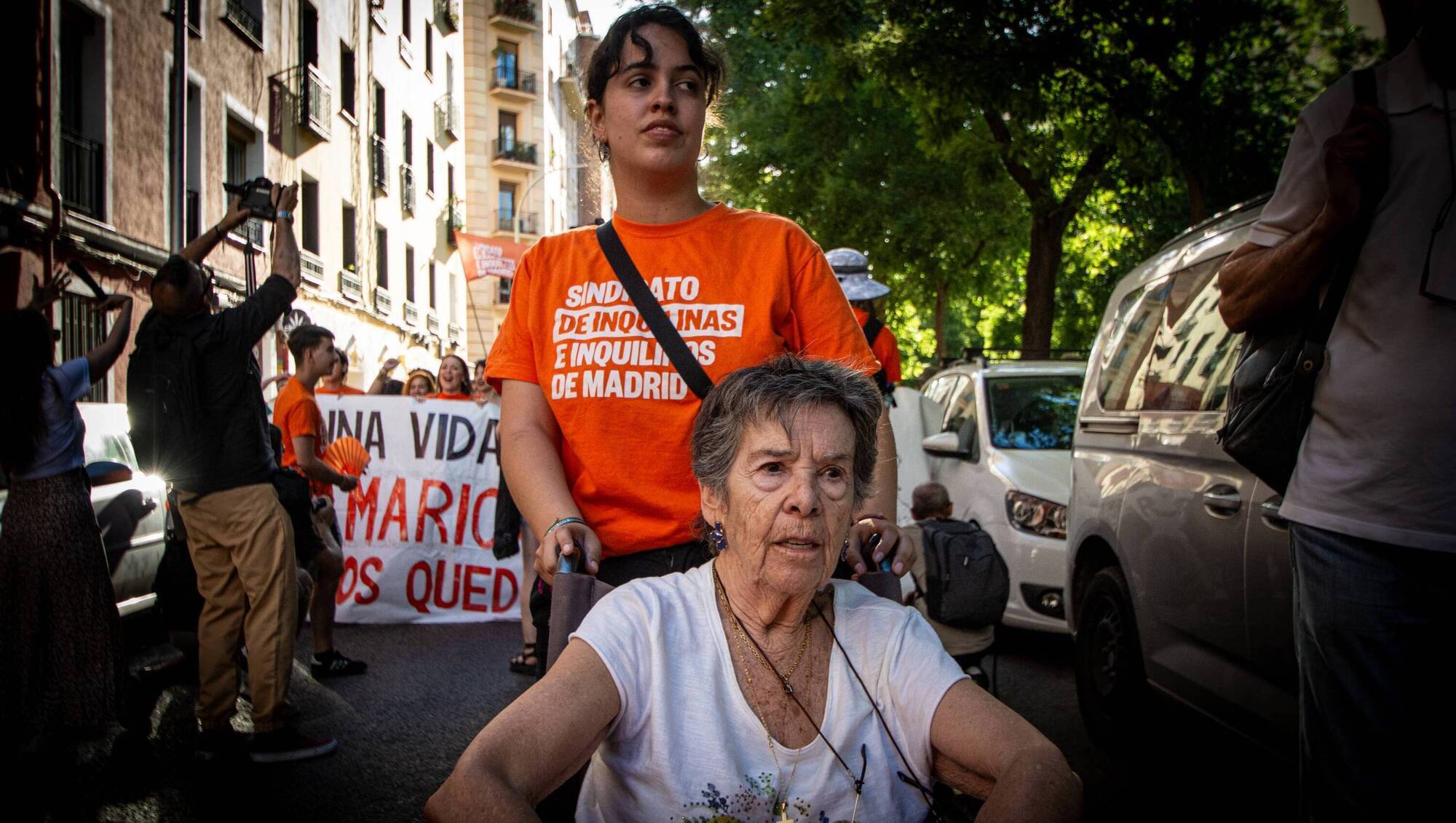
Maricarmen Abascal, 87,had lived for more than 70 years in her Madrid home. On the fourth attempt to evict her, she was carried out on a stretcher and taken away in an ambulance. Picture: Francesco Militello Mirto/NurPhoto via Getty Images

Maricarmen Abascal, 87,had lived for more than 70 years in her Madrid home. On the fourth attempt to evict her, she was carried out on a stretcher and taken away in an ambulance. Picture: Francesco Militello Mirto/NurPhoto via Getty Images

Old man take a look at my life,

I’m a lot like you.

Neil Young was a young man of 25 summers in 1970 when he bought a large ranch in southern California. 

He was already wealthy from his singer/songwriter career. 

After the purchase, the 70-year-old caretaker on the ranch, a man by the name of Louis Avila, drove him around the wide expanse to show him his new property.

Avila asked him how one so young was able to afford a ranch that big.

“Just lucky, Louis,” Young replied. “Just real lucky.”

“Well,” Louis said, “that’s the darndest thing I ever heard”.

The moment, Young later revealed, sparked off for him the core theme of Old Man, the song in which he meditates of how life’s internal journey can be at the same station however far along the life cycle one is.

The same dreams can live at 25 and 75, the same anxieties, the same fears. The same wins, the same losses.

I’ve been first and last,

Look at how the time goes past.

The same goddamn housing crisis. Right now, there are shared elements to the problems of having a place to call your own at both ends of the chain of years that is adulthood.

For the young, the hope of easing into security by owning a home are, for many, more dream than hope these days. 

Their plight has been well documented. 

The cost of renting is punitive to the point where saving to buy becomes nearly impossible. 

And even if that can be achieved, the price of houses is simply out for reach for too many.

At least time is on their side. 

For those at the other end of the lifecycle, time is precious, the light is fading. More than anything, it’s the time to feel a little secure.

Already the housing crisis has seen a spike in the number of retirees who have never, and will never, own their own home. 

According to Social Justice Ireland’s poverty focus report for 2026, the number of older people reliant on renting in the private sector is steadily increasing. 

The report quotes the last census. “There were more than 17,000 private rented households where the head of the household was aged 65 or over,” it states.

“This figure has increased by almost 85% in a decade. At the same time, average market rents have nearly doubled over the past decade, placing increasing financial pressure on older renters as their income transitions from a wage to a pension”.

That is the crucial element that, at the current rate, is going to lead to a serious societal problem in the coming years. 

It’s one thing to be paying exorbitant rent at a stage of life while still working. 

Doing so when living on a pension will inevitably lead to poverty and the kind of stress that can shorten a life.

The 2022 census recorded that just 66% of permanent private households are owner occupied. This is a historic low, down from over 80% in the 1990s.

Alone, the agency for the elderly, has pointed out that the contributory state pension is currently €1,032.63 per month, but average market rent in Ireland as a whole is €1,227. It is simply unaffordable in retirement.

In June, consultant geriatrician Rose Ann Kenny told the Oireachtas health committee that patients she has seen have told her. “I can’t once I retire afford my rent and I’ll have to leave my community.” 

She called for a cross-departmental approach to housing and other issues associated with ageing.

The problem is not confined to these shores. Last month, 87-year-old Maricarmen Abascal was evicted from the Madrid apartment she lived in for 70 years because she couldn’t afford a rent hike. She had to be taken out in a stretcher due to ill health.

The evictions sparked mass protests that led to the Spanish government calling a snap election. 

Ms Abascal died in hospital two weeks ago.

Last Monday in the Irish Examiner, Gráinne Ní Aodha reported on homelessness among the elderly in this country. 

“The number of people aged 65 or older who are in emergency accommodation has increased by 168% since 2017, to 271 people recorded in August this year.”

The reporter spoke to May Jane Farrer, a 66-year-old woman living in Galway. 

She worked as a chef but suffered a workplace accident 15 years ago. 

She has lived from rented flat to rented flat for most of her life. Three times she was evicted, each time because the property was to be sold.

“Everything that you need as a human being to live is affected by getting eviction orders or by becoming homeless, everything you need for your sanity, whether it’s in your brain or in your body, it’s just gone,” she said. 

She got lucky and is now renting in a community development built by the agency Simon.

That experience is not widespread yet, but on current trajectories will be before long. 

As of yet, practically nothing is being done at official level to deal with this aspect of the housing crisis. 

The whole focus is on new homes, first-time buyers, attempting to stabilise prices, all of which is necessary.

But what Government department, agency or minister is looking at all the tomorrows when a whole new cohort of people are facing into retirement in the most insecure circumstances possible?

There is no planning. As far as governing is concerned, there are no tomorrows. And when the time comes, those in charge right now will have moved on and it will be somebody else’s problem.

“Without greater access to affordable and secure housing, increasing numbers of older renters may face poverty and financial hardship in later life,” the Social Justice Ireland report states. 

Now is the time for some action on this in order to alleviate the kind of pain that is inevitable for older people who will never be in a position to own their own home.

Young’s caretaker Avila died in 1979, just short of his 80th birthday.

Young is an old man today, still burning, refusing to fade away, but he doesn’t have to worry about where the next meal may be coming from. 

He has, throughout his career, retained the capacity to see the world through eyes not his.

One of his mid-life songs was Rockin’ In the Free World.

The opening verse goes like this:

There’s a warning sign on the road ahead

There’s a lot of people saying we’d be better off dead.

Don’t feel like Satan but I am to them.

So I try to forget it any way I can.

From this vantage that sounds like nothing as much as a government press release about tomorrow’s problems, delayed and denied, because nobody wants to tackle it today.

More in this section