Mick Clifford: Political abuse is rising — and Ireland risks losing the people democracy needs
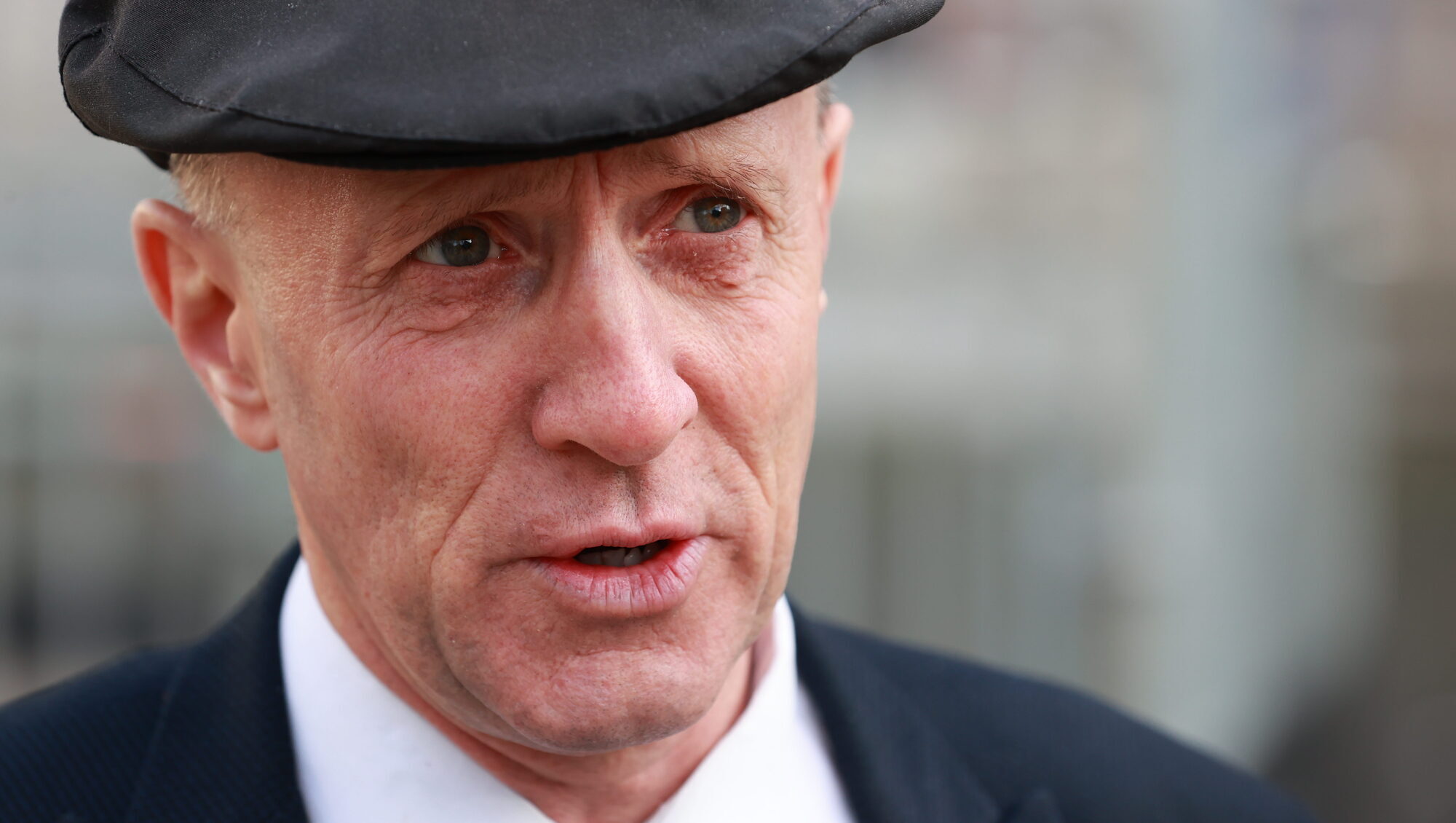
On Wednesday, Michael Healy-Rae allegedly received a punch to his head when he was stopped in traffic, en route from the Dáil.

On March 31, 2010, Eamon Gilmore accused Brian Cowen of “economic treason”. The exchange happened in the Dáil and was in relation to the decision in the bank guarantee two years previously to include Anglo Irish Bank.
The implication of what the Labour Party leader was saying was that Cowen was more concerned with elites — many of them from outside the country — than doing his best for the Irish people.
Cowen replied that in 25 years of politics, he had never been beholden to anybody.
“I will not be accused of seeking to commit treason against my country. I consider that to be beyond the Pale,” he said. “I would never come into this House to accuse another Irishman of what he accused me.”
This week, talking about his new biography of Cowen, DCU professor of politics Gary Murphy related that the former Taoiseach remains angry about the accusation. Well, he might.
The slur was a new low in parliamentary debate. On the other hand, Gilmore was gaining a reputation as the angry lightning rod for a people who were bereft at the fallout from the economic collapse. Some might have nodded in agreement, taking grim comfort at the accusation on their behalf.
Notwithstanding all that, it was an ugly lapse from an otherwise decent parliamentarian.
Cowen could rightly be accused of making a hames of public spending when he was minister for finance. He was less than assured as Taoiseach during a time of national crisis. He had, while leader, the countenance of a man haunted by some of the decisions he’d made in his previous job.
Read More
But to accuse him of treason, of acting against the interests of a people suffering badly in austerity, was below the belt. It occurred at the dawn of a new age in how public figures in general and politicians in particular have come to be regarded by a section of the public.
On Tuesday, a man was arrested after he allegedly attempted to assault the current Taoiseach Micheál Martin at the Ploughing. On Wednesday, Michael Healy-Rae allegedly received a punch to his head when he was stopped in traffic, en route from the Dáil.
It is fair to say that the public, for the greater part, is shocked that democratic representatives of the people are being treated like that.
And yet, while there is shock, there should be no surprise. The democratic world has been heading in this direction for a while. Much of it can be traced back to the economic collapse in 2008.
The fallout from that opened up a major cleavage between the haves and the have-nots. There was, for those on the wrong side of the collapse, a realisation that politics as it was being practised no longer served their needs, particularly as the highest economic and human cost was footed at the lower reaches of society.
The water charge protest in 2014 was one manifestation of this new world.
As Michael Brennan related in his book, , the protest “was part of the breakdown of the old order, a decline of deference. Politicians had always been part of a group — the other being teachers, gardai and clergymen – who had enjoyed a high social status.
“The notion of challenging them on the street or calling them names, had been unthinkable prior to this. But that had changed during the recession.”
Doing away with undue deference was no bad thing but the changes went much further than that.
During the protest, then tánaiste Joan Burton and her female assistant were prevented from leaving an event in west Dublin and subjected to serious abuse.
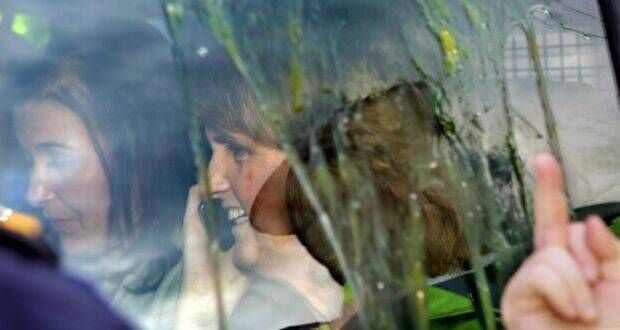
Burton would later tell a court that “bitch”, “c**t” and “whore” were among the names being hurled at her as the chanting of political slogans was mixed with violent personal abuse. The two women were trapped in a car for three hours, surrounded by the baying crowd.
Burton testified that there was one woman standing beside the car who was beside herself with rage. “She was wishing all kinds of stuff on me. Illnesses. Death.” Six men, including TD Paul Murphy, were acquitted of charges of false imprisonment.
That was then. Today, the contempt towards politicians comes from the populist and far right, rather than the far left, and it’s not just confined to government parties. In her book Ourselves Alone, about Sinn Féin during the last Dáil, Siobhan Fenton recalls how representatives were subjected to horrendous abuse in some working-class areas.
Online, it was even worse when she logged onto the party’s social media accounts.
“I was confronted with a barrage of vile sexist and racist abuse,” she writes. “This included violent misogynistic language directed at Mary Lou as well as the constant refrain that she was a ‘traitor’.”
The base accusation of treason had, since 2010 in the Dáil, migrated from government to the bulk of the political class.
This is how mainstream politics is now being portrayed by the populist right, particularly online. The narrative casts the body politic as acting in the twin interests of refugees “pouring” into the country and global elites who are plotting something or other, lifted from a villain in a James Bond movie.
Repeatedly, the social media accounts and podcasts in this space drive home the narrative that the body politic is unaccountable and has contempt for “the people”. In this parallel universe, it doesn’t have to be spelt out that the purveyors of this stuff see themselves as calling out “traitors”.
While all of that might sound bananas to the average person, there are plenty of likewise average people who have found themselves lost in the rabbit holes of online algorithms where anger and resentment can be harvested into contempt for “traitors”.
The muck that passes for debates on public interest is generally reduced to baseless allegations, rumours and distorted facts, but in an echo chamber it doesn’t take much for all that to solidify into a warped “truth”.
In such a milieu it only takes the odd headbanger to convince himself that when the opportunity arises he is entitled to perpetrate violence against “traitors” in the name of “the people”.
None of this is unique to Ireland in the current global dispensation. If anything, we are a bit behind the curve, which is no bad thing. But the old certainties are gone.
Restoring the status of politicians simply to a point where they are treated with basic respect will not be easy.
As a result, the business of representing the public will gradually lose attraction for the kind of people who could make a positive difference, whatever their politics. We are all, including our democracy, going to be poorer for that.
CONNECT WITH US TODAY



Be the first to know the latest news and updates