Mick Clifford: James Connolly would have a thing or two to say about the modern Irish left
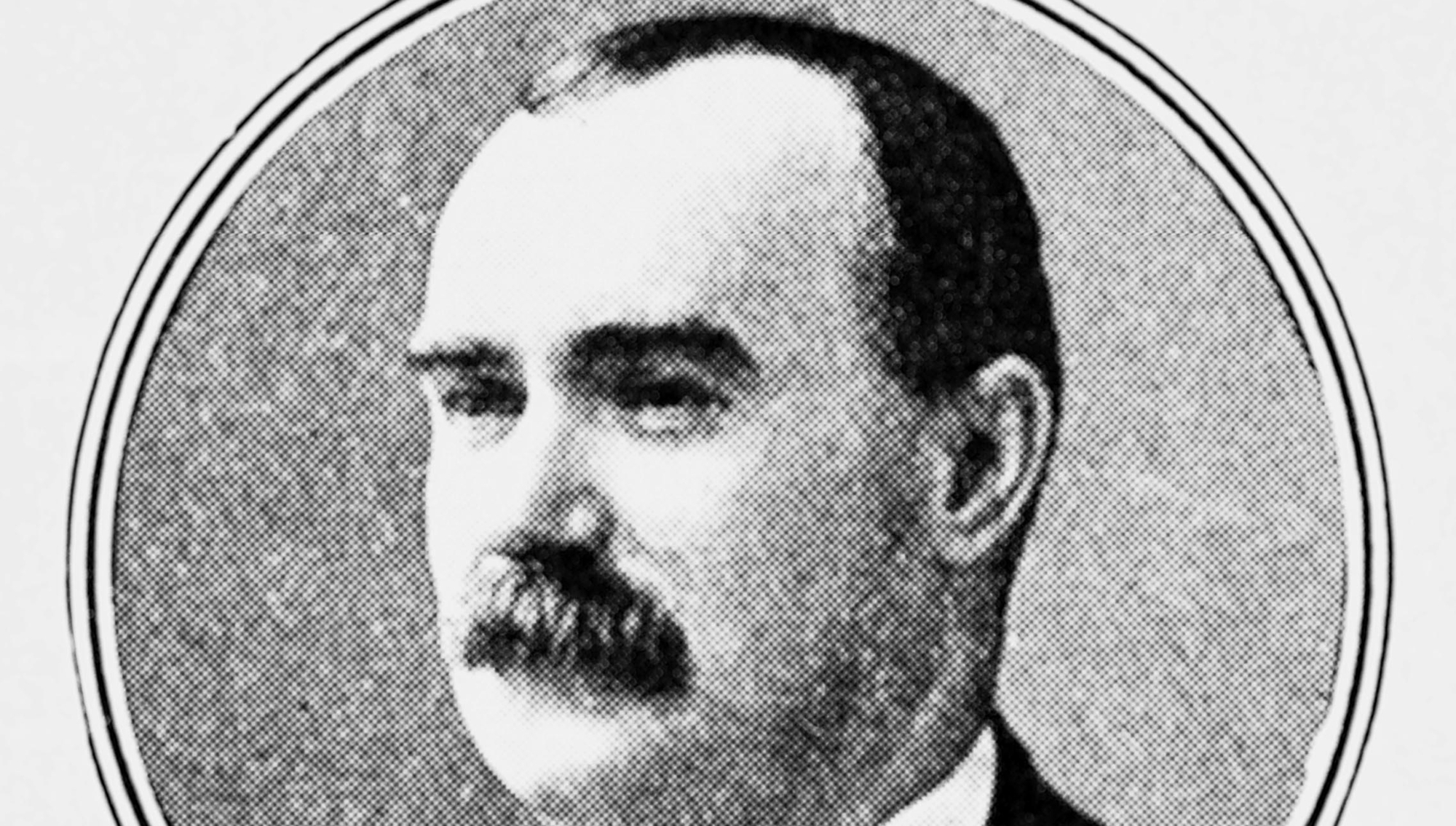
There are few figures from Irish history who have been appropriated so widely and erroneously as much as James Connolly has. Photo: Time Life Pictures/Mansell/Getty Images

Where is James Connolly when he’s needed? On Wednesday, RTÉ aired a documentary on the executed 1916 leader. Also on Wednesday, reports emerged of the latest split in one of the myriad groups claiming lineage to Connolly.
Apparently, a group of prominent members of the political party People Before Profit have resigned from the Socialist Workers Network (SWN), which is described as “the long-standing Trotskyist movement that has been the driving force behind the party”.
The reported that the dispute seems to “revolve around widening differences in approach and strategy between younger members of the SWN and long-standing members.” For anyone familiar with Monty Python’s , this resonates with the split depicted in that movie between the People’s Front of Judea and the Judean People’s Front.
Or, in a political sphere, a dispute between two bald men fighting over a comb.
There are a whole range of parties, movements, organisations that claim lineage to Connolly, but People Before Profit could make the case of having a unique purchase. They continue to believe in class warfare, in a workers’ revolt.
HISTORY HUB
If you are interested in this article then no doubt you will enjoy exploring the various history collections and content in our history hub. Check it out HERE and happy reading
Just a few years ago the party produced a policy document which posited that in the event of a left-wing government coming to power, wealthy interests would “use” the gardaí and wider security services to overthrow the administration.
If we were all back in Connolly’s time, such predictions might have some resonance. But Connolly’s time passed over a century ago, and it would seem that the boys and girls in PBP have some difficulty moving on.
Read More
There are few figures from Irish history who have been appropriated so widely and erroneously as much as Connolly has. For instance, the so-called Republican movement has clung to him down through the decades as the outstanding figure among those who led the 1916 Rebellion and died in the breaker’s yard in Kilmainham.
This appropriation may well be on the basis that of all the leaders, Connolly had a proven record as a substantial figure in attempting to represent ordinary people through the trade union movement.
He was also the only leader who had any real military experience through his membership of the British army decades earlier. “I joined up for want of something to eat,” he said of his decision to serve in order to escape grinding poverty.
In reality, he was a late addition to the Irish Republican Brotherhood behind the rebellion, having been sworn in four months before Easter 1916. He saw a confluence of interests between his Citizen’s Army and the IRB, but his goal was always separate from that of Pearse and McDonagh and the others.
RTÉ's documentary made no mention of the quote attributed to him when addressing his comrades in the Citizen Army ahead of the Rebellion.
“The odds are a thousand to one against us, but in the event of victory, hold onto your rifles, as those with whom we are fighting may stop before our goal is reached,” he said. “We are out for economic as well as political liberty. Hold onto your rifles.”
Would Pearse and the others have acquiesced to a Workers’ Republic in defiance of the Catholic Church? Would they have taken any different path than the one beaten by those who succeeded them in the War of Independence?
And would Connolly have been happy with that at a time when places like Russia were offering a new way forward? Had they beaten the odds in 1916 there would, in all likelihood, have been a violent parting of the ways between Connolly and his fellow signatories.
Equally, the notion that Connolly would have cheered on the Provisional IRA and their political wing in what was largely a conflict between working-class people is ludicrous, but then grave robbers don’t need reality in which to wrap their myths.
The film did illustrate how Connolly dedicated his whole life to fighting for equality and against injustice. He was a person of major substance but it was probably the cruelty of the manner of his execution that elevated him to his mythical status.
He was among the last to be executed because of his injuries but by that time public opinion was already turning against the firing squads. Yet, by all accounts there was pressure to ensure that Connolly wouldn’t live.
The fall-out from the Rebellion was seen by some powerful forces as too good an opportunity to get rid of a man who was a threat to the prosperous few who exploited the many. So he was strapped to a chair, in pain yet resolute, and dispatched to immortality.
The film did not explore what came after him other than to allude to the thesis that he would be mightily disappointed at the country that he died for.
The new state that emerged from the ashes of the Revolutionary period certainly only had a minor role for the kind of left-wing politics that Connolly espoused, and which were a staple in most western democracies.
The Labour Party, which Connolly co-founded, ended up as the half in a two-and-a-half party polity for 60 or so years. Its brief tenures in office as a coalition were tempered by sharing power with the centre right Fine Gael. Apart from that, the left in Irish politics had more splits than you’d catch in a ballet extravaganza.
The Socialist party emerged from a split in Labour in the early 1990s, and 25 years later the Social Democrats were the product of another split. Out on the further left the various splits and attempts at confluence of interests were more comedy than politics.
Quite often the driving imperative was not to find the best way to convince a chunk of the electorate to move to the left, but to instead maintain purity of thought and deed in ancient totem poles of socialism or social democracy.
What would Connolly have made of it all? He was a practical man, as evidenced by his decision to throw his lot in the with IRB ahead of 1916. One can only surmise that he would have torn his hair down to roots in frustration at the left’s inability to get its act together.
Right now, the rising force in that section of the political spectrum is the Social Democrats. If the current trajectory is maintained the party should be well placed to enter power as some part of a coalition.
Most likely that will involve breaking bread with Fianna Fáil or Fine Gael. Quite possibly a reconciliation with former colleagues in the Labour Party might also be required to strengthen presence.
The dilemma will be unique for a party that has a great welcome for itself. In wrestling madly with their collective conscience, they may well ask what Connolly would have done were he here today and walking in their shoes.
CONNECT WITH US TODAY



Be the first to know the latest news and updates