Sarah Harte: We need to work out how to merge rewilding with farming to avoid a culture war
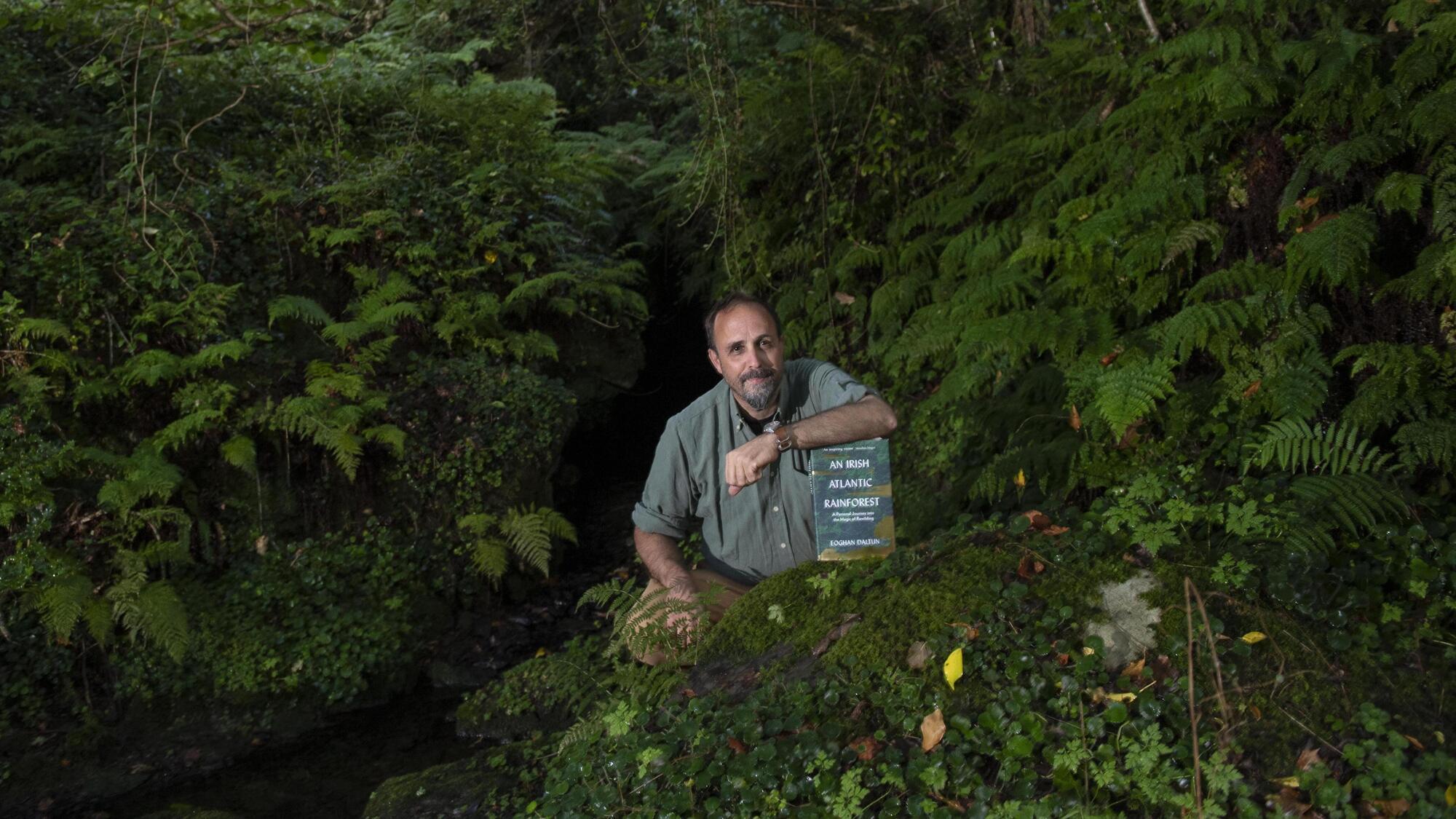
Eoghan Daltun with his book 'An Irish Atlantic Rainforest' at his home near Eyeries in West Cork. In a film based on his book Daltun repeatedly makes the point that landscape diversity matters. Photo: Don MacMonagle

On an exceptionally humid night, we wilted in the lobby waiting to gain entry to the Bantry cinema for .
Gary Lennon has made a stunning film about rewilding a patch of Beara in West Cork. Fungi, sparrowhawks, pine martens, otters, horseshoe bats and a carpet of wildflowers are all shot by specialist cameras.
His film, though, isn’t a simple call to rewild our land. It asks timely, provocative questions about how we use our land and what kind of future we want at a time when you ask yourself if you are living in Provence.
Sitting in the packed-out auditorium for a lengthy Q&A, listening to the West Cork audience, many of them already converted to the gospel of rewilding and hailing from the Netherlands, England and America as well as being more locally based, a question hovered in the air.
What happens when the people being asked to rewild land are the people who’ve stewarded the land for generations, as they make their living from it? Could farming versus rewilding be the next culture war?
Read More
At the centre of Lennon’s film is Dubliner Eoghan Daltun, who in 2009 bought a farm in the mild oceanic Beara climate with the idea of rewilding it. Daltun says: "Sacred. I said to myself this place is sacred. And I’ve never stopped feeling that."
What makes his project interesting is that he also has a herd of Dexter cattle. Daltun is not some millionaire libertarian who bought a farm and stuck up a ‘KEEP OUT’ sign. The last thing hard-working farmers need is some elitist in a Patagonia fleece giving them a TED Talk on how he treats the country as his luxury playground or pet ideological project.
Any discussion around rewilding should centre on people who understand the practical realities of producing food, preserving a rural economy and way of life, informed by data, economic reality and the reality of running a farm.
When Eoghan Daltun bought the farm, the Sika deer and goats who had multiplied had munched the plantation "stripping everything bare". The rhododendrons, which Daltun describes as "a scourge", turned a once thriving ecosystem into a biological desert, crowding out native species and stripping habitats of biodiversity.
He fenced out the goats, killed the rhododendrons with Roundup (distinctly unecological but apparently there’s no other way) and reintroduced indigenous plants to their natural habitat.
Growing up, the sole form of solace to the nature-loving Daltun on a concrete Dublin council estate was a cherry tree outside his window. He witnessed boys on the estate burning it in a pyre. This act of teenage vandalism becomes a metaphor, a clash between humanity and nature.
Daltun argues that Ireland’s increasingly intensive production systems have contributed to significant biodiversity loss and that we are "tinkering at the edge of ecological collapse".
But rewilding is not simply a question of what nature needs; it’s also a question of who gets to decide what happens to the land.
Climate change may ultimately force us to ask what the land is for. Is it for food production, biodiversity, the continuation of the ancient Irish farming tradition and in what combination?
At a time when climate change is already putting pressure on food systems and an increasingly vulnerable international food supply chain, how much agricultural land can we afford to remove from production, and which land should we choose?
We export enormous quantities of food while importing much of what fills parts of our fridges. As political editor Elaine Loughlin wrote last week, Ireland exports €19bn worth of food and drink products each year but must import more than 80% of the fruit and vegetables we eat here, which she rightly describes as "nonsensical".
There’s a challenge here. Climate change is one reason we need to rethink how we use our land in ways that reduce emissions and protect biodiversity while figuring out how we produce more of what we eat.
Living in the heartland of small West Cork farms, it’s evident how hard farmers work, day and night, with generations of families collaborating to make the family farm work.
The rhythms of life here mean waiting in your car while people shepherd their cows down the road, often with their eyes slanted against the rain and wind during winter storms. At night, at ungodly hours, you hear the farm machinery moving up the boreens, particularly in summer.
For decades, agricultural policy, markets and government incentives encouraged farmers to drain land, improve fields, and grow ryegrass for animal feed or forage and maximise production.
Farmers didn’t create this system alone. Society created it and rewarded it. Can we reasonably ask farmers to reverse decades of government policy without recognising the economic and cultural consequences?
Teagasc’s summary of the 2026 European Scientific Advisory Board on Climate Change Climate Mitigation and Adaptation Report makes the point: "Climate-proofing the EU agri-food system is essential for food security & climate neutrality."
Climate-proofing the agri-food system, the European Scientific Advisory Board on Climate Change argues, requires a "systemic transition" across production systems, land use and consumption patterns.
One of its recommendations is to phase out CAP payments that incentivise the most greenhouse-gas intensive farming practices, while developing alternative forms of income support.
In other words, the board is not simply asking farmers to change how they farm. It’s arguing that the incentives surrounding farming need to change too.
Farming is part of our heritage, and farmers may understandably feel that rewilding threatens not just income, but traditions and a way of life in rural communities. The question seems to be what kinds of farming can co-exist with ecological restoration?
The added complication is that our hotter, drier landscapes are becoming more fire prone. Wildfires, as we saw in Slievenamon, Co Tipperary and further afield, including in Spain and France, suggest that if we rewild, it has to be done in a way that is not just better for biodiversity but also resilient to wildfire.
Here we return to a point Daltun makes repeatedly: landscape diversity matters.
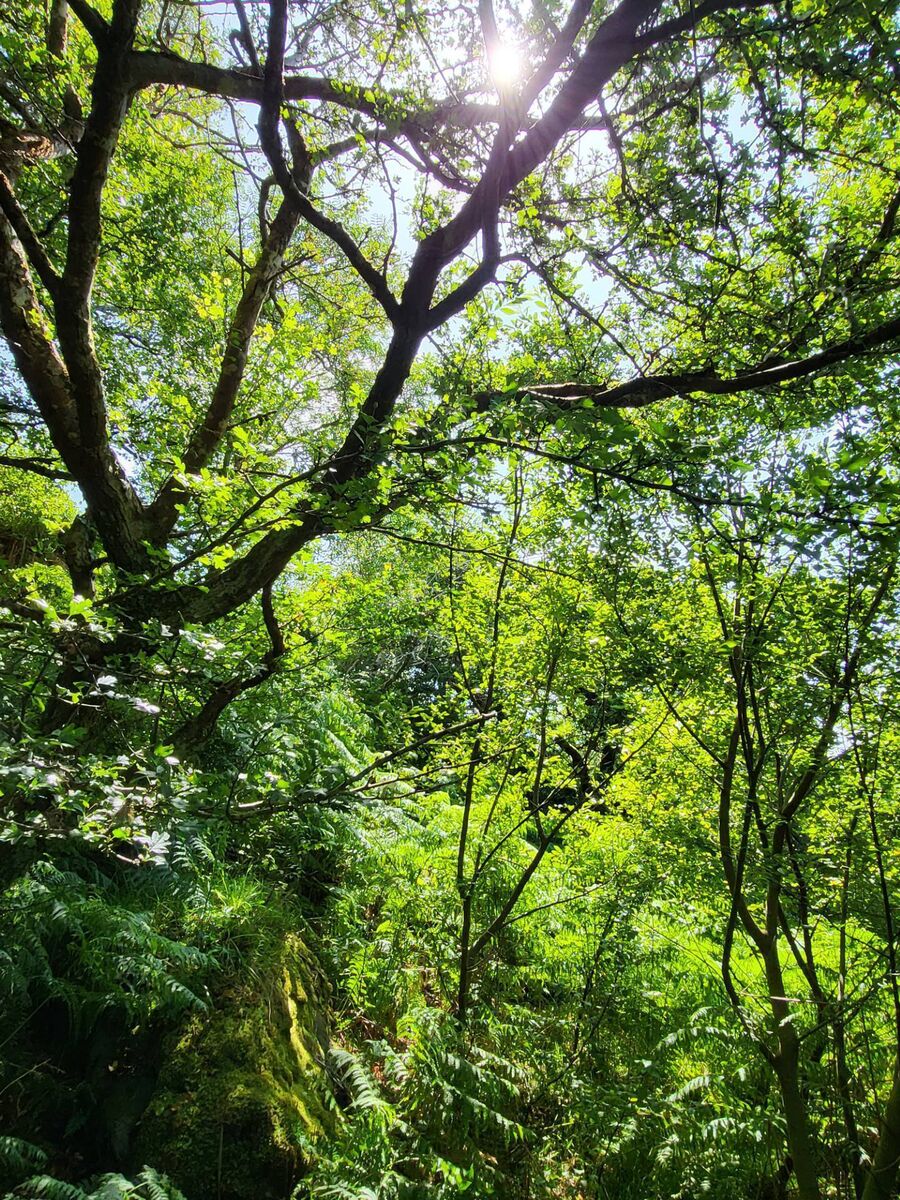
That means thinking about how woodland, wetlands, farmland and open ground fit together in a complicated mosaic and how that diversity might help slow the spread of fire.
Lennon’s important film made these difficult questions impossible to ignore. He asks us to look again at what we have lost, what we are trying to save, and who gets to decide what comes next.
He leaves us with no easy answer, rather an homage to a precious landscape we can no longer afford to take for granted.
will show at the IFI Dublin on 12 and 13 August. It will show at the Arc Cinema Cork from 14 to 16 August.
A two-part RTÉ series based on the film will be broadcast on RTÉ One on 23 August at 6.30pm, with the second part on 30 August.
CLIMATE & SUSTAINABILITY HUB
CONNECT WITH US TODAY



Be the first to know the latest news and updates