Fergus Finlay: I never thought I'd be writing about toilets, but here we are

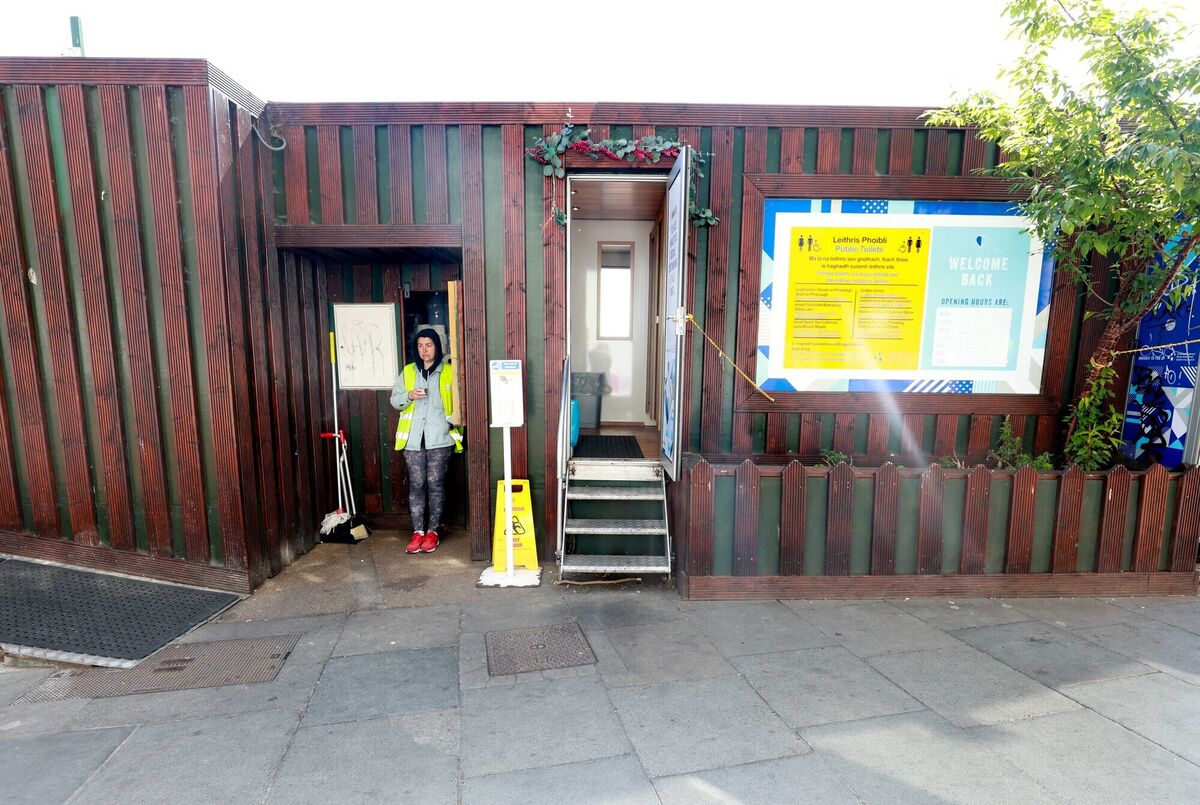
There’s no reason we’re not building clean and welcoming toilet facilities ourselves. File picture

You’d probably need to be a bit older than you are to remember Frankie Byrne. But for generations of Irish people, lunchtime radio was part of our staple diet, and she was its queen.
There was the main news bulletin of the day, of course, but there was also drama, and there were what used to be called sponsored programmes. Some of us of a certain vintage can still remember , a radio soap that went out every day with a guaranteed cliff-hanger at the end of each Friday’s episode.
And before that (I’m really showing my age now) there was the , which started when I was about five and was still going when I was a young married man. It was the first Irish soap opera, and most of us in those days would never want to miss an episode.
Both radio soaps RTÉ pioneered — the Kennedys and Harbour Hotel — were of high quality and featured often the best Irish theatre actors around.
But back to Frankie Byrne. Her show was only 15 minutes long, but the moment that theme song began you stopped whatever you were doing and listened. (I admit I indulged myself when I was thinking about this by searching out the theme tune. It’s not easy to find — it’s from the soundtrack of a black and white movie called , and the song is .)
If you’re like me, the minute you hear its opening chords you’ll be right back in the 1960s again, with a cup of tea in your hand and Frankie’s introduction in your ear.
Frankie was an agony aunt. As open and (to coin a phrase) as frank as it was possible to be in those days. She said at the start of every programme, “the problems we’re discussing today may not be your problems, but they could be some day”.
And that’s a phrase from my past, a lot of our pasts, that’s been really bothering me lately. It’s not nostalgia that wells up in me when I hear it, but guilt.
Because I’ve written about other people’s problems for years. Especially about disability. It’s a subject I care passionately about, and I’ve learned as much as I could over the years. The neglect of people with a disability makes me angry.
My friendships with a lot of disabled people matter to me. The stupidity of so much public policy — the unwillingness to see solutions that are staring policy makers in the face — drives me nuts.
But all that is me discussing other people’s problems. They’re not mine. Until now.
I suppose I should explain. The other day I was listening to two brave women, Olivia Sheridan and Maria Crowe, on calling for the introduction of a “no wait card” for people who need urgent access to a toilet.
They were especially brave because they were discussing the sort of intimate stuff about bodily functions that no-one wants to talk about on the radio. And I suddenly realised, even though they weren’t talking about me, they could have been.
I guess I need to explain further. I’ve been through a six-month period that has involved two substantial pieces of abdominal surgery, and at the end of that a month dealing with an infected wound. The surgery has been really successful, and I have been left with nothing to fear.
The only thing is, as my doctor explained, when you have to go through all that stuff, it can take your intestines quite a while to “find their own way home”.
All my life I’ve taken for granted the task of controlling bladder and bowel functions, and it’s a bit of a shock to discover that for the moment, they’re controlling me. (Like I said, it won’t last forever.)
Which is why I found myself not that long ago, with really painful stomach cramps and an overwhelming feeling that at any moment I could embarrass myself beyond belief. I was standing in an old and very well-known hotel in the centre of Dublin (south side of the Liffey) outside a locked toilet door. There was a sign on the door that said “Gents Toilet. Guests Only”.
A man passed who looked like a manager (he had the suit and the badge). I grabbed his arm and said: “Please, I’ve got to use the toilet now.” He looked at me, hesitated, decided I wasn’t a complete ne’er do well, produced a key and opened the door, to my immense relief.
But since I listened to those two women on the radio, I’ve been asking myself why? Or rather, why not? And I’ve been looking around. You can walk the entire length of the main street in Dun Laoghaire (end to end, the guts of a mile) and you won’t find a serviceable public loo.
In the main shopping centre, in the middle, there are toilets. You have to make your way to the furthest end of the centre, go up three escalators, and then down a long depressing corridor. But there are toilets. A Gents, a Ladies, and a Disabled toilet that seems to be permanently locked.
And they are the only accessible public toilets in the rich and salubrious Borough of Dun Laoghaire. As Olivia and Maria said on the radio, you can go into any of the dozens of private establishments in places like Dun Laoghaire and there’s a 50/50 chance of access to a loo.
But too often with a delay, or a raised eyebrow, or even a casual remark designed to make you feel as small as possible.
Olivia and Maria, and their No Wait Card campaign, estimate there may be upwards of 400,000 people who urgently need the kind of access and support that a no wait approach would provide.
There is no good reason why every pub, restaurant, forecourt, and retail premises in the country couldn’t make sure that people who are suffering, with a thousand different conditions that cause pain (sometimes agony) and embarrassment (sometimes excruciating embarrassment) shouldn’t be obliged to make a basic human facility available to people who are suffering.
Mind you, as one of the richest countries in the world, there’s no reason we’re not building clean and welcoming facilities ourselves. If that’s too much for us, we should be willing to fork out a small amount — a reduction in commercial rates for example — to subsidise people willing to make the investment in their own premises.
I never thought that I would face the embarrassment — the stigma, actually — of having to beg for urgent access to a locked toilet.
But like thousands of other people, for as long as my present situation lasts, I have to think long and hard about how to attend meetings. And long after the need has passed, the feeling of stigmatisation will remain.
And more of us will face that dilemma over the years. What’s really infuriating is that there is no reason we can’t fix it. I don’t want to be facetious, but as Frankie said, “the problems we’re discussing today may not be your problems, but they could be some day”.
We can make sure that doesn’t happen.
CONNECT WITH US TODAY



Be the first to know the latest news and updates