Fergus Finlay: How do ministers fight it out ahead of the budget?
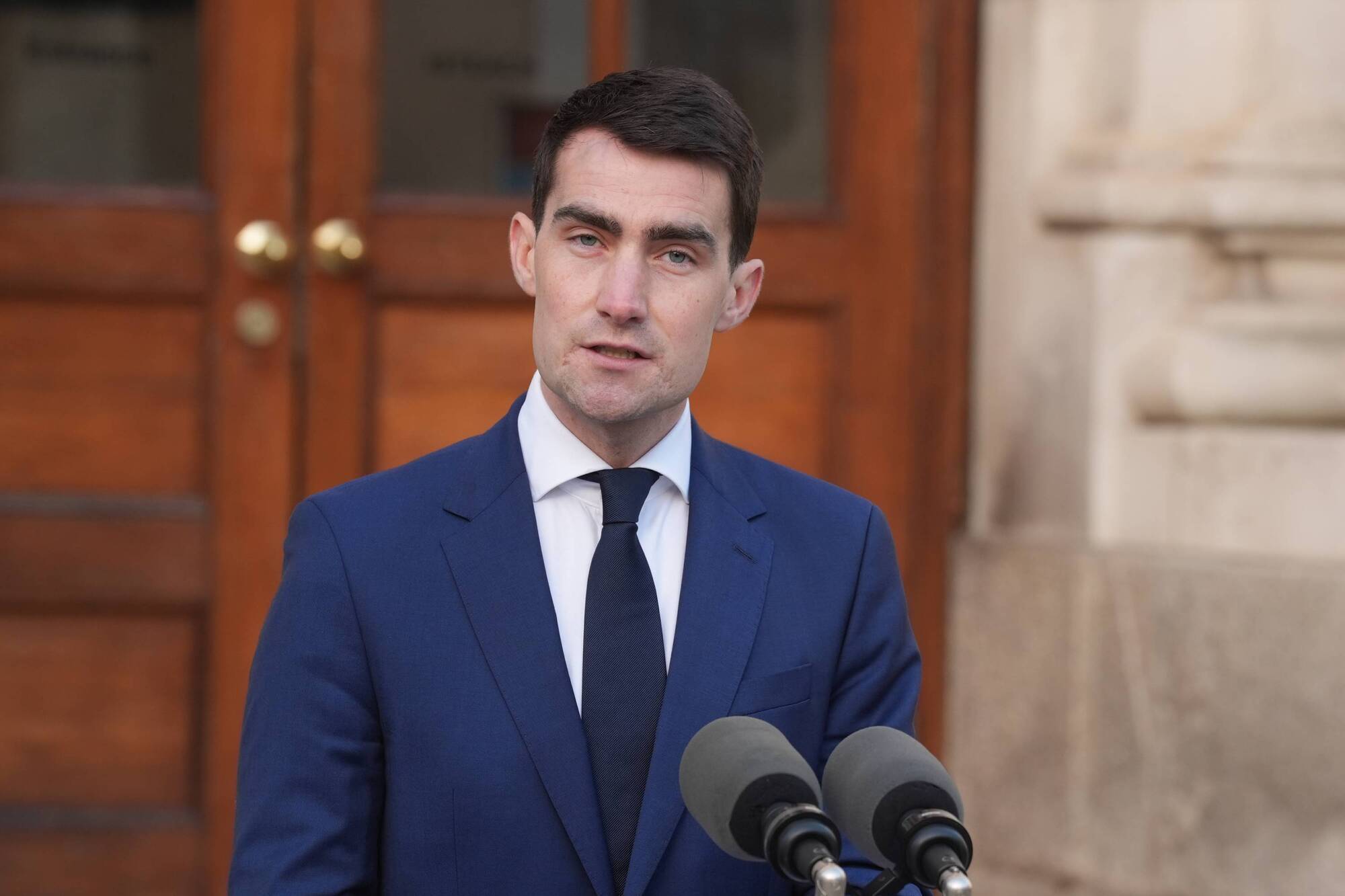
Around this time every year, the minister for public expenditure Jack Chambers sends a letter to every department warning of hell fire and perdition if swingeing cuts aren’t made in the year's budget. Picture: Brian Lawless/PA

“I have to tell you minister, this is a grave and serious moment. The contents of this folder are deeply consequential for this department and its work. We have outlined a series of absolute priorities which must be achieved in this process.”
Having delivered himself of this speech, the general secretary of the department handed the file to his waiting minister. As the minister stood to leave, the general secretary added: “It’s probably not too much to say, minister, that the department views this process and its outcome as little less than a test of your virility.”
That stopped the minister in his tracks. Those present knew instantly that this particular minister was unlikely to respond well to such an offensive and patronising remark, coming as it did from a civil servant 25 years his senior. But he made a choice.
He tucked the file under his arm, turned to the boss of the department, and said quietly: “You and I will have a private conversation about that remark when I come back”.
Read More
None of us who were around at the time were ever made privy to that private conversation. But we did get to know that the relationship between the civil servant and his minister changed to a much more respectful one.
The minister came to rely on the civil servant’s wisdom and judgement. The civil servant learned to keep his arrogance well in check.
That conversation happened a little over 40 years ago, believe it or not. It heralded the start of an internal government process that really hasn’t changed much in all that time.
It’s had a few levels added — a bit of parliamentary scrutiny, for instance — but really it’s the same as it always has been. As the process goes on and gathers a bit of steam, it starts to generate a lot of news stories.
A well-placed leak here and there will be good for a few days’ coverage. As time goes by, especially in tougher economic times, an air of crisis will develop. Will they be able to resolve their differences? Will minister X or minister Y have to resign? Will the government fall?
It’s called the estimates process — the business whereby the government decides what it’s going to spend next year on the enormous range of public services. It’s actually more accurately described as the estimates campaign.
It’s a war, with winners and losers every year, and government departments prepare for it as if they have to wage a series of battles.
They line up their artillery and they deploy every weapon at their disposal to protect what’s dearest to them. And they try to put their ministers under the most intense pressure to deliver for them.
It starts around this time every year with a letter to every department from the Minister for Finance (the Minister for Public Expenditure these days).
Year after year, whether its warranted or not, it’s always the same letter. Full of gloom and doom, warnings of hell fire and perdition if swingeing cuts aren’t made in every budget.
Immediately the departments, who have been preparing for months, swing into action. A string of letters go back. Never once in the history of this process has anyone replied to say they understand, and here are the savings they can offer.
Instead the line is always, invariably, the same. Not only can we not make any cuts — in fact the heavens will fall in if we don’t get increases across the board.
When all these letters are read and digested and a series of heavy sighs emitted, the system moves on to the next stage of the process. It’s called bilaterals.
Individual ministers are brought into the department of Public Expenditure and sat in front of the minster and his beetle-browed officials. Effectively, they’re beaten up to force them to surrender as much of their budget as possible.
Sometimes that works, especially with less experienced ministers or smaller more vulnerable departments. The bigger departments — Justice, Health, Social Protection, Education — tend to laugh this stage off.
They will all have built in a good wodge of fat into their early draft estimates, and they’ll be able to tell the world they’ve made sacrifices “in the national interest”.
The media leaks always start to accelerate during this stage of the process. Ministers will read in their morning newspapers that they are being seen as particularly obdurate and unhelpful.
There might be a quote, usually attributed to an anonymous cabinet colleague, that minister X is beginning to be thought of as “not a team player”.
Most ministers regard that as the kiss of death, the sort of description likely to destroy their chances of promotion.
So, the more vulnerable ministers will end up shouting at the civil servants in their own department — “look at the position you’ve forced me into!”. Senior officials in public expenditure will allow themselves a dry chuckle when they hear about the panicking ministers.
It’s all part of the process of making the sums add up.
This all must come to an end of course, because getting the spending numbers to add up is only the first step in preparing the annual budget, which happens around a whole new set of public expectations around tax cuts, pension increases and the rest.
So eventually everyone is brought together around the Cabinet table, and a deal is hammered out. Or rather usually a set of deals, which can sometimes involve ministers under real pressure getting a bit of help from ministers with spare resources.
That final meeting is the really painful one, because if ministers are cutting spending they must be clear about what programmes are being cut or what services will be lessened.
Only once in our history did the Cabinet publish a reduced set of spending estimates without making any of the decisions that made the reductions possible. That was in 1981, when the late great Charles Haughey “cooked the books” by deliberately masking the state of the public finances.
We paid for that for years.
But notwithstanding CJH, the whole process is crazy. It pits departments against each other. Every government department knows its job, its only job, is to fight its own corner throughout the entire process.
There is an overwhelming argument for treating this process as one where the legitimate claims of one bit of the public service are reconciled with the legitimate interests of another, and both are reconciled with the overriding national interest.
But instead of reconciliation, the thing is set up to be a zero sum game. If more money goes to health, less goes to education. If more gardaí are needed on the streets, less resources will go to prisons.
And of course, the entire process is seen as “fixing” the problem for one year only, when real solutions always take longer to achieve.
It’s hard to imagine a less strategic way of managing the country’s money and getting the most out of it. Instead of all these battles and media leaks to achieve short-terms outcomes, surely real leadership would insist on redesigning the system to make sure it serves us all.
It wouldn’t hurt to try, would it?
CONNECT WITH US TODAY



Be the first to know the latest news and updates