Jennifer Horgan: Teachers aren't responsible for childcare and workplace challenges
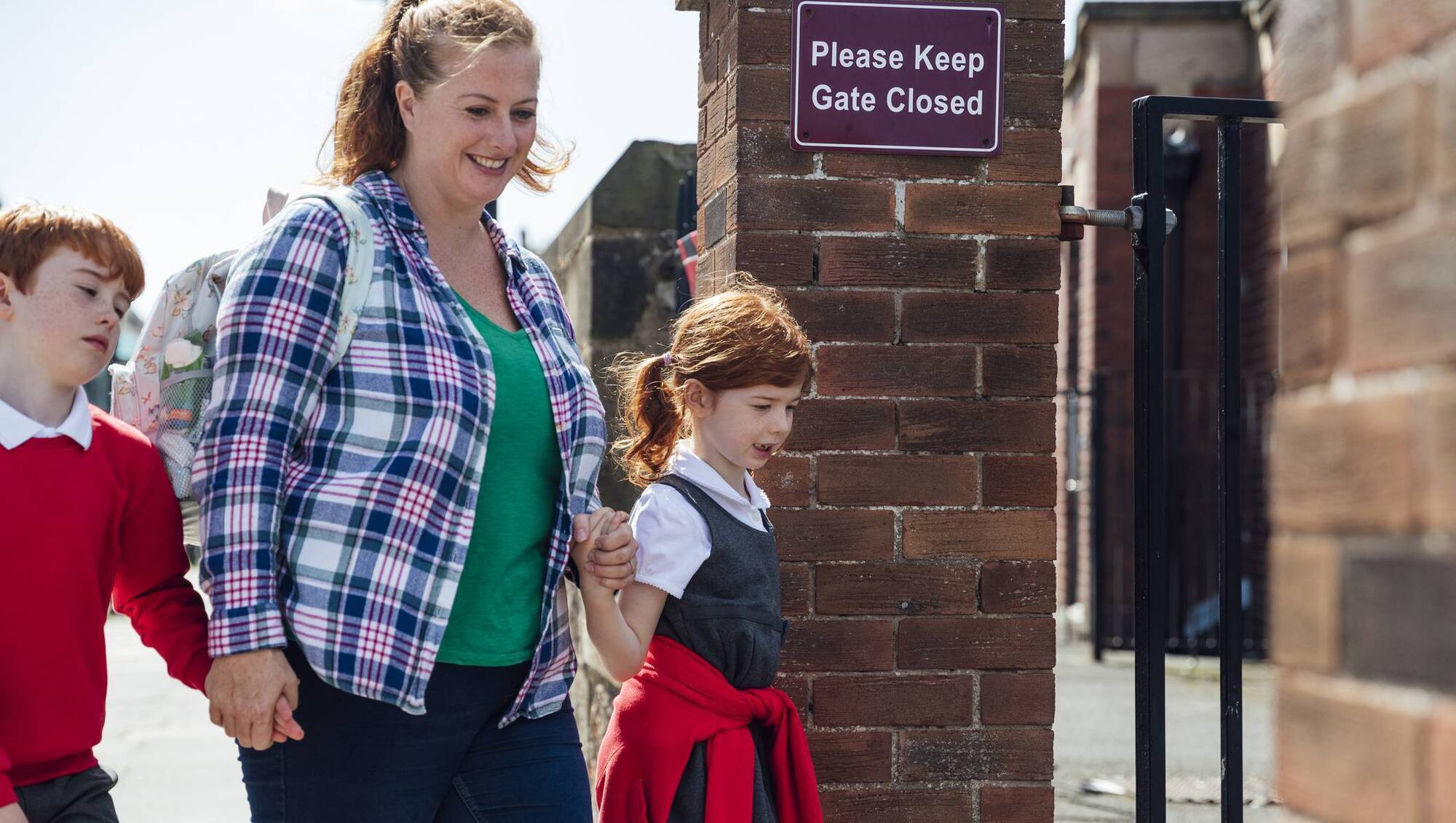
Mothers and schools are treated like giant refuse sacks, expected to hold everything, to be everything for everyone, with no attention paid to their capacity or their competing responsibilities. File picture

Parents are used to having their say in education. Six months ago, the then minister of education Helen McEntee launched a survey specifically for the parents and guardians of children attending or due to attend primary schools in Ireland.
Staff in primary schools were also invited to engage with three simple questions about preferences for or against same-sex schooling, denominational schooling, and Irish-language schooling.
On April 7, 2026, the new minister for education and youth provided an update but instead of any detailed breakdown we received one statistic for each question. In relation to ethos we were told “approximately 60% of parents in denominational schools wish to retain that ethos”.
This left a range of questions unanswered. Does 60% include the parents of children intending to start in their local denominational school? If prospective parents, parents in multidenominational schools, and indeed all school staff were added, what statistic would we get nationally on ethos?
A spokesperson for the Department of Education and Youth assured me this week that “school-specific survey results, which will include the position in respect of pre-school children, will be published in mid-June. The high level survey results at national level will also be published at that time.”
It seems odd that results of a survey are being drip fed to the people who engaged with it, possibly because the department doesn’t want to reveal a national picture that looks pretty devastating to the Catholic church. Given the glacial pace of change when it comes to removing sacramental preparation from the school day, I’ve already lost interest.
If I had my way, I would run a different kind of parent survey on an entirely different topic. It would be qualitative in nature, with one simple question: in your own words, what is the job of a primary school teacher in society?
Summer holidays are on the horizon for primary school children and I can already hear the complaints of parents rumbling up from playgrounds, sidelines and car parks around the country. These grumblings are similar to the ones I hear during the school year too, that quiet drum of frustrated voices, whenever teachers take time to train or upskill.
What is the role of a primary school teacher in society? I would like to ask the question, because for many people the role of a primary school teacher is to keep children occupied so parents can work full time all year. Training days and school holidays are thereby unreasonable, given this understanding of teachers and their function.
The poor children. And the poor parents. I have genuine sympathy for everyone involved. Costs of living are soaring and parents are struggling. It is impossible to parent and work a traditional full-time job. But children are not meant to spend every day in school.
Equally, parents should not be expected to work as if their children don’t exist. Something has gone terribly wrong in the running of society and the blame, most frequently, lands at the closed school door, be it closed for an afternoon, a day, a week, or for eight weeks in summer.
I wonder when we’ll figure out that the closed school is not the problem — the workplace is, the government is. People need more help when it comes to childcare and we need broader societal support for children and teenagers.
Parents who work should be seen and respected as such — parents who work. Flexibility needs to be baked into their contracts, with specific flexibility offered for school holidays and teacher training days.
The workplace needs to change — and that doesn’t mean the quality of work needs to deteriorate. The research is clear. Hybrid working makes employees happier, healthier and more productive.
Flexibility shouldn’t be limited to parents either. There are plenty of people caring for other members of their family, caring for beloved pets, or pursuing projects that simply keep them happier and healthier and more productive at work. If an employee is happy they perform better — that much we know.
But when we look at parents specifically, we must interrogate the suggestion that schools simply need to take children for more hours, on more days of the year. We must interrogate it because it is entirely bogus.
Irish primary schools have more than enough contact time by international standards. This is an irrefutable fact. A child’s education is meant to be one part of a fuller life. Children are meant to exist and flourish outside school.
They are meant to be parented by parents, not teachers. Nowadays, we seem to believe that school is simply the natural place for children to be. It is a false and damaging belief.
It’s also terribly sad that it’s often mothers who complain about school closures. Mothers are the most affected by them for reasons we all know.
Pushed into unmanageable situations, they can’t see that they are treating teachers in schools just as they themselves are treated in society.
Nobody respects mothers’ boundaries. Similarly, nobody respects schools’ boundaries.
Mothers and schools are treated like giant refuse sacks, expected to hold everything, to be everything for everyone, with no attention paid to their capacity or their competing responsibilities.
You see, teachers have lives too. They have children too.
Their work inside school is to educate in line with best international practice. That includes a well thought-out timeframe.
Nowhere in their roles and responsibilities are there mentions of what the parents of their students do for a living.
It is literally not part of their job to ensure a child is kept busy while a parent works. Yet parents routinely make out like it is.
Who would turn up to a chiropodist to get a tooth filling? Who would dare ask a teacher for childcare?
Parents should be embarrassed to hear themselves complain about holidays and training days for teachers. Then they should get angry at the right people in the right places.
No parent should be made to feel so reliant on schools. People should be supported by their government and their workplace to manage childcare challenges.
The government is simply not keeping up. Following on from the Work Life Balance and Miscellaneous Provisions Act 2023, it has implemented a code of practice for employers and employees on the right to request remote and flexible work arrangements.
This is good, but employers can deny or grant requests at their ‘discretion’. It is a far cry from the cultural reforms happening in other countries, such as Denmark, where flexibility is not dependent on individual requests but is embedded in workplace practices.
Cork Chamber published a report this week sharing that 36% of respondents have had employees leave their organisation or decline roles because of childcare challenges. Up to 69% would consider supporting childcare through models such as corporate creches or tax-incentivised partnerships with providers if appropriate Government incentives were introduced.
Our children are the future. We need to stop pretending they’re invisible. As plenty have written about in recent months, the world of work is broken. The point I wish to add is that it is not a teacher’s job to fix it.
CONNECT WITH US TODAY



Be the first to know the latest news and updates