Fergus Finlay: We can't apologise enough to survivors of institutional abuse
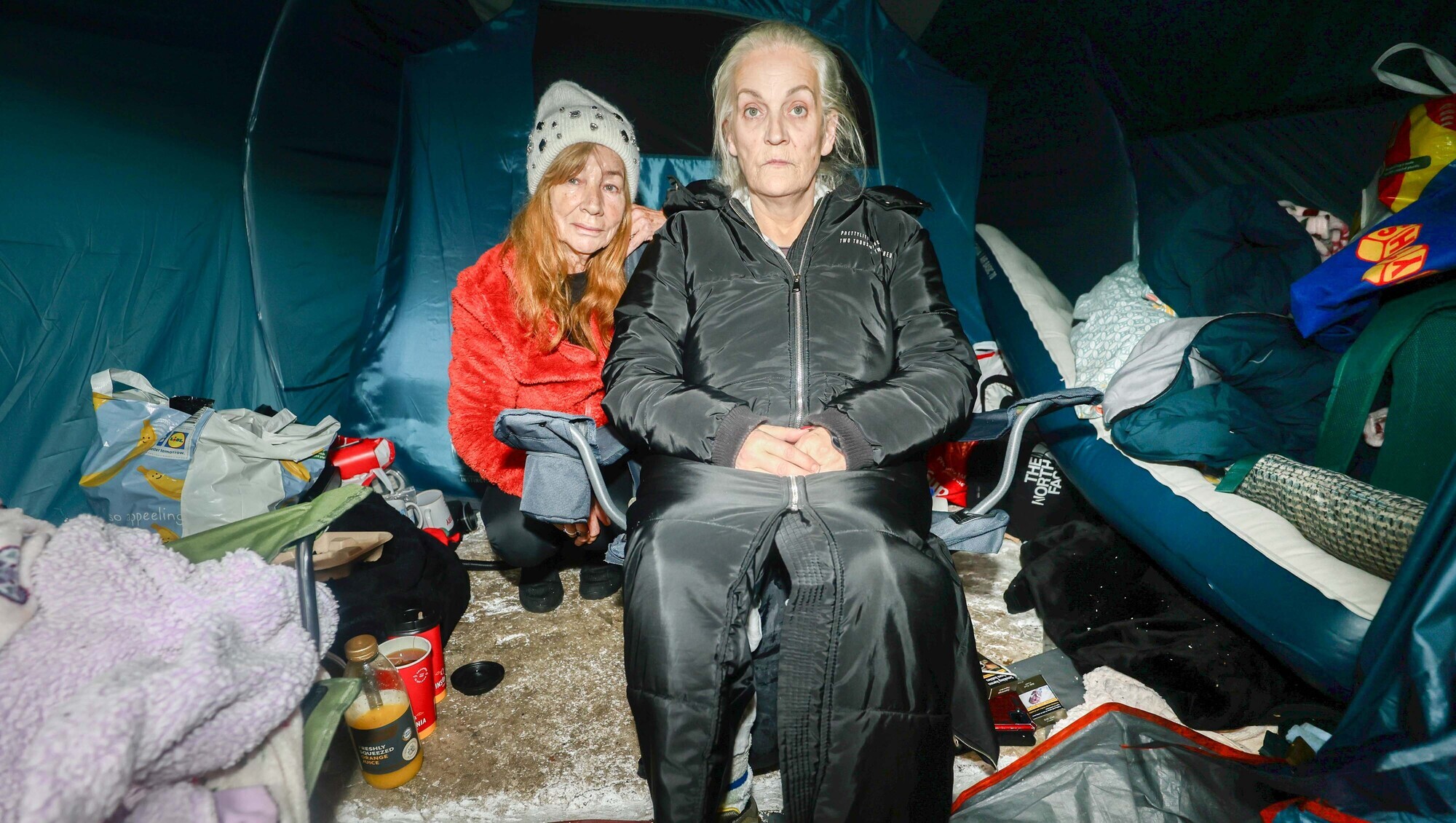
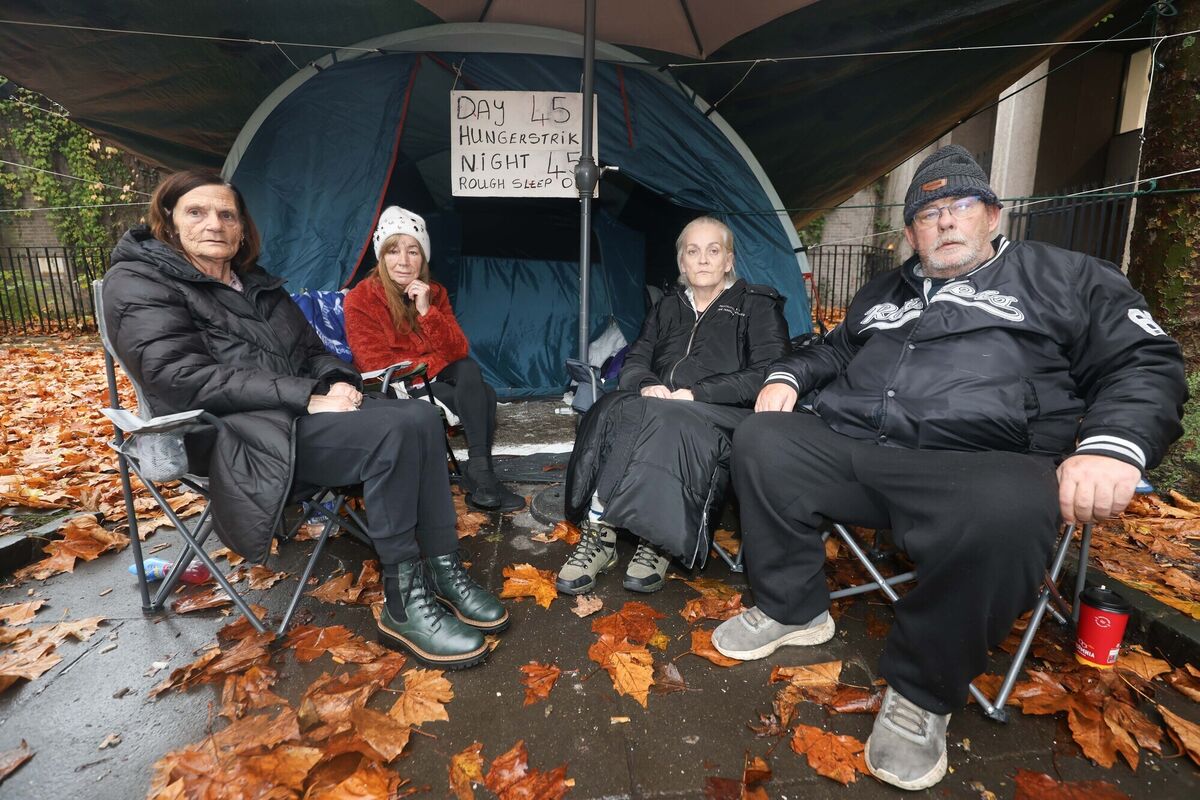
Miriam Moriarty Owens from Tralee, 68, and Mary Donovan from Kerry, 57, two of four survivors of institutional abuse who went on hunger strike outside Leinster House last year to demand access to contributory pensions and Health Amendment Act cards in recognition of the State’s responsibility for their treatment in residential institutions. Pictures: Leah Farrell / RollingNews.ie

I watched the Taoiseach and Tánaiste apologise to survivors of institutional abuse in the Dáil last week, and I found it surprisingly moving. Not so much because of the speeches (they were pretty ordinary, to be honest) but because of the people there.
The Taoiseach spoke directly to four survivors sitting behind him in the Distinguished Visitors’ Gallery (I’ve written here about those four brave people before), but his remarks were aimed at survivors all over Ireland, people who still struggle to come to terms with what happened to them in their childhood.
“I apologise on behalf of the State for the abuse and neglect that you suffered. What happened to you was wrong, shocking and should never have happened,” Taoiseach Micheál Martin said.
You know, that’s the third or fourth time the State has apologised to survivors of institutional abuse and another profound apology is due; and I believe is due to happen soon.
The next apology is to people whose lives were destroyed by the drug thalidomide, and especially by the indolent and irresponsible regulation of it in Ireland.
But, to go back to the survivors of institutional abuse, a lot of money has been spent on redress, and all sorts of structures have been put in place to offer help. Some of those structures have actually been effective, many have not.
Two things really bother me about the apologies. The first is simple enough. Every time a senior politician talks about this, they talk about religious-run institutions and acknowledge the complicity of the State. The State, in all its awkwardness, its bureaucracy, its precedent-driven policy failures, is still there.
There are roughly four phases to the involvement of these “religious-run institutions” in the lives of survivors. The first is when they were running the prisons to which children were sent in their thousands, punished for the crime of being poor. Then, some of their members worked alongside the children to try to give them a better life. Many of their members physically and sexually abused the children. Very, very few of their members took a stand against what was going on.
Then, after the first apology, when television began to break open the degradation and obscenity being visited on thousands of children, and investigative tribunals began to take shape, the second phase began. The religious-run institutions lawyered up.
They set out to make sure that not only would survivors not be believed, but they’d be broken. People who had been abused as children — with part of that abuse being the denial of education — had to face relentless cross-examination by skilled counsel working for the “religious-run institutions”. Men and women traumatised as children were traumatised again as they set out to tell their truth.
The third phase was quite short. When the “religious-run institutions” were found out — when it was clear the survivors were being believed, and not the holy people, they switched tack again. They hired some of the best and brightest public relations people in the country to craft fulsome apologies. Apologies which meant absolutely nothing because they were still hell bent on protecting themselves.
The fourth phase was their action plan to ensure their billions of assets were protected into the future. They went into negotiation with a team of impeccable and highly skilled religious leaders. The Irish government for its part sent Dr Michael Woods who was minister for health and had a PhD in animal husbandry.
Key people like the attorney general were excluded from the negotiations. The result was a cake walk for the people of God. They stumped up around €120m in assets, a tiny proportion of their overall wealth. And in return, they were indemnified by the Irish State against any big legal actions into the future. In all, the Irish State paid out €1.5bn in redress. The actual abusers contributed less than 10%.
I said there are two things bothering me about the speeches. The other one is that actually, we can’t apologise enough.
The first major investigation carried out in this area was by Judge Mary Laffoy. Despite the apologies and all the promises, she resigned because she ran into a brick wall of non-cooperation, from the Department of Education particularly.
Her resignation had the effect of shaking the system up so when Seán Ryan took on the role of chair, government departments were forced to cooperate much more fully than they had before. But before she left, Mary Laffoy wrote a couple of reports that have always stuck in my head. One in particular about the Baltimore Fisheries School.
I guess part of the reason it sticks in my head is because I know Baltimore and love it. You can’t drive through the town, or look out on Sherkin Island, without thinking that what happened in Baltimore had to be a bad dream. But it wasn’t, it was a place of casual brutality, awful cruelty, and endless sex abuse. And it was run by the bishop of Cork and the parish priest of Baltimore.
One phrase I vividly recall from that report was Mary Laffoy’s comment that most of the male witnesses who appeared before her, although they were all men in their 60s and 70s, were well below average height; a direct consequence, in her view, of their malnourishment as children.
The report says “the young people were not merely hungry; they were literally starving. They were compelled to supplement their diet by eating raw vegetables and vegetation — potatoes, turnips, mangolds, carrots and sorrel, by eating barnacles at the seashore and by scavenging, begging and stealing in the village of Baltimore”.
I know this may seem odd, but one description that always moved me was from one boy who was sent to Baltimore when he was eight, given a pair of shorts, a cheap shirt and a geansaí. They were the same clothes he was wearing when, at the age of 16, he was sent home on a train to Dublin and had to walk down North Circular Road to his parent’s house in Cabra, with, as he thought, everyone in Dublin laughing at him.
I’m telling you these stories, because in some ways, I think the casual cruelty in these places, and the steps they took to save money at the expense of the kids, was a form of emotional cruelty that was completely unforgiveable, and if you like, “unapologiseable” for.
I don’t want to finish this, without telling you about a survivor of Baltimore that I met. His name was John Griffin, and I imagine he’s dead now. Throughout his time in that cruel and barbarous place, he had one memory that sustained him, and it was the memory of being cradled in his mother’s arms and gazing up into his mother’s face before they came to take him away. That single memory, he said, sustained his entire life, and meant more to him than any State apology ever possibly could.
CONNECT WITH US TODAY



Be the first to know the latest news and updates