Michael Moynihan: New Cork train stations announced — but will they ever actually be built?

Monard was to be home to 13,000 people, have its own railway station, and help to expand Cork as a viable counter-balance to Dublin. File picture: Larry Cummins

Good news, good news, good news.
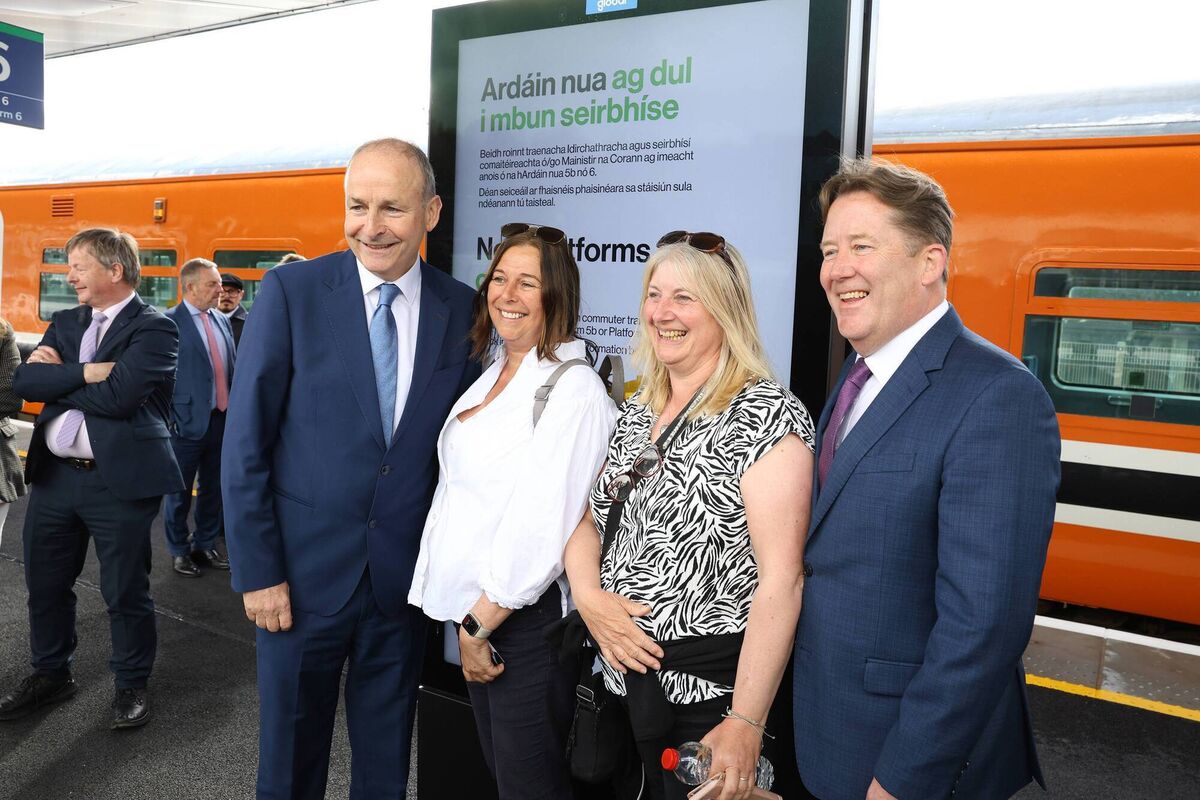
Last week, Eoin English reported that the State rail authority has plans for Cork.
“Irish Rail says it is fast-tracking plans to build eight new commuter train stations in metropolitan Cork,” wrote Eoin, adding: “... five could be built by 2030 pending planning and funding approval.”
That wasn’t the entirety of our good news when it comes to Leeside infrastructure. A few days before that Eoin had reported on the long-awaited Cork-Limerick motorway, with a much-anticipated specificity about dates: “It is hoped work on the €1bn to €3bn transport project could start by 2028, with the road expected to take seven years to complete...” Well, maybe ‘much-anticipated’ might have been overkill.
A wrenching break, it may seem from my usual attitude, but allow me to misquote Barbra Streisand and rain on the parade. The omens are not good when it comes to the disparity between announcing plans and — er — seeing those plans come to fruition.
This is something that a stroll around the city reveals pretty quickly. Start on Patrick’s Street, where we once saw the Roches Stores building as the anchor for an entire stretch of the city’s main street.
In January 2024, this newspaper carried the headline: “New owners of former Cork Debenhams store progress plans for hotel development”, accompanied by the suggestion it could be seen as an important step in restoring the city centre to its former glories. Readers will note the lack of progress in the 18 months since.
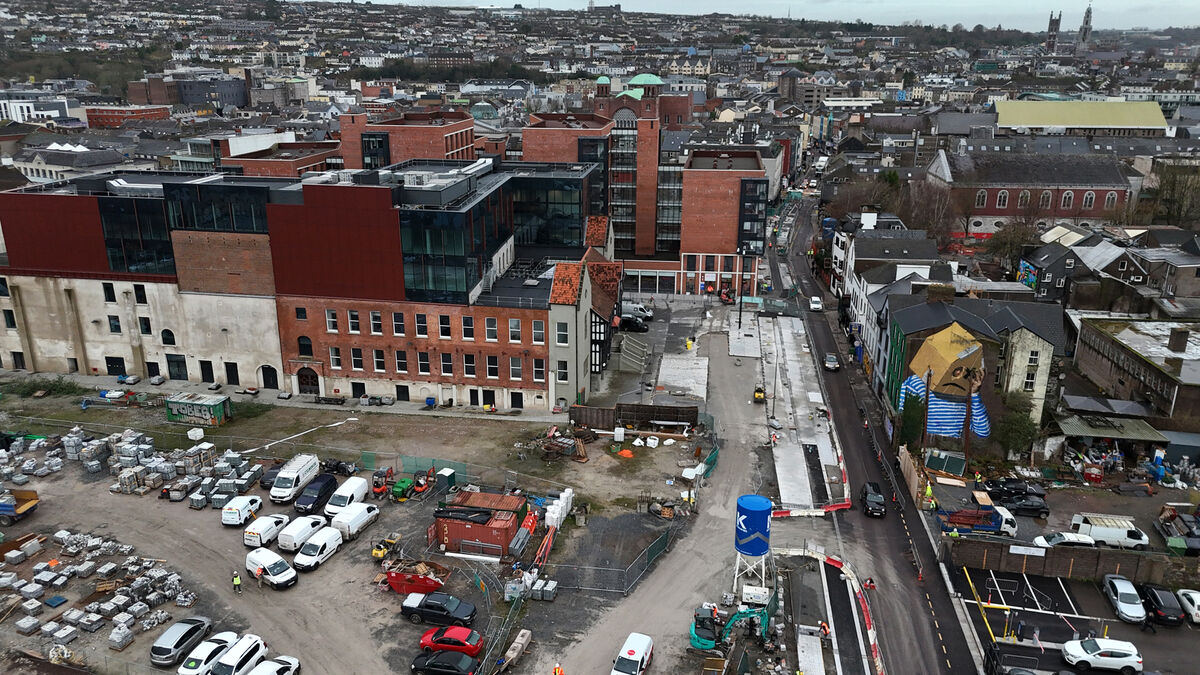
Look across from that site to the Savoy, once a cinema, then a live venue, then a shopping centre, but now vacant for quite a few years. In January 2020, this newspaper reported that plans for its redevelopment included the possibility of a new cinema opening there, while planning permission was granted for apartments in the building in December 2020.
Since then?
Stroll further and you’ll eventually come to what used to be the Queen’s Old Castle, complete with Mary Rose’s coffee shop and so on. Again, this newspaper reported in October 2022 that permission had been granted for plans including: “... the partial demolition of the building to allow for office and retail development on the site on Cork's Grand Parade.”
Since then?
In the interests of fairness, earlier this month Eoin reported Labour councillor John Maher asking for an update on several vacant sites in the city, including some of those mentioned: “Officials said they were inspected periodically, continuously monitored and subject to active engagement with the property owners to encourage and support the return to use of properties.” So our top people are on the case.
In June 2023, we carried a story about another site, one a brisk stroll from the Queen’s Old Castle. This was the former Brooks Haughton site, a large block facing South Terrace, Copley Street and Union Quay and ready for...
The headline on a story here by Alan Healy was: “Construction of new UCC business school to begin in 2024”, with Alan writing: “The plans will see the current buildings demolished, the site cleared and a new six-storey building take its place . . . The new building will include lecture theatres, academic offices, study and teaching areas, a restaurant, a coffee dock and bike storage areas.”
Again, have a look around the next time you’re in the vicinity.
Of course, if you walk from Daunt’s Square up to the South Terrace, you can glance upriver from Parliament Bridge and see our definitive, category-killing, undisputed king of stalled infrastructure projects, the event centre.
I won’t insult readers (and editors) by revisiting this shambles all over again here, other than to offer it as the jewel in the crown, as it were, of Cork’s eminence when it comes to large projects which never got off the ground. Mind you, there are a few other gems that could be placed carefully on this crown.
Three years ago, we featured this headline: “A tale of two towns: Whatever happened to Monard?” Eoin English wrote: “Devised in 2001, Monard was to be home to 13,000 people, have its own railway station, and help to expand Cork as a viable counter-balance to Dublin.”
Eoin then compared the Cork plan to a similar scheme planned for Clonburris in Dublin, asserting “... the one in the capital on the fast track to delivery with the other, in Cork, apparently stuck in the sidings despite leaving the station first.”
Yes, you need not rub your eyes. We are now waiting almost a full quarter of a century for a new town to the north of the city.
The sharp reader will realise that this is where we came in, of course. The proposed Cork-Limerick motorway would serve this new town, while one of the new train stations envisaged by Irish Rail is intended to serve Monard specifically.
Building a station to cater for a non-existent town would be a fine set-piece in some kind of satire, but clearly it’s a little less welcome in real life.
This is the point. The large projects trumpeted in the last couple of weeks should be encouraging, but experience in Cork teaches us not to get our hopes up. University business schools, hotels, apartment complexes - entire towns!
We hear about them, often with quite a bit of fanfare, and then we learn to our cost, all over again, that announcement is not equivalent to existence (which was I believe one of the options considered as an existential catchphrase in Les Deux Magots back in the day).
Reasons of space don’t allow me to dwell on the ‘Kildare Village’ development for Carrigtwohill, a project dear to the heart of those who would like to vaporise businesses nearby. Or the Prism plan once suggested for the Port of Cork site. Or the apartments announced for the site of the old Sextant several years ago. I could go on.
Some readers will be happy to point out that some dates are intended as guidelines, or are inherently flexible, or shouldn’t be taken as set in stone, pardon the pun. No doubt someone will also point out that the trouble with setting a date for completion is that people will weaponise that date if it isn’t met.
Taoiseach Micheál Martin made a point along those lines last April about another much-lauded infrastructural project, the light rail system, which will boost property prices and connectivity south of the river.
“I want to accelerate the timeline,” he said. “I’m wary of other projects in the past and if you give a specific timeline, people are back onto you in terms of meeting those times.”
I hate to point out the obvious, but isn’t that the point of specific timelines? Or is this a different era — beyond specific, post-timeline, above completion, but very focused on announcement?
If announcements are all that counts I will be at the Monard Train Station in a fortnight, just up from the town hall. Hope to see you there.
CONNECT WITH US TODAY



Be the first to know the latest news and updates