Gareth O'Callaghan: How protests are uniting unlikely bedfellows
Old turf rules appear to have changed now that a joint intolerance towards immigration has resulted in a shared prejudice
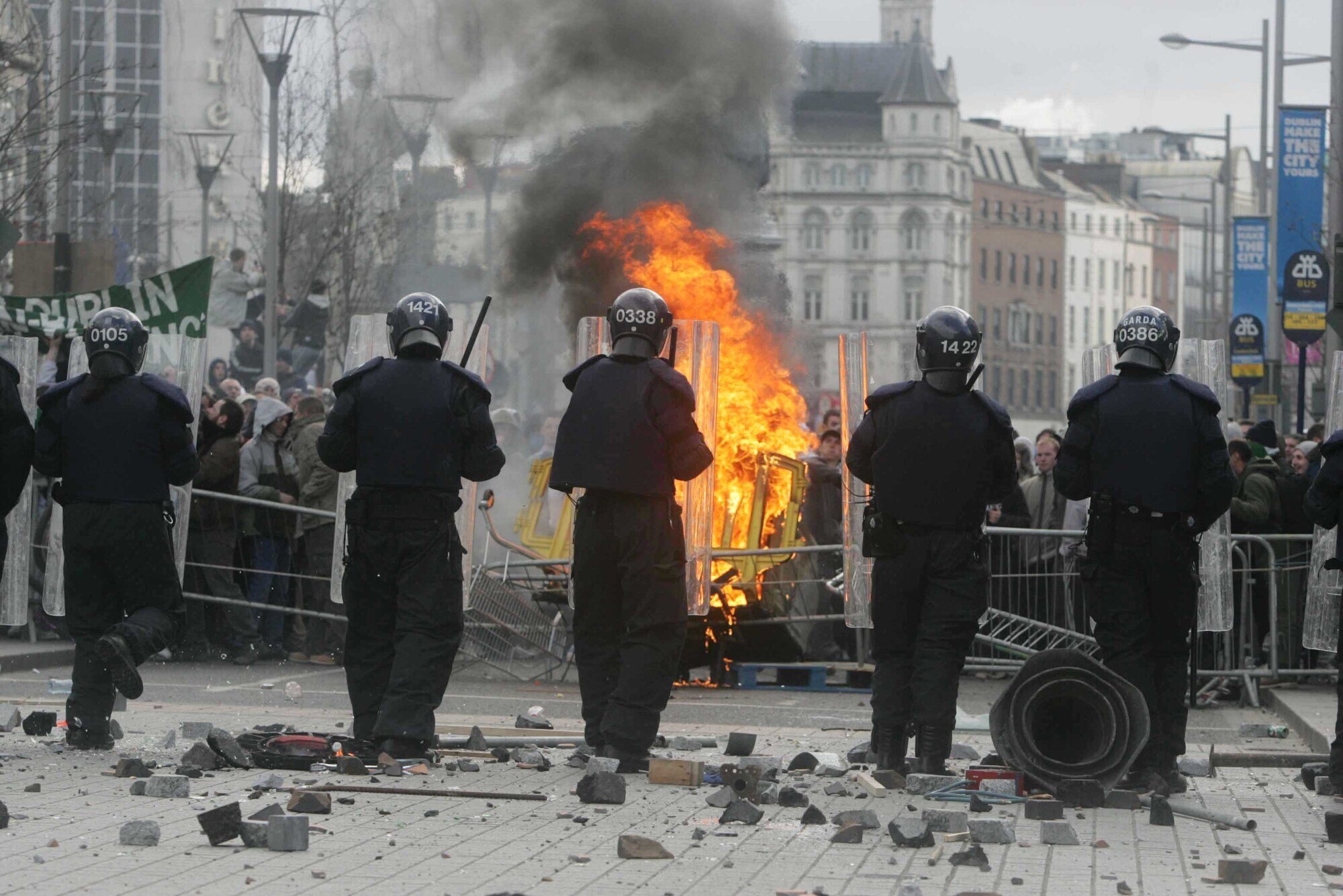
Members of the Garda riot squad in action on O’Connell St, Dublin, in 2006, as protesters to the ‘Love Ulster parade’ started attacking gardaí and property. Picture: Leon Farrell /Photocall Ireland
Gareth O’Callaghan is a radio presenter, psychotherapist and author of six books.
LOVE Ulster. I only have to mention the words, and a whole generation here in the South of Ireland is swept back to February 2006 — to the first loyalist march consisting mostly of relatives of IRA murder victims to take place through Dublin city centre since Partition.
Willie Frazer, the loyalist founder of Families Acting for Innocent Relatives, saw nothing untoward about replicating the scenes of the annual July 12 commemoration in the North by parading bands and men costumed in sashes and top hats through the streets of the capital.
It was, as he correctly reminded anyone who would listen, their right to protest peacefully. However, it wasn’t a protest.
It was essentially a highly inciteful march, and viewed by many down south as a loud statement of defiance.
Counter protesters who objected to the parade along the street, where the Irish Proclamation had been delivered 90 years earlier, took to the streets and rioted.
Blue skies turned dark as cars were set on fire. It’s estimated 2,000 rioters were involved. Around 40 people, including three gardaí, were injured.
Willie Frazer was 15 when his father, a member of the UDR, was murdered by the IRA.
Three other members of his family would meet similar deaths over the next 10 years at the hands of the terrorists.
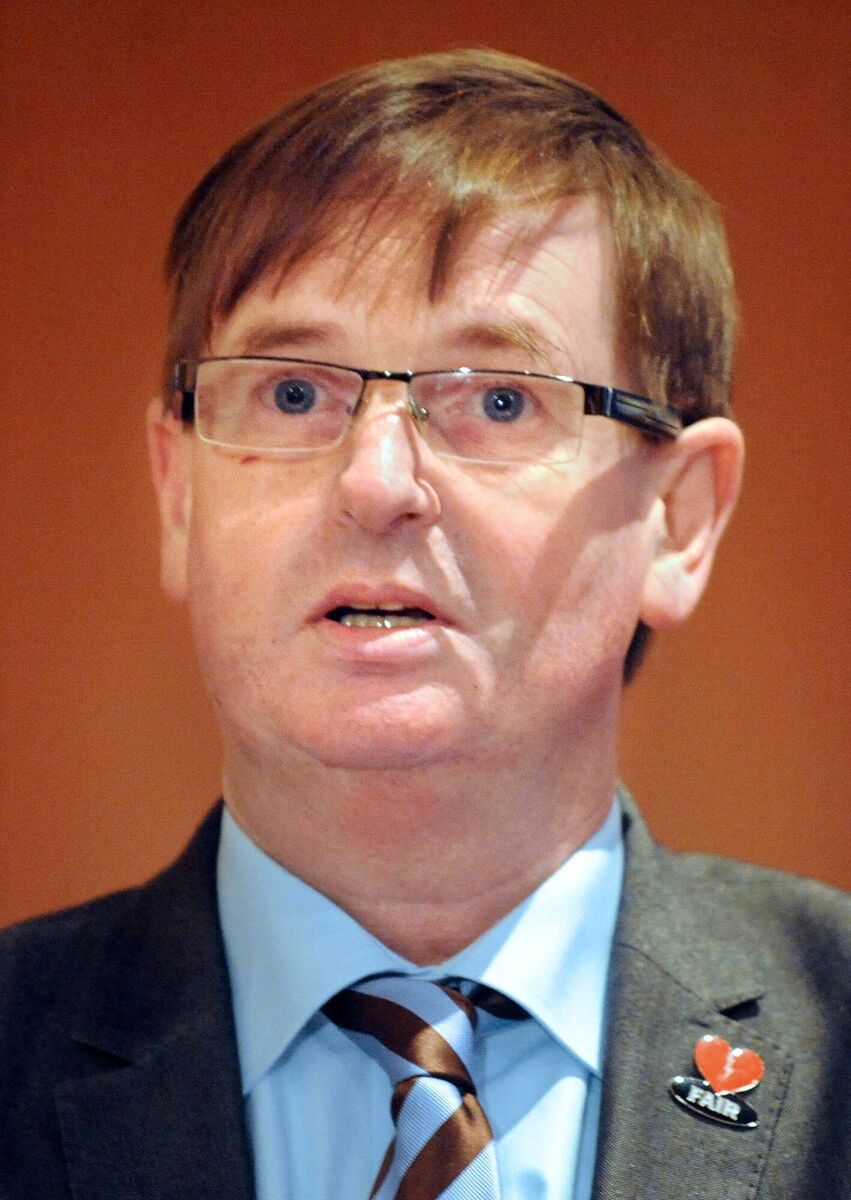
Willie Frazer, who has lost four close members of his family to provisional IRA violence.
According to reports in a BBC Spotlight programme broadcast in 2019, the year of his death, Frazer had been supplying assault rifles and rocket launchers to loyalist groups in the North in the early 1990s — a claim backed up by former UDA boss Johnny Adair.
Frazer was a controversial figure all through his life, mostly remembered for his arrest following the illegal 2013 loyalist flag protests. At one of his court appearances, he arrived dressed as radical Muslim cleric Abu Hamza. So one wonders how he might have reacted to the protest outside Belfast City Hall two weeks ago.
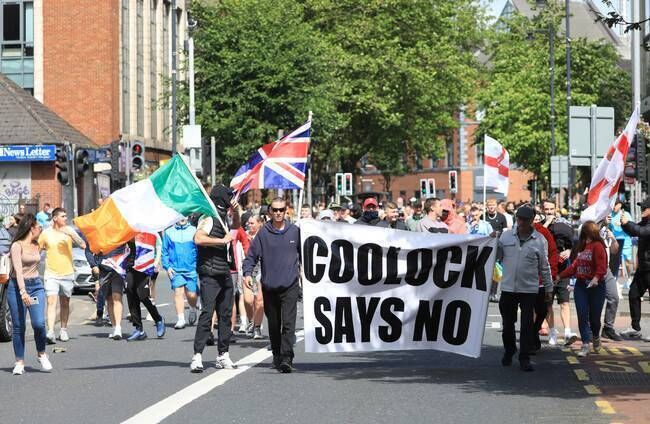
In a part of the island still plagued by sectarian tensions and random violent attacks by dissidents from both sides, the sight of Irish Tricolours mixed with Union Jacks and a large sign saying “Coolock says no” at a far-right, anti-immigration rally left most fair-minded people shocked.
The Coolock Says No group marching with Loyalist Groups in Belfast. PA
Republican protestors reportedly ended the day drinking with loyalists in a pub that supposedly has had strong connections with the UDA over many years.
The violent protest led by such a highly divisive collusion, many of whom were too young to remember the dark days of the Troubles, sent shock waves through the country — more so because of its combined target, namely immigrants.
Belfast Magistrates Court Judge Mark Hamill said from the bench last Saturday: “Attacking a person who is trying to run a business because of the colour of his skin is as bad as it gets.”
Some of those he was remanding in custody that day will no doubt disagree with him. Others will forever wonder what took hold of them in a moment that changed their lives forever.
It’s timely that the house of Paisley no longer has a place in northern politics, with its abhorrence of a possible all-island unity that they rejected over generations — a sign that the political dynamic has shifted; but this is a sign of unity that nobody foresaw and it’s not what we’re about.
It’s difficult to know where this unholy alliance will go from here, and equally worrying.
The dangerous political jigsaw has been at the core of northern violence for decades, but a merger that radicalises ordinary innocent bystanders who end up rioting is extremely worrying
So what precisely is it that turns a normally peaceful individual into an anger filled rioter?
Research over many years shows that most protesters who turn violent do so as a result of long-held suppressed feelings of political contempt mixed with despair.
One reason they mostly fall below the radar is that they don’t openly discuss their views of a system they believe is stacked against them, responsible for neglecting their needs and what they feel entitled to, while the same system prioritises the needs of others they see as making them feel more marginalised.
Despair, the complete loss or absence of hope, has a shocking ability to unleash waves of anger and violence if there’s a belief among a community in despair that nobody cares about them and that the state of their lives is never going to change.
Research also shows that heavy-handed, violent tactics by the police is a major catalyst of violence at protests. Protests are about the freedom to express our constitutional right on matters that concern us.
But at what moment is that desire suddenly replaced, and in its place consumed by a level of hatred and a propensity for violence that has resulted in many people finding themselves facing prison sentences in recent weeks?
Most people don’t believe that violent protests serve any real purpose or value.
But what if, as you witness a violent clash during what started out as a peaceful protest, you suddenly think the level of force the police is using is unjust and unethical? For many, that’s the tipping point. Most social movements throughout history have been formed as a result of specific events that have led to tipping points.
People take part in protests because they’ve had enough of injustice aimed at groups they are committed to supporting. We all believe we can make a difference to our lives by collectively pooling determination and efforts to exert change, but the line that separates peaceful and violent is almost impossible to read in heated situations for many people who’ve never raised a hand in violence before — and it’s only when it’s been crossed that they realise the damage can never be undone.
Riots are fuelled by leaderless crowds where misinformation is quick to spread online and by word of mouth. Politics has virtually nothing to do with influencing rioters.
Let’s face it, when was the last time you saw a politician at a riot? Bottom line is that social media misinformation is the real driving force behind violent protests.
As Austrian researcher Julie Ebner details in her book, Going Mainstream: How Extremists Are Taking Over, extremists using low-profile social media platforms such as Truth Social and Telegram lure their followers through misinformation and radicalisation via conspiracy theory-based rabbit holes.
There, they are exposed to dangerous content while cutting them off from sources of fact-based information.
It’s also a fact that people are more at ease rioting with others who they feel a connection to, which might explain in some bizarre way why loyalists and republicans came together in Belfast two weeks ago. Old turf rules appear to have changed now that a joint intolerance towards immigration and racism has resulted in a shared prejudice.
Riots cultivate a sense of connectivity. But for how long? The Troubles were shocking times, far beyond the imagination of this generation. Or are they?