Fergus Finlay: We live in a dark world but have brilliant people who shine a light
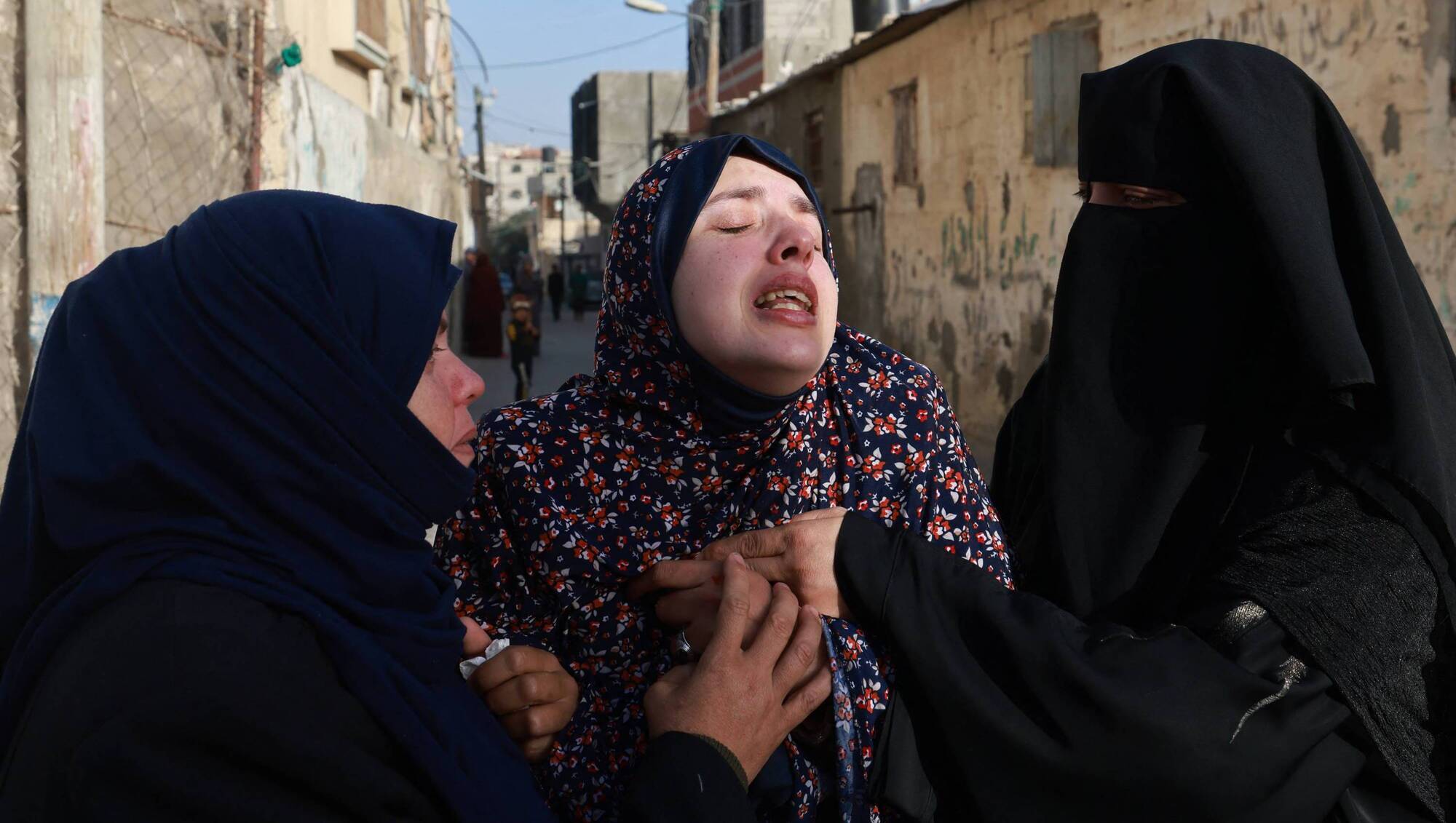
Rania Abu Anza, the mother of twin babies Naeem and Wissam, killed in an overnight Israeli air strike, weeps ahead of their burial in Rafah in the southern Gaza Strip.

You become immune, don’t you? I can’t remember when I last saw anything as awful, as cruel and terrible, as the Israeli assault on the women and children of Gaza. It’s inexcusable, indefensible at any level, and cannot possibly achieve anything worthwhile.
But I’ve found myself watching the news coverage less and less lately. More and more pictures of more broken buildings and weeping people — who can handle it, day after day? Yet every now and again something about this awful tragedy catches me by the throat, and forces me to stop what I’m doing.
I only heard it on the radio. Two babies being buried in southern Gaza after an Israeli bomb blew their house to bits while they slept. Twin babies. Naeim and Wissam. Their mother’s name is Rania, and the news report described her weeping in agony as her babies were buried.
For the first time since this terrible slaughter began, I found myself close to tears. Twin babies. Blown to bits. Some general somewhere shrugging his shoulders, muttering about the unfortunate casualties of war.
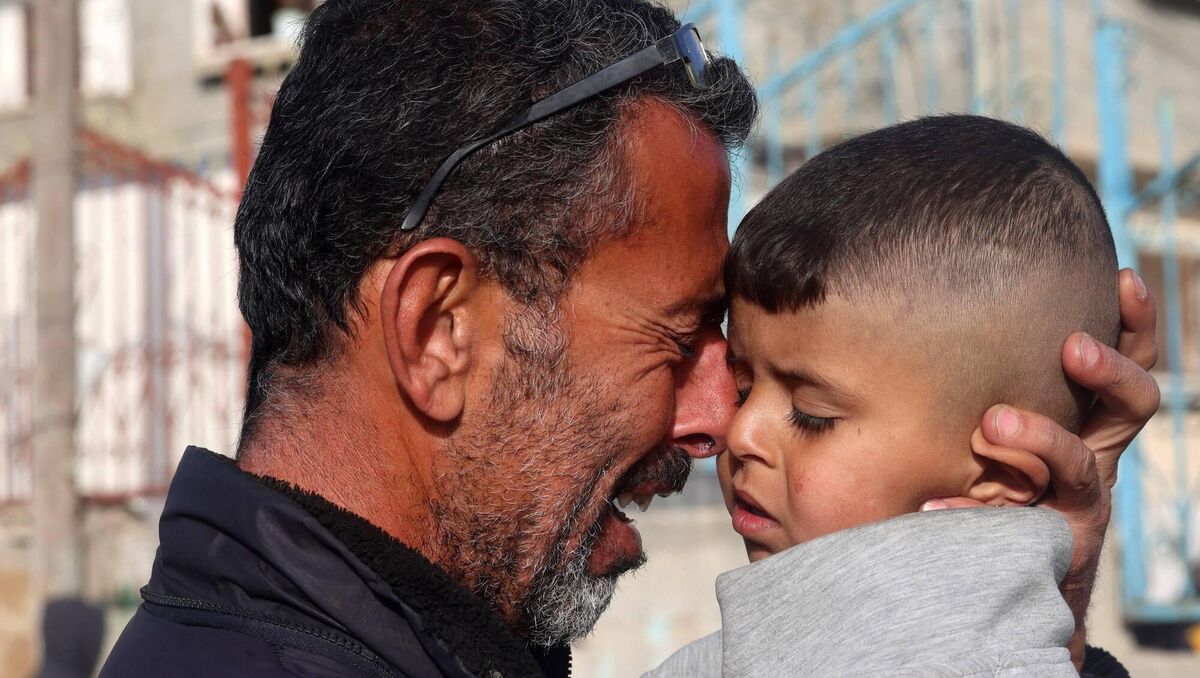
Have these generals and politicians ever suffered the pain of a loss like that? How can they sit in their offices or wherever they run their wars from and pretend this is ok, just another bit of collateral damage from a war they were forced to fight?
I can remember a time in our own country when atrocities would happen in the middle of our “war” — the war the Provisional IRA ran against the rest of us — and you’d wonder is this the moment when they realise it’s gone too far? Jonathan Ball and Tim Parry being blown up by an IRA bomb in Warrington. Thomas Begley blowing himself and a dozen other people to shreds in a fish shop on the Shankill Road.
It turned out then that those were fleeting moments when we thought that the depths of despair might yield some hope. But the men who ran that war had inured themselves entirely. They were incapable of being reached by any sort of remorse or pain.
Something has died in the souls of those prosecuting this war now. The Israeli Government started a fight against a terrorist act committed by a heartless terrorist organisation, and they have now descended to the status of terrorists themselves.
There is a special place in history for people like Slobodan Milosevic, the architect of ethnic cleansing in former Yugoslavia, whose forces killed tens of thousands of Bosnians and others. Or people like Henrik Verwoerd, who designed the brutal system of apartheid in South Africa and whose police tortured and killed thousands of people, including in the course of a massacre in Sharpeville, when they shot protestors in the back as they ran away.
And all the more so because all the signs are that he is prosecuting this remorseless terror against utterly defenceless people in order to cling to power himself. Perhaps there are some in his Cabinet whose souls haven’t died. Perhaps there are some who will stand up to him and demand an end to the slaughter. Perhaps. But it seems a forlorn hope, doesn’t it?
Until I heard about the death of the twin babies, this was not the column I was going to write today. I know this can be a cruel world, but I also know that it can be redeemed by people. I wanted to give you a couple of examples of that.
On the day of the snow last week, I spent a couple of hours slipping and sliding my way to an event in Dublin organised by One Family as a space where people could offer their own stories in support of a double yes vote this week. We were all late getting there because of the weather, but I have seldom met such a bunch of inspiring people.
John O’Meara is famous now for taking the State all the way to the Supreme Court because his family had been denied a widower’s pension after his partner of twenty years, Michelle, passed away. John told us that despite his victory, despite his evident commitment to the memory of his partner and his love and care for three children, the State and the constitution still does not recognise his family as a family. Because the constitution says “family based on marriage”.
Then there was Christopher Tuite, a young man from a disadvantaged background who is the proud father of three children and not married to the mother of his kids. He argued passionately about the importance of men’s role in care, and about the need for greater equality in the division of that role. He may not have a “family based on marriage”, but I don’t know if I’ve ever met anyone more committed to his family.
Ten days ago my sister (my twin sister, imagine) and her husband had a bad car accident just outside Skibbereen. They ended up in a ditch, upside down, strapped into their seat belts. Within minutes fire brigade help had arrived and, amazingly, a helicopter landed close by. It was clear that Robert was the more seriously hurt and he was carried to the helicopter and taken to Cork University Hospital, with Finola following in an ambulance.
Robert was in intensive care in Cork within an hour of a car crash in Skibbereen. Over the next few days, he required a lot of treatment, including late-night surgery for a bleed on the brain. It will take time for him to recover, but the quality of care he received has been beyond praise. Finola needed a lot of stitches (staples they use nowadays) for a bad gash on her head and is really battered and bruised, mostly from the seatbelt. But she’s on the mend already.
The thing she keeps talking about though — it was obvious when I was there too — was what she calls “the United Nations” of care in the hospital. Young hard-working professionals, with enormous empathy and skill, and they’re from every country in the world. As Finola said, “Thank goodness for immigration!”
The thing I noticed about the hospital was how enormous it has become since I was last there many years ago. And how often, as a result, I got lost. But at every corner there was someone who wouldn’t just point me in the right direction but would walk some of the way so I wouldn’t get lost again.
Yes, it’s often a really cruel world, often redeemed by brilliant people. There are parts of the world where brilliant people are desperately needed now, and are in terribly short supply. That’s the cruellest thing of all.
CONNECT WITH US TODAY



Be the first to know the latest news and updates