Terry Prone: There will always be a public desire for the wellbeing ‘magic bullet’
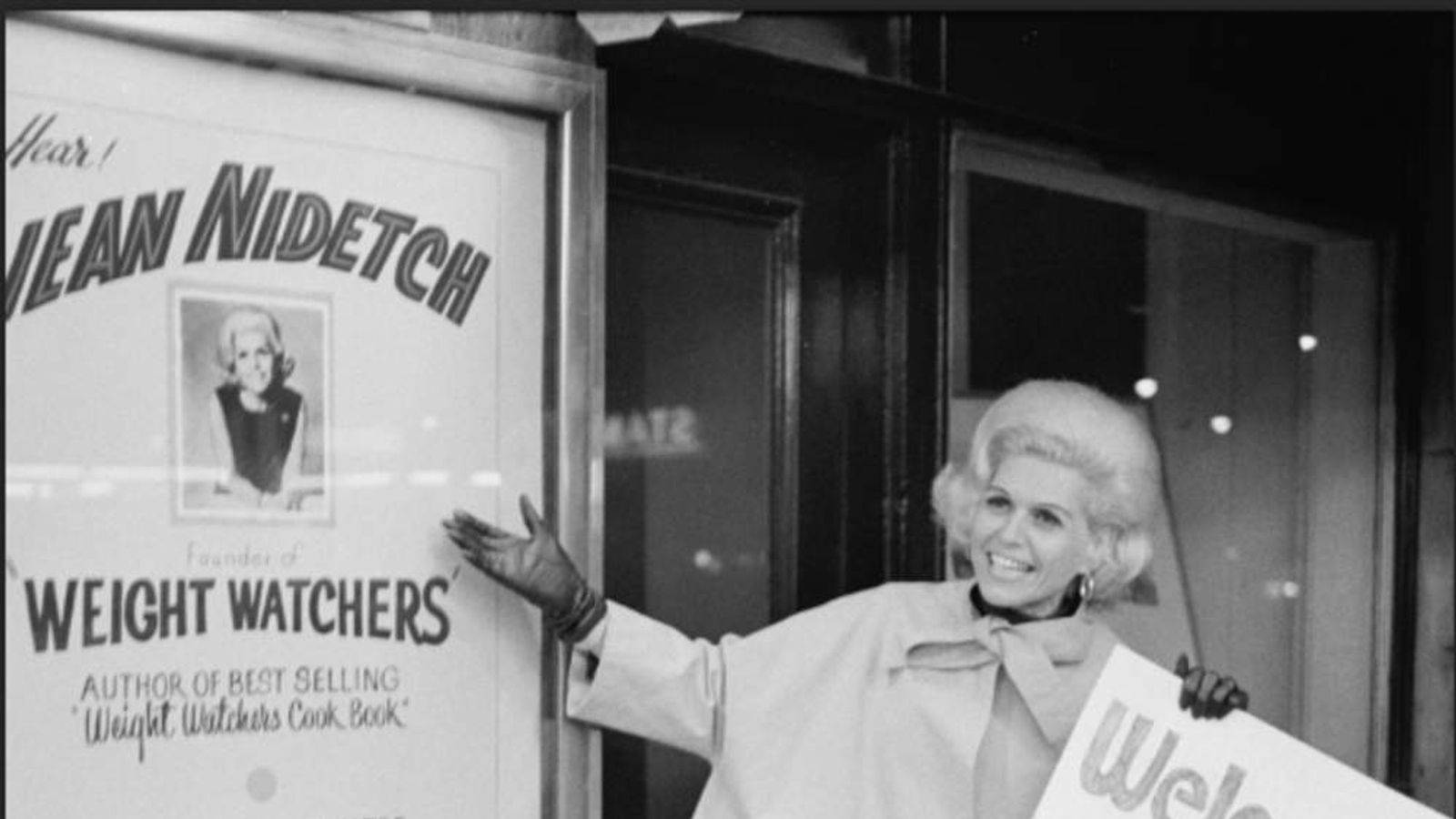
Three years after Jean Nidetch founded Weight Watchers, it launched its first cookbook. In the 80s, Heinz developed Weight Watchers-branded meals.

Now, here’s a turndown for the books. A director stands down from a million-dollar entity, donates her substantial shareholding to a non-profit for free — and the value of the gift drops by a third, right there. It may be the first time in the history of capitalism that someone decided to give a present worth millions only to see it, instantly, drop in value by a third.
That’s what happened with Oprah Winfrey, who has slimmed down on one of the new diabetes/weight-loss drugs and who decided to get off the board of WW (formerly Weight Watchers) as a result. The chosen recipient of the shares being America’s National Museum of African American History and Culture.
Oprah seems to have removed herself from the board and shareholders of WW because of a fear of conflict of interest. Weight Watchers was founded by a woman named Jean Nidetch in 1963.
Nidetch, an overweight New Yorker, had tried everything, including hypnosis, various diets, and pills.
On one 10-week diet orchestrated by a medical institute, she lost weight but found the bossy presentation by the instructor intolerable.
This gave her an idea. She decided to invite some of her overweight friends to her home for a discussion about weight loss and mutual support. This grew as she lost roughly a third of her own bodyweight and didn’t regain it, and in no time at all had morphed into Weight Watchers.
Three years later, the first cookbook associated with the brand sold 1.5m copies. The Heinz company, having bought it in the 1980s, developed branded Weight Watcher meals.
At the turn of the century, Weight Watchers was still profitable, still popular: One of those forgiving franchises you could return to after you had broken all the rules that had got you to a thin point and needed to start all over again.
It did, however, face stiff competition from similar organisations and new approaches to eating. Then came apps and Fitbits and inevitably the franchise began shipping water. But along came Oprah, 10 years ago. She bought 10% of the equity, lost weight on its system, and became its spokesperson.
Which was all grand until the Ozempic revolution started. On this one, Oprah’s initial input, less than a year ago, was to articulate the traditional values-based argument that you really shouldn’t take pills to lose weight but rather gird your loins and show a bit of willpower, which sounded pretty good from a woman who was thinner than she’d been in a while.

But then she confessed to taking a weight-loss drug, hastily adding that she was also working out, hiking the odd five miles, and having her chef cook the most nutritionally balanced food imaginable.
Meanwhile, Weight Watchers had already re-branded as WW to emphasise its contributions to general wellbeing rather than skinniness. It now started to announce new strategies, having acquired a company that would support those new strategies.
The new approach meant you could join WW the usual way, through a local group or an app, but added to the wellbeing, the exercise regimes, the instructions on healthier eating, they could provide you with a prescription for one of the new weight-loss drugs. See? Perfect compromise, calculated to appeal, not just to the overweight looking for a drug to help solve their weight problem, but to what might be called the obesity establishment within the medical profession, which always liked the “change your lifestyle, get active, get healthy” advice offered by WW.
Which is funny, now, because the obesity establishment has recently joined the trend towards rubbishing the “move more, eat less” trope which underlies precisely that advice, and yet it can’t quite get over the need to tell fat people that it’s not enough to take a pill. They must be good and diligent students of behaviour change. They must learn to avoid super-processed food and get their asses into the gym. Just where that differs from “move more, eat less” is a mystery.
What the obesity establishment use as its key dismissal of Ozempic is that “it’s not a magic bullet”. When this one is articulated by an eminent medic, you’re supposed to nod your head in an accepting kind of way. Except that Ozempic (and all its little pharma cousins) is precisely a magic bullet.
What do you call a pill that allows a woman of 70 like Oprah to put aside 50 years of misery and turn up for the premiere of The Colour Purple in a clingy purple gown, looking gorgeous? Yep, you call it a magic bullet.
What do you call a drug with the potential to reverse what medical commentator James Le Fanu suggests was the coincidence of hard marketing of fast and fat/sugary/salty foods on the one hand and some undetected infection in the sixties which robbed following generations of agency in relation to being overweight? You call it a magic bullet.
This warning against magic bullets is supposed to make ordinary folk realise that medicines have their downsides and that if we misuse them, they are likely to come around and bite us from behind.
Doctors and patients misuse new medicines and always have. Don’t forget Freud and cocaine. Don’t forget the generation of little asthma sufferers who had their lives cut short because their doctors fell in love with the wonderful, obvious initial benefits of steroids.
For 50 years, we have misused and overused antibiotics. But the fact is that when they arrived, antibiotics were magic bullets. A handful of readers are old enough to remember the first time their GP prescribed sulfa, that awful-tasting white pasty medicine; old enough to remember the suffering from the infections that came before the white pasty stuff; old enough to remember the miraculous lifting of the agony, thanks to the magic bullet. Overuse of antibiotics leading to resistant bugs came later, but for several decades, they were magic. Same with aspirin.
Ozempic is up there with antibiotics in terms of its potential impact on the world, whether it be to public attitudes to those suffering from obesity, to economics, aviation, or the food industry.
The fact that some of the drugs now in grievously short supply are coming near the end of their patent period will mean the pharma companies that own them will go into overdrive, in research terms, in order to find some added value which would allow a re-formulation and a lengthening of exclusivity. Which is good for patients. Research and competition always are.
The new weight-loss drugs are a complex proposition. Arguably the most interesting factor they illustrate is how slow medical specialists are to abandon disproven dogma, especially when the general public are way ahead of them in their desire for magic bullets.
CONNECT WITH US TODAY



Be the first to know the latest news and updates