Mick Clifford: When the State treats victims as opponents, not as wronged citizens
Many of the threads woven together in the UK’s Post Office scandal will be familiar to anybody who has observed the outworkings of scandal in this country
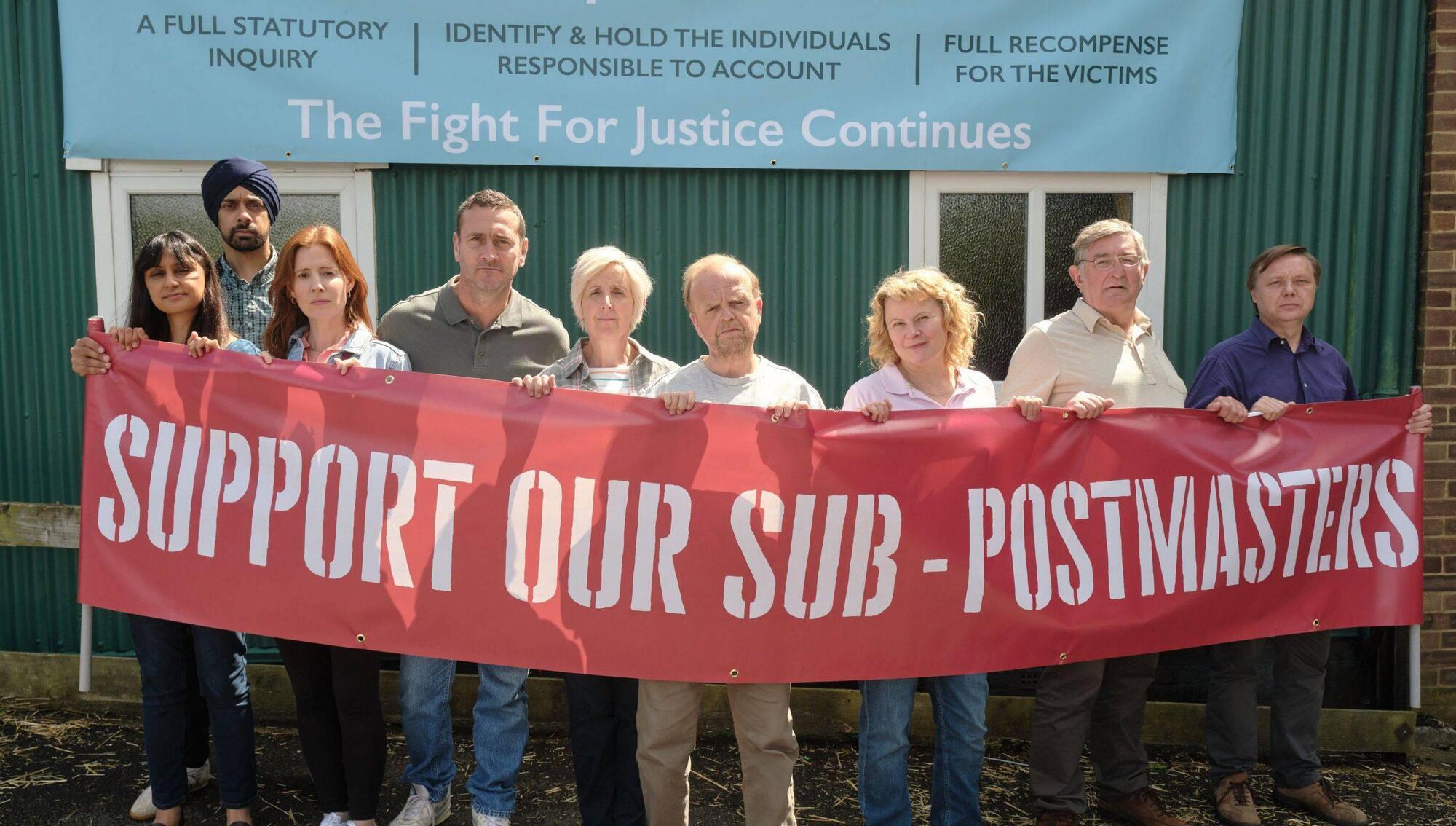
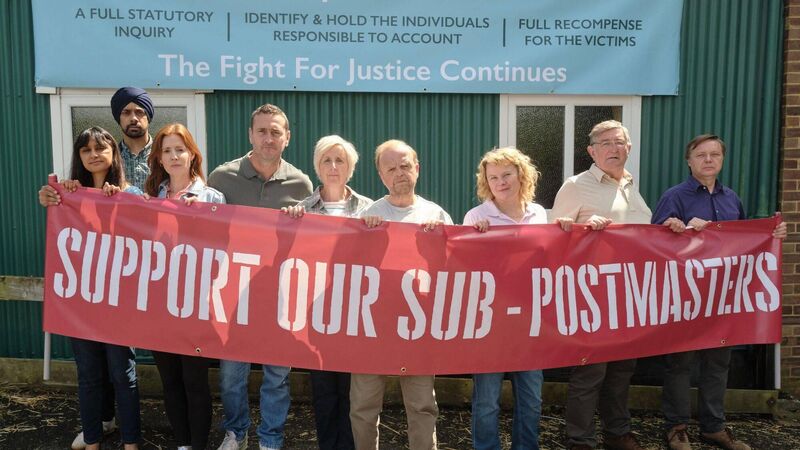
Toby Jones, centre, stars as Alan Bates in Mr Bates vs The Post Office. ITV's series dramatising the Horizon IT scandal. Picture: ITV
What resulted was what is now being described as the biggest miscarriage of justice in British history. Over 700 people were pursued relentlessly across 15 years up to 2015 for financial losses that didn’t occur. At least four took their own lives. More were sent to prison, including a woman who was pregnant.
Dozens were subjected to bankruptcy and the enormous human toll was spread right across Britain, with at least another dozen in Northern Ireland implicated. Ultimately, there was no fraud, certainly not by the vast majority of those accused. It was all down to a computer glitch in a new system.
What has appalled the British public was the manner in which the Post Office, a beloved national institution, treated the sub-post masters, telling each one who got into trouble that they were the only ones with such an issue.
Once the alleged “fraud” was discovered, the victims were relentlessly pursued through the courts. In today’s vernacular, what unfolded was a mass exercise in gaslighting followed by the persecution of hardworking people who were putty in the hands of a powerful state organisation.
The outworking of this miscarriage of justice had been bubbling away under the surface of the public square until the drama came along and set it out in clear, human terms. Outrage and the sound of politicians scrambling for cover followed.
On Wednesday, Rishi Sunak announced that the British government would bring in legislation exonerating the hundreds who were wrongly prosecuted. This is a dodgy move. The principle of separation of powers between a state’s legislative arms and the judiciary is a sacred tenet of liberal democracy, designed ostensibly to protect the citizen.
British prime minister Rishi Sunak. File Picture: PA
Now the UK government is overturning convictions imposed by the judiciary simply to alleviate public outcry and deflect any blame away from Downing Street. Apart from that, what if one or two or even more of the hundreds convicted actually may be guilty? Do they now get a free pass simply because it’s an election year?
We do things differently here. Don't we?
We can, on this side of the Irish Sea, look over across the water and say that Old Blighty has gone to pot. Such long-running miscarriages could not happen here. It would not take a drama or some big revelation way down the line to highlight any injustice that had unfolded in plain sight. We do things differently here in a smaller, more intimate society where the citizen is more valued. Don’t we?
Unfortunately not. Many of the threads woven together in the UK’s Post Office scandal will be familiar to anybody who has observed the outworkings of scandal in this country.
Look first at the uncovering of a scandal that rebounded on the reporter who did the leg work. For decades, the Sweepstakes were considered a national institution. Tickets were bought on the premise that the money gathered was going towards the upkeep of hospitals.
Irish Independent reporter Joe MacAnthony investigated it in 1975 and found that just 10% of the monies were set aside for the good cause. There were huge expenses being accumulated, a nice circle of people getting wealthy, and a racket in which tickets were illegally sold in the USA.
The expose was top-class journalism. The outcome was that MacAnthony was frozen out of work, had to emigrate to Canada to earn a living, and the crooked aspects of the Sweepstakes were quietly and slowly worked out behind closed doors. It was about as Irish a scandal as it was possible to have.
Just as with the Post Office in Britain, so also the women who had been infected by the national blood transfusion board in this country were told for years that they were not part of any systemic fault.
So also were those devastated by the tracker mortgage scandal, as the banks attempted to keep a lid on things and minimise their exposure despite the huge human suffering that had resulted.
The State and its institutions using the courts and any other means to long-finger the outworkings of a scandal will be familiar to anybody who has taken legal action for negligence or malpractice in the area of health.
The victim is treated not like a wronged citizen but as an opponent against whom all the resources of the State must be deployed to defeat them.
Garda scandals have had many of the same characteristics as what has happened in the UK, particularly in how they have occurred in plain sight but did not receive traction for a long time. In that vein, there was a tendency in this country to look at miscarriages carried out in the UK against Irish people, particularly during the Troubles, yet simultaneously look away at the same thing happening here.
The Sallins mail train robbery
The most notorious case in that respect was the events that followed the Sallins mail train robbery in 1976. A number of men, members of the Irish Republican Socialist Party (IRSP), were allegedly beaten in custody.
The only evidence against them in subsequent charges were confessions which they said were beaten out of them.
Three were convicted of the robbery after a protracted trial process that had highly dubious aspects to it. Two were released on appeal, and the third, Nicky Kelly, was finally released on humanitarian grounds in 1984.
The State paid out large sums in damages to the men involved but no inquiry as to what happened ever took place.
Osgur Breathnach, one of three men convicted and subsequently cleared of the Sallins mail train robbery in 1976. File Picture: Moya Nolan
The late Supreme Court judge Adrian Hardiman, writing in 2007, referenced the case which he said, “led to massive settlements and grave damage to the reputation of our policing and criminal justice systems. But we have never, as a country or as a community, internalised the lessons of that event or of the other declared miscarriages of justice which have taken place since.”
Seventeen years on, the same observation applies. One of those caught up in Sallins, Osgur Breatnach, has been attempting for decades to have the matter addressed. His campaign has attracted many high-profile and legal figures yet successive governments have looked the other way.
Sometimes a miscarriage of justice just works through the system and is addressed as speedily as possible. Other times, the victim is put through the ringer before arriving at a place where justice can be accessed.
And then there are those, like Sallins, which are allowed to wither, simply because they don’t ignite the imagination of the public, which in turn applies pressure.
That’s the reality and there is no difference in that respect between Britain and this country.