Michael Moynihan: A symbolic indication that long history of service is valued in Cork
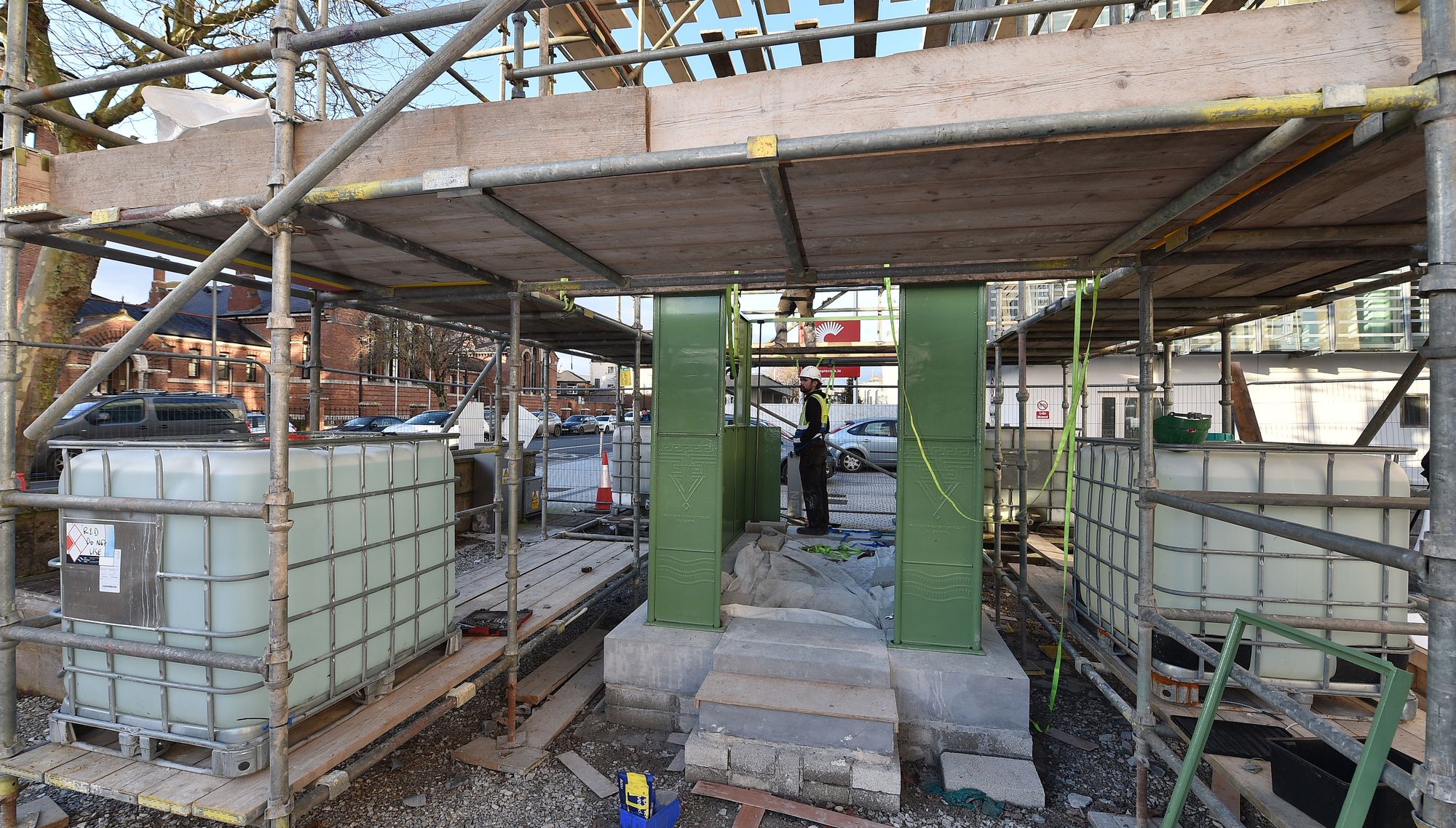
James O'Riordan of Leeside Forge working on the Fireman's Rest, which has been restored for reinstatement in front of the Fire Station on Anglesea Street, Cork. Picture: Dan Linehan

It’s a long time ago now but the circumstances remain sharp in the memory.
Your columnist was still in his days of exile in Dublin, prominent in attendance at a quiz night in Toner’s, the greatest pub in the capital, when a very focused geography question stumped the team.
Name the little hut by the statue on Patrick Street, Cork.
Now that the statute of limitations has expired, I can confess that contrary to all the rules of polite society I slipped upstairs and into the alley alongside the pub to make a surreptitious phone call home for the answer.
“It’s the Fireman’s Rest,” was the response. “I’m surprised you didn’t know that.” I should have. I had rung my father and as a fireman himself he was entitled to be disappointed with my ignorance.
In my defence, those were the days when sufficiency and I were less well acquainted and I was probably distracted.
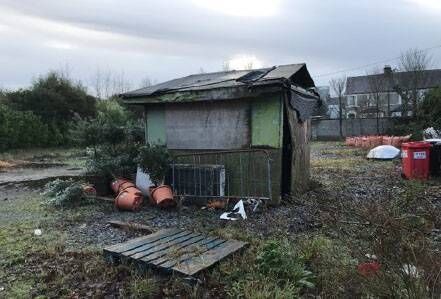
Now, of course, the Fireman’s Rest is back in the news, having been left to rot in the back of a council yard — literally — for over two decades.
As Eoin English of this parish reported recently: “The Fireman’s Rest was commissioned in early 1892 by the then Cork Corporation and was 120 years old last year.
“It was originally assembled for the Cork Fire Brigade and was shared by them with the staff of the old tram company between 1898 and 1930.
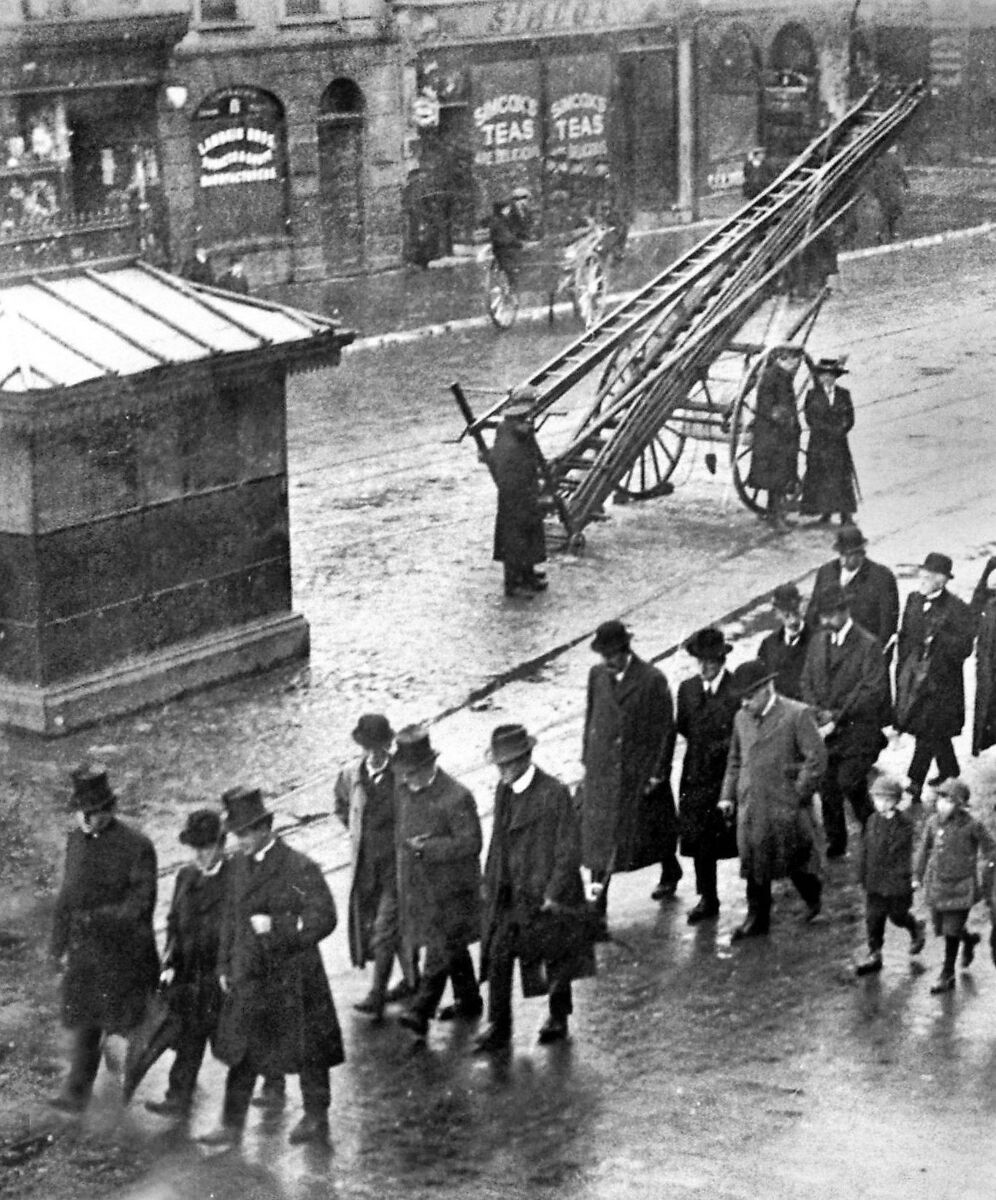
“Located near the Fr Mathew Statue, it consisted of a metal hut that was manned 24/7 by a firefighter with a ladder and hose nearby.
“It served initially as a central 'fire station' at a time when the city's fire brigade had positioned wheeled escapes and ladders at strategic locations around the city for use in emergencies.
“As the city fire brigade modernised, the hut was later used exclusively by CIE from 1931 to 2003. But it was removed to facilitate the revamp of St Patrick’s Street and was left in a council storage yard in Fitzgerald’s Park, where its condition deteriorated significantly.”
Eoin is being his customarily polite self in describing the old hut as “deteriorating significantly” in its long exile in obscurity: in truth, it was falling to pieces.
This columnist, being markedly deficient in such good manners, may have something more to say about the city council’s treatment of part of its own heritage at a later date, but suffice to say this is a welcome development.
Even if it has taken two decades.
Cork Fire Brigade historian Pat Poland — a civic treasure in and of himself — has in the past outlined the detailed orders for the firemen who would be stationed in the Rest. (“While on duty, the fireman is on no account to leave his station. The watch-box is provided as a protection against inclement weather and must not be used by any other person. The door must not be closed when the fireman is within, as he is expected to be vigilantly zealous for the preservation of life and ready to give immediate attendance whenever required.”)
Little wonder they hated it, as Pat writes: “ . . . due to the order stating the door be left open regardless of weather, they often came off their tour of night-duty half-frozen.”
The Rest’s new location is outside the main fire station on Anglesea Street: presumably, its door can be closed these cold evenings.
(It was first located, back in 1892, at the intersection of the Grand Parade and Washington Street until Grant’s, a new department store, asked for it to be removed; it was shifted to Lavitt’s Quay and thence to Patrick Street.)
Readers have no doubt read Eoin’s account of the restoration saga, and will appreciate what he describes as the campaigning work put in by historians, retired bus drivers, and firefighters on this matter.
Something like the Fireman’s Rest is the very definition of local heritage, an heirloom of the past that may have outlived its specific use but still retains the power to make us consider times long past.
(I feel as though the city council is going to be mentioned again — ed. All I can say on that score is that if it had been called the Fireman’s Vape Shop then it would have been part of our streetscape long ago.)
What makes the restoration of the Rest particularly timely was the news which broke on Christmas Day of a suspected firebombing in the city centre.
As reported here, three people were hospitalised after multiple units of the Cork City Fire Brigade were alerted to a blaze at a house on Dyke Parade when smoke was seen coming from the building shortly after 6.20pm.
Firefighters wearing breathing apparatus were able to enter the premises, while those outside used their Aerial Ladder Platform to stop the flames from spreading — by 9.30pm Cork Fire Brigade was able to inform the public via social media that the fire had been dealt with.
In and of itself, that shows the journey taken by such a vital service over 130 years.
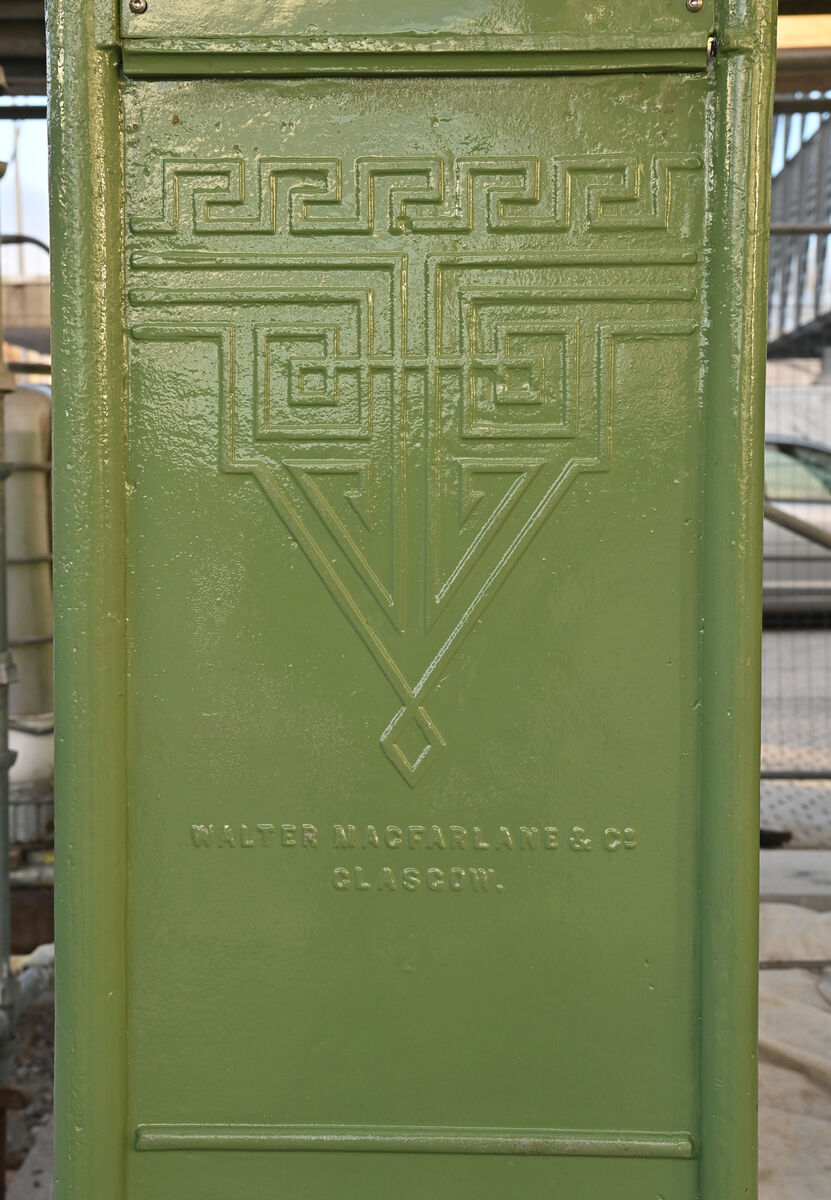
When the Fireman’s Rest was opened originally, it became home to one of the very few phones in Cork (connected to the fire station and the chief’s residence); its location in the very centre of what was then a far smaller city made it a vital communications hub when it came to emergency services.
Now, the modern-day fire service can use Twitter and other online platforms to let the public know instantly about fires and other accidents in the area.
Similarly, there is no need now for a man to be stationed in the middle of the city all night — on his own — as a kind of fire watchman, let alone keeping the door open at all times.
(As for the possibility of commercial interests seeking the removal of such a facility to another location . . . well, I leave it to others to judge whether that might be a possibility.)
However, some elements of the story remain constant. The fire that broke out on Dyke Parade on Christmas Day might have occurred in 1973, or 1923, and the response would have been much the same — an immediate turn-out from the fire brigade to save lives and limit damage.
It’s a time of year when most of us think in terms of elasticated pyjamas, and what exact time of the day is appropriate for diving headfirst into a box of Celebrations. But not everyone.
My thanks here, then, to those who work over the holidays and dedicate themselves to keeping others safe in every part of the city and country. And returning the Fireman’s Rest to its former glory is at least a symbolic indication that a long history of service is valued and acknowledged in Cork.
Happy New Year to all.
CONNECT WITH US TODAY



Be the first to know the latest news and updates