John Moran vows to run again as Limerick mayor faces rows with councillors and city traders
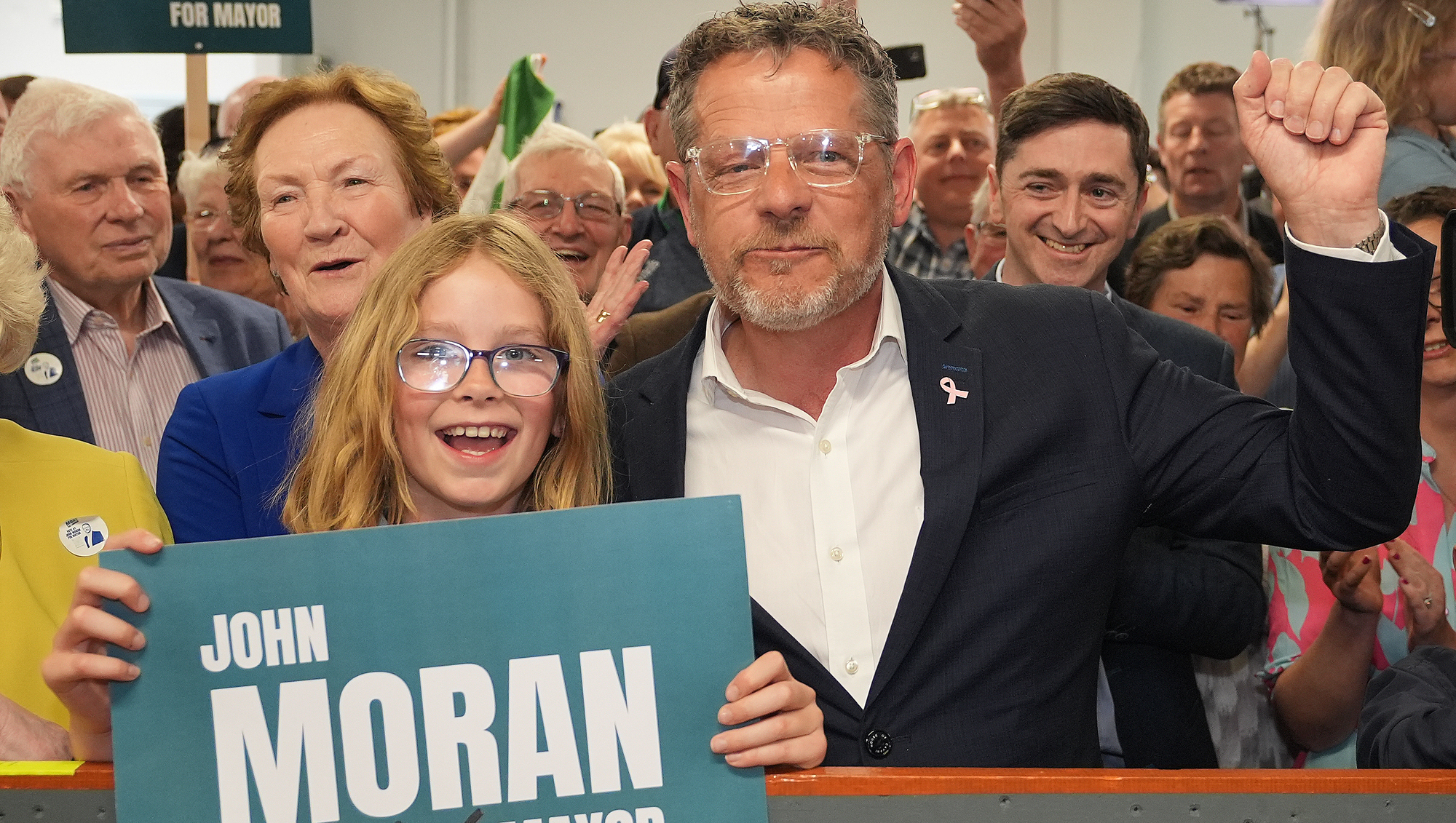
John Moran is elected as Limerick's mayor in June 2024. Mr Moran says intends to run for a second term despite escalating tensions inside the council chambers.
In June 2024, John Moran became mayor of Limerick, the first directly elected mayor in Ireland. He has since faced his fair share of pushback inside the council chambers, notably from Fine Gael and Fianna Fáil members, the two biggest parties on the council.
In February, tensions escalated when Mr Moran brought closed-doors interactions into the public eye. Writing online about the “lowest point” since his election, he accused some councillors of being hostile towards him as he detailed what happened during a seven‑hour meeting, during which he became unwell.
Moran stands by claims that some councillors from Fianna Fáil and Fine Gael are constantly trying to undermine him and that there is a strategy to make his role “unbearable”.
Between an infamous closed-door meeting where JP McManus teared up while addressing councillors about the International Rugby Experience, snarky remarks during marathon meetings, and claims of “manhandling” inside the council, one thing is clear — the tensions have led to national headlines.
But despite it all, Mr Moran says intends to run for a second term.
Read More
The latest controversy in Limerick has seen more than 100 businesses urge the mayor to abandon planned road closures as part of his August Activation programme aimed at increasing footfall in the city centre.
The Limerick City Centre Traders Association said 193 businesses have signed a letter raising concerns about the closures and warning they could damage trade.
While the traders did not make the letter and its signatories public, some of them publicly voiced their concerns. After a special meeting was called to discuss traffic restrictions, Mr Moran said a holiday with his partner was “hijacked”.
Steve Gleeson, owner of Gleeson Sport Scene, was one of the traders critical of the road closures.
“We’re 100% behind all the activities, we don't want to be drawn into controversy again. After the controversy, our statement is simple: We just don't want the main thoroughfare closed,” he told the .
Mr Gleeson said traders' voices have been heard but that no action has been taken.
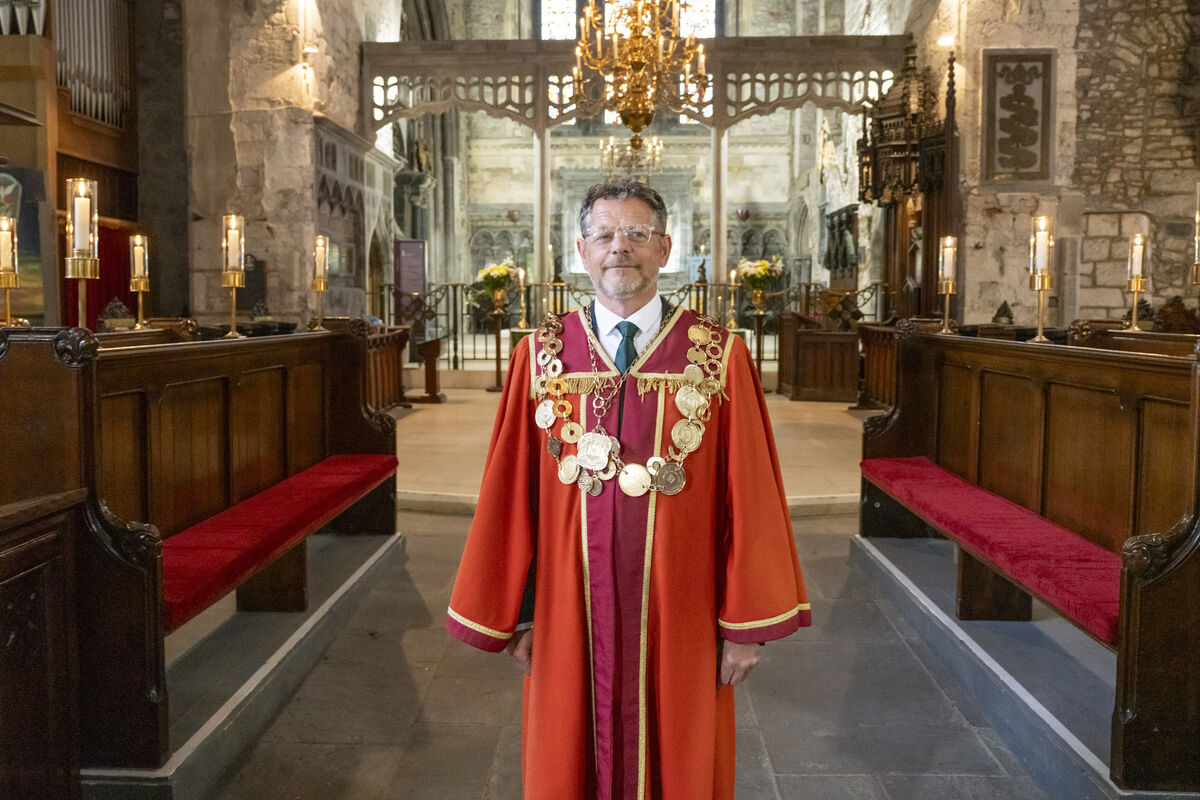
“The Crescent is a main thoroughfare, we've even proposed that they close it at the weekends when the activities are on there,” he said.
“People are coming in from outside of town, and you've to make things as easy as possible for people to get into the city, not to put obstacles in their way.
"I think it's over 70% of people come into cities via car, and we're similar — over 70% of our customers would be in cars. By not having cars, it means we've less customers.”
Councillor Kieran O’Hanlon, alongside his Fianna Fáil colleagues Catherine Slattery and Joe Pond, called for a special meeting under Section 140 of the Local Government Act 2001. The motion requested that Mr Moran and the council director general put a stop to the proposed traffic restrictions to protect traders.
However, following legal advice, the council found that Section 140 had been used incorrectly and the motion could not proceed. Mr O’Hanlon said he met with a small group of traders who were concerned with the closures.
“They said that they were very concerned about the future of some of the businesses in Limerick and also about the jobs. Now as it so happens, this week in Limerick, we had two major closures,” Mr O’Hanlon told the .
“We’re all concerned about the city, and we have to listen to the traders. We only have certain legislation available to us to make sure the mayor doesn't go against the wishes of the majority of the people in Limerick.”
Asked about claims councillors set up meetings while Mr Moran was on annual leave, Mr O’Hanlon said: “As far as I'm concerned, he can go on a holiday anytime, but life has to go on in Limerick, even if the mayor goes on holidays.”
The main request from the traders is to reopen the Crescent. So far, the mayor has stood firm on his decision to close the area.
Asked if the mayor will be capable of compromising, Mr O’Hanlon said: “No, absolutely not.
"As an elected councillor for 35 years, I have a fundamental problem with one individual having the right to actually close streets in Limerick city.”
Mr O’Hanlon said he is unsure about the legislation, because “I’m not a barrister or a solicitor”, but is seeking to get further clarification.
An upcoming review on the mayoral legislation is due to determine its efficacy after three years of establishment. As Limerick serves as a “guinea pig” to the experiment, the findings of the review will help determine if the mayoral framework could be expanded to other cities.
“I'm fairly sure that most counties in Ireland would run a mile from having a directly elected mayor when they see the outcome of what I consider a failed costly experiment,” Mr O’Hanlon said.
“He doesn't seem to recognise the fact that we get elected as well; we have a mandate from the people. He's of the opinion that he's right all the time and whatever he wants to do, he expects us to toe the line.
"When he shouts, he wants us to say, 'How high do we jump?' But I won't do that.”
The council recently hired an external PR team to handle mayoral communications at a reported cost of €25,000.
“He spends half his time attacking the councillors who don't agree with him. Now, again, I have a problem with that. I don't have access to a PR company,” Mr O’Hanlon said.
Meanwhile, tensions have been simmering for a long time between Mr Moran and councillor Catherine Slattery.
In March, Ms Slattery accused the mayor of making an "off-mic" remark during a council meeting and said she had made a formal complaint alleging breaches of the council's dignity at work policy.
She said she felt "bullied and intimidated". Mr Moran said at the time that he was unaware of any such complaint.

More recently, Ms Slattery voiced support for traders opposed to the proposed traffic restrictions and criticised some of the mayor's initiatives, saying events such as the planned Long Table dinner at the Crescent were not aimed at "ordinary people".
“In my view, having an area segregated is very intimidating for the ordinary person to walk up and go in and mix and be made feel welcome.
"Take the Long Table event, mark my words, it will be the same faces that were sitting at the table last year and none of those faces I recognised as the ordinary people of Limerick and their children,” she told the .
Ms Slattery's comments quickly gained traction, with a form circulated on social media to register as the "Ordinary People of Limerick".
Mr Moran said the comments were hurtful.
“Maybe it wasn't intended to be that way, but it came across at least to a lot of us, who have different lived experiences, as divisive, as a kind of othering of different people,” Mr Moran said.
“It was, in its literal terms, suggestive that all ordinary people all have kids, and that's hurtful for people who don't have kids. The suggestion that people that live in one area or that frequent one street in Limerick are somehow different to people in another street, I think that's just not right.
"I don't think our political leaders should be leading with that kind of divisive language,” he said.
Mr Moran added that the quote may have been taken out of context and called on Ms Slattery to clarify the comments.
Asked if he would change the location of some of this month's planned activities, Mr Moran said: “I am open to everything, right? I'm open to all suggestions, and we'll look to them, and obviously there are budgets that need to be taken into account and everything else.
"There’s this sense that we're only doing it in one place and not another, and it has to be taken in the round.”
Some traders declined to have their names published in their letter, saying they were concerned about losing their anonymity.
Mr Moran said there should be greater transparency around those involved in the campaign. After meeting Mr Pond, he said he suggested that at least half of the businesses objecting to the plans attend a meeting with him.
"If you can bring 50% of the businesses into a room, at least I'm comfortable that there's a representative sample there," he said. Mr Moran said some traders wanted any meeting to take place in private and without being recorded.
He claimed businesses lobbying a mayor or senior official on public policy may be required to file lobbying returns and added that he had not seen any from those involved in the letter.
After months of public rows between the mayor, councillors, and traders, Mr Moran insisted relations were improving and said opposition to his plans was becoming less widespread.
"I do think that it's increasingly a minority view," he said. "I think the majority of councillors, the people working in the council particularly, and indeed I think the majority of people in Limerick, want us to work for the betterment of Limerick."
Acknowledging the criticism he has faced, Mr Moran said disagreement was an inevitable part of politics.
"No matter who you are or what you say you want to do, you cannot please everybody all of the time. There'll be some people who just do not, and I have to respect that, want the same Limerick I want," he said.
Asked about an online petition calling for his removal as mayor, Mr Moran said he had not seen it.
He said:
Despite it all, Mr Moran revealed he intends on running for a second term.
“Absolutely, I've done all the hard work. I'm taking over a role for which there's no blueprint, nobody’s done it before. So whenever I choose to do something one way or the other, it sets a precedent for how others will follow. They will agree, they will change.
"If I argue for more resources for the office of the mayor in Limerick, every mayor from now on will benefit from that decision.”
After this article went to print, Catherine Slattery provided a comment to the
"In relation to comments I previously made regarding 'ordinary people', I wish to clarify that no offence or division was intended. My point was simply that public events and initiatives should be accessible, welcoming and inclusive for the widest possible range of people," Ms Slattery said.
"Mayor Moran himself acknowledged that my comments may have been taken out of context. I would ask him, therefore, to listen to the context I am actually giving now rather than attributing motives to me that I did not have," she added.
Ms Slattery said she stands by her questioning of how public space is used in Limerick, and by her concerns to close off The Crescent area.
Mr Pond was also contacted for comment but did not responded.
CONNECT WITH US TODAY



Be the first to know the latest news and updates