Missing garda fingerprints expose a troubling culture of delay, confusion and evasion

An Garda Síochána has confirmed that the number of prints at issue has risen from 17,000 to 23,000, but it claims that these are not lost. File photo
Uncovering a problem that is a potential scandal and doing something about it has never been an attribute of An Garda Síochána (AGS).
That was one of the reasons why in 2018 it was decided to bring in an outsider to fill the role of commissioner. Drew Harris was from a different culture.
In most workplaces there is a standard way of dealing with what we might call a malfunction. The problem, and how it arose, is identified. This is then addressed and a way forward mapped out. Responsibility is acknowledged, lessons learned.
That has never been the way in AGS. There is a long history, going back to the 1970s, of burying scandals and hoping they will go away. Inevitably, the culture ensures that more scandals arise.
A case of a major malfunction in the handling of fingerprints is straight out of scandal central for AGS. It wasn’t so much what happened, although that was serious, as the reaction to it, which defines this scandal.
Fingerprints are a major element of crime investigation. In AGS, the fingerprint section was in the Garda National Technical Bureau (GNTB) since it was formed in the 1960s. At some point the system was digitalised under the Automatic Fingerprint Identification System (AFIS).
In this, the physical sample of a fingerprint is scanned into the system for retention. How long a sample can be retained is subject to various laws and exceptions.
In 2016, the head of the GNTB, Detective Superintendent Brian O’Reilly, reported that the AFIS system might be encountering IT problems. A new system would have been the best solution, but would have required major resources.
In 2017, the Garda Inspectorate made a recommendation that responsibility for fingerprints be handed over to Forensic Science Ireland. A few years later the process got underway. In the course of the handover it was decided to retain governance of the system within the GNTB.
Then in July 2021, it was discovered that over 17,000 sets of prints within the AFIS had been lost. The discovery was a major development.
The prints had, through the system, been placed in a “suspended” category erroneously. This location was programmed to delete entries after six months. So any prints inputted prior to January 2021 were gone.
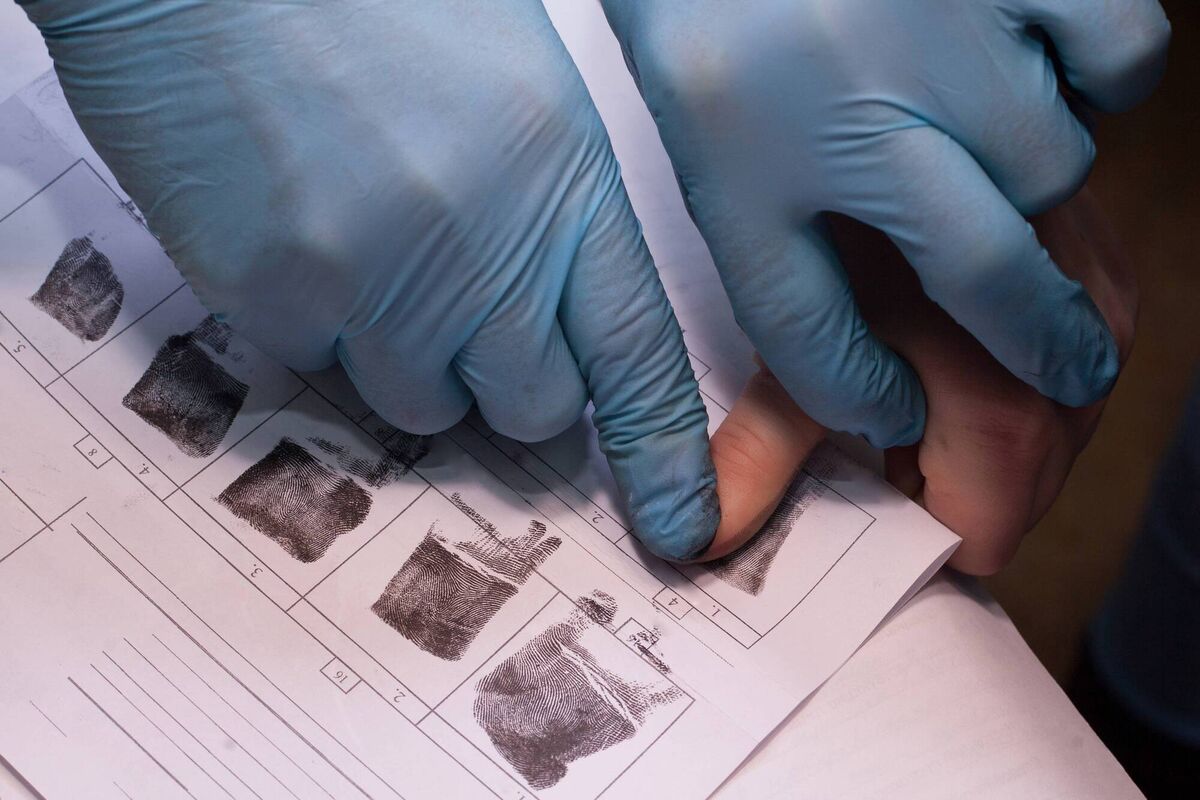
This would have had implications for crime scenes, investigations, and the chances of the victims of crime seeing justice done. It would also have caused major controversy.
The public and the body politic is well aware of the importance of prints and the idea that so many could be lost would have prompted headlines and outrage from politicians.
Det. Supt Brian O’Reilly reported the information about the loss to Chief Superintendent Paul Cleary, who had an oversight function in the bureau.
The chain of command would have seen the Chief Supt pass it up the line to Assistant Commissioner John O’Driscoll, who died in 2024. He would, in the ordinary course of events, have passed it on to the Garda Commissioner, Drew Harris.
The gravity of such a development was such that it was bound to fall under Section 41 of the Garda Síochána Act which obliges the commissioner to tell the minister for justice of any major issues that arise. That did not happen.
There was another issue. Under a 2014 act, fingerprints should only be retained for 12 months unless exceptional circumstances apply, such as an ongoing investigation or trial.
AGS had only begun to clean up its database to comply with the law in 2019. In this respect, there were potentially 17,000 people whose prints were not just retained but were now effectively missing.

Nearly four years later, in February 2025, justice minister Jim O’Callaghan confirmed to Labour’s Alan Kelly that his office did not receive any such notification. There is no indication that anything at all was done on foot of the revelation.
Det. Superintendent O’Reilly, and the Garda Information technology unit were asked to check whether the material was retrievable. The IT people came back and said a definitive 'no'.
Beyond that, there does not appear to have been any action to see what must be done, whether, for instance, anybody whose prints were lost should be informed; to examine what criminal investigations may be disrupted or fatally impacted.
It was, to all intents and purposes, back to the future. Keep the head down, pretend it never happened and maybe it will go away.
That was how it remained until April 2023 when Detective Superintendent O’Reilly made a series of protected disclosures (PD) about what he alleged were various malpractices.
Under Protected Disclosure law, his report of the loss of the prints two years previously also qualified as a PD.
He engaged with the Protected Disclosure unit in AGS. He also wrote to Drew Harris and then minister for justice Helen McEntee about the loss of prints and the failure to do anything about it.
After various back and forth, the minister sent the matter back to AGS to, in effect, investigate itself. Nothing was done.
That was how it remained until January of this year, as the minister was heading out the door during government formation talks, when the whole case was handed over to the garda ombudsman, Fiosrú.
The ombudsman has not had any substantial engagement with the man who made the PD, Superintendent O’Reilly, since then.
Fast forward to last June and commissioner Harris was before the Oireachtas Justice Committee, with some of his executive team, including then acting deputy Justin Kelly.
Alan Kelly asked the commissioner about the 17,000 missing fingerprints. “In regard to the fingerprints, a business case has been submitted to me approximately six weeks ago,” the commissioner replied.
“That was the first time there has been a full exploration of what the issue is and we now have to resolve that.”
It was a startling admission. The discovery of a major malfunction had been four years earlier. Yet the commissioner was saying that “a business case” about the issue had only been put to him six weeks previously.
He didn’t say when he first heard about it. He didn’t give any explanation as to why some action hadn’t been taken for four years. He certainly didn’t explain what a “business case” was in this instance.
Alan Kelly wasn’t satisfied with what he was hearing. He asked the commissioner:
“Is 17,000 sets of fingerprints, in terms of the capacity and loss as regards investigating cases, in particular, not a huge loss for the police force?”
Commissioner Harris didn’t seem to think so. “These are fingerprints of a certain vintage,” he replied. “We will have to go through them and that will happen.”
Again, the explanation was highly curious. What kind of a certain vintage? And when and how did he find that out, whatever it means?
This meeting in Leinster House was taking place against a background where Mr Harris was heading out the door, the end of his contract a few months away, on the other side of the generally dozy summer period.
This was to be his last appearance explaining stuff to elected parliamentarians. Wherever this thing was going, he wouldn’t be around for it.
The man at his side that day Justin Kelly would. In July, Kelly was appointed to succeed Harris.
On November 11, as most of the body politic was focused on the inauguration of President Catherine Connolly, Commissioner Kelly attended his first Oireachtas justice committee meeting.
Among those who accompanied him was now Assistant Commissioner Paul Cleary, who back in 2021, as a chief super, had directly received the report on the malfunction over the fingerprints and confirmation that the prints were irretrievable.
When it came the turn of Labour’s Eoghan Kenny to ask questions, he pointed out to the commissioner that neither he nor his colleague Alan Kelly had been happy with Drew Harris’s mention of a “business case” being formed in relation to “vanishing fingerprints”.
Was there any correspondence, anything at all, that might reference this business case? Commissioner Kelly said he’d hand that one over to his deputy, Shawna Coxen.
She said she would have to correct the term “vanishing”. “I appreciate why the deputy might use that term but it is a systems issue,” she said.
“Did we lose 17,000 fingerprints in the system?” the deputy asked.
“No,” the deputy commissioner replied. “There is a lot of work to be done to understand how many are in there waiting to be uploaded,” she said.
“This is part of an important process we are going to need to follow through on with respect to the digitisation of fingerprints.”
The reply was highly confusing. The fingerprints were lost. Sitting next to Ms Coxen at the meeting was Assistant Commissioner Paul Cleary, who back in July 2021 had asked by email whether the lost prints were retrievable and got the reply that they were not.
He didn’t intervene at the Oireachtas meeting to correct his colleague, but the notion that they were not lost is curious, particularly as the previous commissioner never thought to point that out at the previous meeting when he was asked about it.
The TD attempted to return to the point. Commissioner Kelly’s predecessor had said in June that a “business case” had been made over what to do about the missing prints. Is there anything on paper, a note, an email, a report, that shows exactly what he was talking about when he gave evidence to the committee?
“I presume somebody in garda HQ is aware of that correspondence?” Kenny asked.
“I do not know, I could not speak of that today,” the commissioner said.

“Could we unearth that correspondence, perhaps?” he asked.
“Off the top of my head,” the commissioner of An Garda Síochána replied. “The reality is that this is a huge organisation and there are many different things going on. I do not know this, but there may not have been a direct correspondence with the commissioner.”
Now we’re entering Keystone cops territory. A major malfunction in gathering evidence and intelligence could have been sorted with a few lads having a chat about it without any report, correspondence or paper trail.
If what was at issue was a serving garda caught without a light on his bike that might be understandable. But no official record of actions to be taken on foot of something as serious as this?
Deputy Kenny was not letting go of his bone. He pointed out to the commissioner that he was part of the leadership team throughout 2025. Was the issue brought up at a team meeting?
“I would not have been at all of them,” the commissioner said. “We have one every single week. If I am out of the country or on leave….”
Now the commissioner was making the issue sound like it was something as trivial as whose turn it was to bring the biscuits to a meeting.
Eventually, Kenny simply asked could somebody get back to him and let him know whether there is any record, anything, a piece of paper, a scribble somewhere, to show that the previous commissioner’s “business case” actually exists?
“I do not see why not,” the commissioner replied.
It is worrying that the head of AGS doesn’t know whether there is a report, explanations, recommendations on how to avoid a repeat, in existence.
Equally it will be interesting to see what he manages to turn up before appearing in front of the committee again.
In response to questions, the Garda Press Office issued a lengthy statement on the issue. Firstly, AGS confirmed that the number of prints at issue has risen to 23,000, but it claims that these are not lost.
It said Deputy Commissioner Shawna Coxen was correct to state that the prints are not lost but simply does not appear on the AFIS system. “This is an ICT issue where systems do not appear to be communicating between each other fully.”
The statement infers that the prints are lost to the IFAS system but retained on the garda PULSE system.
“There has been significant engagement between operational management and Garda ICT to identify the cause of the issue, its full extent, and remedies. This work is ongoing.”
This position is completely at odds with documentation seen by the about the loss of the prints which stated they were irretrievable. That the work to identify the problem and find a remedy is “ongoing” four and a half years after it was discovered raises all sorts of issues.
The reference to the “business case” made by former commissioner Harris, the statement says, was to an audit of fingerprints to see what records should be retained and what destroyed to fully comply with the law. This does not appear to have anything to do with the 17,000 missing prints that Mr Harris was asked about.
Deputy Alan Kelly says he believes there is a cover-up afoot on this issue in both AGS and the Department of Justice. He says the impact of the loss of the 17,000 prints — or 23,000 as AGS now estimates — has to be assessed.
“How many crimes have happened that could have been prevented, how many convictions have been lost? How many crimes are still being investigated without these fingerprints?” he says.
The Drew Harris era in AGS is at an end. His record is mixed. He brought in some worthy changes, he attempted to tackle ill-discipline and he made advances in areas like domestic violence.
Change will always meet resistance and there was plenty of resistance from the rank-and-file to Harris’s agenda. How much was justified is a moot point.
What does not appear to have changed is a culture in which anything controversial is considered not to be a chance for learning and change but instead, like an unexploded bomb, something to be tiptoed around until such time as it quietly defuses itself.
The current commissioner is highly regarded in AGS. He has, with the fingerprints issue, been handed a scandal not of his making. How exactly he handles it from here on may give a hint as to how he intends to shape culture within the organisation during his tenure.
CONNECT WITH US TODAY



Be the first to know the latest news and updates