Public sector pay talks: What is the Government offering and will the strike go ahead?
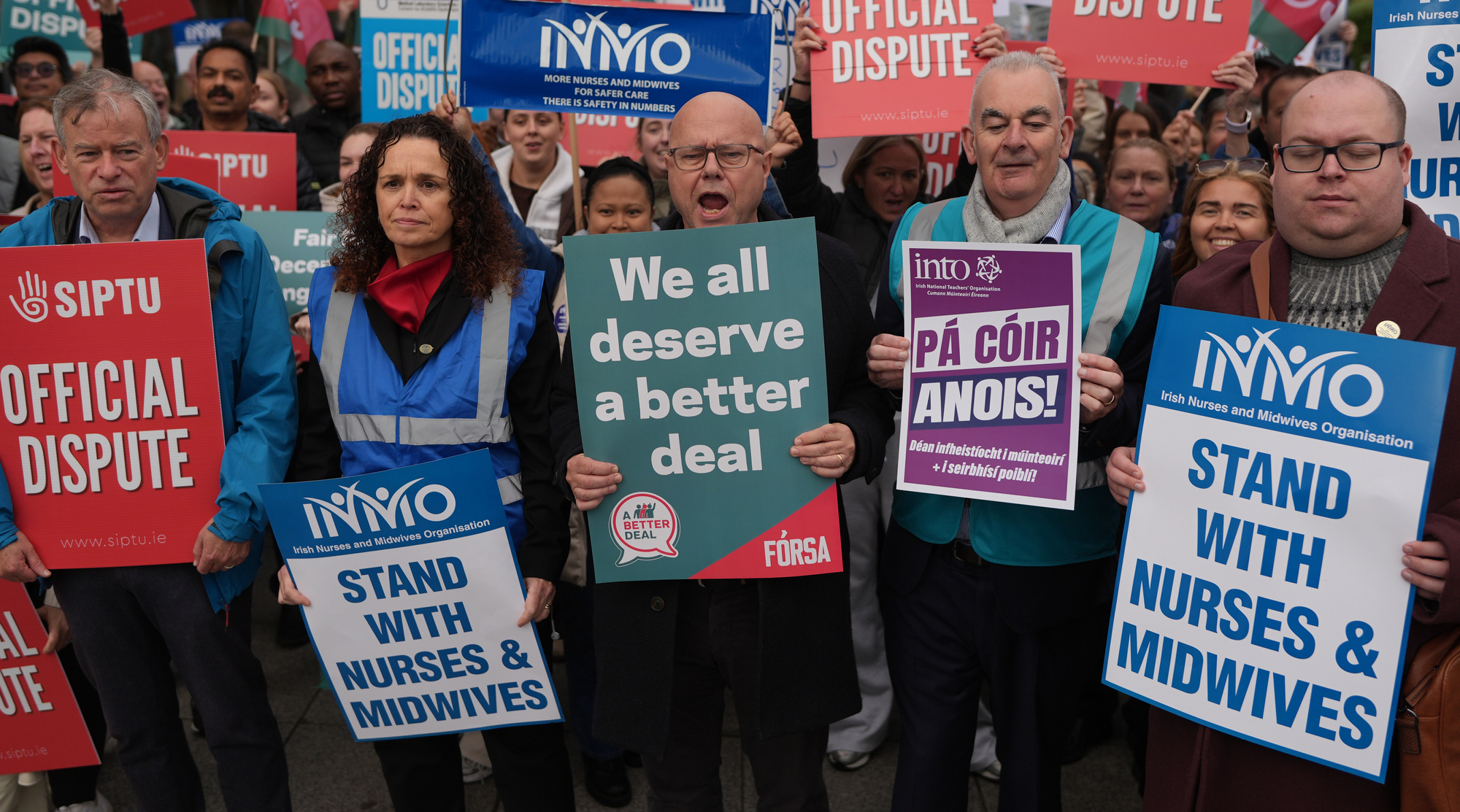
(left to right) Deputy general secretary of SIPTU Adrian Kane, INMO general secretary Phil Ni Sheaghdha, Kevin Callinan Forsa's senior general secretary and Irish National Teachers' Organisation general secretary John Boyle join public sector workers, including nurses, doctors, teachers and civil servants, during a 24-hour strike. Picture: Press Association
Government and union representatives are back at the Workplace Relations Commission (WRC) this afternoon as talks resume in a bid to secure a new public sector pay deal and avert Thursday’s planned strike.
The talks follow late-night discussions aimed at bringing both sides back to the negotiating table after the Government put forward a revised pay offer for public sector workers.
But what exactly is on the table, and what is likely to happen on Thursday if a deal is not reached?
Read More
Following the previous breakdown in talks, the Government returned to unions in recent days with what it has described as a “substantially improved offer”.
The revised offer could be worth between 10.5% and 11%, with lower-paid workers receiving pay increases of up to 17.8% over the lifetime of the deal.
It would also include a backdated payment of €1,200 or 2%, whichever is higher, in 2026. Combined with the 2% increase under the previous pay deal, this would bring public sector pay increases to 4% for the year.
The new agreement would be expected to run until early 2029.
Union leaders believe there is a potential pathway to an agreement following the resumption of talks.
Speaking to broadcasters as he arrived at the WRC, Fórsa general secretary Kevin Callinan said unions wanted to reach a deal today.
“There are a number of matters outstanding. I think we’ll see how the day goes. We’re not optimistic, we’re not pessimistic,” Mr Callinan said.
“We’re seriously going to try and negotiate a public service deal.”
However, Mr Callinan said it was “impossible to say” whether the strike would be called off.
“It all depends on how the day goes and how quickly we can manage to reach agreement on the outstanding matters.
“We're committed to trying to close out a deal today, but really, that's going to depend on how the talks go."
If unions and the Government fail to reach a deal, Thursday’s planned strike would go ahead.
Work stoppages would take place across the country, with schools and hospitals set to close.
Unions have also announced plans for major rallies in Dublin and other parts of the country, with striking workers urged to attend.
The strike would coincide with Ireland hosting a major summit of world leaders, the European Political Community meeting.
CONNECT WITH US TODAY



Be the first to know the latest news and updates