Kerry engineer who built a shotgun in school now creates bomb disposal robots used worldwide
Tralee-based engineering company now develops advanced bomb disposal robots and military technology used internationally by defence forces
Padraig O’Connor caused havoc in North Kerry as a 14-year-old when he made a real gun for a school project — and demonstrated it in action. Four decades on, his firm Reamda supplies the Irish Defence Forces with bomb disposal robots and also exports to several countries. 	Pictures: Domnick Walsh

Padraig O’Connor caused havoc in North Kerry as a 14-year-old when he made a real gun for a school project — and demonstrated it in action. Four decades on, his firm Reamda supplies the Irish Defence Forces with bomb disposal robots and also exports to several countries. Pictures: Domnick Walsh

Padraig O’Connor will never forget the chaos that unfolded after the school project he had been working on in class for weeks turned out to be a real shotgun.
Now the owner and managing director of Reamda in Tralee, Co Kerry, which specialises in explosive ordnance disposal, he still recoils at the naivety of his 14-year-old self.

“The panic didn’t set in until after my metalwork teacher asked me to try it out,” the 57-year-old told the Irish Examiner. “He thought it was a BB gun at worst.”

Teachers had no idea back then that the student would one day combine his love of guns and robots to help save lives around the world.

Reamda was founded by Mr O’Connor in 2001 and has been developing military and engineering products for both national and international markets since its formation. The company has been exporting to international customers since 2006, including the UK, Switzerland, and the US.

Reamda, an acronym for Robotic Electronic And Mechanical Development Agency, also has expertise in the fields of robotic and weaponry simulation, including various naval weapon tracking systems simulations. A number of its robotic platforms boast live weapon capabilities.

Padraig’s creations have come a long way since his schooldays in Causeway Comprehensive School back in the early 1980s.

Childhood interest in guns and robots

“From a very young age, I wanted to do something with guns and robots, and I was going to make that happen no matter what.

“Even at eight years old, I had a knowledge of electronics. My uncle was into electronics too, and he used to drop me bits of old radios. 

When I was 14, I had a massive interest in firearms, so I built a gun in school.

“My dad was spotting his fishing weights going missing. I used to melt down the lead into oak. The metalwork teacher at the time didn’t know what it was because there were component parts. I think he thought it was an air rifle. 

"He even helped me make the barrel. 

Padraig had a blast at school 

"I honestly thought the teacher knew what it was. I still remember the day he said he wanted to see it working. We had this big metalwork room. It was a theory class, so the rest of the students were sitting down watching the blackboard.”

Students and teachers never anticipated what was about to happen.

“The metalwork teacher brought another teacher in to see as he thought it was a ‘lovely project’. I asked him if he was sure he wanted me to take a shot as it was ‘a bit loud’, but he insisted. When I fired the shot, it shook the windows and doors. The other teacher went running as the caretaker came charging in, thinking that one of the machines had exploded.

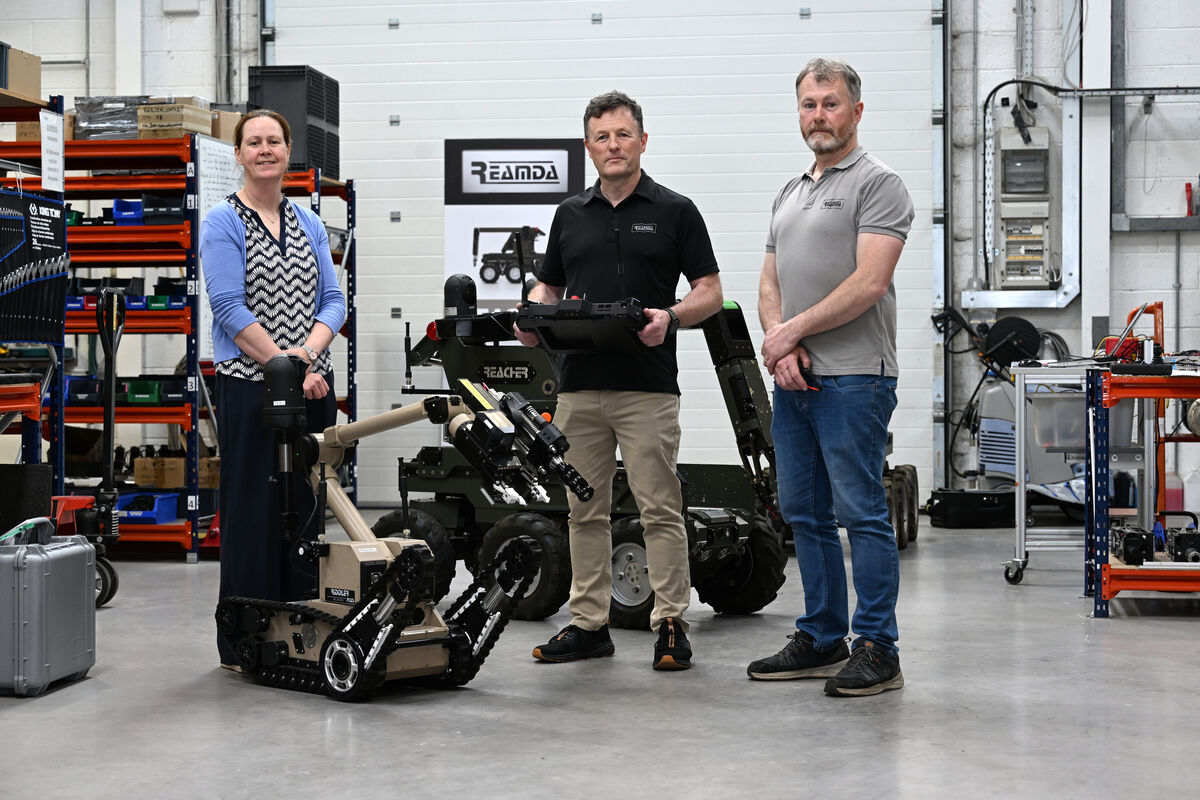
Julie Behan, Padraig O’Connor, and Noel O’Connor at Reamda in Tralee. As well as supplying the Irish Defence Forces, the firm has been exporting to countries including the UK, Switzerland, and the US since 2006.

“Meanwhile, the metalwork teacher took four steps back and stood there for a moment. I had a ringing in my ears, and he had a ringing in his. My cousin remembers how the blood drained from his face. He opened the door. The bullet had gone right through it and across the courtyard.

“Later that day, I heard my name called out on the intercom. The teacher gave me an earful about how dangerous what I did was and told me that I could have killed someone.”

Padraig wasn’t giving up his pride and joy that easily.

“I knew where the caretaker kept the keys for the metalwork room, so I was able to sneak in and get it back. I was hoping that the whole thing would be forgotten about, which was never going to be the case.

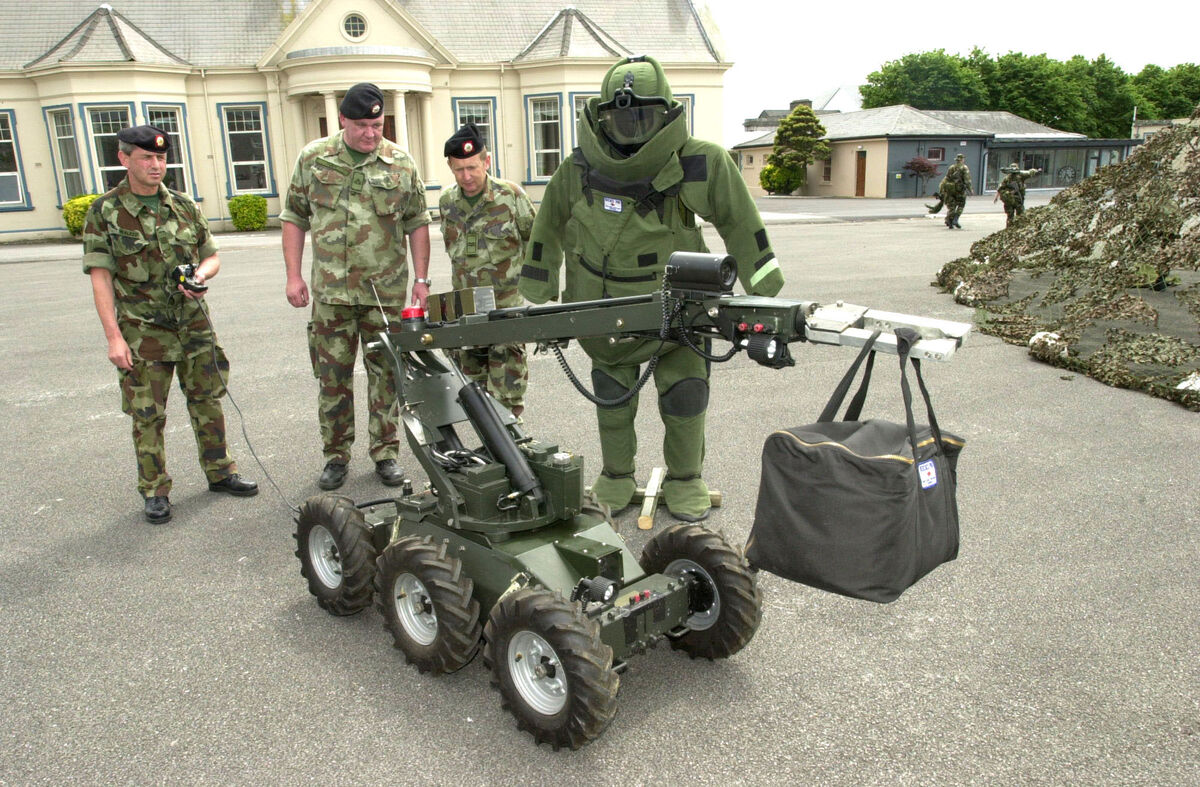
A 2005 photo of the Irish Defence Forces' Explosive Ordnance Disposal team demonstrating a HOBO robot at an open day at Collins Barracks, Cork. Reamda started in business in 2001 by providing life extension upgrades to HOBO units.  Picture: Irish Examiner Archive/Richard Mills

“That Saturday morning, the metalwork teacher called to our house. I’ll never forget my father’s reaction as he asked in disbelief: ‘He made what?’ He brought me over to the workshop at our home and told me to leave it in there. The gun stayed there for 40 years. As I have a restrictive firearms licence, I am able to legally have it now, but I didn’t want to take it until it was legally permissible for me to do so.”

The story has cemented Padraig’s legendary status in the community: “The bullet missed the woodwork window by a foot, and that chunk is still missing today.”

Padraig later studied physics and electronics at Tralee Regional Technical College, and data communications at the University of Limerick. He went on to work for Ansaldo STS, a leading international technology company, before finding his own niche in the industry.

“I had learned to programme by the time I went to college and was fluent in about four computer languages. I later started up my own company and was asked to make radio links for a bomb disposal robot.

“The company then asked me if I could do electronics for the machine. I got left supporting the Irish army and took over supporting the machines. In 2006, there was a massive upgrade for the Irish army.

Total refit of the classic HOBO robot 

“The HOBO robot, which is the original bomb disposal robot for the Irish army, hadn’t been serviced since the 1970s. 
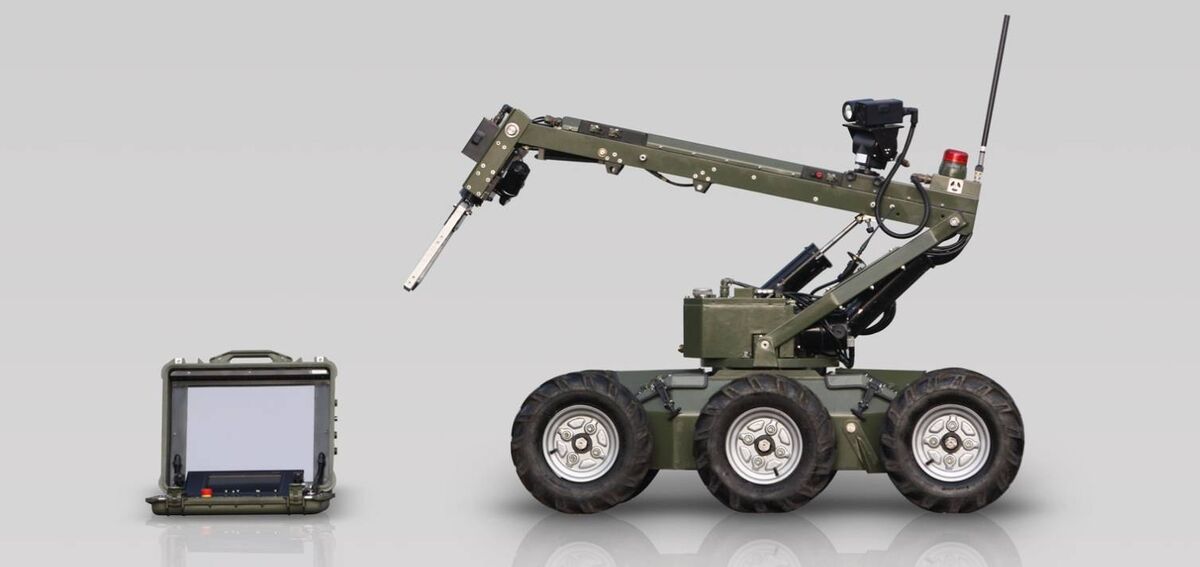
"We did a life extension on that and upgraded its radios and cameras, and gave it a new command console. 

One of the services being offered by Reamda in Tralee is a complete electronics refit of HOBO unit which has been used for bomb disposal in over 22 countries since the 1970s. Picture: Reamda

"We won that tender, and that’s what started us at the time. For a company of just three, it all came down to luck and circumstances.”

The company has gone from strength to strength.

“Reamda has been expanding ever since, and we started making robots in 2012. 

'We make everything'

"We began with the small ones that were 15kg and then 85kg and up to 300kg and 450kg. We have a very wide range of machines, and we make everything. 

"Everything is made in-house. We’re a design research company, too so other companies come to us to design stuff for them. It keeps it interesting.

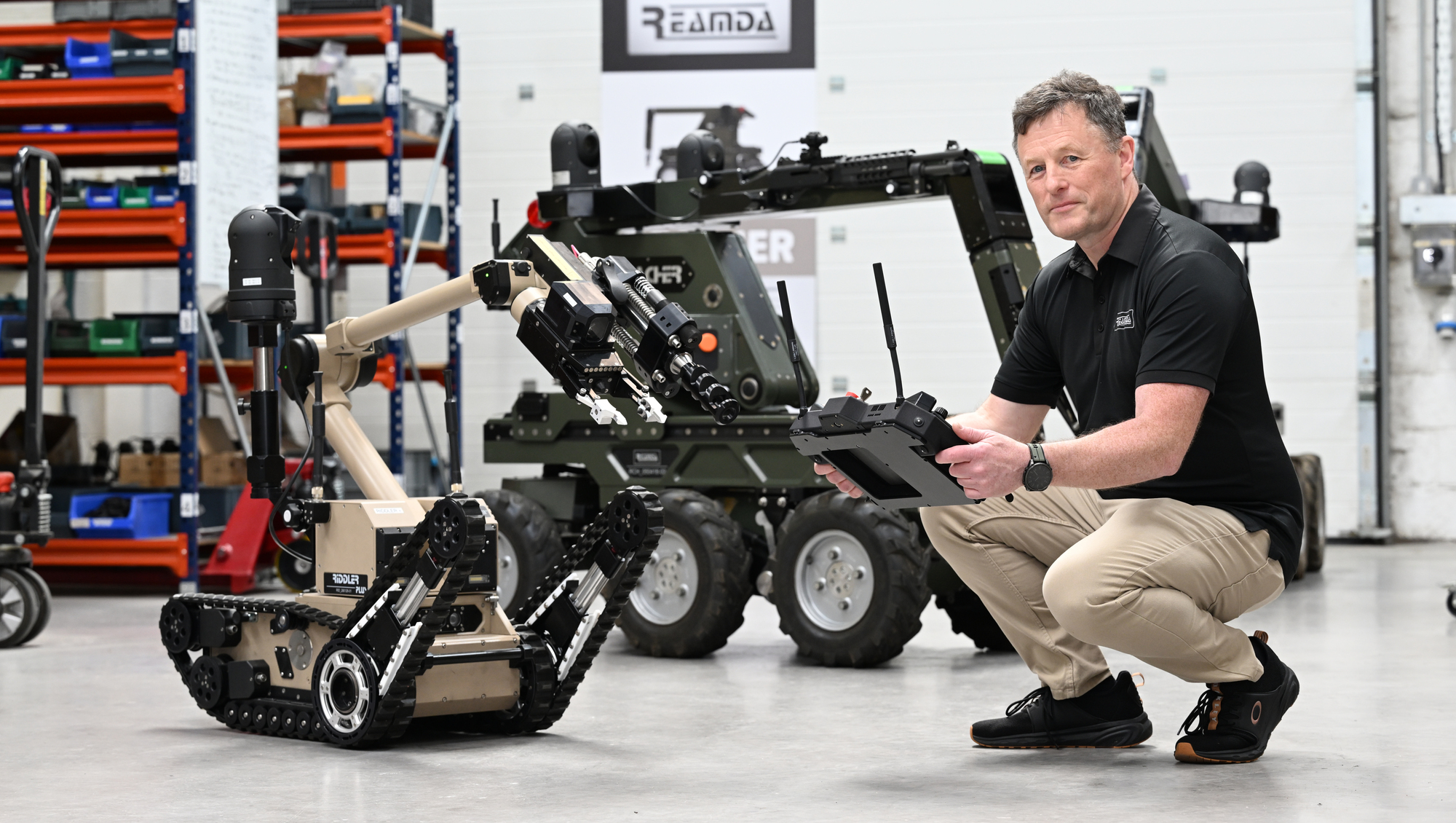
“It’s all bomb disposal, but the Riddler is our biggest seller because the industry needs small machines. 

"While this machine looks small, it’s also incredibly powerful. It can lift 80kg. It could even lift me.”

Reamda, which employs 22 staff, supplies bomb disposal robotic products to the Irish Defence Forces and police around the world. Some of its models have even been used in hostage situations.

Robots ideal for hostage situations

“When you have a terrorist or a hostage situation, the last thing you want to do is elevate it. 

"If you send in a SWAT team with guns, not only are you putting their lives in danger, but when the hostage-taker sees it coming, it can elevate the situation. He might return fire or kill the hostage, but if you can send in a small robot, it’s not as intimidating or viewed as a threat. 

"If it’s a face-to-face talk through a machine, then there’s no risk. They can try to shoot the robot if they want because they normally don’t see it as a threat.”

The team also enjoy coming up with solutions a little closer to home. 

Douglas Village Shopping Centre fire 

Padraig vividly recalled forming part of the response team amid the aftermath of the Douglas Village Shopping Centre car park fire in 2019, which resulted in damage exceeding €30m and its closure for more than a year.

“You are always looking for the exciting job as opposed to the mundane stuff that is a little bit different to what you do every day.

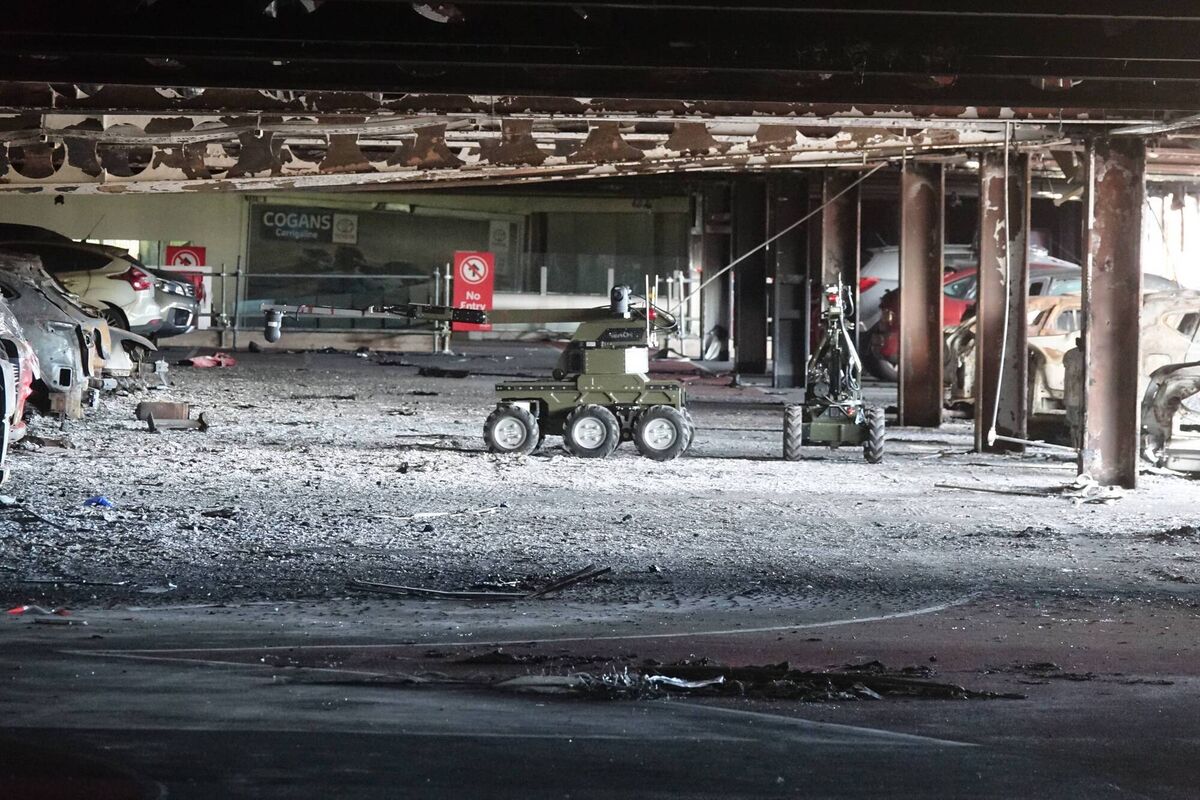
“We took in two of our robots. There were 20 insurance companies there who all wanted to see the footage because they didn’t know who was going to pay this massive insurance bill. 

Even from Germany, and everywhere else, there were insurance investigators. We had to take two machines, so if we ever lost communication, the second machine could re-establish the link. We went in and took pictures and videos.

Two robotic probes operated by Reamda safely surveying damage in the car park of Douglas Village Shopping Centre, Cork, after it was devastated by fire in 2019.	Picture: Vrai.ie
Two robotic probes operated by Reamda safely surveying damage in the car park of Douglas Village Shopping Centre, Cork, after it was devastated by fire in 2019. Picture: Vrai.ie

“Nobody could go in because the whole place had been condemned. The roof was going to come down. It was an example of a bit of diversity and a bit of excitement. We had never done that before. You are always looking for something that’s a little different to what you normally do every day.”

Irish Defence Forces' unit

The Irish Defence Forces bomb disposal team, known as the Explosive Ordnance Disposal unit, frequently disposes of explosive devices across the country.

“You would be surprised at the different agencies and the different approaches of the countries.

“You see the likes of the police in Dubai go through their whole careers without seeing a real device. However, if you join the Irish army, you will probably see one in your first month. 

We got very good at making bombs in this country, and it hasn’t gone away because the IRA are gone. 

"The skill stayed, but now it’s more the criminal element and your ordinary criminals using it as a way of intimidating each other.”

Padraig’s career is as fascinating as it is challenging: “It’s such a varied industry because you have mechanical engineering, electronic engineering, software engineering, simulation engineering and even chemical engineering. We have chemical sensors that can be attached to the robots, including a gas spectrometer.

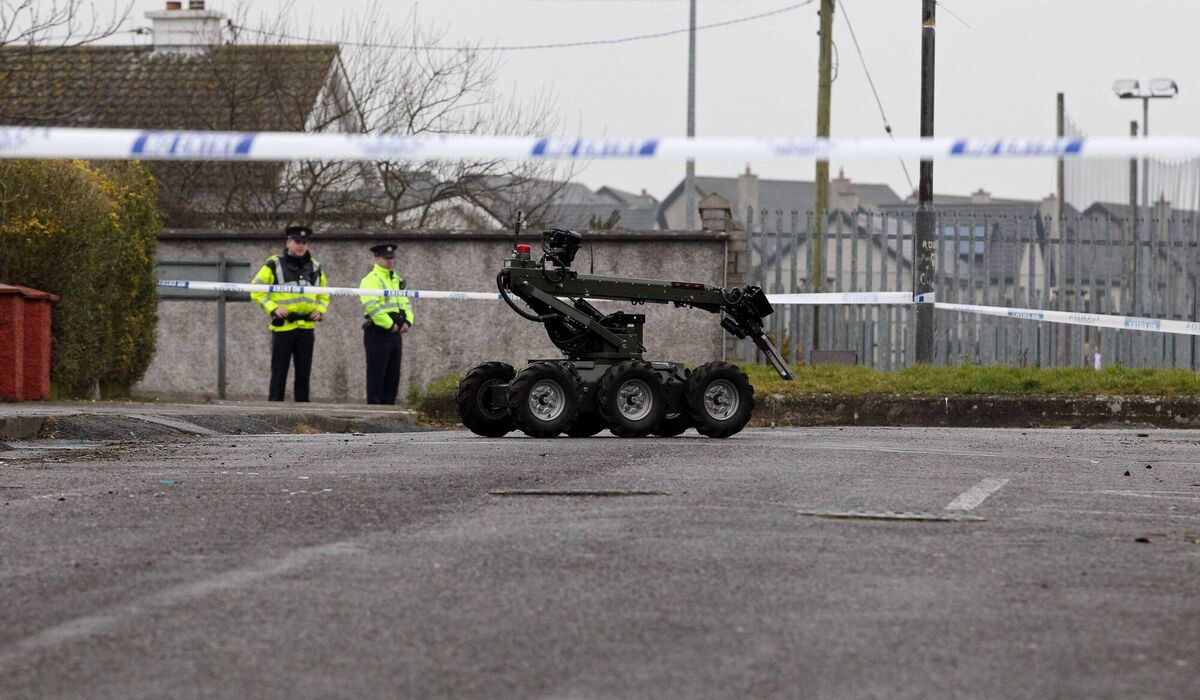
An Irish Examiner Archive file photo from 2015 of a bomb disposal robot being deployed by Explosive Ordnance Disposal, the specialist unit of the Irish Defence Forces. Picture. Jim Coughlan

“This can detect chemicals like Sarin gas, which is used in war as a chemical weapon nerve agent. Mustard gas, which is used in warfare, can also be detected, along with all the other chemical agents.

“Radiological sensors will tell the robots if you are exposed to radiation and how dangerous those levels are.”

'Fit for purpose'

One of the most rewarding parts of Padraig’s job is the feedback he gets from customers.

We’ve never lost a sale to a demo. If we get as far as a demo, we usually win because the product is fit for purpose. 

"A lot of people make stuff that looks nice and fancy but, at the end of the day, this is a tool that does a job, and if a tool doesn’t do a job, then it’s not useful.”

While his robots are designed to save lives, bomb disposal still often ends in tragedy.

“People still die because they might not use the robot. The Irish army is well trained, and they are probably the best in the world. However, with others, there can be battlefield scenarios where people still get caught out with a booby trap or something like that.”

'AI is making a massive difference'

Artificial intelligence has helped the team streamline much of their operations: “AI is making a massive difference. It has changed so much in this company from the point of view of design and creating computer programmes.

“It’s like having this very powerful employee who can do what we describe as the ‘grunt’ work and elevate you to a higher level. You can now try ideas that would normally have taken weeks of this grunt work. Now, engineers are able to step back and look at the bigger picture.”

Padraig’s brother, chief mechanical engineer Noel, also works at Reamda. The facility even boasts nods to their childhood, most notably a currach suspended from the ceiling.
“My father was very good with his hands and very good at carpentry, but he loved fishing. We used to fish for lobsters in that boat during the summertime, and I used my lobster money to buy my first computer. There was a dividing wall between the workshop and another shed, and Dad used to watch us over the wall. 

"The idea was to bring in the boat and hang it on the wall to ensure that Dad can continue keeping an eye on us to make sure we’re not up to any mischief.”

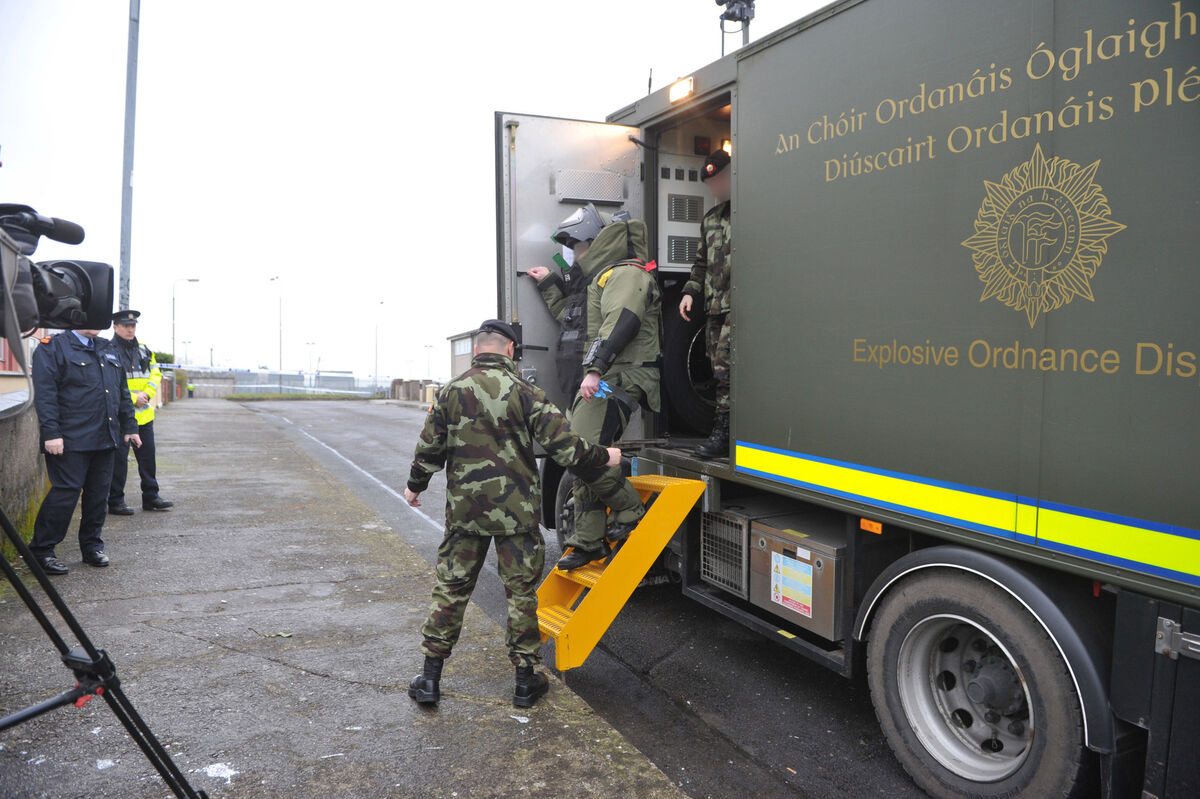
Members of Explosive Ordnance Disposal, the Irish Defence Forces' bomb disposal unit, arriving to investigate — and, if necessary, neutralise — a suspect device in 2015. Picture: Irish Examiner Archive/Dan Linehan

Senior research, development, and application engineer Julie Behan explained how the robots have become like a part of her family.

“My daughter Lucy calls the big one the robot with the big red eyes, and she still talks about him all the time. She is nine, but when I brought her in, she was much younger and really believed the robots here were alive. One mother told me that Lucy told her daughter that I make robots that blow stuff up. She was very taken aback when I explained that Lucy was in fact telling the truth.

“My son Alex is still only two, so he is still a bit small for the robots yet, but it’s still very exciting for him.”

The University of Limerick professor said she is extremely proud of the work she does: “As a country, we deliver high-end products and compete with the best in the world in this area.

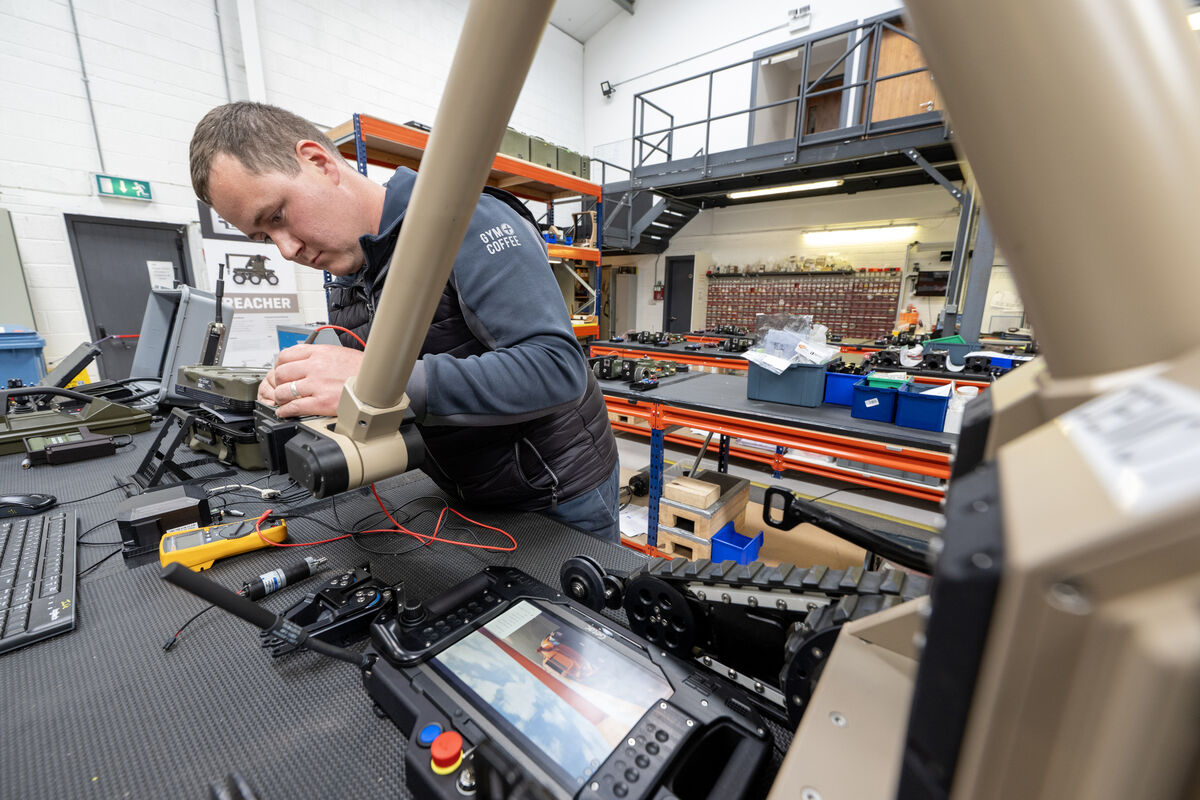
Conor Walsh in the lab at Reamda in Tralee. Founder and managing director Padraig O’Connor says: ‘We started making robots in 2012... We began with the small ones that were 15kg and then 85kg and up to 300kg and 450kg. We have a very wide range of machines, and we make everything. Everything is made in-house.’ Pictures: Domnick Walsh

“It’s great to be part of that and also very rewarding. When you make something and test it, you can see the full circle of development two years later. Every time the army goes out, our robots are part of their kit. They can’t go out without a robot. When you see the robots being used, and they are helping and protecting people.”

Senior robotic engineer Sergei Sabkin enjoys the unpredictable nature of his work.

“The most interesting part of Reamda is getting to work with all the different equipment,” he told the Irish Examiner.

“Every single day, you have experience with different fields of engineering. In most big companies, you focus on one small thing. In Reamda, we get to do different things.

“For example, today we implement X-ray or radiation detectors. Tomorrow we implement ultrasound scanning systems...”

More in this section