Air India Flight 182: Cork photographer recalls taking iconic image of 1985 bombing tragedy
One of the most poignant photographs ever printed on the front page of this publication was that of the lines of dead bodies in the temporary morgue set up in Cork for the victims of Air India flight 182.
A bomb placed on board the flight by militants exploded off the Kerry/West Cork coast on June 23, 1985, with the plane plunging into the Atlantic.
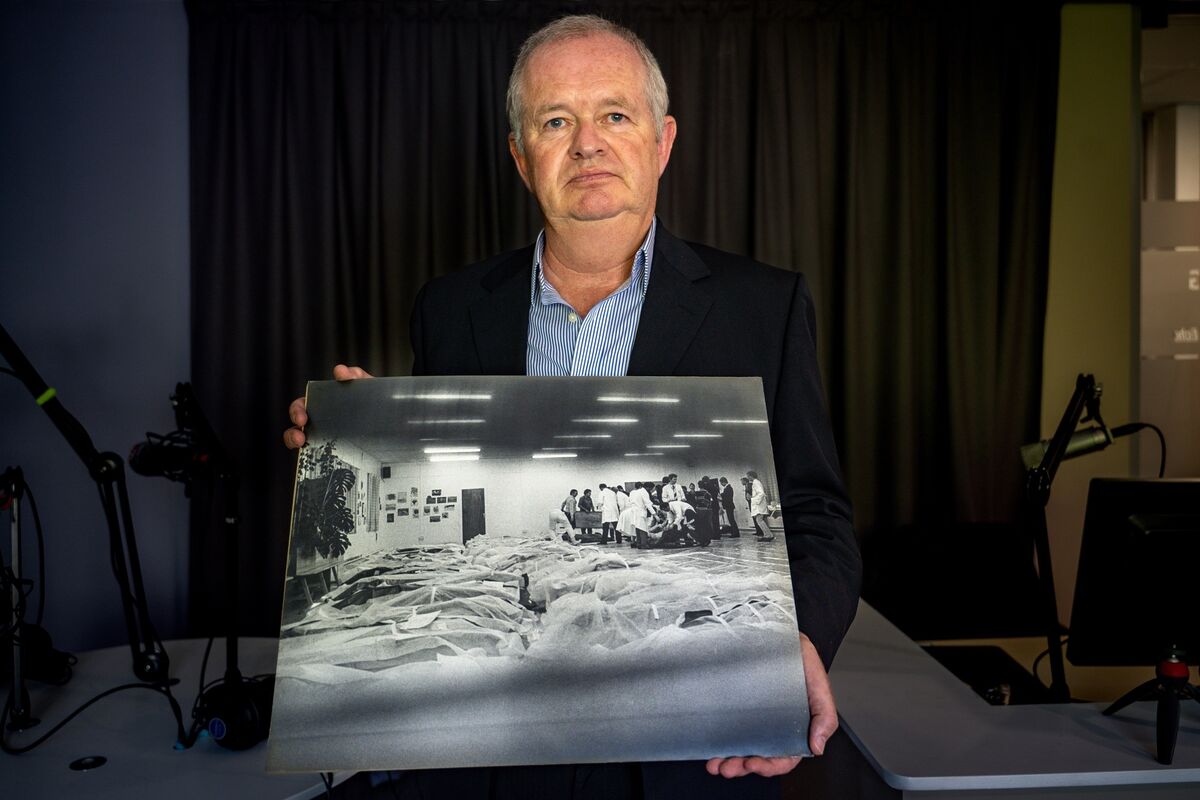
Forty years on, photographer Denis Minihane can still recall second by second the lead-up to snapping that iconic photograph, which also showed a group of medics gathered in the background of the image.
Now retired after spending 47 years as a press photographer, the then 26-year-old snapper had been looking forward to a busy afternoon shooting sports photos in Thurles for two Munster hurling games.
HISTORY HUB
If you are interested in this article then no doubt you will enjoy exploring the various history collections and content in our history hub. Check it out HERE and happy reading
But when news broke of the horror air disaster off the west Cork coast, Denis’ day took a different turn. He was not to know it as he returned from Thurles to the offices of the on Academy Street in Cork city centre but his image would become synonymous with the tragedy unfolding in the sea off West Cork.
Denis’s image from the temporary mortuary set up in the then Cork Regional Hospital was syndicated across the world, and was featured in the New York magazine, , which was very influential at the time.
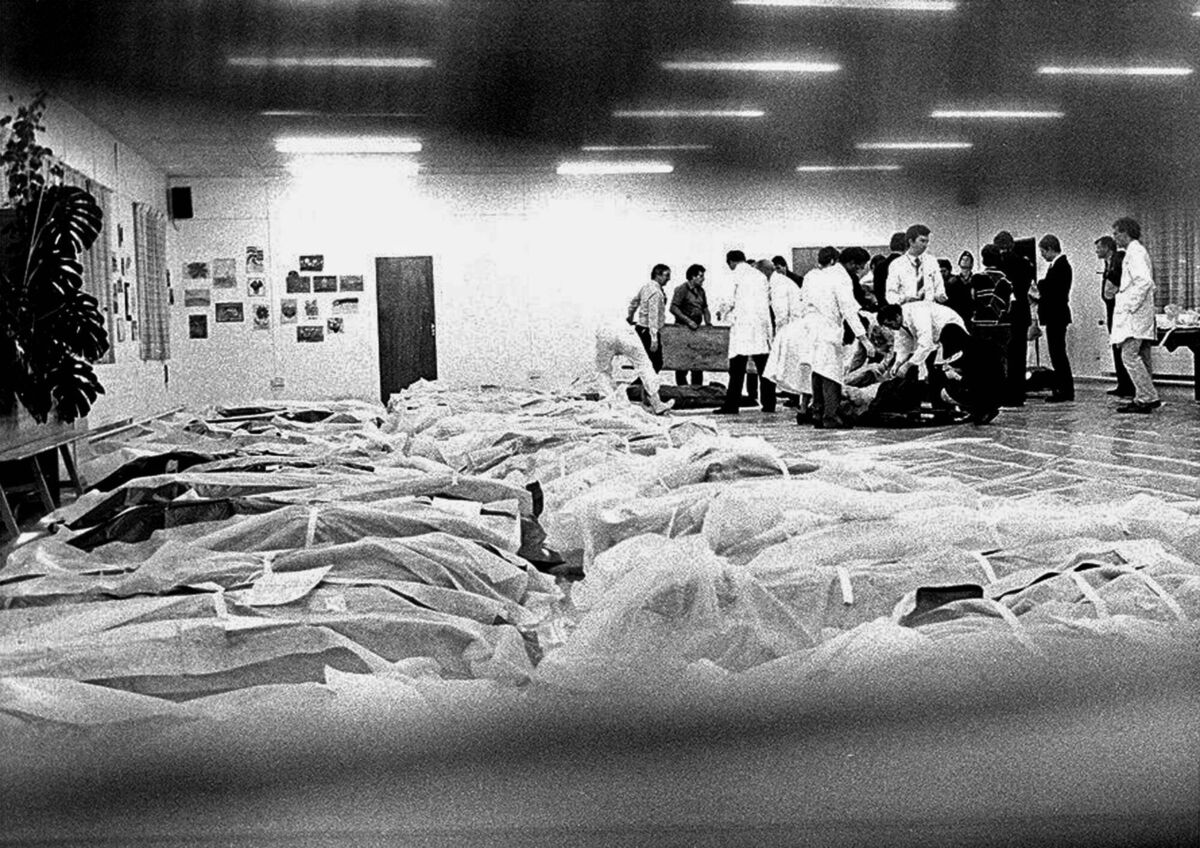
Looking back, the Skibbereen-born photographer said: “It was the most significant photograph I took in my career really. Sadly it was one of a disaster. Such is life.”
Denis retired last year and recalls entering the photographic trade after seeing his father Michael work as a photographer with the then .
After his Leaving Certificate, Denis entered the dark room in the in October 1976, not knowing that one of the most iconic images of Irish press photography history would his.
He recalls: “On the morning of the 23rd of June 1985, I was marked to go to Thurles to cover two Munster hurling championship games and the 11 o’clock news came on on RTÉ Radio 1 and it said that Air India flight 182 had gone down off the Irish coast.
"So we came back to Cork and parked the car and came into the office and it was rather difficult to get into the photographic department because it was packed with photographers who had arrived in Cork from different countries around the world.”
He says of himself that he was just a “young fella” at the time, aged 26.
He continues: “I went out and attended the press conference (at the Regional Hospital) and there was a huge gathering of photographers and camera crews at it. I managed, through enquiries, to find out where the remains of the people taken from the wreckage were being kept and it was a temporary morgue that was set up in the gymnasium.
"I got as far as the door and I obviously was not able to get any further so I went around the back of the building and I could see that there was a very high window.
"But it was just down to my level so I could just about see in and didn’t know if I could get a photograph or not because there was a very high thick net curtain, full length, inside the window, down on to the window sill.
"So I could barely see into the room. I was by the window for quite a while and it was getting late in the evening. It must have been 10.30pm, may be 10.30/11 o’clock at night and I saw someone coming towards the window with a ladder and I move, I step back around the side of the building.
Seeing his chance, Denis decided to have another attempt at seeing into the mortuary and recalls: “That’s how I had a gap of maybe two inches to get the photograph through and I managed to get a few frames.”
But even then, he didn’t know if his attempt was successful, in a time when photography took more patience than today.
He explains: “In those days, you had to come back to the office and process so I didn’t know whether I had a photograph or not and it was a nervous seven or eight minutes developing the film – an anxious wait. Anxious also because it was also an upsetting scene that I had seen. It was a poignant scene.”
He recalls seeing the images develop and night editor Liam Moher writing the caption for his now famous image, which included the words “world exclusive picture”.
He says: “I just didn’t understand the significance of it I suppose. It was over my head. I had done what I had done because it was my job and he had asked me to go and do it but I didn’t realise how significant the picture was going to be in the following days and years afterwards.”
He is mindful of the pain and suffering of the families and friends of those who were lost in the Air India disaster.
He continues:
The flight was due to stop over in London’s Heathrow before travelling to India for stops in Delhi and Mumbai. Passengers were primarily from Canada, but others on board came from India and Britain, as well as other countries. More than 80 of them were children.
Two men accused of murder and conspiracy relating to the crash were found not guilty in March 2005.
It was alleged that the bombing was plotted by Sikh extremists in Canada as revenge on India for its storming of Sikhism’s Golden Temple in Amritsar in 1984.
CONNECT WITH US TODAY



Be the first to know the latest news and updates