Bus plans for Cork City will see loss of on-street parking and some gardens
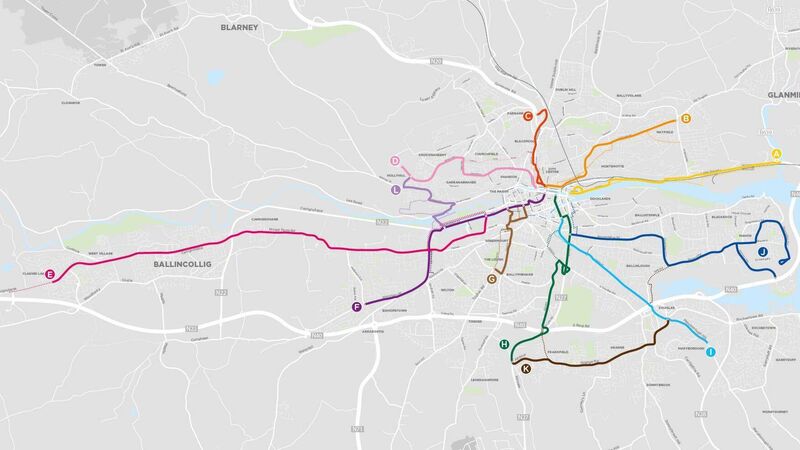
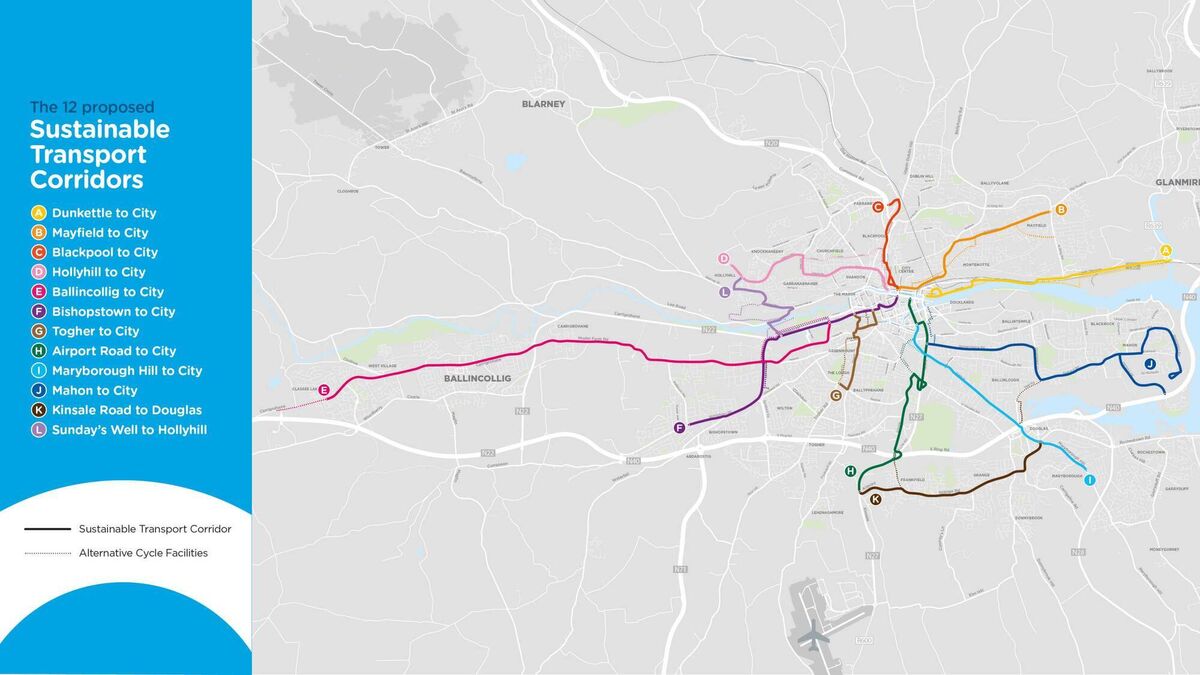
The 12 proposed Sustainable Transport Corridors, with bus, cycling and pedestrian facilities, proposed for Cork under the BusConnects Cork plan.
Ambitious plans to build 129kms of new bus and bike lanes along 12 strategic transport corridors in Cork city have been unveiled.
However, full delivery of this key infrastructural element of the €600m BusConnects Cork plan will mean a loss of on-street parking spaces, the acquisition of some buildings, and the loss of gardens in places.
The news was confirmed this morning as the National Transport Authority (NTA) unveiled details of the 12 proposed sustainable transport corridors (STC) it hopes to build to help meet the needs of the growing city while accelerating its journey to a net-zero future.
The corridors will run from:
CLIMATE & SUSTAINABILITY HUB
- Dunkettle to the city;
- Mayfield to the city;
- Blackpool to the city;
- Hollyhill to the city;
- Ballincollig to the city;
- Bishopstown to the city;
- Togher to the city;
- Airport Road to the city;
- Maryborough Hill to the city;
- Mahon to the city;
- Kinsale Road to Douglas;
- Sunday’s Well to Hollyhill.
The proposals, if implemented in full, will deliver 75kms of new dedicated bus lanes, 54kms of new cycling and walking infrastructure, and deliver a near 50% reduction in bus journey times across most of the STCs.
The details are contained in the BusConnects Cork STC report published by the NTA today which says the routes will significantly improve bus journey times and increase the number of people walking and cycling into the city.
Delivering the STCs is one of the nine key elements of BusConnects Cork that aims to transform the city’s bus system, making public transport more accessible to more people.
Other key parts of the plan include redesigning the city's bus route network, work on which is ongoing, transitioning to a zero-emissions bus fleet, new bus livery and the introduction of a modern ticketing system.
The NTA said the proposed STCs are fundamental to realising the ambition of the Cork Metropolitan Area Transport Strategy (CMATS) which aims to increase the number of people using public transport in Cork fourfold by 2040 and expand the numbers cycling and walking by 33%.
Transport Minister Eamon Ryan TD said Cork has a unique opportunity to become a leader in sustainable transport.
“BusConnects Cork is key to making public transport and active travel a viable option for people and communities across the city,” he said.
“The new sustainable transport corridors announced today, along with the planned roll-out of a zero-emission bus fleet, will make travel by bus, as well as walking and cycling, more attractive to many more individuals and families. By drastically reducing bus journey times and providing dedicated cycling and walking infrastructure, sustainable transport will be at the very heart of a thriving Cork City into the future.”
NTA chief executive, Anne Graham, said a clean, modern and reliable public transport system can help unlock Cork’s potential as a connected and competitive European city.
“That’s why the NTA has unveiled a €600m investment in BusConnects Cork to transform public transport in the city,” she said.
“Central to that investment is the development of the sustainable transport corridor project featuring 75kms of bus lanes and 54kms of cycling and walking infrastructure.
“With a 51% increase in the numbers taking the bus in just six years, there is a rapidly growing demand for bus services and the need for modern infrastructure to support Cork’s growth.
“The planned growth in bus services and increase in active travel investment will benefit a significant proportion of Cork’s population but will not fully succeed without the roll-out of the sustainable transport corridors.
“Today’s report is the first step in creating a more sustainable future for Cork. In June, we will be engaging with commuters, residents and businesses to hear their views about the proposals we have put forward. These views will help the NTA in collaboration with Cork City Council in developing and finalising the STCs.”
City council chief executive, Ann Doherty, said the investment in BusConnects Cork is a vote of confidence in the city and the council’s ambitious plans to make Cork a better and more sustainable place to live, work, visit and invest in.
“The provision of 75kms of bus lanes and 54kms in cycling and walking infrastructure will help to meet the increase in demand for travel within the city while reducing the dependency on the car,” she said.
“The project brings with it exciting new opportunities to change the way we travel and to invest in urban renewal.” Details on each of the proposed STCs will be published for an initial round of public consultation in June.
The NTA said a series of community forums will then be established to fully engage people and groups at a local level for each corridor and surrounding areas, as the project progresses.
CONNECT WITH US TODAY



Be the first to know the latest news and updates