Independent group asked to resolve public sector pay dispute after talks reach impasse
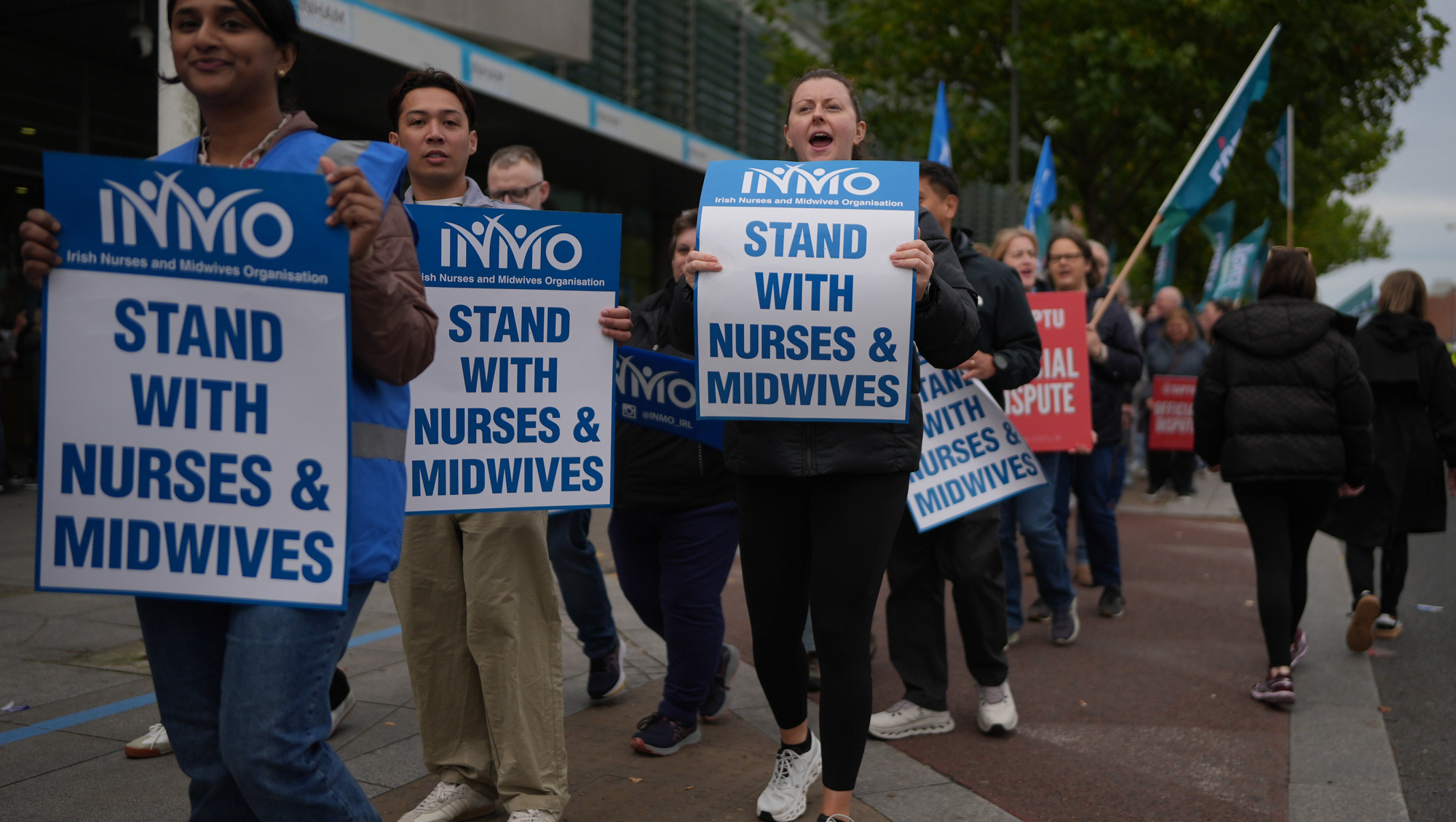
Public sector workers including nurses, doctors, teachers and civil servants, took part in a 24-hour strike earlier this month (Brian Lawless/PA)
A Government-appointed group has been asked to help resolve the public sector pay dispute[/url after negotiations reached an impasse.
Talks aimed at resolving the dispute ended without agreement late on Friday night, with unions raising the prospect of a further day of nationwide strike action.
On Saturday, the Workplace Relations Commission (WRC) said that, following 10 days of intensive talks, it believed certain issues had reached an impasse.
“The commission have today stated that it is requesting that the Government Appointed Group consider those issues and put forward a means of resolution,” the WRC said.
“Government remains committed to agreeing a fair and credible pay deal for workers across the public service that is also affordable and sustainable for the country.
“All other matters under discussion shall remain with the WRC.”
Read More
Hundreds of thousands of public sector workers took part in a nationwide strike in October.
A planned repeat strike was suspended to facilitate talks with the Department of Public Expenditure, but is now back under consideration.
The Public Services Committee (PSC) of the Irish Congress of Trade Unions (ICTU) is due to meet on Monday to consider a further nationwide strike on Wednesday, November 11.
On Friday, the general secretary of Fórsa, Ireland’s largest public sector union, said talks at the WRC, which began on Monday, October 19, had at times been “heated”.
Kevin Callinan, who is also chairman of the PSC, had said unions would be left with “no alternative but to escalate the action” if an agreement was not reached by the weekend.
As talks were adjourned shortly before midnight on Friday, a union spokesperson said: “Despite lengthy negotiations, we have reached an impasse.
“It does not appear possible, at this time, to negotiate an agreement that unions could confidently put to members in a ballot.
“We will reconvene with the affiliate unions of the Irish Congress of Trade Unions’ Public Services Committee on Monday morning to update them on the negotiations, and to discuss our next steps.
“We also wish to thank the officials of the Workplace Relations Commission for their efforts.”
The last strike forced the closure of schools, the rescheduling of thousands of non-emergency hospital appointments, and the cancellation of driving tests and most court hearings.
Public sector workers, including nurses, doctors, teachers and civil servants, went on strike after first taking part in work-to-rule action.
Unions had demanded that pay be placed at the top of the agenda in the talks, while the Government said it would be discussed as a priority.
CONNECT WITH US TODAY



Be the first to know the latest news and updates