Antarctic meteorites are disappearing at 'alarming rate', new research finds
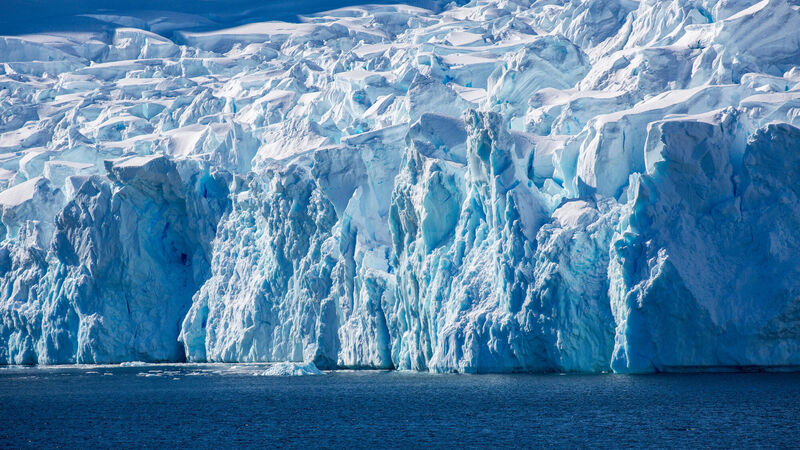
Researchers from ETH Zurich and Université Libre de Bruxelles in Nature Climate Change say a quarter of the estimated 300,000 to 800,000 meteorites in Antarctica will be lost due to glacial melt by 2050, and potentially over three-quarters of the meteorites could be lost by the end of the century. File picture
Antarctic meteorites are disappearing at “an alarming rate” due to climate change, a new study has found, putting at risk “some of the secrets of the universe.”
The continent of Antarctica contains a large concentration of meteorites, which provide invaluable information on the solar system. Now, researchers using artificial intelligence, satellite observations, and climate model projections, found that one tenth of a degree increase in global air temperatures leads to nearly 9,000 meteorites disappearing from the surface of the ice sheet on average.
Researchers from ETH Zurich and Université Libre de Bruxelles in Nature Climate Change say a quarter of the estimated 300,000 to 800,000 meteorites in Antarctica will be lost due to glacial melt by 2050, and potentially over three-quarters of the meteorites could be lost by the end of the century.
Their disappearance will mean the loss of extraterrestrial rocks that would melt into the ice sheet.
Published in the journal Nature Climate Change, Harry Zekollari, who co-led the study, is calling for a major international effort to preserve the scientific value that meteorites provide. He said:
We need to accelerate and intensify efforts to recover Antarctic meteorites. The loss of Antarctic meteorites is much like the loss of data that scientists glean from ice cores collected from vanishing glaciers — once they disappear, so do some of the secrets of the universe.
Co-lead Veronica Tollenaar of the Université Libre de Bruxelles says the meteorites heat up regardless of them being surrounded by ice due to the power of the sun.
“Even when temperatures of the ice are well below zero, the dark meteorites warm-up so much in the sun that they can melt the ice directly beneath the meteorite.
“Through this process, the warm meteorite creates a local depression in the ice and over time fully disappears under the surface,” she said.
Scientists stress that the only way to preserve most of the remaining unrecovered Antarctic meteorites is to reduce greenhouse gas emissions.
The study concluded: “A concerted effort would be similar in spirit to what is currently done in ice core research, where ice samples collected from vanishing, yet unique, glaciers — such as the few remaining tropical glaciers — are stored in long-term archives.
“Ultimately, however, the only way to preserve the remaining unrecovered Antarctic meteorites is to rapidly reduce greenhouse gas emissions.”
CLIMATE & SUSTAINABILITY HUB
CONNECT WITH US TODAY
Be the first to know the latest news and updates