'We are just so tired': Parents reveal endless struggle to find and pay for childcare
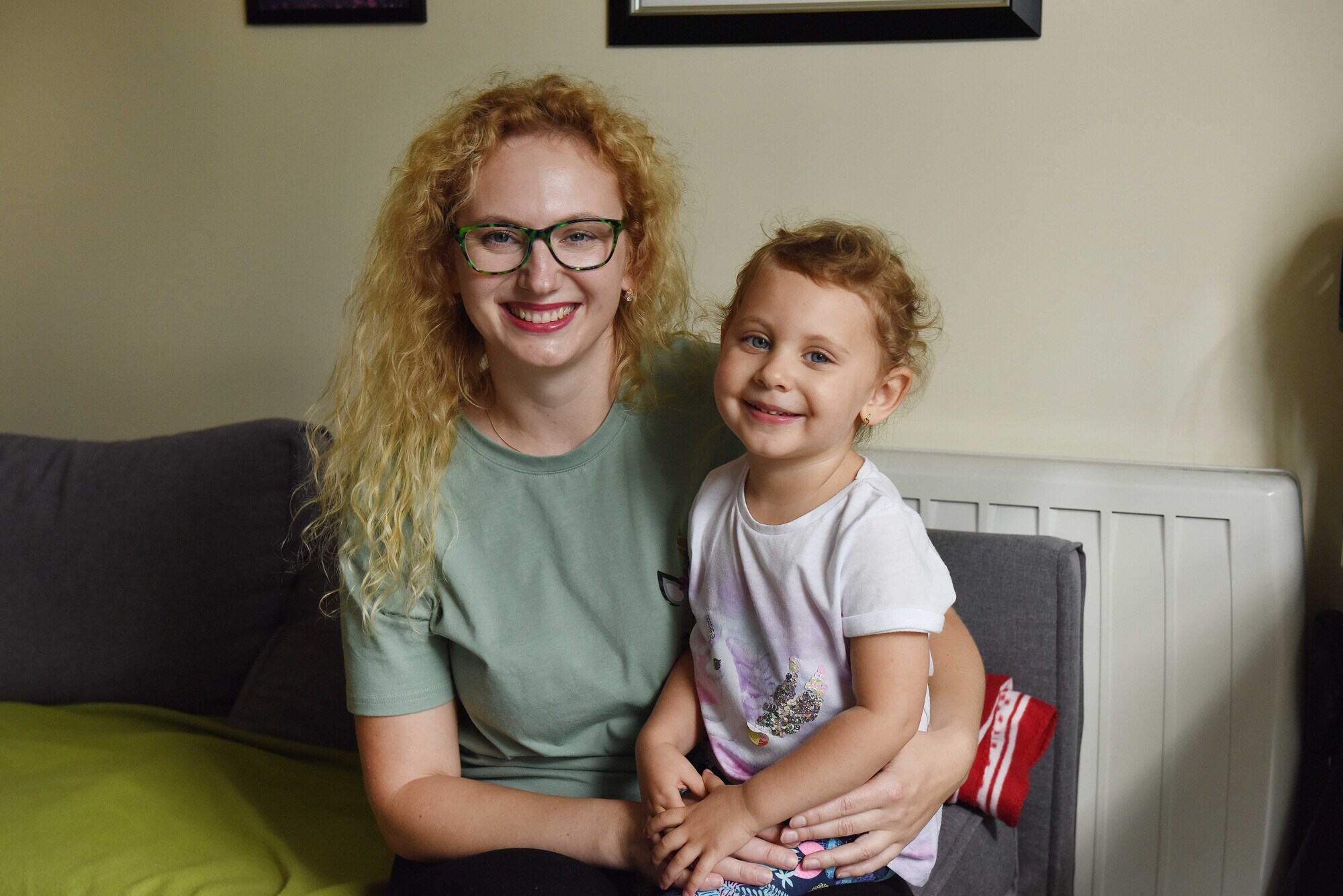
Renata Karpicz from Tallaght, cannot find a place in a local creche for her two and a half year old daughter Haniya. Potograph Moya Nolan
Having a child in Ireland in 2021 is an increasingly costly endeavour for parents, even for those in relatively well-paid employment.
Thousands of new parents get a rude awakening when it comes to returning to work and they realise the huge costs associated with childcare. Added to this is the stress of finding a suitable place, especially for a baby under the age of one.
The average rate for a creche place in Ireland at present is in the region of €800 per month per child, based on data released by the Department of Children in late 2019, though the figures vary wildly — in south Dublin the average cost is closer to €1,070, and fees of closer to €1,300 are not uncommon.
At the same time, childcare businesses are struggling desperately to survive. Rising costs and increasing regulation, coupled with an industry-wide shortage of suitably-qualified staff (mostly due to the consistently low wages which are common in the profession), make merely keeping a business afloat a tall order.
As a result of those increased costs, the majority of creches in Ireland will no longer accept children aged younger than one. This, coupled with Ireland’s status as the second-worst provider of statutory parental leave in the EU, places new parents in a massive predicament. Childcare is not easily found, when it is it can be prohibitively expensive, add in Ireland’s well-worn issues of housing and rental costs, and the situation becomes increasingly difficult.
And then there’s Covid-19 which has, as it has in so many ways across our lives, dealt a cruel blow to childcare providers, many of whom closed at the beginning of the pandemic and never reopened.
Nevertheless, there are huge numbers of children in childcare in Ireland — over 200,000 according to a 2019 Pobal survey, with more than half of that figure being cared for in creches.
The Department of Children has committed to bringing funding for the sector up to scratch, though how long that will take is anyone’s guess. It has also acknowledged the “evidence of undersupply for certain cohorts, including children under the age of three”.
Coupled with the headache of intense competition for childcare spaces is the fact Ireland ranks among the worst countries in Europe for paid statutory parental leave. While both parents are entitled to five weeks’ leave during the first two years of a child’s life, there is no onus on an employer to pay a full salary during that time. The same is true for maternity leave.
In a seemingly hopeless situation for parents, the solution for many can only be found through thinking outside the box, be it working outside what would commonly be seen as normal hours, or enlisting the help of Ireland’s army of grandparents to share the childcare burden.
Here are five stories of a struggle being felt in homes across the country and across the social spectrum.

Helen is a 36-year-old nurse living in south Dublin. She has two sons. She is currently on unpaid maternity leave.
The creche in which her older son is cared for doesn’t accept children under the age of one
Helen wants to return to her work at Beaumont Hospital in December, but is caught in a dilemma as her new baby won’t be one until March.
“I opted for unpaid maternity leave a few weeks ago,” she says:
“It is no secret that the level of nursing staff in Ireland is at a critical point. But how am I to go back and help with no childcare?” she asks.
Her hospital manager “is amazing”, she says. “She knows the situation, but when it gets to October they’re going to need to know when I’m going to work in order to draft the new rosters.” She says “to be honest, I don’t really know what I’m going to do”.
“In a worst-case scenario, I can’t go back. But the dole won’t cover the mortgage. I could do community work at night, but it’s not exactly something to look forward to. I want a work-life balance, who wants to be constantly exhausted?”
A consistent problem for the early years industry, particularly for creche workers, is the issue of low wages. Finding staff is problematic. Keeping them is more difficult again.
Helen’s current creche moved to part-time hours for the month of August due to staffing shortages, but is expected to return to full opening hours from the end of September, which means at least one of her children will have childcare. The future for many creches is precarious, however, between increasing costs and neverending staffing issues:
“The bottom line is that childcare workers do an amazing job. We trust them to care for, educate, and socialise our children at such an important part of their lives.”
“The workers’ pay should reflect that. People can’t be expected to do this job on the frontline for €12 an hour. How could anyone have the incentive to progress and stay in the sector with this pay? They have families to support too.”
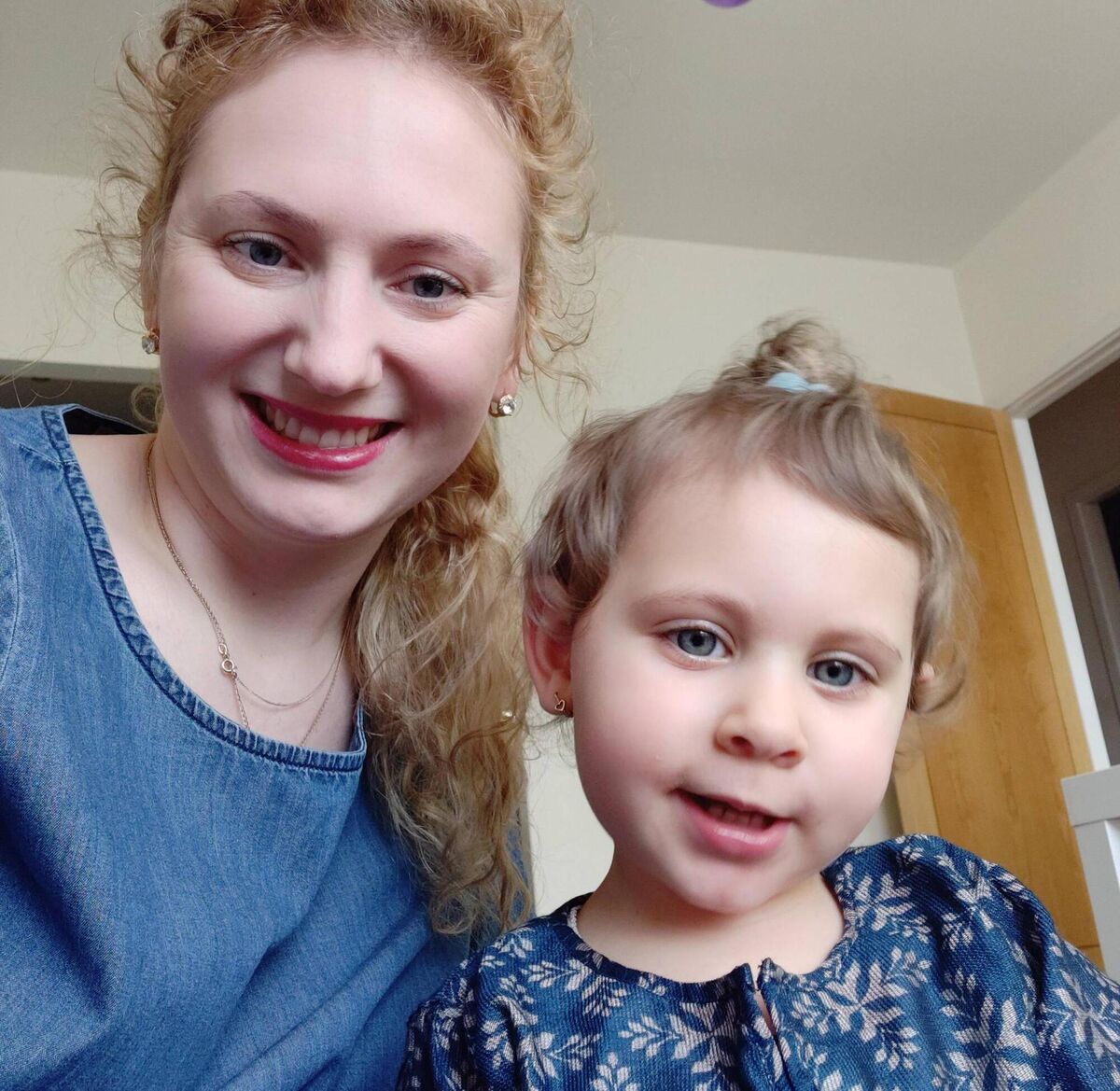
Renata Karpicz is from Poland and has been living in Ireland for the past six years. She and her husband both live and work in Tallaght in west Dublin.
The 35-year-old’s story is one that brings home what parents in a world of often exorbitantly priced childcare sometimes have to do to get by.
Their daughter Haniya is two years and five months old. It’s a significant age — in three months Haniya will become eligible for the ECCE (early childhood care and education) scheme, the State’s offering of free preschool education, first introduced in 2009.
The ECCE now adds up to two years of pre-primary education, fully subsidised, for three hours a day, in tandem with the school year. Applying for the scheme is one thing, finding a preschool to take a child is another, particularly when many have large waiting lists.
Haniya has never been in childcare, she has never had a childminder. Instead, her parents work practically every hour in the day to take care of her between them.
“I have been working night shifts and day shifts,” Renata explains. At present she works in a delicatessen in Tallaght between 9am and 3pm each day. Her husband works the night shift as a security professional. He minds Haniya when he comes off shift.
When Renata comes home, he grabs a couple of hours of sleep before heading for his overnight job once more, she says:
Some respite beckons in the form of ECCE. Renata has applied, and Haniya has been accepted for the scheme. The problem now is to find a preschool which will take her in. Renata and her husband have been looking for the past three months.
“We’ve tried four places around here. We don’t drive so it has to be around here. People say to get a preschool close to the school where she will eventually go, but it’s so difficult,” she says. “Two of them say she is on a waiting list since June. But when I try to meet the manager of the school they are always busy. Nobody can take a call. We are both so tired.”
One principal has told Renata that they will be able to take Haniya from the end of September. “But we’re still not certain,” she says.
For the moment, Haniya is still at home, and her parents are still working around the clock. “It is very hard for us,” Renata says.

The problems with childcare in Ireland are a double-edged sword. On one side are the parents suffocating under enormous costs, on the other are the businesses struggling desperately to survive. Ireland’s creche industry is predominantly a private, market-driven one. There is another issue, however, the divide between community childcare — which are not-for-profit organisations, generally in more populous areas, often catering to parents of limited means — and their private counterparts. Both are swimming in the same waters, and working off the same employee pool.
Suzanne is a manager with a childcare chain in the Midlands, a private business operating several facilities catering to children aged six months and older. She says that community childcare services are heavily subsidised, handing them an unfair advantage in terms of rates and pay, numbers her own service can’t compete with.
“We’ve lost four staff recently,” she says, people who have in effect been headhunted by local competing community concerns.
“We support our staff as best we can. It’s not always about money.”
However, Suzanne is under no illusions that differences in wages will eventually add up for a worker. She estimates that the two community services in her area are paying roughly 25% more per hour than her own company can afford.
“When you see the large scale difference in rates and pay — I know they say private is a business and community is not for profit, we can only pay wages based on our income, and we can’t keep raising creche rates for parents,” she says. “We have had to close one of our baby rooms and we may have to close more as getting suitably qualified staff into the sector is such a major problem.”
A national standard ratio of one adult to three children in a baby room applies, making such a facility a lossmaker for any creche offering it.
“Overall, we can suffer the loss of earnings in the room but when we don't have the staff we can't continue to provide the service, which significantly impacts working parents.” At fault is 20 years of childcare policy on the part of the State, she says.
“With capital funding from the Government community creches can get up to €500,000 to upgrade their premises, and €50,000 for maintenance work. We’ve €7m which has gone into the sector, and all we can apply for are €500 worth of IT upgrades,” she says.
“Private providers could not be treated more disrespectfully if the Government tried. If all private providers closed their doors it might make the Government and everyone else finally take notice.”

Emma Carolan has run the gauntlet of trying to find suitable childcare on several occasions. With children ranging in age from 18 down to one, she has seen it all. The Cavan native says over the years the situation has mostly got worse.
Two months ago, her two-year-old son was asked to leave the creche where he had been minded since his infant days due to his not yet being potty trained [children vary in when they get used to using a toilet — two-and-a-half is perhaps an average starting point, but it varies].
That creche will now only take children aged three and over, a recurring trend across the country due to the relative ease of caring for older children and the heightened cost benefits of same.
Now Lavey-based Emma is stuck working from home and minding two children under three. She’s due to return to the office in Cavan town this month, but has yet to find a spot for either of her two youngest.
“I’ve been in touch with about six creches in the town. Two of them would take babies under one. Other than that it’s from three years onward only,” she says.
“Then one evening they said ‘we’ll see him again when he’s trained’, and that was it.”
The same creche was where Emma had sent her older children. “I would have always sung their praises. I wouldn’t want to say anything bad about them, but I think they handled it very badly — they should have worked around him,” she says. She works for the Department of Agriculture, but no specific childcare scheme for those in the civil service exists:
“What is really driving me up the wall,” she says is the fact a new creche in nearby Ballyjamesduff, which had been due to open in June, has been repeatedly delayed due to backlogs involving the relevant inspections by child agency Tusla.
“I’ve had my little man down for it ever since I heard about it opening. It’s going to take another three or four weeks I think. In the meantime, the creche is just sitting there.”

Catherine is a 30-year-old childcare worker and mother of two living in a small town in East Cork. She says she could not afford to place her two children in the creche she works in because it would be too expensive.
“So I’ve had to look for other options,” she says. “It’s sad, I work in a position of responsibility, I’ve been there for more than ten years, and yet I have yet to reach the so-called living wage [the minimum average salary which will allow a socially acceptable standard of living — currently that is €12.30 per hour in Ireland].”
She notes how it has become more and more difficult to operate a childcare business as regulation intensifies: “There is more time spent regulating businesses than there is in actually trying to find a way to make them work,” she says.
“There are so many rules and regulations and things like insurance costs that it is no longer viable for most places to open for children under one,” she says:
"The whole situation is a pickle," Catherine says, adding that she believes childcare issues are “having an extremely negative impact on my and my family’s lives, and it’s the same for people all over the country. And I don’t see any change on the horizon here. No one is talking about it where it matters.”
CONNECT WITH US TODAY



Be the first to know the latest news and updates