Renault 4 EV review: Why this retro-inspired electric hatch is a standout
The new Renault 4 electric impresses with retro styling, strong range and everyday practicality — and may even outshine the five-star R5
|
RENAULT 4 |
|
|---|---|
|
|
★★★★★ |
|
|
from €27,995 - €32,995 in tecno spec as tested. |
|
|
a 52-kWh battery, which develops some 148bhp |
|
|
around 320km - give or take |
|
|
those who remember the old one, won’t believe this one |
|
|
A truly excellent piece of kit |
Last year we found time to do just that about the new Renault 5. It got a rare five-star rating, only to be outshone in our end-of-term Car of the Year awards by its sister machine, the Alpine 290 GTS, which took the top gong.
In itself, however, the R5 last year – to paraphrase the old Roxy Music song – was remade and remodelled. And what a job they made of it. It is a fantastic thing and, while it now comes as an electric vehicle (EV) only, is one of the best things done chez Renault for years.
And then they pronounced they were going to revisit another old hero, the Renault 4. Upon the announcement, we here at Motoring Towers, were filled with something approaching dread. They couldn’t make something as bad as the old R4 again, could they?
Anyone of a certain age will have vivid memories of the old R4, irrespective of whether they actually owned one or not. So ubiquitous were those cars – built as they were from 1961 through to 1994 – that almost everyone of a certain vintage has clear memories of such as the dash-mounted gear lever, or the terminal tendency to rust.
Read More
Despite looking like it was made from an amalgam of biscuit tins – and rusting accordingly – the original R4 was actually a hardy buck of a car with largely bombproof drivetrains. The sliding windows might never have worked, and you could easily use a screwdriver to gain access and start it, but you could get it to go pretty much anywhere – forever.
There was little of the French sophisticate about the old R4; it was, frankly, as rough as a badger’s ass. But, even if it was a budget car, it still managed to create a few firsts. That it had a top-hinged single-piece rear door actually made it the first mass-produced hatchback.
It was also the first time Renault used a front wheel drive layout, and it pioneered a move by most mainstream manufacturers to such a format.
Launched at a time of booming economic progress, surging prosperity and a massively increased number of people owning and buying cars, Renault had managed to sell 1m by February 1966. By the end of its production life, over 8m had been made in factories on four continents.
It was, by any measure, a roaring success. And, for all its flaws, it is still fondly remembered by those generations of drivers who either learned to drive in one or for whom it was their first-ever motor.
Such was the depth of that fondness, Renault decided – much as it had done for the excellent new R5 – to make a new one. And if we gushed about that car, you'd better get your bibs out now to protect you from the splashing.
Although our test this week was somewhat rushed for a variety of reasons too boring to go into here, it was obvious from the get-go that this was a special car and it is probably fair to say it would have been a strong contender for the valued European Car of the Year title won this year by the Mercedes CLA, had it not been for the fact Renault won it last year with the R5.
That, and the fact that the two are based on the same platform and use the same running gear, probably conspired against the R4. It’s that good.
As regular readers will know, we here at Examiner Motoring really like small cars, their joie de vivre and their on-road abilities. This car has both characteristics by the bucket load and has the added advantage of applied technology and, almost certainly, few of the issues that might have dogged the original – like rust.
Sadly for some, it no longer boasts the dash-mounted gear lever because, as it’s an automatic, the D, N and R functions are controlled from a steering wheel-mounted stalk.
It’s a roomy thing too and has a massive boot for a small hatch (which also has a 55-litre box under the boot floor); it is endowed too with very comfortable seats and, unusually for this genre, loads of headroom for the rear passengers because of its boxy shape.
Boxy or not, it is a vastly practical thing for a little family car, and that’s something people who are drawn to it will find increasingly useful the more they get used to it.
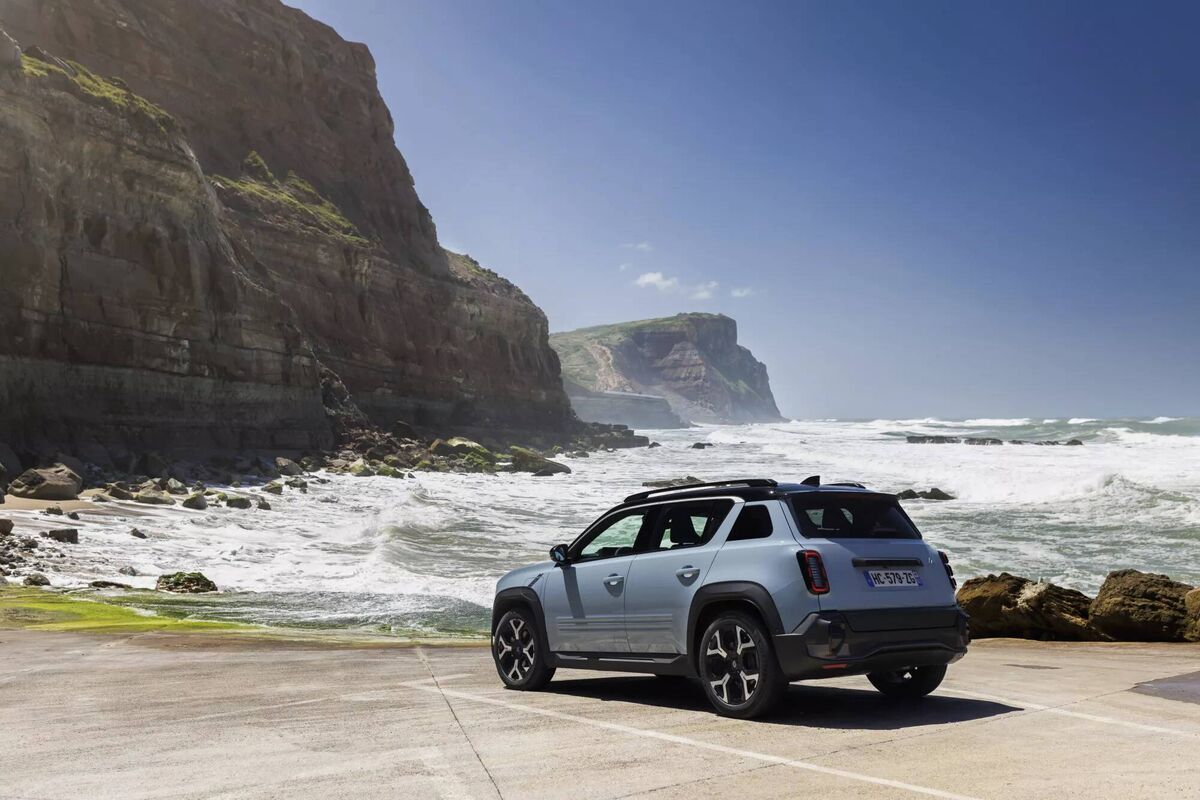
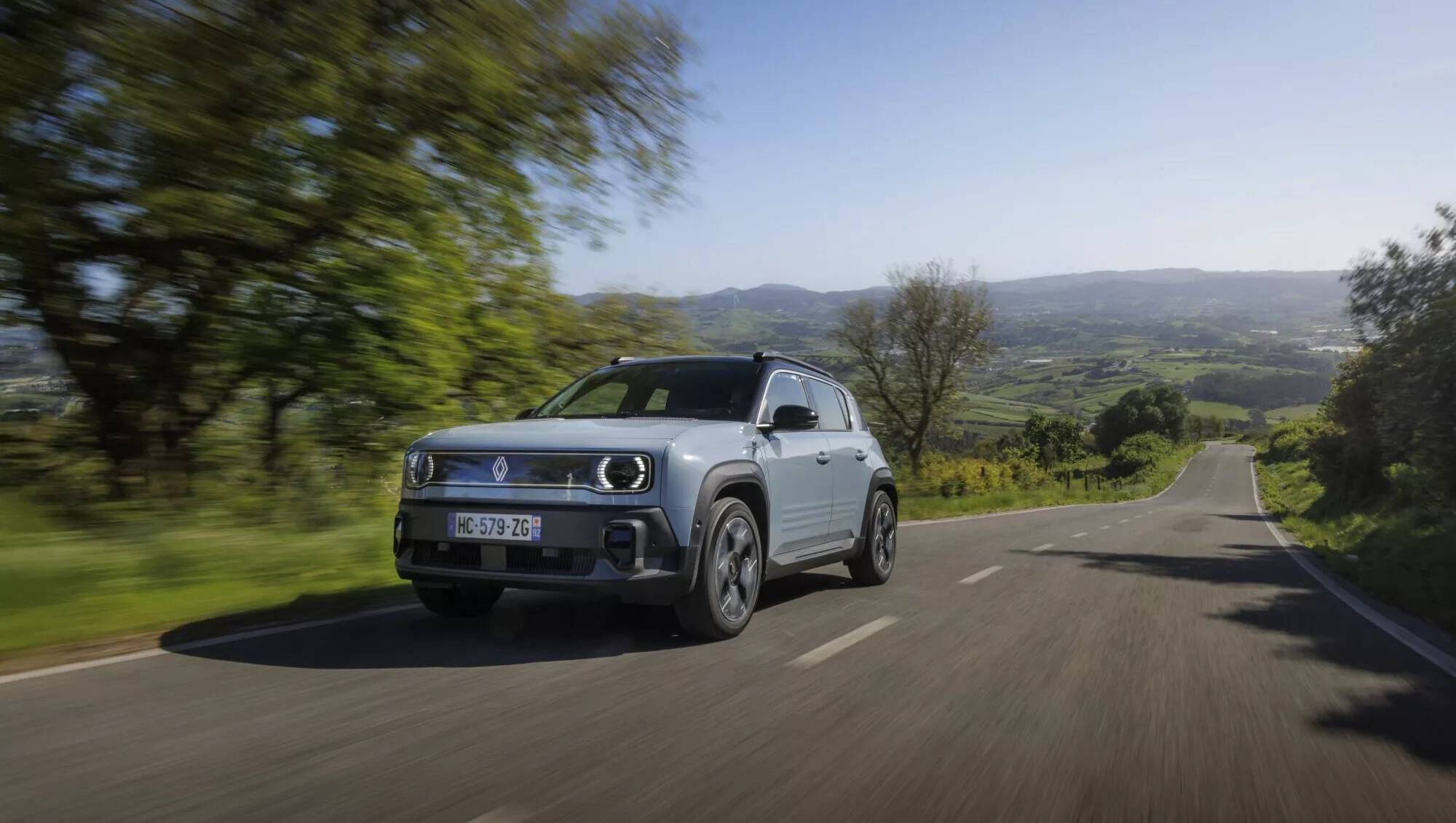
And while the exterior look does hark back to the original R4 in many ways – the roundy headlights and square front end, the slab sides and the almost flat back door. Even the ripple effect on the doors has been replicated.
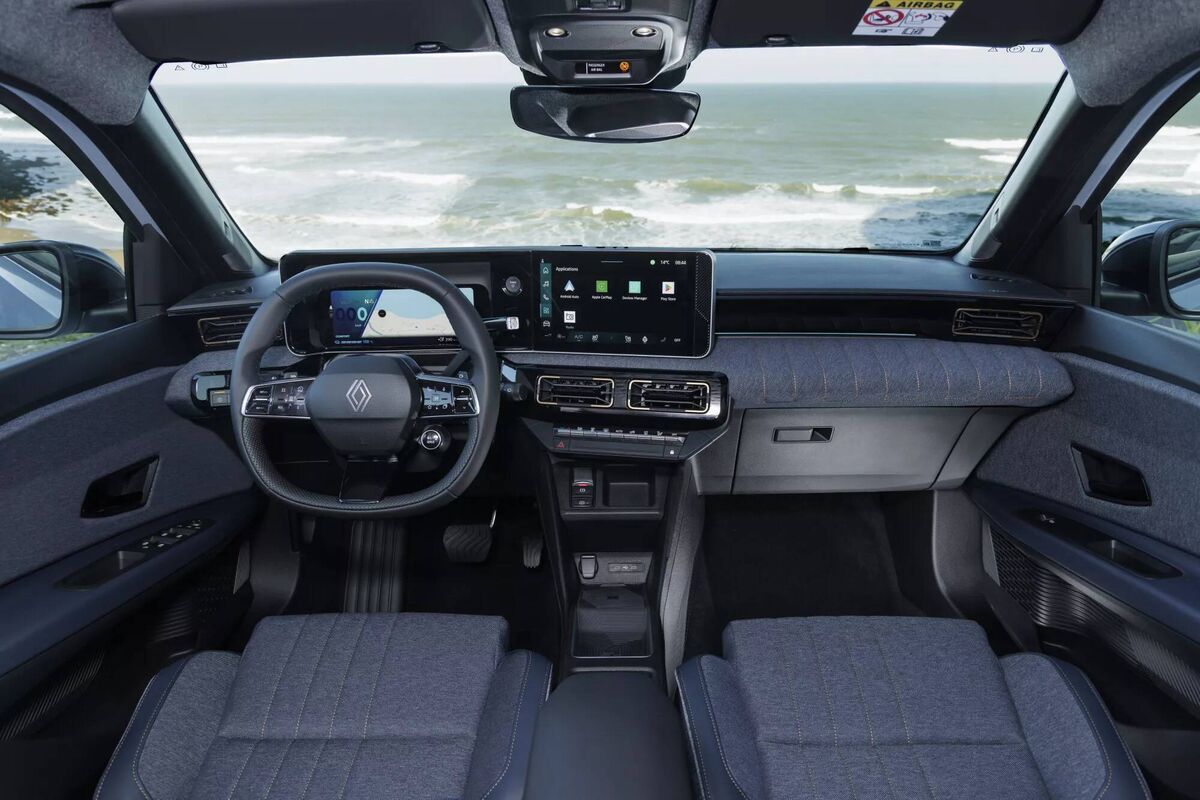
Unlike the old one, though, the interior is very sophisticated. If the original was, say, an interpretation of a rustic French farmhouse, the new one is a small chic Parisian apartment. Given the price, the amount of kit is hugely impressive and the design and implementation of features such as the infotainment and instrumentation screens are excellent.
That there are physical heater controls, buttons for various functions (including adaptive cruise control) on the steering wheel is good, and so is the fact that with the press of just one button, all the annoying safety features (lane change warning, speed alert, etc.) can be turned off.
Four stalks are cluttering the steering column – gear change, wipers, lights and stereo controls – which is a little bit much, but you get used to it.
On the road, it is a wow; a confident and assured handler, it took to the roads of West Cork with aplomb – a test all too many shirk at. It rides well too and coped with the many surface vagaries we face at this time of the year, especially, without fuss.
For a car that does not in any way pretend to be sporty by nature, it is actually quite quick. All R4s come with a 52-kWh battery, which develops some 148 bhp and makes for an 8.2-second time for the 0-100 km/h sprint.
Range is said to be near the 400 km mark, but filling it from a standard wall charger only gave around 320km. Nevertheless, this is an honest broker, and the range is largely matched by what the car tells you it is.
I started out in Cork with an indicated 240 km in the tank, and I reached my destination – some 140 km away – with 80 km left. By the standards of most modern EVs, that is impressive and very workable for most people.
That it will also tow up to 750kgs, makes it all the more useful for a variety of potential owners.
The charging times – 7h 47m from a 7.4 kW wall box and 4h 51m from a three-phase AC charger – are impressive, and so too the 30-minute 15-80% charge from a DC rapid charger.
Renault may well have started a retro-icon fashionista segment with both the R5 and R4, and fair play to them for so doing. The fact that both of these modern iterations of iconic old cars are immeasurably better than the revered older ones, it as much a statement of intent as it is that of a job well done.
If anything, the R4 is even better than the R5, and that got a five-star review. Sadly, I’m not allowed to allocate a sixth star, because if I were, it would get it.