'A scene of desolation': 60 years since Cork was devastated by worst flooding in living memory
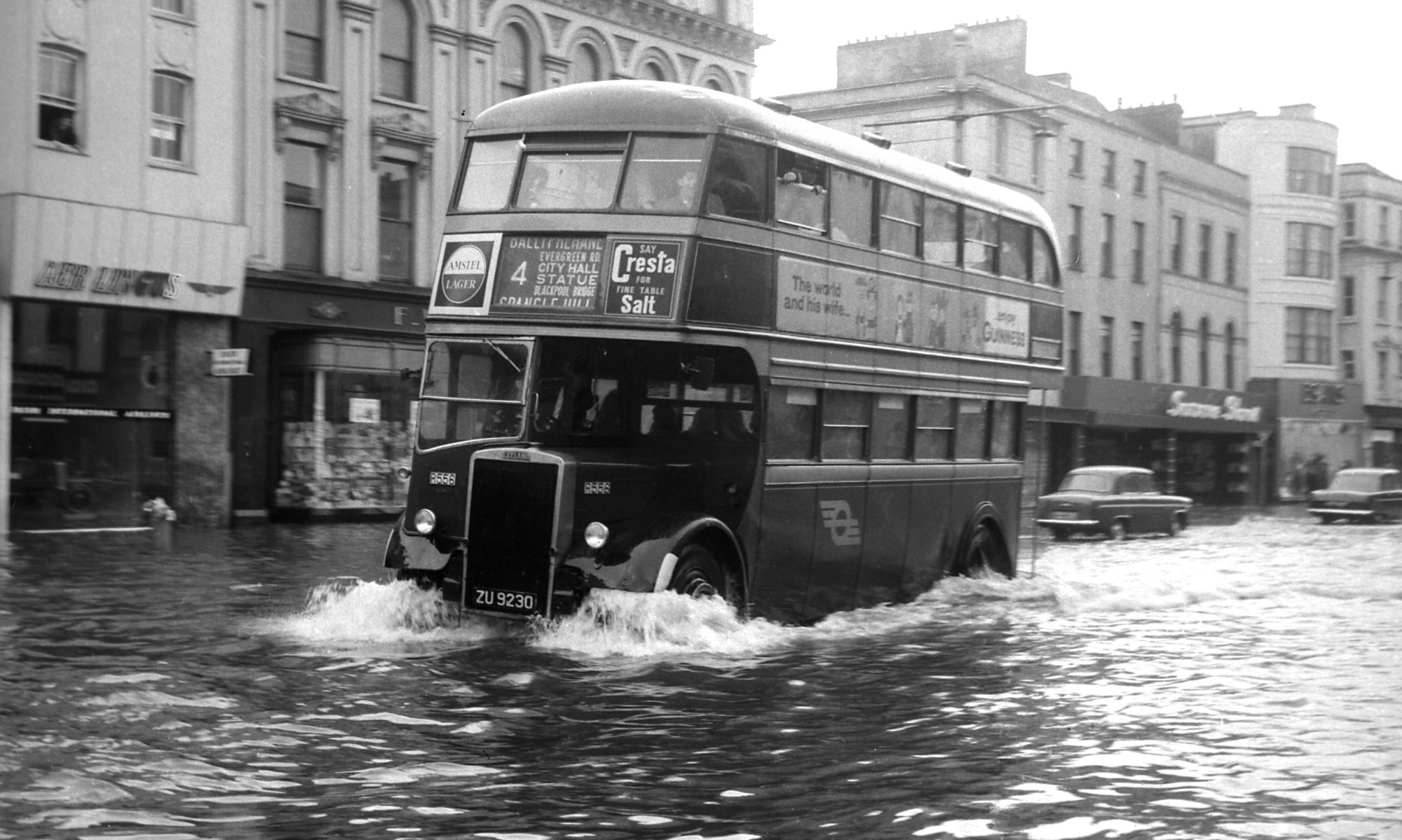
The no.4 bus travelling from Ballyphehane to Spangle Hill makes its way through the floods on Patrick Street.
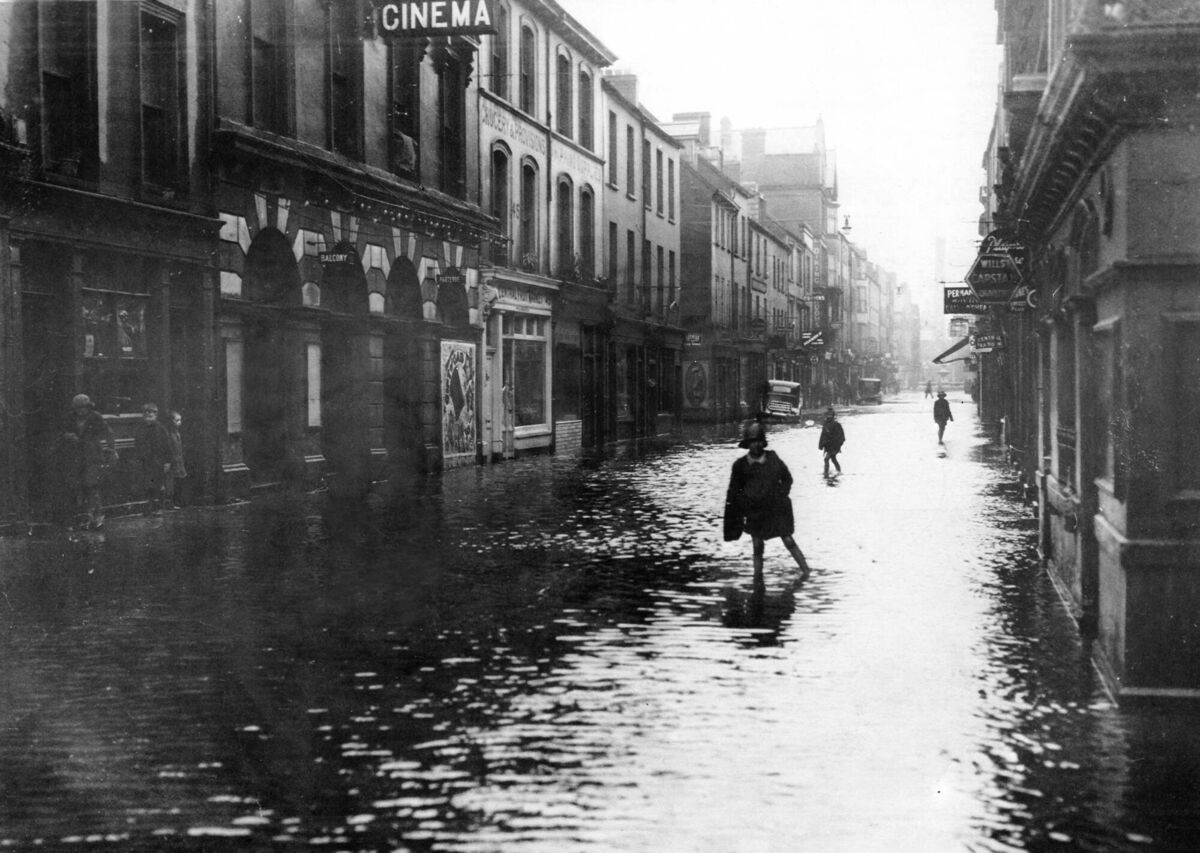
The worst flooding in living memory struck late on Tuesday, March 6, 1962, culminating on Wednesday morning and into Wednesday evening, with a destructive high tide causing a flooding terror on a scale never witnessed before.
By late evening, Cork city lay in darkness, with all telephone communication between Cork and the outside world broken down. A devastating combination of high spring tides and heavy rain, propelled by 70 miles per hour winds, wreaked havoc across the city and county.
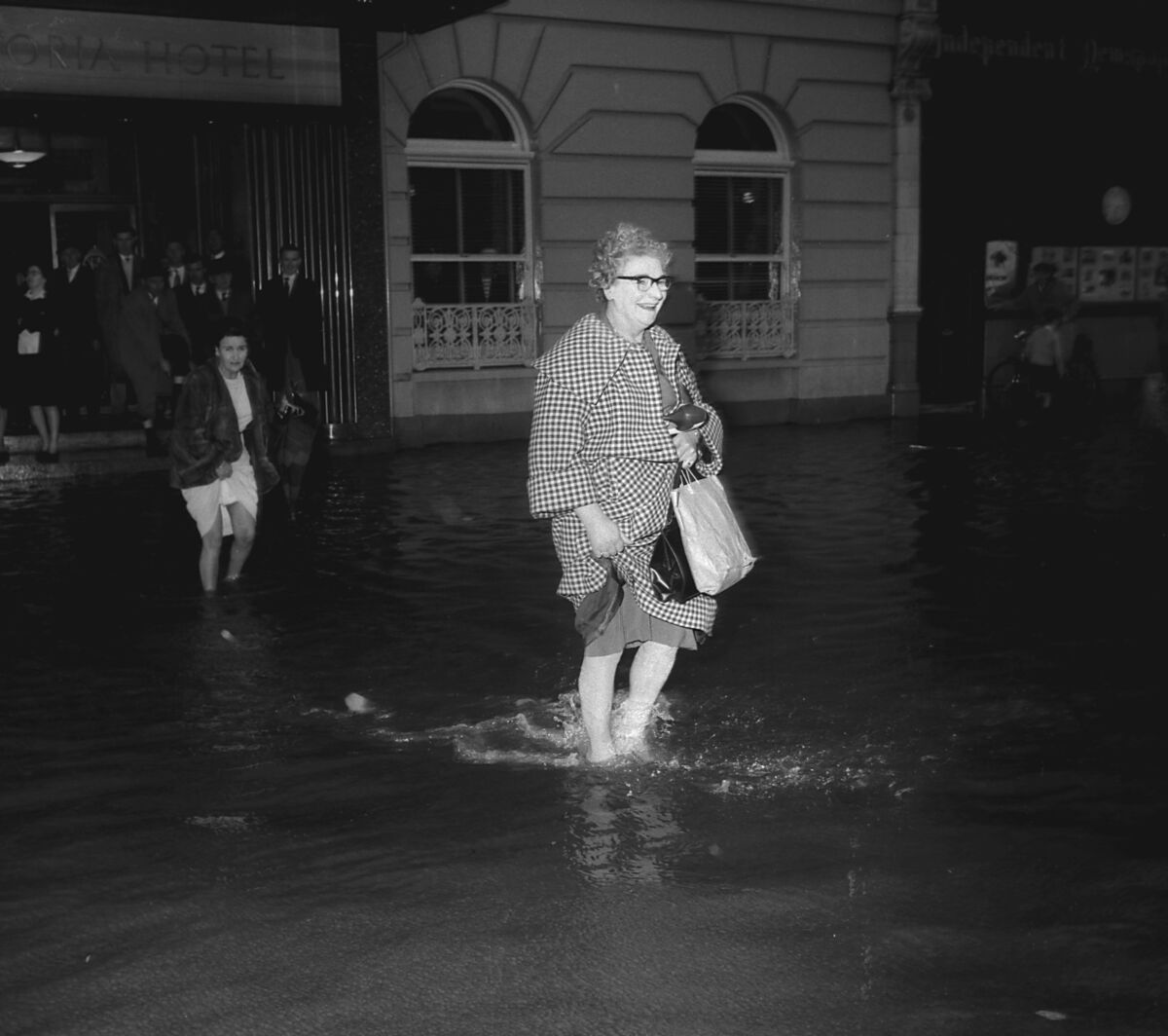
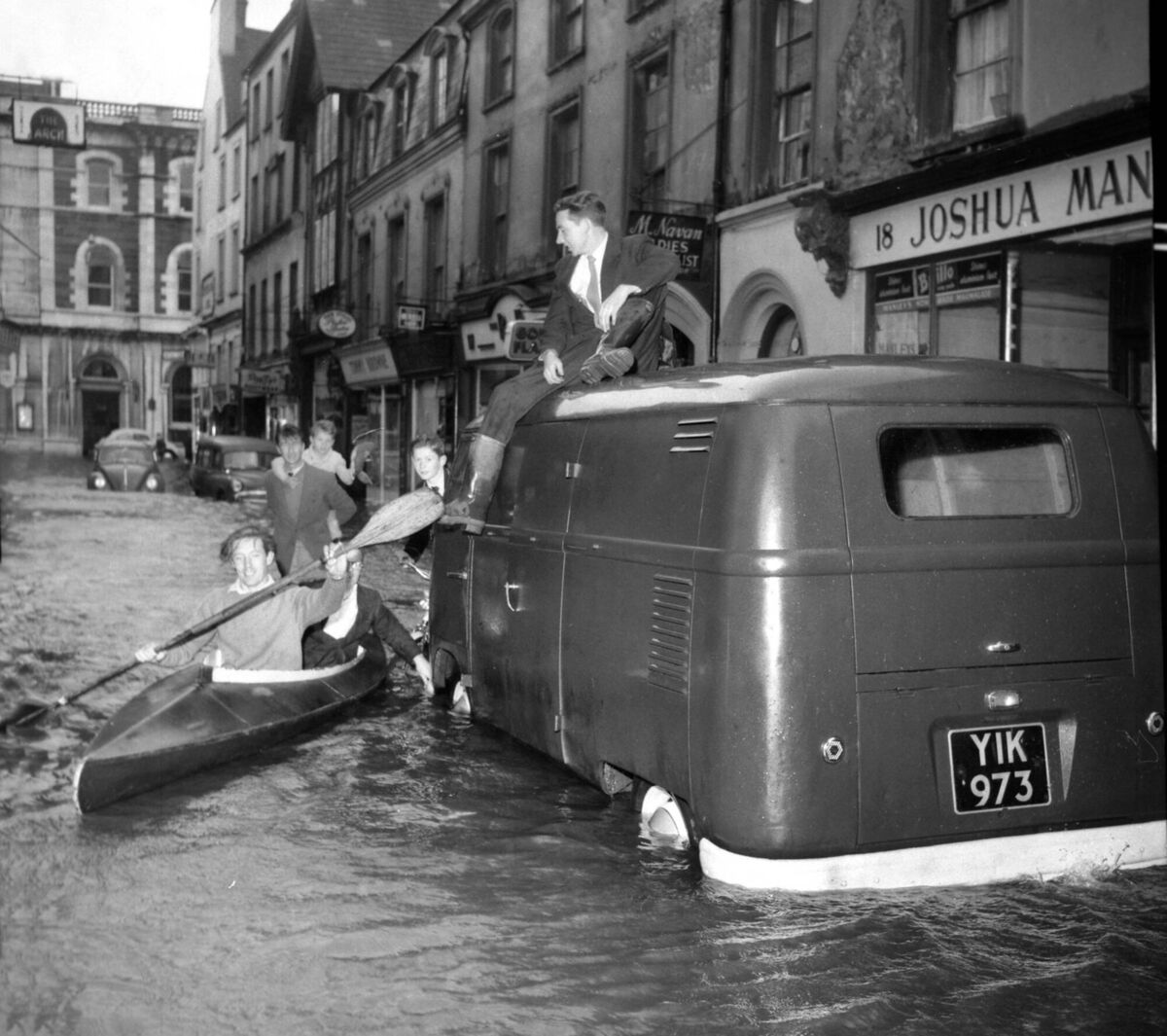
In a 12-hour period over four feet of water poured through the city centre flooding, St Patrick St, Oliver Plunkett St, Grand Parade, The South Mall and the South Terrace — leaving a trail of dirt, glass, debris, house furniture, barrels, boxes, papers; forcing many citizens to abandon ground floor living. An eyewitness told the Cork Examiner, “The city today is a scene of desolation, mud and debris in the streets, abandoned cars and lorries impeding traffic.”
In order to co-ordinate any response to a major weather event, it is vital to establish or in the case of Cork city, to re-establish communication networks. A major problem in any natural disaster is communication. After two high tides on Wednesday (March 7), the Cork telephone exchange located in the GPO found itself under several feet of floodwater.
At 3am on Thursday, postal officials made a desperate appeal to Collins Barracks for help, as the city found itself entirely isolated from the rest of the country. Inside the GPO, technicians battled through the night to dry out and repair cables and terminators in stiflingly hot conditions for the reason that, Calor gas and electric heaters were used to dry out the cables. It took until Thursday night to establish contact with Dublin and Waterford.
Even then, no direct contact was possible until Friday with a three-hour delay on the line between Cork and Dublin. Communication between the first responders: Garda, Fire, Ambulance, Army and the Red Cross were done through short wave radios, supplied by the army.
Meanwhile, across the city an arduous clean-up was being attempted after a night of terror. The city of Cork assumed a forsaken appearance with goods destroyed, no public lighting, no telephones, shattered shop windows, with stranded workers inhabiting shops filled with sodden stock now utterly unusable and most of which was now floating on the streets.
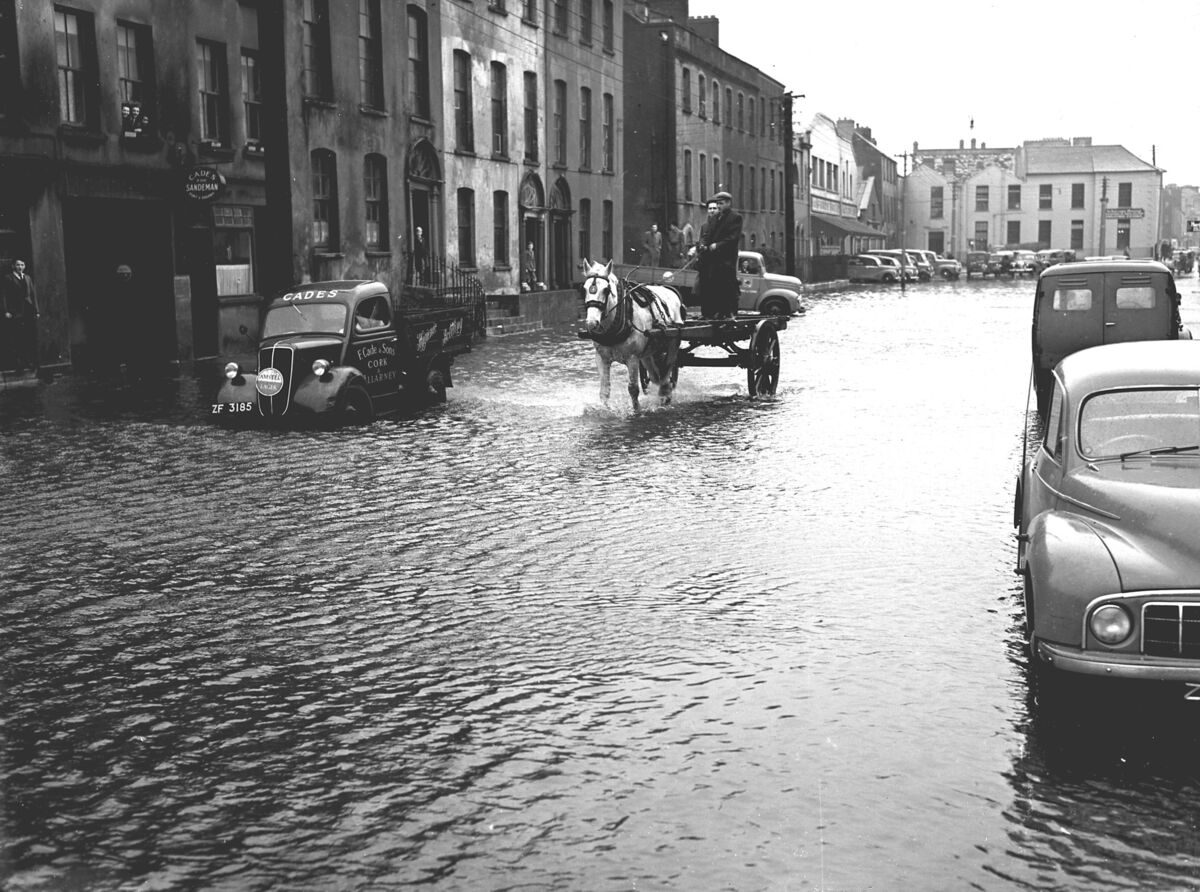
Army personnel from Collins Barracks instigated “Operation Rescue” to assist stranded citizens, answering an SOS, as four feet of water engulfed the principal streets. Patrols of courageous soldiers worked tirelessly until 4:30am — in between rescuing marooned citizens — managing to place 500 sandbags around the GPO to prevent further damage to the Cork Exchange building.
Beyond Cork city, the coastal town of Youghal experienced unbelievable damage. Friday’s (March 9, 1962) edition of The Cork Examiner, described the scene of devastation: “Yesterday Youghal looked as if a stick of bombs had been dropped there. Beyond Crosshaven, it is as if the place had been hit by an earthquake and then washed by a tidal wave.”
A giant crater opened up on the roadway, with houses, shops, and the railway station destroyed by the floodwaters. It was claimed that the cavern was so deep that a double-decker bus could easily fit inside.
Youghal’s protective sea wall suffered a breach enabling seawater to pour into houses and shops through windows and doors. Many accounts of fish swimming in people’s living rooms were reported in the aftermath of the flood.

Youghal with its seawall breached was pounded by 80-foot waves which smashed through windows and doors aided by concrete slabs and tarmacadam carried by the waves.
Union Hall, a small fishing village in Co Cork, with a population of around a hundred, on Wednesday morning, saw a high tide with hurricane-force winds tear through the protective sea wall flooding the fishing village. At five o’clock, the sea returned, smashing through windows and doors with household furniture floating in four feet of water in the Main St, before being taken out to sea. Householders from top storey windows watched helplessly as swell after swell of seawater carried chairs, tables, chickens, hens and bonhams (piglets) down into the bay. Nine boats floated up the Main St and were left there after the waters retreated.
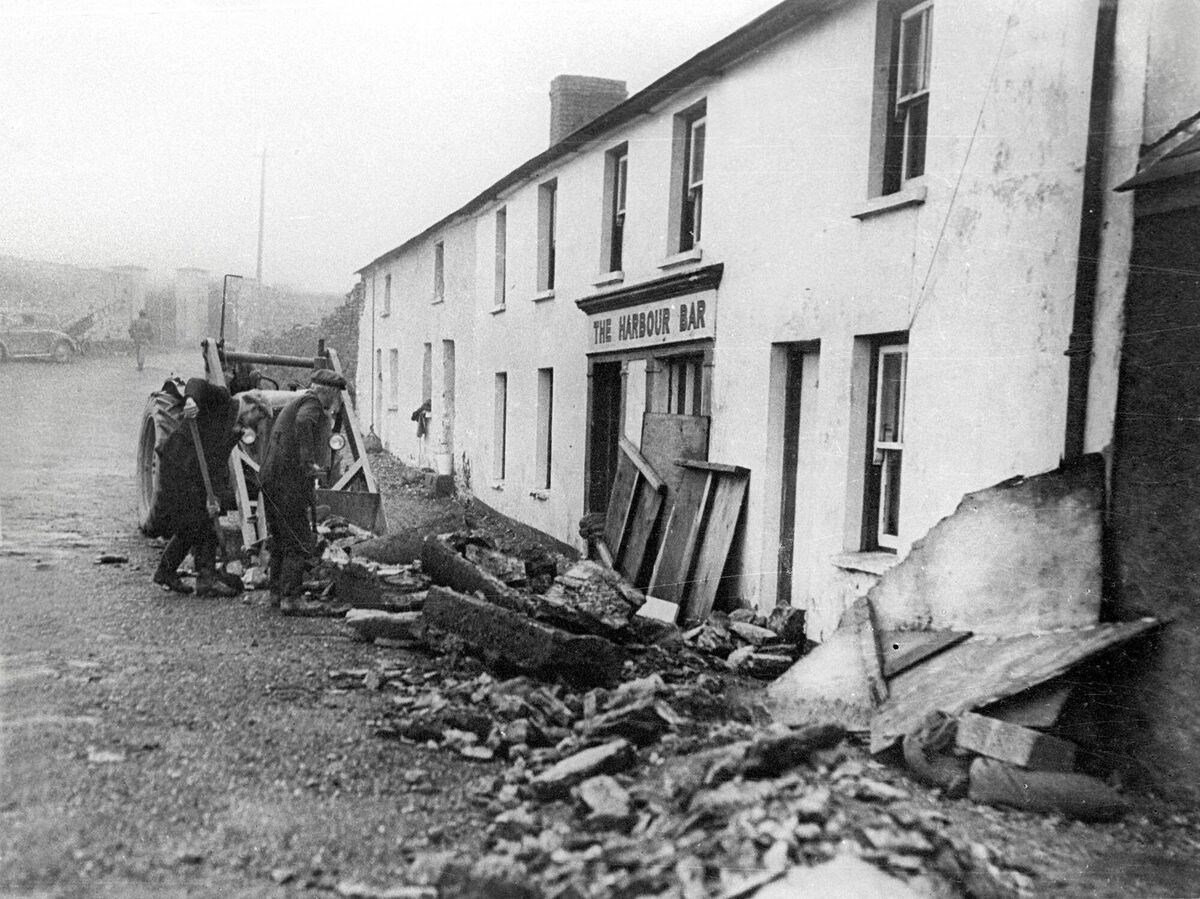
Robert’s Cove, near Carrigaline, saw its sea wall collapse resulting in waves spilling over the tops of houses. Large stones poured through the door of the local pub and in
Castletownbere, the local pier floated down the Main St. In Bantry, older people described the weather event as “the worst in living memory”, with boats dragging anchor and being beached up on the dock.
In Crosshaven, a wall from the village to the boatyard collapsed resulting in wreckage, including two bungalows, close to the shoreline just disappearing into the sea.
Meanwhile on Belvelly Bridge, Cork Harbour, a terrifying situation was developing. Almost 100 passengers trapped on three CIE buses found themselves in four feet of water and rising. Many of the passengers were forced to scramble onto the roof and were waiting in this dangerous situation for three hours to be rescued. To comfort themselves, in this nightmare situation, they sang hymns and recited the rosary.
Perhaps the most disturbing occurrence, in this entire catastrophic weather event happened in Castletownsend, a village near Skibbereen.
Its sea wall was pounded to pieces, bringing about a torrent of seawater, which swept away stone walls, headstones and trees. The Cork Examiner’s edition, Saturday, March 10, 1962, described the gruesome scene thus: “Human bones and pieces of coffins were floating around the cemeteries, while some of the graves were empty, the earth having been scooped up by the waves. Local residents found the corpse of a woman that had apparently been forced out of its coffin.” County Council workers were sent immediately to carry out repairs.
Midleton lay under several feet of water, as was, Carrigaline, Passage West and Glenbrook. The Beara Peninsula, Clonakilty, Kinsale and Cobh remained cut from the outside world until Thursday morning. Only for the outstanding efforts of council workers, army personnel, fire officers, Red Cross volunteers and coastal communities themselves; loss of life was avoided.
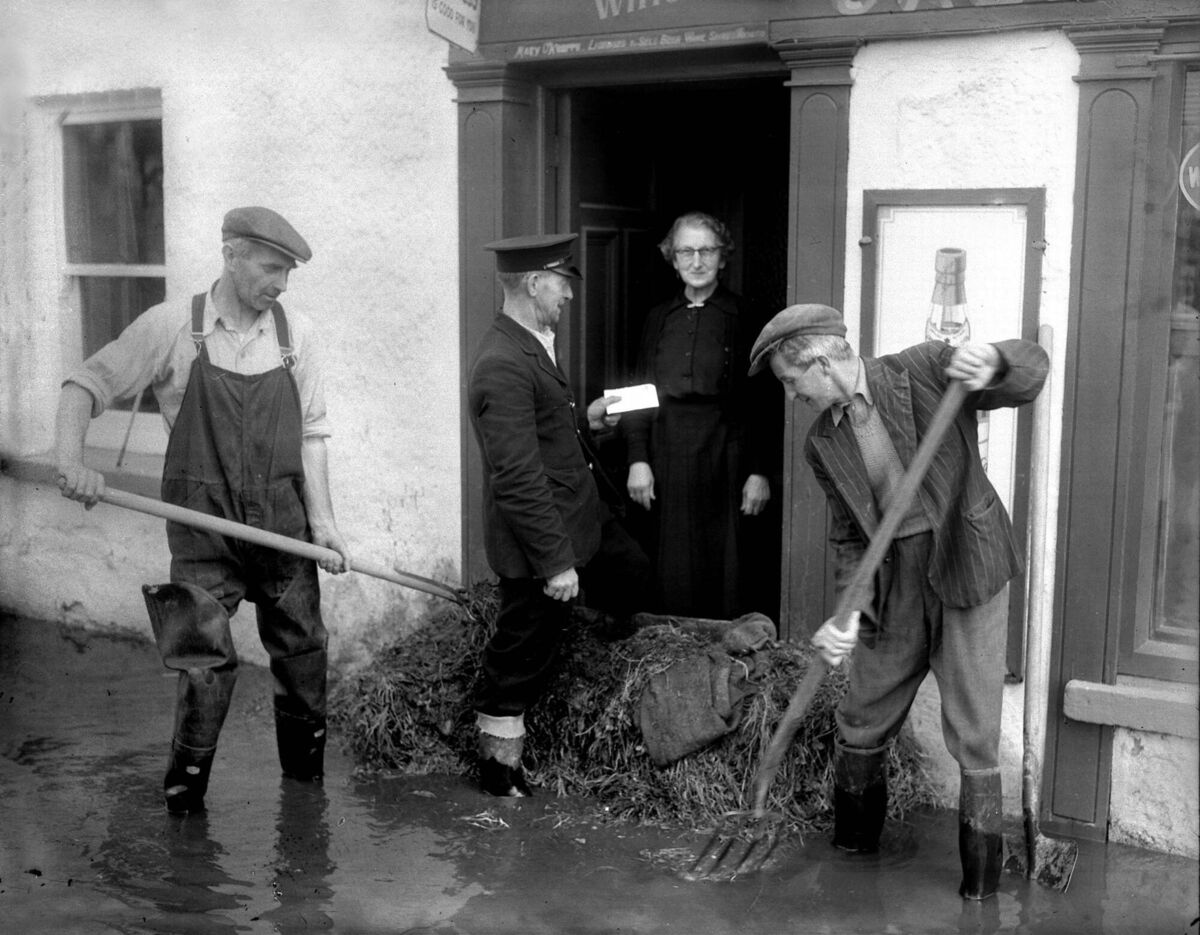
In the aftermath, Cork County Council estimated the damage to coastal property at £55,000 — approximately €1.14m today’s money; which didn’t include local authority or private property.
Local politicians passed several motions and offered words of sympathy to the unfortunate citizens of Cork but little by way of financial compensation. For many, the financial loss was life-altering with many seeing their life savings destroyed in the floodwaters.
A promise was given to carry out surveys, improve drainage and plan measures to counteract future severe weather events. One novel idea was that a type of air raid siren would blast out across Cork city to warn citizens of rising water levels. This seems like a derisory plan for a city suffering the consequences of a mini tidal wave.
We remember a once-in-a-generation weather event, when Cork became a desolate, silent city.
CONNECT WITH US TODAY



Be the first to know the latest news and updates