No Mow May: Why we need to put the lawnmower away
‘No Mow May’ is a national effort to make space for nature in gardens across the country, a campaign encouraging us all to simply put the mower away during the month of May
No Mow May: Why we need to put the lawnmower away

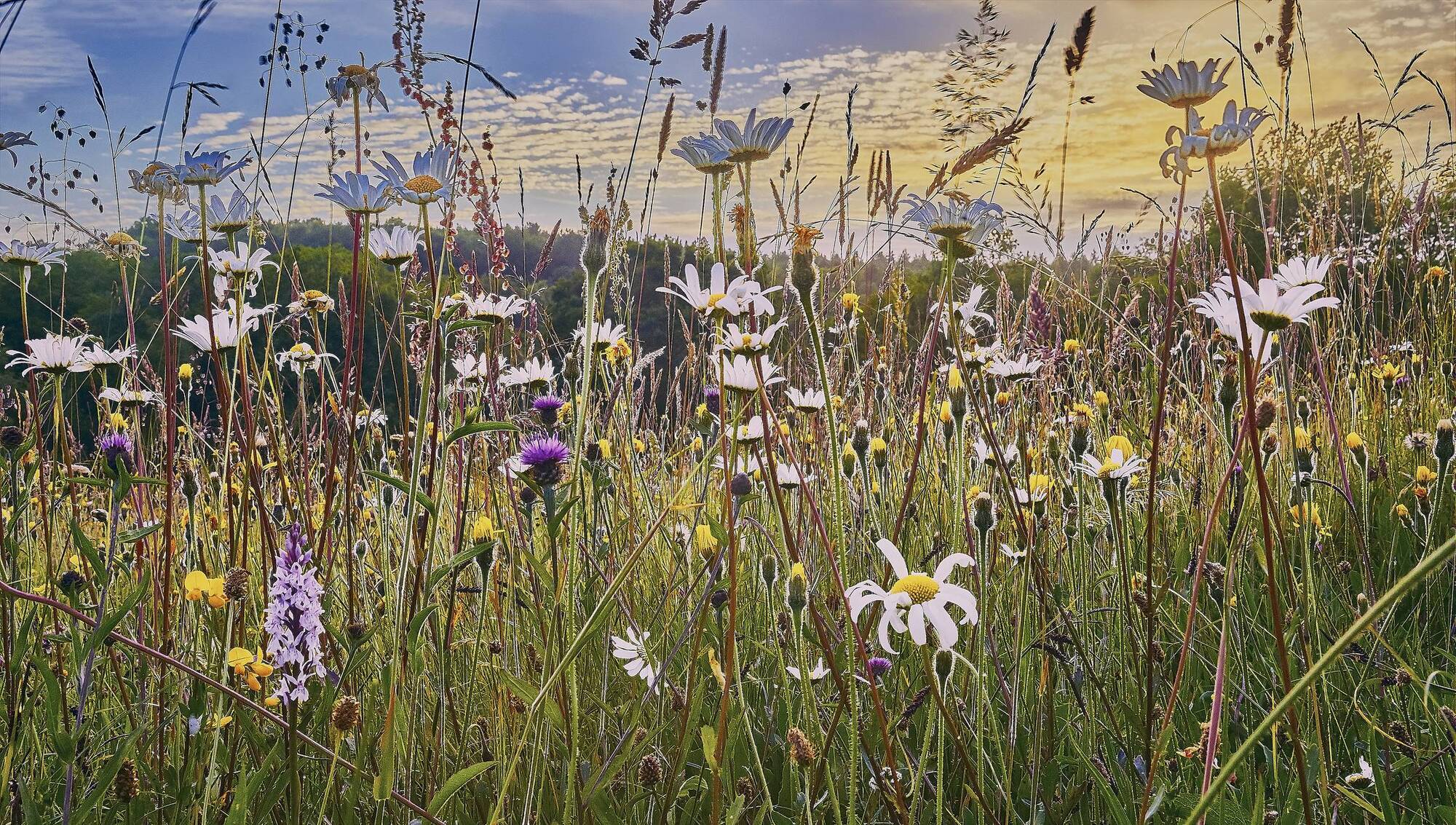
Wild flowers growing in a a hay meadow in the High Weald of Sussex

May is when many wildflowers begin to blossom. One of my favourite wildflowers at this time of year is the delicate pale pink cuckoo flower, also known as lady’s smock or mayflower. It likes wet meadows, waysides, and damp corners of semi-natural grassland, flourishing just when the cuckoos are calling out over fields and valleys. Cuckoo flowers are also the larval food plant of beautiful orange-tip butterflies, and many other insects dine on the nectar and pollen they provide.

Each and every wildflower is adapted to the habitat where it grows, some plant species are quite particular and others are more generalist. But all have their role in the ecosystem in which they grow and provide rich resources for insects such as beetles, butterflies, ladybirds, moths, bumblebees, and solitary bees, which pollinate wild plants and crops, and provide food for shrews, hedgehogs, and nesting birds, among others.

For millennia, flower-rich ‘semi-natural’ grasslands have provided ample food and shelter for wildlife. However, these semi-natural grassland habitats are rapidly disappearing from Ireland’s countryside and are now among the most threatened habitat types here. With agricultural intensification, monoculture crops of perennial ryegrass replace species-rich pasture and hay meadows are drained and reseeded for higher productivity. More intensively managed landscapes leave little room for biodiversity.

There is much to be done to change the policies that continue to incentivise the loss of diversity in agricultural landscapes, and action is urgently needed to support farmers to support nature where it is most needed. But each of us can make a difference too, especially in gardens and amenity areas.

‘No Mow May’ is a national effort to make space for nature in lawns across the country, in gardens, sports clubs, church grounds, and land managed by local authorities. It is a campaign encouraging us all to simply put the lawnmower away during the month of May. Allowing the grass to grow gives flowering plants a chance to blossom, offering up pollen and nectar for wild bees and other pollinating insects. A whopping one-third of Ireland’s 99 species of wild bee are threatened with extinction, deprived of food, shelter, and other vital resources they need. Many species of native butterflies have suffered alarming declines too. Leaving green areas to blossom at this time of year can help them enormously.

CLIMATE & SUSTAINABILITY HUB

WHOLLY UNPRODUCTIVE

Manicured lawns are an exceptionally odd cultural phenomenon, to begin with. They came about in the 1700s when the newly designed gardens at Versailles featured ‘tapis vert’, translating to “green carpet”. The owners of stately homes in France and Britain followed suit, and lawns became a highly desirable status symbol. In 20th-century suburbia, monotonous, uniform, and wholly unproductive lawns have become standard for gardens across the world, where diversity, colour and life are tightly controlled. Lawns are sprayed and meticulously mowed, ensuring that not a scrap of food or shelter for wild creatures such as bees and butterflies can be found.

Now, with the wisdom of hindsight and an understanding of the extinction crisis, there is ample opportunity to ease up on the mowing in our gardens, road verges, amenity grassland, and parks. Attractive purple heads of self-heal will begin to appear, along with common wildflowers such as dandelions, red and white clovers, and delicate birds-foot trefoil. Each of these are excellent sources of food for wild bees, butterflies, and in turn, for nesting birds.

And we can’t talk about pollinators at this time of year without talking about dandelions. In gardens across the country, dandelions are out in force, challenging our perceptions of what is a weed and what is a wildflower. The bright yellow flower head of dandelions consists of hundreds of tiny florets packed in tightly together, each floret its own offering of nectar for insects in need of a sugary fix. Dandelions are one of the most abundant flowers in our landscape, a crucial resource for insects who rely on nectar.

Yet we begrudge them their vigour, we resent their bright happy flowers, we spray them with weed killer and strim them from lawns and roadsides in the name of tidiness. We don’t cast a thought for the many small creatures sustained by the cornucopia of nectar provided by dandelions and other self-seeding wildflowers. Perhaps it is precisely because it is such a common thing, with a tendency to take over lawns, that we begrudge dandelions their success. We cherish what is rare, not what is abundant in our midst.

If you are worried that a flower-filled grassy meadow will look messy, mowing a path through the tall flower-filled sward can be a gorgeous addition, letting people know that this natural look is by design rather than laziness.

MOWING A PATH

In addition to what is going on in lawns, there may be little pockets of habitat hiding away at the end of the garden or behind the changing block of the playing field that are already providing food and shelter for bees, butterflies, and nesting birds. The overgrown corners filled with bramble, for example, overhung by the flowering whitethorn with a bounty of blossom right now — these are all of value to wildlife. Forgotten verges filled with naturally occurring wildflowers are filled with tasty sustenance for butterflies, bees and others. Old walls with cavities between the stone and mortar provide nesting sites for solitary bees.

For more information on how to manage a short flowing meadow or a tall meadow, the ‘All Ireland Pollinator Action Plan’ and associated website — pollinators.ie — gives ample information about when to mow, what to look out for, and how to identify some of the wild bees that you will see when you leave the lawn to grow and give a little space for nature.

  • All you need to know about ‘Mo Mow May’ and supporting pollinators can be found on the website of the All Ireland Pollinator Action Plan — pollinators.ie
  • Anja Murray’s new book Wild Embrace is available now
  • Follow Anja on twitter: @miseanja

More in this section