How to spot the warning signs of type-1 diabetes - and TEST them
Danny Lee was four years old when diagnosed with type 1 diabetes,  the most common chronic childhood condition in Ireland.
How to spot the warning signs of type-1 diabetes - and TEST them

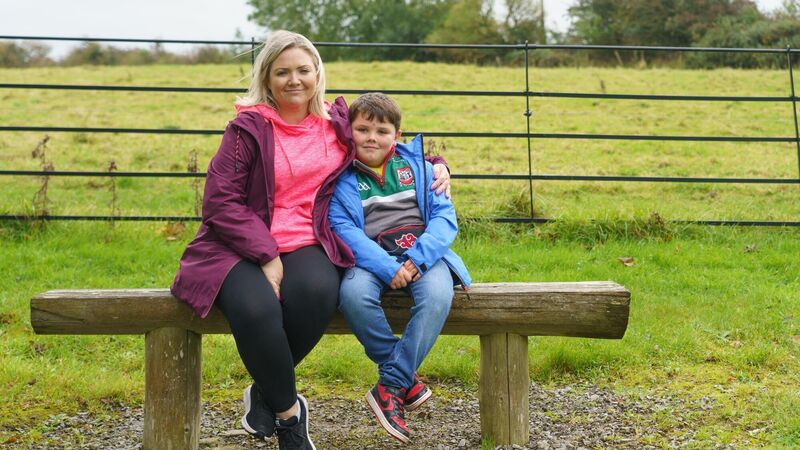
Eva and Danny Lee who has type 1 diabetes photographed at the Tower of Loyd just outside Kells, County Meath. Photo: Barry Cronin
Eva Lee’s four-year-old son, Danny, didn’t like drinking water, so when he began getting up at night to drink from the bathroom tap, she was worried.

At around the same time — as well as drinking cups of water during the day — Danny, now six, was also very hungry. Also, Eva and her husband Joe noticed their youngest son was having mood swings. “He was very whingey,” the Meath-based mum of three said.

A Google search brought up diabetes and when Eva — working at the time as a hairdresser — heard Danny’s childminder also remark on his symptoms, she took him to the GP. A finger prick test showed very high blood glucose levels.

In A&E at Our Lady of Lourdes Hospital, Drogheda, Danny was quickly diagnosed with type 1 diabetes and immediately given insulin.

Type 1 diabetes develops when the pancreas stops producing insulin, the hormone that allows glucose/sugar from food to enter the body’s cells to be used as fuel. 

When insulin is absent, glucose cannot be used — levels build up in the body. The body responds by excreting the excessive glucose in urine, leading to the key symptoms of diabetes — passing large volumes of urine, frequently resulting in dehydration and increased thirst.

Eva is very thankful for her son’s timely diagnosis because it is vital to avoid a life-threatening complication of type 1 diabetes. 

If symptoms persist and the condition is unaddressed, the body increasingly depends on a backup fuel supply and breaks down fat excessively, a process that forms acidic ketone bodies. These ketones build up, changing the body’s acidity, and result in diabetic ketoacidosis (DKA).

“DKA is a very serious condition, where the person becomes very unwell. It’s potentially life-threatening and needs urgent hospital treatment,” education and support coordinator with Diabetes Ireland and nurse Christina Hamilton says.

Christina Hamilton, support co-ordinator with Diabetes Ireland

Childhood diagnosis

Type 1 diabetes typically starts in early childhood or in teen years, though it can occur at any age.

Children in Ireland have the 10th highest reported incidence worldwide. The rate of new onset of the condition in children and young people increased by 21% between 2019 and 2021. On average, seven children and teens are diagnosed here each week.

“It’s the most common chronic childhood condition in Ireland,” Hamilton adds.

A large proportion of children present with life-threatening DKA at the time they are diagnosed with type 1 diabetes — more than four in 10.

Symptoms of type 1 diabetes are subtle at the start and are often missed or misconstrued as a simple viral or urine infection.

“Signs and symptoms can be similar to those of other conditions,” she says .

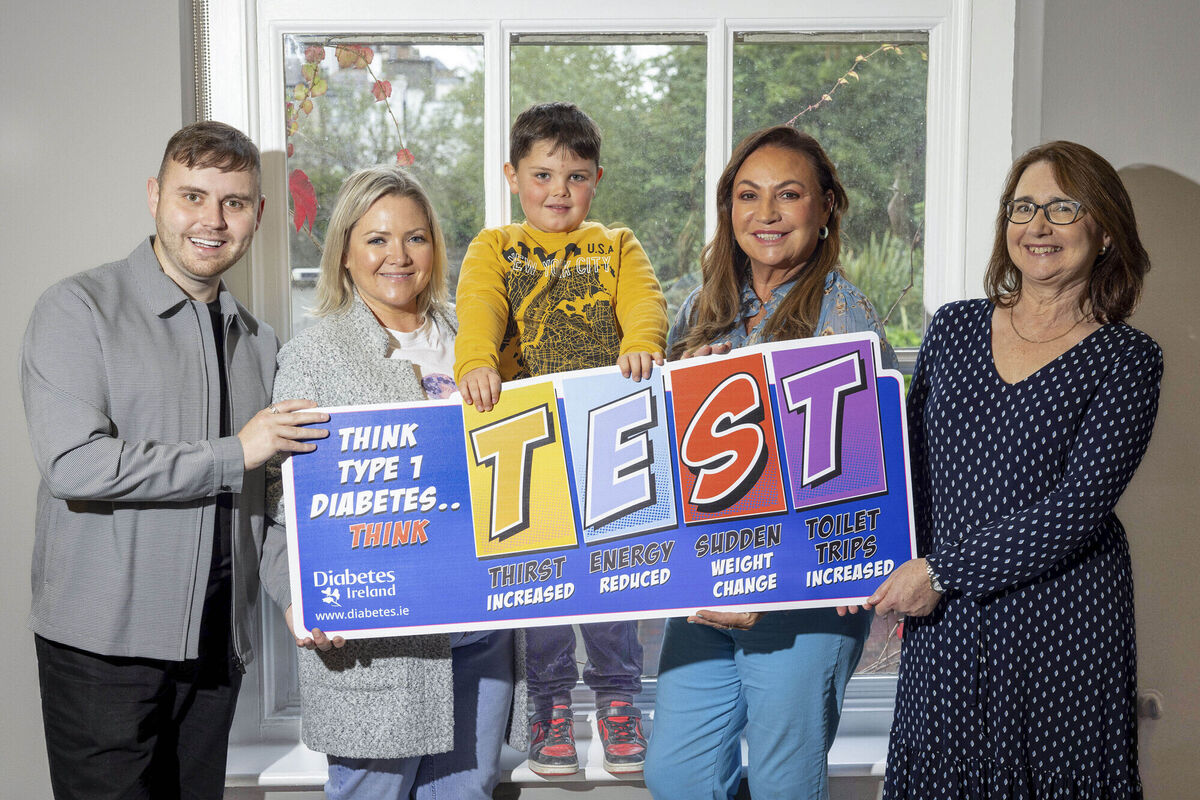
In a bid to raise awareness, Diabetes Ireland and the Irish Childhood Diabetes National Register have jointly developed an acronym, TEST, to highlight red flag symptoms of type 1 diabetes.

TEST stands for:

  • Thirst (increased) — “There’s marked increase in thirst, an absolute drive for liquids,” Hamilton adds.
  • Energy (reduced) — “Children will be very tired, lethargic — they might fall asleep after school where they wouldn’t have before.”
  • Sudden (weight change) — “With new-onset type 1 diabetes, there’s often weight loss.”
  • Toilet (trips increased) — “There’ll be increased urination. Parents might see a child, already toilet-trained, start bedwetting or up multiple times at night.”
These symptoms serve as critical indicators of possible type 1 diabetes, warranting an urgent blood glucose or urine test, a TEST campaign spokesperson says. “It’s important to note these symptoms apply to adults as well as children.”

Unlike type 2 diabetes, where up to 58% of cases can be prevented with lifestyle modifications, type 1 diabetes is not preventable.

An autoimmune condition, it is not known why it develops. Nor is it reversible.

“I thought it could be controlled with diet and exercise,” Eva Lee says, describing her shock when, immediately post-diagnosis, she had to begin grappling with the intense management of Danny’s condition.

Photographed at the TEST Campaign Launch to raise awareness of Type 1 Diabetes and spotting the signs and symptoms: Jay Hickey, Eva and Danny Lee, Norah Casey and Professor Edna Roche (ICDNR). Photo: Conor Healy/Coalesce

Balancing act

Daily management of type 1 diabetes involves balancing insulin input with food intake and exercise — the patient must take multiple injections of insulin, or infusion through an insulin pump.

Initially, Danny spent eight days in hospital. “I had to know how to manage it before he was allowed to go home” Lee adds.

“I had to learn how to do the finger prick test to check his glucose levels before he ate. I had to understand how to read food labels, weigh and measure food, and how much insulin to give him, based on his levels and the amount of food I was giving him.

“I needed to learn how to inject insulin. The nurse explained this is for life — I had to master it.”

Adding that many factors can affect blood glucose levels, Lee says: “Activity can make blood sugar levels drop, and Danny can feel very shaky, dizzy, lethargic, nauseous.

“Being very active during the day can affect [his levels] at night. So many factors do. Most nights we’re up, giving him glucose —yoghurt, a biscuit — if his levels are low, or if they’re too high we give him insulin. We rarely get a free night.

“People ask: ‘Is it starting to regulate now?’ I say: ‘No, it’s always going to be like this’. It becomes part of your life.”

Recent advances in monitoring and insulin treatment for those with type 1 diabetes have also made life easier. Danny wears a Dexcom (glucose monitoring system) to keep track of his blood sugars. This sends an alert to his parents’ phones if his levels rise/fall unduly.

“He also now wears an insulin pump which means we don’t have to inject,” Lee says.

While Danny has the occasional “wobble” when he says: ‘I hate having diabetes — I don’t want it anymore’, he’s generally coping well.

“He’s a great character, a little comedian, he’s mad about football and loves Renaldo.”

Her big message: Know what TEST is — because it could be a lifesaver.

More in this section