Behind the scenes at the Oscars with the first Corkman nominated (no, not Cillian)
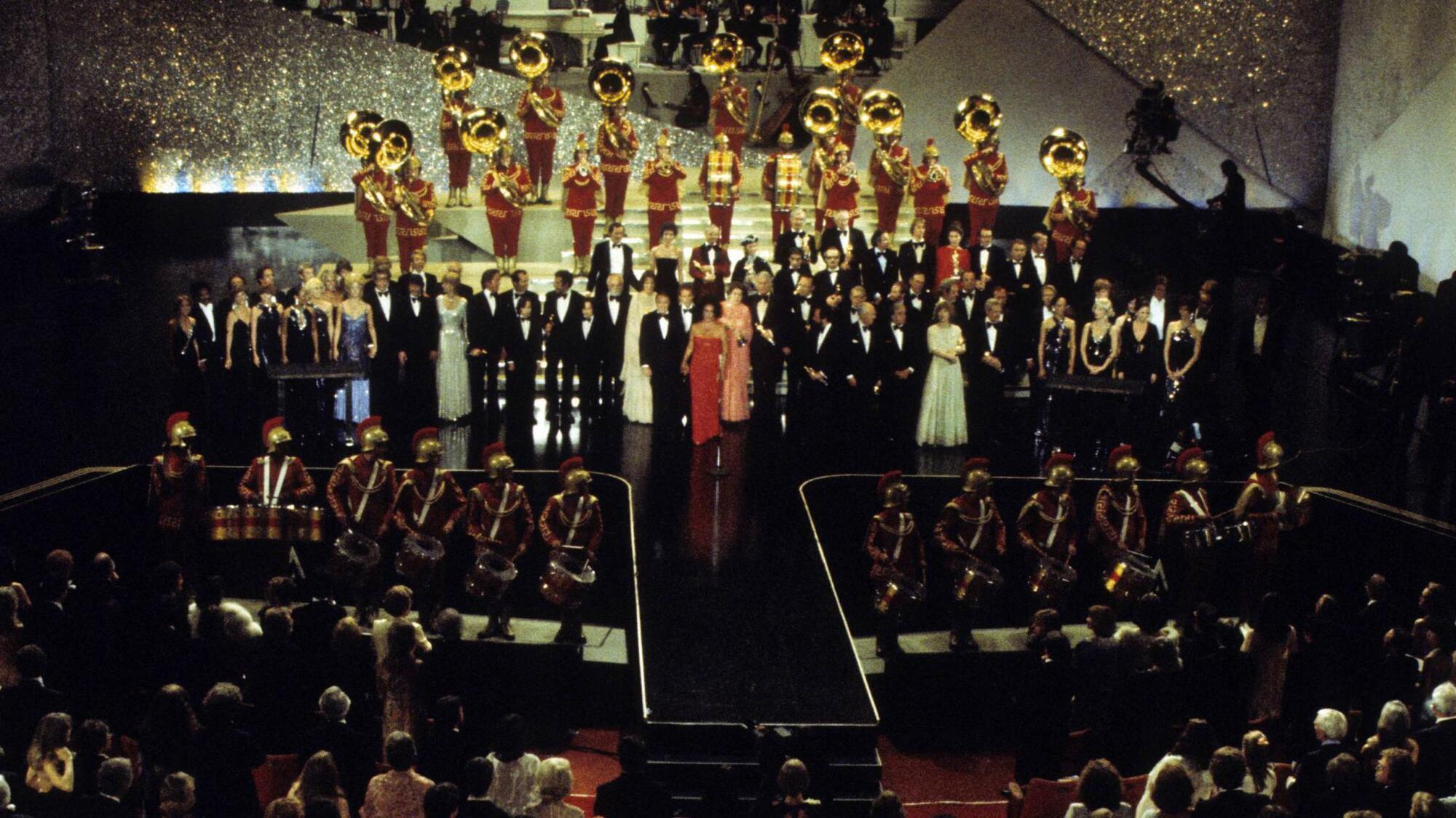
Elizabeth Taylor and others onstage at the Dorothy Chandler Pavilion in 1976 for the Academy Awards, an event also attended by Cork nominee Louis Marcus. (Photo by ABC/Disney via Getty Images)
Mae West and Groucho Marx were two of the elder celebrities treading the red carpet when Cork film-maker Louis Marcus first attended the Oscars 50 years ago.
The two former vaudeville stars whose careers stretched back as far as the 1929 inception of the Academy Awards when ‘talkies’ were in their infancy, were among the great and the good of Hollywood making an appearance as Marcus represented Ireland’s nascent film industry after receiving the first of two Oscar nominations.
“One was literally rubbing shoulders with the gods and goddesses of film Olympus,” recalls Marcus, who was nominated for Best Documentary Short in 1974 for Páistí ag Obair (Children at Work), and again in 1976 for Conquest of Light in the Live Action Short Film category.
Born and raised on the Mardyke and educated in Shandon, Glasheen, and UCC, Marcus found himself on Hollywood guest lists with the likes of Paul Newman, Gregory Peck, and Elizabeth Taylor.
“The week before the ceremony, if you have a nomination, you are really somebody, even for a shorts nomination, and because I was the only foreigner on both occasions, the Academy very kindly included me and my wife in the receptions for the foreign features directors, so we got to all the great events,” says Marcus.
“We were royally treated also by certain Irish organisations in LA, like the IDA [Industrial Development Agency], who took us out for a meal in Chasen’s, one of the legendary Hollywood restaurants; and the LA office of Bord Fáilte took us to Disneyland.”
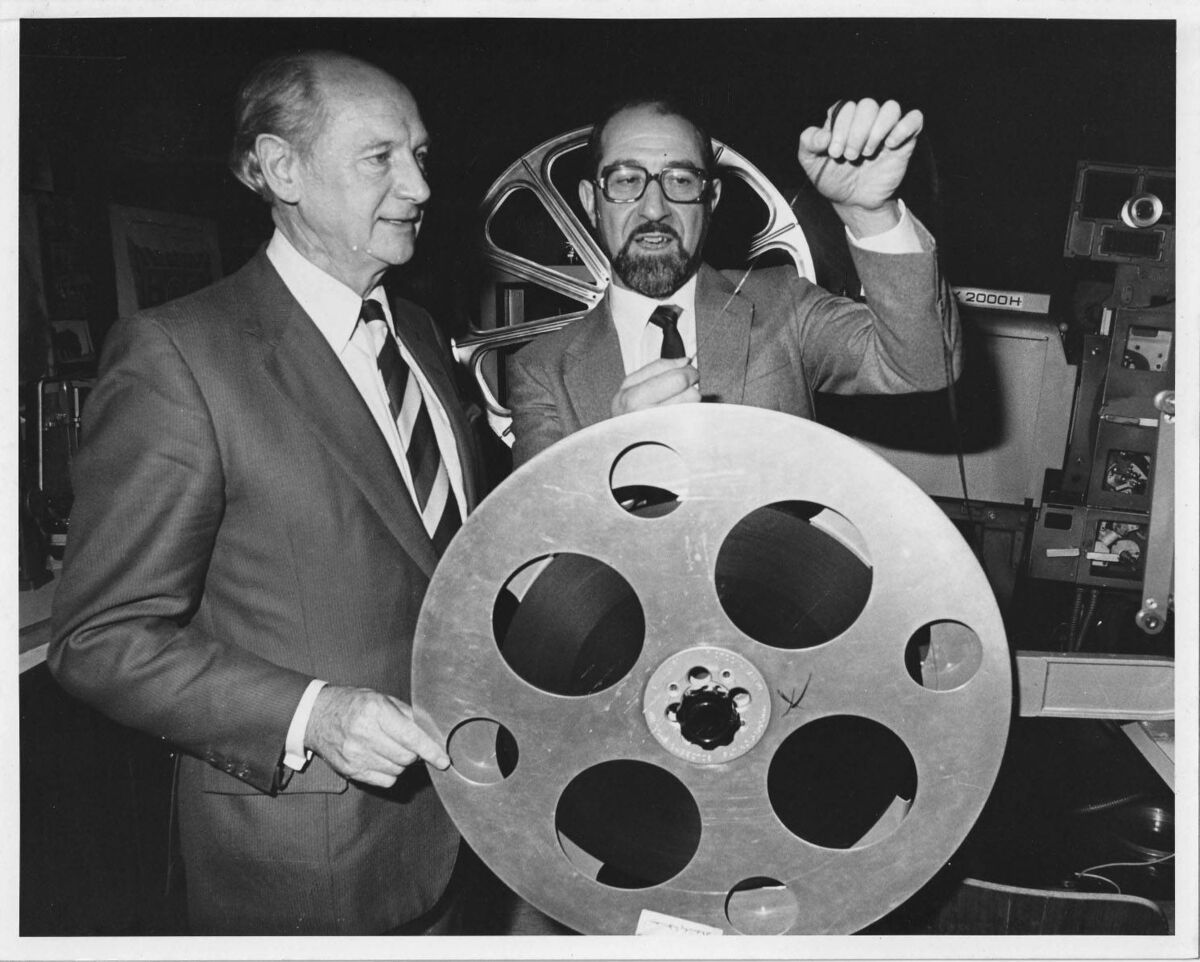
Marcus, who started making amateur films with the Cork branch of the Irish Film Society and got his first professional opportunity in 1958 assisting George Morrison on Gael-Linn’s Mise Éire, directed dozens of cinema films for Gael-Linn, including Páistí ag Obair.
It was this documentary that earned him his first Oscar nomination, the news coming by telegram. “We were invited to all the events for the foreign film directors and at the first one we were at, one of the foreign directors was François Truffaut, the great French director of the new wave, and in honour of these foreign directors some of the greats of Hollywood would come out,” he says.
“Billy Wilder was at it, George Cukor, and John Schlesinger. They had tremendous respect for people like Truffaut. The stars come out in that week beforehand and at that first reception for the foreign directors the hostess was Ava Gardner,” says Marcus, who was enchanted by the company, if not by some of the food served.
Hollywood icon Gardner was, according to Marcus, “the most charming person”. However, when the meal came the main item was steak tartare, which is virtually raw meat.
“I couldn’t eat that so I ate the vegetables and when the waiter came round to collect our plates he saw this and he said ‘Would you mind if I put your steak in a bag for Miss Gardner’s dog?’ “I said ‘No, not at all’ - so I can claim to have fed Ava Gardner’s dog!”
Marcus and his late wife Miriam, known as Chookie, were befriended during their Oscars trips by Gene Allen, Academy Award winner for My Fair Lady, and his wife Iris.
Allen was the art directors’ representative on the Academy Board, later its president, and he and Iris “entertained us in their home, brought us to private receptions, and drove us to the awards ceremonies,” says Marcus. “Their warmth and generosity were the highlight of our visits.
“Through him I came across so many people. You would be standing with Gene at a reception and people would come up to chat,” he says, adding that it was Allen who introduced him to American director Cukor. “I remember Gregory Peck came up to chat once, and Ernest Borgnine.” He and Chookie were “brushing shoulders, literally” with big-name stars. “We were standing at one stage next to Paul Newman and his wife Joanne Woodward,” he says.
“You see all around you very famous people that you’ve seen for years on the screen and they’re just normal human beings,” says Marcus, who later recalled on an Irish Film Institute blog the poignant moments amid his star-spotting. “One evening a raddled and bloated old woman was approaching, supported on either side by handsome gigolos. With a shock I recognised Mae West. Later came a hoary and stooped old man, clinging to the arm of a beautiful young redhead.” This was Groucho Marx, who three years before his death was in attendance at the 1974 awards to receive an honorary Oscar.
Two years later Marcus and his wife returned to Los Angeles when his documentary Conquest of Light was nominated for an Oscar for Best Live Action Short Film.
He recalls the Irish hospitality of television director Michael O’Herlihy, who worked on Star Trek and Hawaii Five-O, and who invited the couple to dinner at his house.
This second Oscars trip also saw Marcus meet again with American director John Huston, with whom he had previously advocated publicly for State support of indigenous Irish film-making.
Marcus renewed his acquaintance too with Cukor, whom he remembers as a “gentleman”, though he was less enamoured with the celebrity the My Fair Lady director escorted to the Academy’s showing of the nominated short films.
“My wife and I were walking in and we got to the bottom of the stairs just as George Cukor was there, escorting the celebrity of the day, who was Elizabeth Taylor,” says Marcus.
“Cukor was such a gentleman he stopped and said ‘Miss Taylor, this is Mr and Mrs Marcus from Ireland. Mr Marcus has a nomination for a short film about Waterford Crystal.’
“She hardly glanced at us and said ‘Yeah, I got Waterford Crystal’ and proceeded to walk up the stairs. Cukor was very embarrassed. She was not a nice person,” he says.
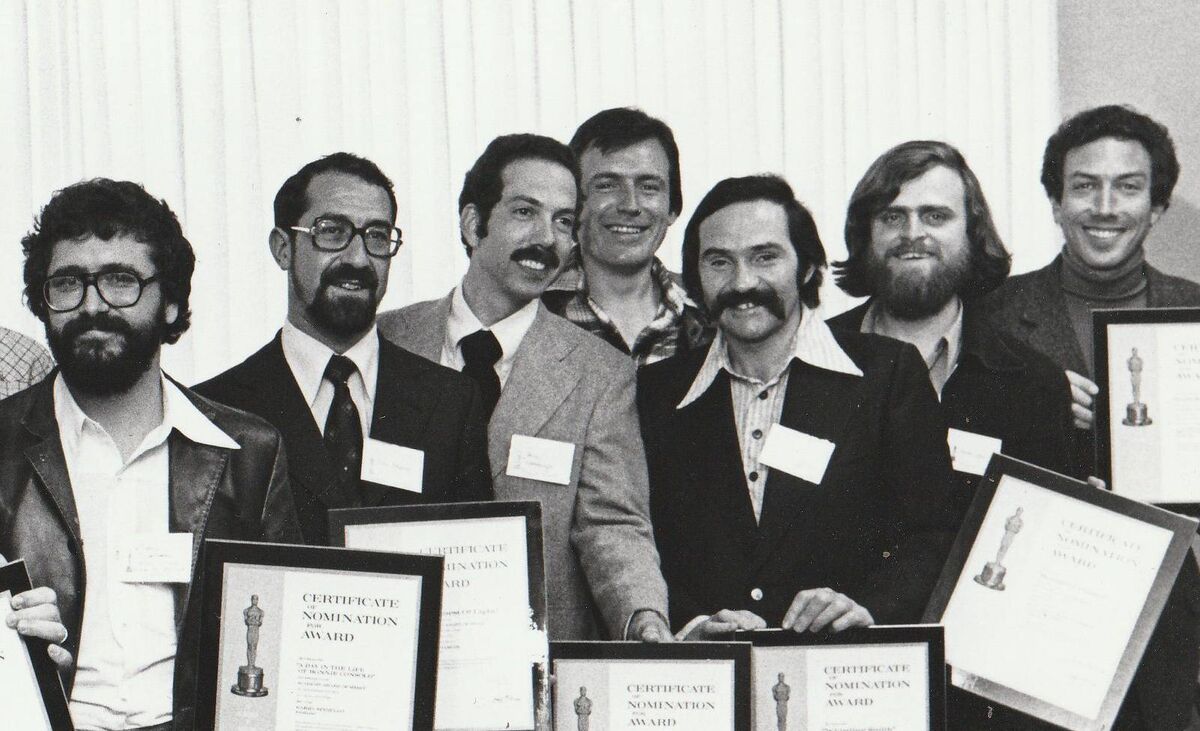
When the day of the Academy Awards arrived, Marcus encountered a more affable famous guest, seated behind him at the ceremony.
“I discovered that I had been allocated a seat on the aisle,” he recalls. “I got a tap on the shoulder and I turned round and recognised Bob Godfrey, who was a distinguished English animator and had a short animation as a nomination. He said, ‘I say old boy, you know why they’ve placed us on the aisle don’t you?’ Shorten the walk to the stage when we win’.
“His category came up first and he won it. So I was sweating at this stage,” says Marcus. “When my category came up it was won by the man furthest in on the row, who had to clamber past all the nominees and their women in order to get to the stage!”
Despite missing out on an Oscar, Marcus enjoyed the experience. “It was surreal for me to be there at all,” he says. “The nomination in itself was a victory of a kind because at that stage there was no Irish film industry; there was no Irish Film Board; there was no tax incentive scheme; there were no Irish feature films. Ardmore Studios was failing after the State spent a fortune funding only British films with British crews, and Ireland made only one or two short films a year for the cinemas.
“Sometimes a government department would sponsor one on health or road safety but the only sustained Irish film activity was Gael-Linn. It WAS the Irish film industry and I was very lucky that I made a short cinema film for Gael-Linn almost every year from 1960 to 1973,” says Marcus, who during a career spanning almost 50 years made more than 80 documentaries.
His subjects included Cork sculptor Séamus Murphy, Christy Ring, and Mohammad Ali’s visit to Ireland, and he was the recipient of some 20 awards, including the Berlin Film Festival’s Silver Bear in 1967 for Fleá Cheoil, the Film Institute of Ireland award for contribution to Irish film, and in 2006, a Lifetime Achievement Award from the Cork Film Festival.
Oscar nominations confer a lifelong honour on recipients, who can become members of the Academy of Motion Picture Arts and Sciences, entitling them to vote on the awards – a distinction which Marcus says in pre-streaming days saw up to 70 DVDs a year arriving at his Dublin home for perusal.
Marcus, whose sons Shimmy, Saul, and Joe have followed him into the film industry, says his fellow Corkman Cillian Murphy would be a worthy Academy Award recipient.
“He’s a superb actor and his performance in Oppenheimer is just incredible. He will deserve it if he wins and I think he should win it. His performance is astounding.”
From his own Oscars experiences Marcus largely saw the good side of the industry on his visit. “Whether they were stars or famous directors, this was a community of craftspeople, very talented, very dedicated to what they did, utterly unpretentious, and nothing like the picture of Hollywood that you see in the media.”
The Corkman also urges film fans to see beyond the celebrity façade of the Academy Awards. “People can dismiss the Oscars as terrible, superficial glitz. What they don’t realise is that the Oscars is what funds the Academy and what they do is unbelievable. Behind the surface glitz and glamour is a deeply serious film institution of which it was an honour to be elected a member.”
* Cork-born was nominated for Best Animated Feature at the 2017 awards as director of The Breadwinner. The past pupil of St Mary’s Secondary School, Midleton, is co-founder of Cartoon Saloon, also short-listed in 2010 for The Secret of Kells.

* Last year, Cork actor was among An Cailín Ciúin cast members attending the Oscars after the Irish language film was nominated in the Best International Feature Film category. UCC graduate Doug Murray was nominated too for a Best Sound Award for his work on The Batman.
* Filmmaker , son of Cork revenue commissioner William Carey, worked in Canada and England, receiving nominations for The Living Stone (1957), and Sky (1960), and winning Oscars for Journey Into Spring (1958) and Wild Wings (1967). He returned to Ireland in 1962, co-founding Aengus Films and receiving further Oscar nominations for Yeats Country (1966) and Oisín (1971).
* Actress , who bought a home in Glengarriff in 1970, received no Oscar nomination during her film career but in 2014, a year before her death, the Academy presented The Quiet Man star with a Lifetime Achievement award.
* , whose maternal great-grandparents came from Schull, won an Oscar for Best Actor in 1945 for Going My Way.
A 10-minute colour film for Gael-Linn, made for cinema, with commentary written by novelist/journalist Breandán Ó hEithir, narrated by Annraoí Ó Liatháin. It was subtitled ‘Children at Work’ and nominated for Best Documentary Short Subject in 1974.
Filmed at Dublin and Wicklow Montessori schools, Páistí ag Obair was inspired by Marcus’ wife Chookie, “a trained kindergarten teacher who explained to me that when children are in kindergarten they are not playing; they’re actually working”, he says.
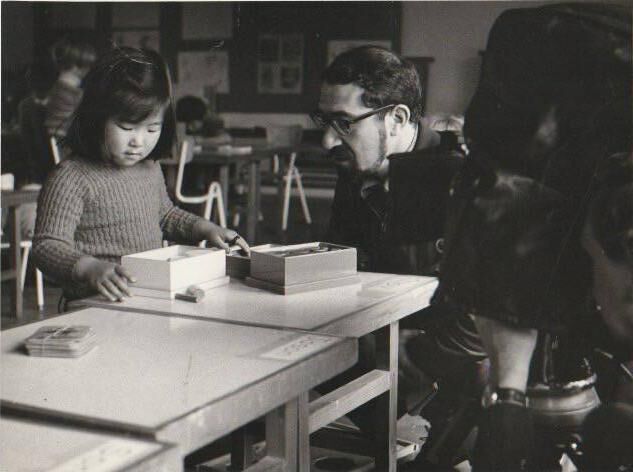
“We shot it in three different Montessori schools; two of them were fairly posh and one was a Traveller school. The Montessori system is quite regimented and one of the best things in the film is that the Traveller children ignored that and invented their own ways of using the equipment, with great imagination.”
https://ifiarchiveplayer.ie/paisti-ag-obair/
A 12-minute cinema documentary on the art of making Waterford Crystal, with world distribution by Columbia Pictures. It earned Marcus a nomination for the 1976 Oscars for Best Live Action Short Film.
“It was made as a tribute to the extraordinary craft skills of the makers of Waterford Crystal,” says Marcus. “I decided we would shoot it at night when you didn’t see any of the factory background and you only saw the individual blowers, cutters, and engravers working almost in isolation.
“It was shown all over the world and I had to do four or five foreign language versions of the few sentences. It was the last short I made for cinemas.” SEE: Conquest of Light