Half of Irish consumers expect to struggle with essential bills in next 12 months
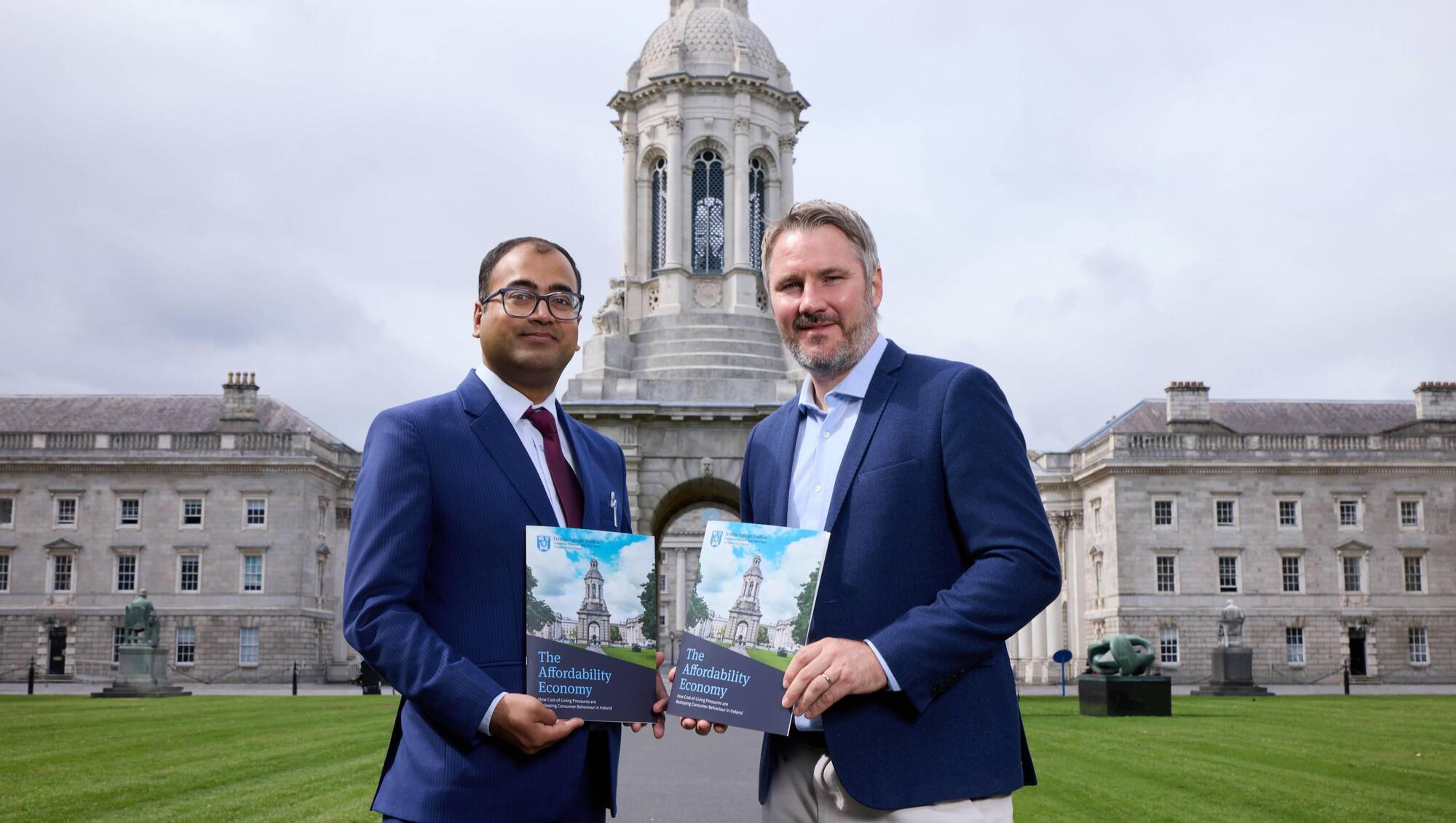
Professor Ashish Kumar Jha, Professor of Business Analytics and Deputy Head of Trinity Business School; and Robin Kiely, EMEA Corporate Communications Director at Shein. Prof Jha says consumers are 'looking carefully at where their money goes'.
Half of Irish consumers believe they are likely to struggle to pay essential bills over the coming year, with one in five already finding essential living expenses difficult to afford, a new research report says.
The report entitled The Affordability Economy, was conducted at Trinity College Dublin and found that 83% of consumers expressed concerned about their personal or household finances. One in five (22%) of respondents said they have stopped saving completely.
Read More
The survey was based on responses from 1,000 Irish adults, and was commissioned by Shein. More than two in five consumers (42%) said that their discretionary spending has decreased compared with a year ago. Among those who have reduced their discretionary spending, 59% cited rising living costs as the main reason. The biggest cutbacks included eating out (cited by 58%), clothing and fashion (48%), holidays or major purchases (43%), and recreation and entertainment (41%).
“What stands out most from the research is just how widespread affordability concerns have become. Financial pressure is no longer limited to particular groups or households. It is influencing how people across Ireland think about their spending, saving and purchasing decisions," said TCD Professor Ashish Kumar Jha, deputy head of Trinity Business School. “Consumers are becoming more intentional with their spending. They are looking carefully at where their money goes, weighing up value more closely and making practical adjustments to manage household budgets. The findings suggest that value for money is now a central expectation rather than a niche consideration."
The research highlighted a distinction between value-seeking and financial hardship. The research found that 'value for money' is a purchasing priority, with 82% describing it as very or extremely important. Significantly, this extends well beyond households under financial strain, rising to 92% among those with annual household incomes of €100,000 or more. “Many consumers actively seek value regardless of income level, but those experiencing greater financial pressure are significantly more likely to deliberately choose lower cost alternatives in order to manage their budgets," said Xiaoning Liang, associate professor in digital marketing at Trinity Business School. "What we are seeing is the emergence of affordability as a defining force in consumer behaviour. Households are adapting in different ways, but the common thread is a much greater focus on maximising value and making budgets go further."
CONNECT WITH US TODAY



Be the first to know the latest news and updates