Who are the GAA’s 15 most marketable stars?
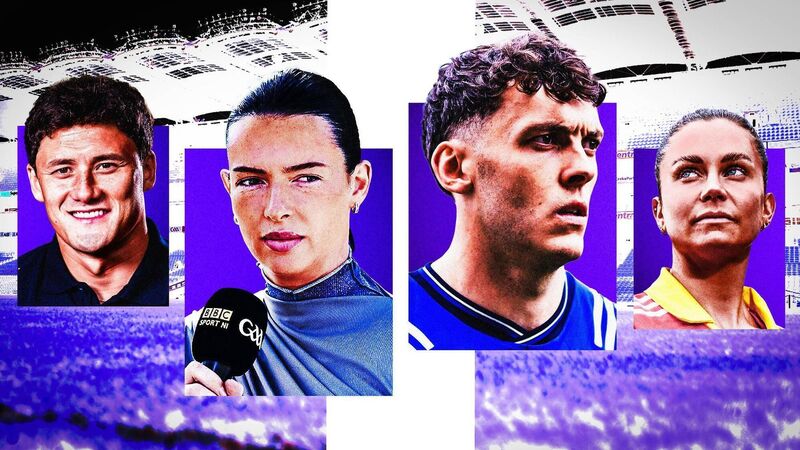
MARKET LEADERS: Among the GAA's most marketable assets are Wexford hurler Lee Chin, Cork camogie ace Aishling Thompson, Kerry star David Clifford and Kilkenny All-Ireland winners Katie Power. Artwork: Adam Moynihan
THIS weekend and next, the top footballers, hurlers and camogie players of 2025 will be honoured at glitzy All-Star events in Dublin. In their ranks will be some of the most popular people in the country. Talented men and women worshipped as heroes by young and old.
For high achievers in other sports, the perks that come with their celebrity status are lucrative. Businesses love to associate themselves with winners, and endorsement deals, brand ambassador roles and paid posts on social media can net these famous athletes huge sums of money. In fact, in some cases, they may earn more from commercial arrangements than they do from their own eye-watering salaries.
Of course, the amateur status of the GAA means the superstars of our native games make their living from their day jobs, but the commercial route is open to them too – if they choose to explore it. Are they making the most of this opportunity? And which GAA, LGFA and camogie players do brands consider to be the most marketable?
We spoke to industry experts to find out.
****
Mary McGuire is Head of Sponsorship with Legacy, an award-winning PR company founded by former Dublin footballers James and Bernard Brogan. Legacy often work on marketing campaigns for high-profile brands who collaborate with sports stars. Their clients include Aldi, Energia, PTSB, Staycity and Aviva.
McGuire says GAA players are “hugely marketable” as far as businesses are concerned. “There’s massive interest in them,” she insists. “It’s just a question of marketing them in the right way.”
According to McGuire, brands are looking for three things in an athlete: excellence on the pitch, personality off it, and a presence/following on social media. Having a picture of what the individual is really like away from the bright lights is crucial. Companies generally prefer to associate with characters who they feel align with their own principles and values.
“What do we know about the player besides the fact that they can play ball? It’s the personal side of things,” McGuire explains. “What do they work as? What are their hobbies? It can be small but we need to know a bit more about them.”
The numbers matter too. Those with lots of followers on social media have a head start when it comes to landing “collaborations” with companies.
“Showing that reach is key – that’s what brands are paying people for,” McGuire continues. “A challenge for a lot of GAA players, even the most followed players in Ireland, is that they don’t really post very often. There isn’t enough content to tell their story. The players that really want to get into it need to naturally be into it and post their own content about whatever they’re up to in their own lives, and not just the sponsored content.”
That aspect, she admits, can be a sticking point. As a general rule, GAA managers prefer players to keep a low profile, particularly while the season is in progress. Potential “distractions” like interviews or endorsements – things that are commonplace in professional sports – are frowned upon, if not outright prohibited.
“I think over the last number of years the players have become more and more afraid to do media and to speak. Management teams are closing things off. Players aren’t allowed to post things on social media or engage with the media in general the week of a game.
“I understand that in terms of having a performance mindset but the work in question might not be something that’s actually going to interrupt anything. It could be something that’s prepared in advance. There’s way too much fear around it.”
Earlier this year, footballer Kevin O’Callaghan claimed he was dropped from the Kildare panel over his social media activity. O’Callaghan is an online fitness coach with over 40k followers across Instagram and TikTok. Some of his posts have hundreds of thousands of views.
“Maybe he (manager Brian Flanagan) thinks it’s something that would bring negativity to the group,” O’Callaghan told the Irish Sun. He previously got flak online for jokingly referring to himself as an influencer in a matchday programme Q&A.
Even if their manager isn’t bothered by players having a social media presence, the players themselves might still be reluctant to post online or take gigs that involve media engagement.
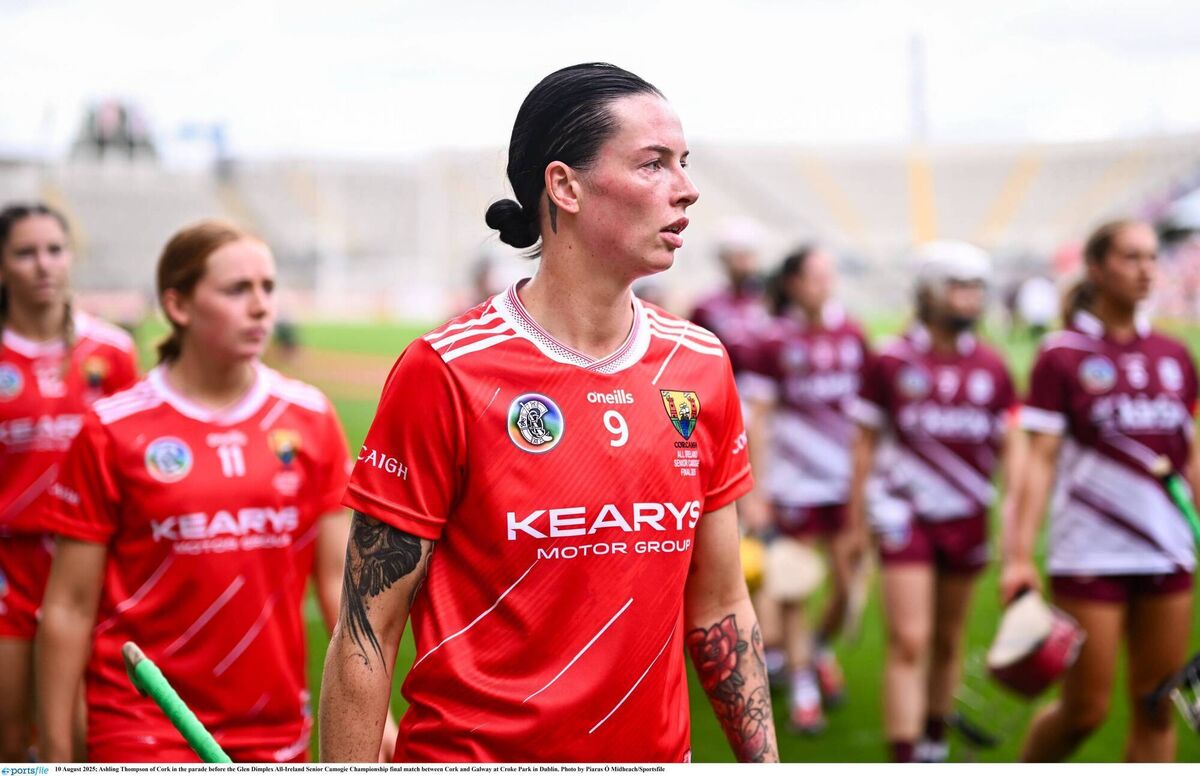
But Emma McGreevey of Define Talent, a GAA-focussed agency which represents the likes of Conor Glass, Rory Beggan and Ashling Thompson, insists that its worth taking the plunge.
“GAA players absolutely should be doing more social media – with the right support behind them. People care what they wear, what they eat, how they train. They finish up their match and their gloves are quite literally pulled off their hands by kids who have rushed onto the pitch, so you can’t tell me they don’t have influence. The demand is there and the rewards are there for doing it.
“The key is doing it in a way that feels natural to them because not everyone wants to be on the front-facing camera every day, and that’s fine. You can use it to share your stories, your values, your lifestyle, and that’s what brands are drawn to.
“If a player isn’t interested in it, that’s obviously down to the player. But their image and likeness are being used already. There are players who are totally against that, which is fair, but there is an opportunity to make something from it themselves.”
As women’s sport continues to grow in popularity, brands are more inclined than ever to include female athletes in their campaigns. They might not all command the same numbers as the men in terms of followers on social media just yet but they do outperform their male counterparts in other ways.
“Females in general post more on social media than men,” McGuire says. “Oftentimes when you have ambassadorships for a man and woman with the same brand, and the same deal has gone to both, you’ll notice that the females organically get more involved and will give you additional posts. They get more into it. They’ll be thinking forward about what else they can do, maybe a nice thing in return. It’s very rare that you get lads doing that. If you have a one-year deal and you’re looking for a second year, those little add-ons really help. The females definitely put their best foot forward in that respect.”
McGuire acknowledges that for some players, male and female, there is “definitely trepidation” when it comes to interacting with the media in particular (some partnerships involve press briefings which give journalists access to GAA players they rarely get time with during the season). “I’ve had several players [express that]. They’re going into a room to speak to media and they’re asking me what they should say or not say, having a little bit of a meltdown.
“The main risk is the change in media. It’s all about clickbait these days. The players are afraid that if they say something small it can be taken out of context and it’s blown out of proportion. You just try to put them at ease. Generally they’re happy out afterwards.”
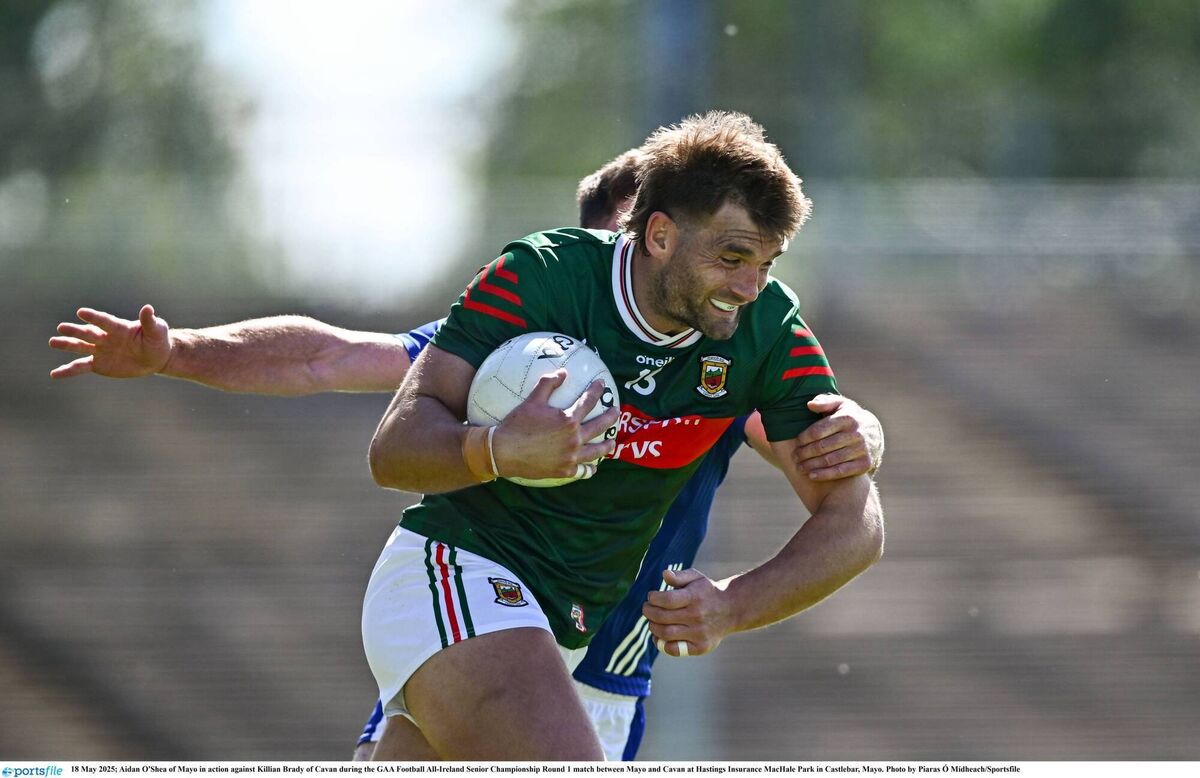
GAA players’ amateur status and related time constraints can also be a stumbling block. Dave McHugh of talent agency Wasserman Ireland has been a long-time representative of Mayo’s Aidan O’Shea and once worked with Kilkenny hurler TJ Reid, but he tends to focus on professional athletes like rugby players, partly because they’re generally more available and more open to commercial work. His clients include Tadhg Furlong, Conor Murray, Josh van der Flier and Olympic boxer Kellie Harrington.
“I’d say 100% of GAA players have day jobs,” McHugh points out. “They have huge commitments around work and training loads and there maybe isn’t a whole lot of time for them to go off and earn a parallel income through their brand profile.”
He also cites the GAA’s 'team first' culture as a reason players might be slow to go looking for commercial opportunities, and he wonders if the tribal nature of inter-county fandom might limit certain players’ appeal in other counties.
Nevertheless, he considers someone like David Clifford of Kerry “very marketable” – but, he adds, “he doesn’t seem to do very much away from football and work”.
If, however, a player is willing and able to put their hand up for commercial work, McGuire and McGreevey believe the benefits are there – not only for the individual but for the brand, supporters, and the GAA as a whole.
“The financial reward is essentially why they do it,” McGuire says. “The GPA have done great work over the last number of years by putting rate cards in to make sure GAA players are paid fairly and consistently across the board. That’s really good for us. The inequality before was atrocious with players from certain counties commanding higher fees than others.
“There’s also a longer-term brand-building aspect. As players move towards retirement, they might stay in the career that they’re already in, but they might look to shift and drive on with something else. Growing their personal brand can help them leverage themselves, depending on what that new direction is.”
According to McGreevey, partnering with GAA players is a smart move for brands. “GAA players’ engagement rates on social media are higher than other influencers,” she says. “When you look at the numbers, our players are not just part of the conversation. They’re at the head of it.”
Looking at the wider picture, she also feels that Gaelic games have some catching up to do in the social media stakes, and that allowing supporters to get to know their heroes will keep younger, modern audiences connected to the GAA. “That’s the kind of stuff that builds real fan loyalty.”
So, with all that being said, which GAA, hurling and camogie stars are the most marketable? Based on conversations with our experts, here’s a non-exhaustive list of 15 (in no particular order)…
*****
One GAA player who evidently isn’t shy about putting himself out there is Wexford hurler Lee Chin. The 2025 All-Star nominee recently starred in an eye-catching TV ad for Bord Gáis that saw him share a bath with one half of The 2 Johnnies (Johnny B). Other athletes might have balked at the premise but Chin’s involvement shows he has some personality and a sense of humour. And his acting isn’t half bad either. Chin has a large following on Instagram (52k) where he has collaborated with companies like Huel, Aer Lingus and Little Dragon Supplements.
One of only two former players to sneak onto our list, decorated ex-Dublin footballer Fenton is active on Instagram (44.4k followers) and Twitter/X (12.6k). According to our experts, he’s “really good” at social media. On Instagram he frequently shares glimpses into his life and personal interests, including his passion for League of Ireland club Shelbourne. Fenton, who retired in 2024 with seven Celtic Crosses in his pocket, has collaborated with brands like Gourmet Food Parlour, Avonmore Protein Milk and Neary’s Lusk (car dealership).
Four-time All-Ireland-winner Thompson may have the largest Instagram following of all current female Gaelic games stars (33.5k). This past May the Cork camogie player featured in the RTÉ reality programme ‘Uncharted with Ray Goggins’ – she opened up about past struggles while undertaking a gruelling seven-day challenge across Bolivia. One of Thompson’s clips from the show has been viewed over a million times on TikTok. She is also a pundit on the William Hill-sponsored Square Ball podcast.
O’Shea made his debut in 2009 and since then he has played for his county over 200 times – the second most inter-county appearances of all-time behind Dublin’s Stephen Cluxton. Unlike some of his contemporaries, he has exhibited an open-minded approach to media and commercial opportunities, which perhaps, at times, has made him a target for unfair criticism.
The Breaffy man has 71.8k Instagram followers so his reach is massive. His wife Kristin McKenzie Vass has 25.5k followers and the couple feature prominently on each other’s grids. A five-second Instagram reel of their wedding day in 2024 has been viewed over 320k times. His Instagram bio points to collaborations with Audi Ireland, adidas and Whoop.
Considered one of the finest players of his generation, Lynch has won it all with the Limerick hurlers, including five All-Irelands between 2018 and 2023. The stylish and hugely popular player has 47k followers on Instagram. His content includes pictures with his partner and twin sons, along with collaborations with Insomnia Coffee, Brian Geary Toyota and mattress company Joya.
Meath woman Wall has proven herself to be a star athlete across multiple disciplines. Although she plays professional Australian Rules football with North Melbourne in the AFLW, she was back in Ireland to represent her home county in the 2025 Ladies’ Football Championship. The Royals lost the final to Dublin but Wall has two previous winner’s medals from 2021 and 2022. She has also represented the Ireland rugby sevens team.
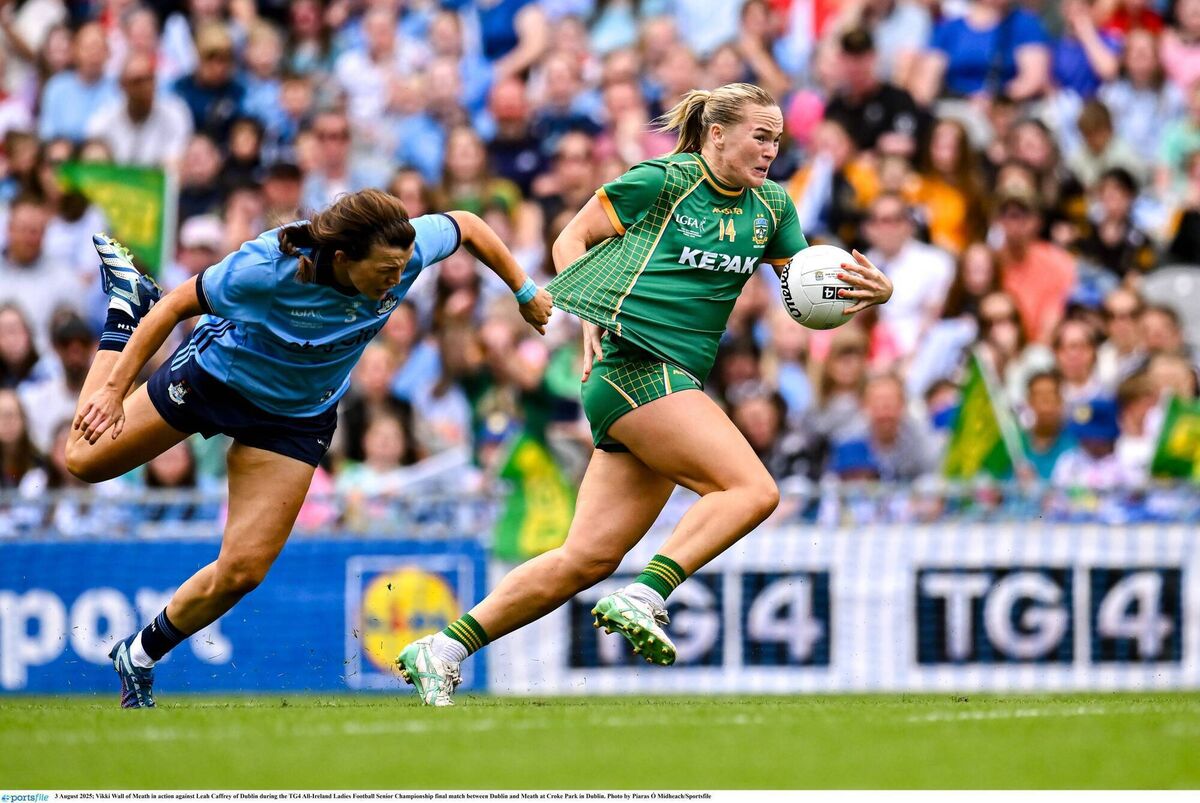
Wall has 14.8k followers on Instagram where she has collaborated with SendMyBag.ie, Joe Norris Motors and Revive Active (supplements). She also uses TikTok to give fans an insight into her day-to-day life.
Silky Galway footballer Walsh has 34.7k followers on Instagram and the former All-Star, who plays club football in Dublin with Kilmacud Crokes, is evidently open to commercial opportunities. His posts include promoted content for companies like Faciem Metus (clothing), Tayto, Uber Eats, Clean Cut Meals and Connolly Audi dealership in Galway. His feed also features posts with his partner, Rachel, and their dog, Honey, alongside collaborations with Irish Guide Dogs for the Blind and the Jack and Jill Children’s Foundation.
Maher is a former All-Star and one of the most recognisable faces in camogie. As co-chair of the Gaelic Players Association, the Dubliner is no stranger to media work. She was one of the strongest voices on camogie’s ‘skorts versus shorts’ controversy which attracted national attention earlier this year. Brand partners on Instagram (4.4k followers) include Toyota Ireland, Skins, G&G Wellness and Staycity Aparthotels. She occasionally uses IG to share snaps from her campervan trips with girlfriend Laura.
With his imperious talent and warrior-like presence on the pitch, Glass has won many admirers during his time as a Derry footballer. Add in his apparent comfort with the social media side of things and it’s easy to see why brands are keen to work with the one-time AFL player. Over 22k users follow the Glen man on Instagram and his feed features sponsored content commissioned by O’Neills and Sports Direct.
One of the greatest hurlers of all time is also considered one of the most marketable. Now a veteran of the game, Kilkenny icon Reid is active on Instagram where his posts regularly feature his wife, Niamh de Brún-Reid, who is a lifestyle influencer. Together they have 168k followers (59k for TJ and 109k for Niamh). On his feed you will find promotional content for Azzurri, Intersport Elvery’s and his own ‘TJ Reid Health and Fitness’ gyms.
A four-time All-Star and three-time All-Ireland winner, Power has been one of camogie’s leading lights since making her debut for Kilkenny 19 years ago. She is active on Instagram (11k followers) where she shares snapshots of her travels, training routine and job as a personal trainer. Her bio shows a partnership with Insomnia Coffee and her feed contains sponsored posts promoting Symprove (supplements) and Boost Drinks Ireland.
Breen was part of the Tipperary team that won the 2025 All-Ireland Hurling Championship and his performances throughout the year have earned him an All-Star nomination. Labelled “one to watch” by one of our industry experts, his online stock has risen substantially since he publicly started dating Irish track star Sharlene Mawdsley, who has a following north of 250k. He now boasts 19.5k followers of his own.
Multi-sport star Tyrrell stepped away from inter-county football this year after injuring her ACL but she did so having achieved plenty over the course of a remarkable career. She first played for the Dublin footballers before switching to rugby, earning 20 caps for Ireland and winning the Six Nations in 2015. She then returned to LGFA, playing a key role for the Dubs as they won the 2023 and 2025 All-Irelands. She also played soccer at a high standard.
Tyrrell has an audience of 10k on Instagram and is a brand ambassador for Annesley Williams Škoda and the Aer Lingus College Football Classic.
O’Byrne was nominated for an All-Star last year but even if you don’t know her for her camogie skills in the sky blue of Dublin, you might recognise her from her starring role in an O’Neills TV advert that was broadcast earlier this year. She has 4.6k followers on Instagram and has collaborated with beauty label Bellamianta, hurling brand Torpey and Whoop.
Described by one industry expert as “Mr GAA”, Clifford’s appeal is obvious. The gifted Kerry forward is set to collect his third Footballer of the Year award on Friday night after spectacularly leading the Kingdom to another All-Ireland title in July. To some, he is already the GOAT. The huge crowds of youngsters that flock to him in post-match pitch invasions are testament to his immense popularity. It seems like everyone wants a piece.
Brands are no different in that regard, and the Fossa man has worked with the likes of SuperValu, financial advice company Davy, insurance broker GMIB.ie and Ahern’s BMW. However, he does not appear to court the commercial side of things, nor does he engage with social media. He must be one of the few 20-somethings in the country who doesn’t have an Instagram account.
Brian Hayes (Cork), Paudie Clifford (Kerry), Emma Duggan (Meath), Louise Ní Mhuircheartaigh (Kerry), Shane O’Donnell (Clare).
CONNECT WITH US TODAY



Be the first to know the latest news and updates