Mick Clifford: We moved on from Covid — but did we learn anything?
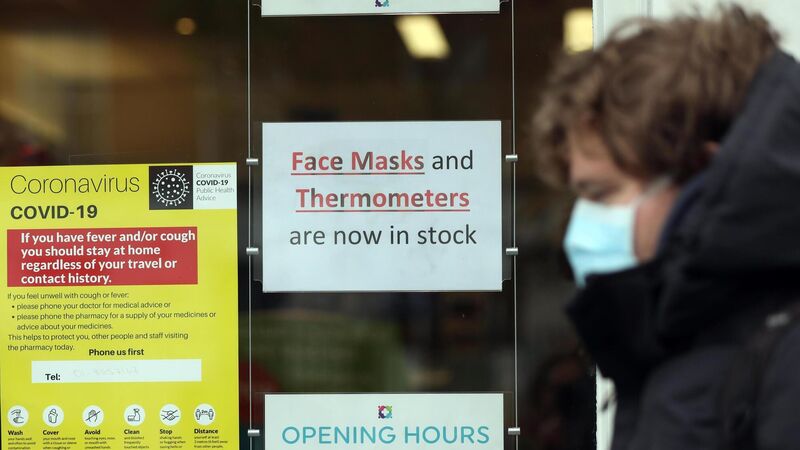
The basis for an initial lockdown was sound. But did it go on too long and were its strictures too harsh and unyielding?

Covid was back in the news this week, but for some people it ever went away. There are those who suffer under the pain of the long version of the virus, but beyond that there are the fallouts rarely acknowledged. It’s as if as a society there has been a reversion to the old Irish response to anything awkward or unpleasant. Sure it’s all over, best to say nothing and take plenty of no notice of what went on.
This week there was a public session of the “review” of the pandemic set up by the government in 2024. A review, as opposed to the kind of statutory inquiry established in many other democracies, is the Irish political version of taking plenty of no notice. It is quite obvious that the government views a proper inquiry as a potential stick with which it might be beaten.
Therefore, rather than attempting to learn from the experience of the pandemic, the imperative appears to be to ensure that the past won’t come back to haunt the current administration. As a result, we all have to simply grasp at the few morsels of learnings that are thrown up by public hearings.
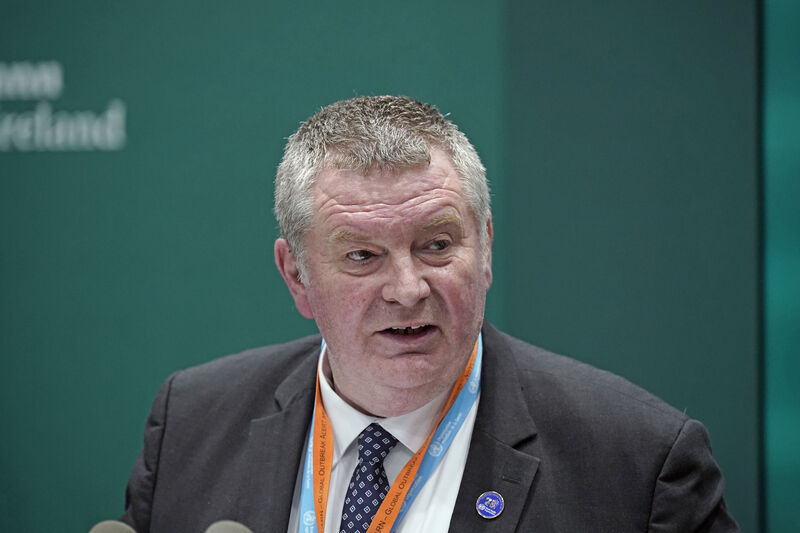
On Tuesday, Mike Ryan, who was highly regarded for his role in the pandemic, had much to say. The former deputy head of the World Health Organisation (WHO) pointed out that while he understood the huge pressure on health systems to effect lockdowns, the measures left little room for democracy. Communities, he said, were not given the opportunity to manage their own risk.
“In general, people manage their own risk,” he said.
"They decide how many times a day they go to the shop, they decide if they get on public transport, they decide if they go to work, all of those are decisions that would increase or decrease your risk of exposure, and we didn't trust communities enough at times to make those decisions."
Read More
Another witness at the hearing was Professor Mark Woolhouse of Edinburgh University who insisted there was no need to close schools during the pandemic. These are serious observations that should receive full attention, not to apportion blame but to be better prepared for the next global crisis.
From this remove the lockdowns that were effected in this country do appear to have been excessive. The basis for an initial lockdown was sound. But did it go on too long and were its strictures too harsh and unyielding?
Ryan’s observation about trust is valid. At a national level it could well be posited that we don’t have a good record of civic duty in this country.
But while civic duty may not be a national virtue, a sense of community, meitheal As Gaeilge, is. There is certainly a case to be made that communities should have been allowed, at least to some extent, to determine what was best in order to protect their own. This is a line of inquiry that is well worth examining before any other such crisis hits.
The lockdowns had a few different effects. At a political level, the exercise of enormous power gave oxygen to those on the far right peddling conspiracy theories. The extent of power deployed, they asserted, was the prime example of the complicity of government in a global exercise. The interest of ordinary people were being sacrificed to facilitate elites, the conspiracy went.
Ultimately, the conspiracies melded with frustration and anger and managed to attract some to the notion that this was an existential action by the State that should be resisted. Certainly to some extent, the strain of right wing populism at the fringes of the current political dispensation has its origins in reaction to the lockdowns.
On an individual level, the lockdowns had a major impact on those least-equipped to deal with confined lives. These included people who were elderly, had some form of disability, or had emotional vulnerability. There was no doubt but that there were mental health impacts for some right across society.
And yet, what was the alternative? The extent of the lockdowns was a function of an imbalance of power that developed between a few strong voices in the National Public Health Emergency Team (Nphet) on one side and the government on the other.
Nphet was solely focused on preventing the spread of the virus.
When the government did so in the name of a “meaningful Christmas” in 2020, the resultant spread of the virus and the fall-out ensured that thereafter that wouldn’t be repeated.
Another pressure point came from those who wanted to pursue 'zero-covid' which would have required greater restrictions. Some opposition parties and a group of self-appointed experts, the Irish Scientific Advisory Group (Isag), cast their objectives in moral terms. Those who didn’t favour zero-covid, they asserted, were more concerned about the economy than saving lives.
Then there was the schools. There can be little doubt but that some children suffered greatly from the disruption and absence of routine. Those most affected were from the lower rungs of the socio economic ladder, or who had a disability or developmental issues. Was it necessary to close the schools for so long, particularly beyond the first few months? What would the reaction have been from teachers if the schools opened while restrictions were still in force in other parts of society?
These are all entirely valid and necessary questions from this remove. Taking plenty of no notice is not good enough for those who have been impacted, particularly in terms of mental health.
According to the John Hopkins University Coronavirus Resource Centre in the USA, this country did well in terms of deaths attributable to the virus. Ireland had 176.35 deaths per 100,000 of the population. This compares favourably with similarly developed countries like Sweden, which had 235.43 and Britain with 325.13. Yet others like Switzerland, Finland, Denmark, the Netherlands, and Canada emerged with results better than ours. Surely there are learnings there, particularly in relation to how restrictions were imposed and maintained.
The attitude from government seem to be to let bygones be bygones. We are over it and it’s time to move on, nothing more to see here. The result of that is an inquiry that may touch on much but is unlikely to yield any definitive findings.
As Mike Ryan pointed out at this week’s hearing, there should not be a blame game in looking into this traumatic episode from the recent past. There is, however, plenty of reason to apportion blame for delay and denial of a proper inquiry into how things were done and how they should be done next time around.
CONNECT WITH US TODAY



Be the first to know the latest news and updates