Mick Clifford: Meath house demolition raises questions about delay in enforcing another order
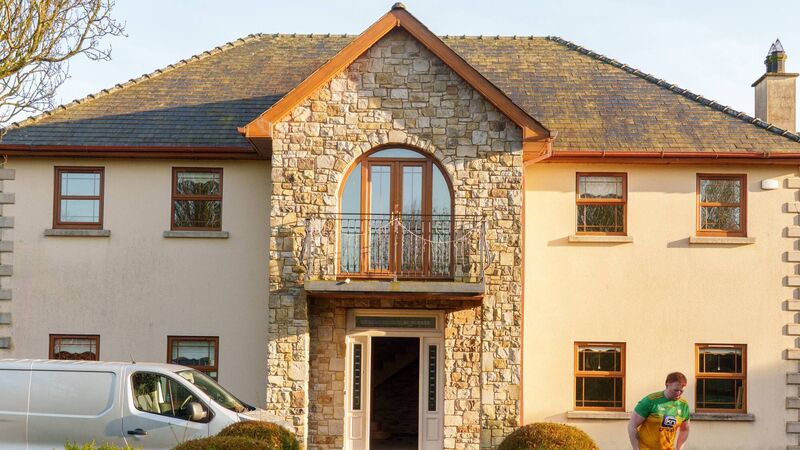
The Meath home built without planning permission that has been demolished after a 20-year legal saga. Many have wondered how some resolution couldn’t have been found short of destroying a home during a housing crisis. Picture: Barry Cronin

The demolition of a family home in Co Meath last week has generated much comment and not a little anger. Rose and Chris Murray had been in a 20-year legal battle with the local council over attempts to retain the illegally built structure.
Many have wondered how some resolution couldn’t have been found short of destroying a home during a housing crisis. But sometimes there is simply no way around such a drastic measure.
Currently, there is another ongoing case where a local authority is seeking to have homes destroyed. The dreaded day is drawing near after a protracted legal battle. The homes in question have been occupied by tenants for over eight years.
That will inevitably mean that those tenants will be forced to find new homes in the midst of a housing crisis. Yet the case for going ahead with the demolition is soundly based and goes to the heart of why in rare instances there is simply no way around such actions if the law is to mean anything.
Larkfield House is a former gym located in Clondalkin, west Dublin, near the Liffey Valley Shopping Centre. In September 2016, a company called Cavvies Ltd obtained planning permission to build seven apartments on the site.
The company is owned by businessman Vincent Cosgrave and his daughter Jackie. Despite getting the go-ahead, work did not begin on the site. Instead, the owner submitted a revised planning application for 48 housing units. This was rejected by South Dublin County Council.
The owner appealed the decision to An Bord Pleanala. The board’s inspector recommended rejection of the appeal. The inspector report stated: “The proposed development, by reason of its poor quality design and configuration, would result in substandard accommodation and inadequate residential amenity for future occupants.”
The most offending features of the application were “the inadequate floor-to-ceiling heights at ground- and first-floor level; the high percentage of single-aspect units and the poor internal layout and, in particular, the substandard widths of the living rooms serving the two-bed units.”
The board agreed with its inspector. Yet while the appeal was still going through the process, the owners went ahead and redeveloped the building into 44 apartments. It had been granted permission for 28, had applied to have 48 and then for some reason just went ahead and built 44.

By the time the appeals board had issued its ruling in early 2018, all of the apartments were built and occupied.
At a later hearing of the Residential Tenancies Board, Mr Cosgrave laid out how he had arrived at the decision to build the appropriate number of apartments, irrespective of planning.
The adjudicator at the hearing asked if he had “deliberately decided to disregard the planning permission”. Mr Cosgrave stated that yes ”he personally had decided the property was more suited to 44 apartments and that was why 44 apartments were built and not 27”.
In April 2018, Housing Assistance Payment (HAP) tenants had to leave their homes in Larkfield House because the council would no longer pay HAP for what was an unauthorised development.
Apart from the planning issue, the development had failed to comply with building regulations in providing certificates at various junctures of the construction. Understandably, that didn’t stop private tenants taking up residency at a time when getting anywhere to live was so difficult.
The owner applied for retention. This is where things got sticky. The council had to decide whether the very clear and considerable reasons for not allowing 48 homes to be built on the site actually meant something.
As is so often the case, the council found space to compromise, presumably in the interests of the greater good. It granted retention for 37 apartments but the remaining seven would have to go.
Mr Cosgrave wasn’t for turning. He applied in 2020 for retention of the other seven but this was rejected. In its decision, SDCC planners noted that the new proposal had not overcome the same reasons for refusal that were there from the start.
These include the "poor internal layout, insufficient private amenity space, the single aspect nature of the apartments and inadequate sunlight to living areas".
“Therefore, by reason of its poor quality design and configuration, the proposed development would result in substandard accommodation and inadequate residential amenity for future occupants".
The dreaded day was further put off by Mr Cosgrave with an appeal to the courts. The Circuit Court threw out his case and he appealed to the High Court. Last December, the High Court refused his application.
As of now, it doesn’t appear there are any further obstacles to the execution of an enforcement order which will lead to the destruction of seven apartments.
Sinn Féin housing spokesperson Eoin O Broin is a local TD who has followed the saga from the outset. He says that there is only one course of action that can be followed as a result of the conduct of the developer.
“Those seven apartments have to go,” he says. “I would prefer not to be saying that but we have planning standards for a reason. If the State isn’t firm when there is such egregious breaches it would be open season for anybody.”
He points out that the planning breaches were only one element of the most serious problems around how the development was constructed.
“The thing that gets lost is that this wasn’t just a planning breach but it was also a building regulation breach. Litigation has not yet been issued for the failure to observe the building regulations.
"We have building regulations for a reason. We have fire safety standards for a reason. This is much bigger and more significant than the obvious breaches that were there in planning.”
South Dublin County Council refused to answer a question as to whether it was pursuing any action against the developer for breach of the building regulations. In relation to the planning litigation it provided the following answer.
“The council is pursuing planning enforcement action in relation to this matter and will not be commenting further as legal proceedings have commenced.” An attempt to make contact with the principles of Cavvies Ltd was unsuccessful.
As of now, the unthinkable will probably have to happen here with the destruction of seven homes during a housing crisis.
But the same question arises as did for the unfortunate couple in Co Meath. If an enforcement order is fully carried out for this, when exactly would it be carried out?
CONNECT WITH US TODAY



Be the first to know the latest news and updates