Subscriber

Terry Prone: Should we burn books after finding out the author is a fraud?
t’s a tough time to be a publisher... and a reader
Terry Prone: Should we burn books after finding out the author is a fraud?

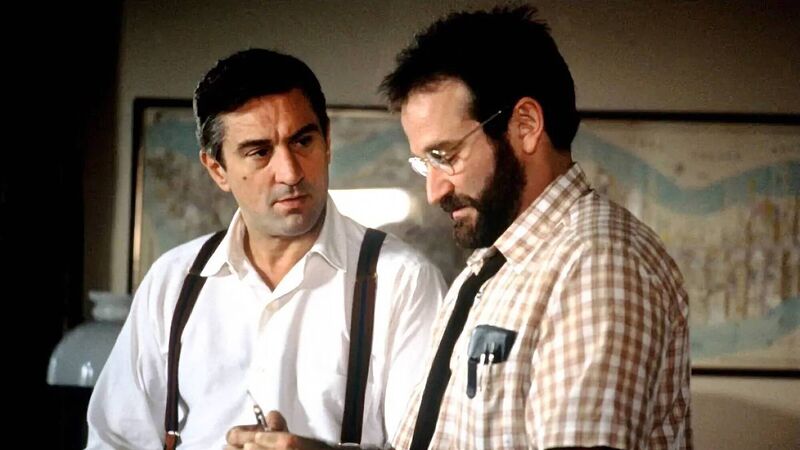
Robin Williams and Robert De Niro in the 1990 movie Awakenings.

It will be interesting to see what Oliver Sacks’ publishers do, now they know him to have been a fraud. At the other end of the scale, David Walliams’ publishers severed all connections with him after personal behaviour allegations — despite his books having sold in the millions for them. It’s a tough time to be a publisher.

It’s also a tough time to be a reader, when you learn you’ve been codded by a writer you adore. You can’t burn the books. Book-burning feels like sacrilege. Fahrenheit 451 and all that. But, when you’ve discovered that a writer you admired, a medical pioneer and poet whose works you collected, was actually a charlatan, you can’t leave their books on your shelves, shoulder to shoulder with the good guys. You just can’t.

During the last fifty years, a neurologist named Oliver Sacks became an internationally-loved figure because of books he wrote like Awakenings, published in 1973 which told the story of survivors of a 1920s sleeping epidemic, who had been unable to move on their own for decades and who then — courtesy of Sacks’ treatment — had a breakthrough back into active life. The book became a major feature film starring Robin Williams and Robert De Niro. It set a pattern: Sacks moved on to produce a bunch of bestsellers like The Man who Mistook his Wife for a Hat, most of them based on his experience with patients, some, like Uncle Tungsten, more autobiographical. Anyone interested in human behaviour or neurology wanted his latest work, which reliably put his books on the top of international bestseller lists.

British by birth, he moved to the United States after earning his medical degree and worked there from the sixties onwards, straddling science and popular publishing and establishing himself as a gay, mostly celibate “character” who rode with the Hell’s Angels bikers and explicated the issue of neurological divergence — his own included — in anecdotes that were charming, quotable and insightful.

We now know, courtesy of a New Yorker analysis, that while they were charming, quotable and insightful, they were untrue. The patients he quoted as saying fascinating things didn’t say them at all. The accomplishments he attributed to damaged patients were not real. He made up the quotations or drew them from his own life. Ditto, the achievements. Yet he was able to fool generations of fans.

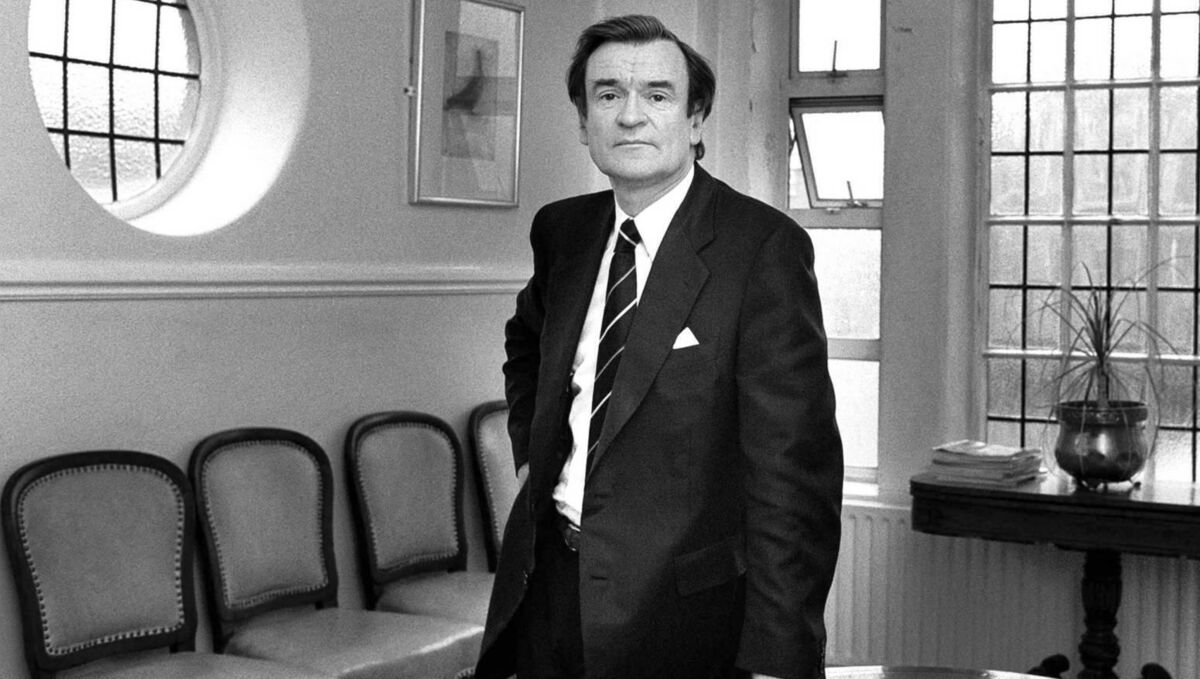
Psychiatrist Anthony Clare.

Ireland’s star psychiatrist, the late Dr Anthony Clare, wrote extensively about Sacks’ work. Anthony Clare was, for a time, the most famous psychiatrist in Ireland and Britain, presenting TV shows like In the Psychiatrist’s Chair and writing books about psychiatry accessible to non-medical readers. Anthony Clare never lost his capacity to doubt. He was the only one of his time who came close to exposing the then high-flying Jimmy Saville. When Clare interviewed the TV personality, later revealed to have been a paedophile, he clearly didn’t buy Saville’s confected image and, in the book version of his interview, came as close as the libel laws let him to nailing Saville.

In that context, it is worth revisiting how Anthony Clare interpreted Oliver Sacks when, in the nineties, the Irish professor wrote about this world-renowned figure. Clare reviewed more than one Sacks’ book. The reviews were generous, as Clare tended to be, crediting Sacks with wonderful prose and with effectively kicking life into the old case history method of medical examination.

But — as with his Saville essay — insightful discomfort is patent within the reviews. 

Clare never actually said that Sacks was selling the general public a highly entertaining fake version of neurological divergence, but he worried about the exceptional nature of the case studies and defined Oliver Sacks as “romanticizing” conditions like Tourette’s Syndrome

He went so far as to suggest that regarding such divergences (as Sacks tended to do) as “adventures” or “alternative ways of being” did a disservice to patients whose coping with conditions like Tourette’s was grindingly difficult, rather than amusingly paradoxical.

Looking back, not just at Sacks but at wider media coverage of Tourette’s, one cannot but be struck by the element of “let’s enjoy this oddity” in his and wider media’s approach. Understandably. Listening to the unplanned and uncontrollable bursts of speech and other noises characteristic of Tourette’s can be highly entertaining and has been facilitated by people forced to live with the syndrome who decide to go public with it, creating one-person shows out of their experience and welcoming radio and TV interviews about those shows. More power to them.

But re-reading Sacks’ books on neurological outliers would have to make any reader question if those books were dangerously close to the entertainment form reprepresented centuries ago by visits to Bethlehem, the English asylum that gave us the word “bedlam.” Back then, decent suburban dwellers would literally go at the weekend to what we would now call a mental hospital, to have a gawk at the mentally ill patients and either enjoy or be righteously appalled by their chaotic behaviour. Yet when we first read Sacks’ books, it never struck us that we might be doing a version of the same thing. How could it? Readers were convinced they were learning insights into neurology from a kindly master. A different proposition altogether.

What readers did not know at the time was that this “educational reading experience” was untrue and unreal. 

Peers of Sacks did question the fact that none of them was able to replicate his achievements with people suffering from specified conditions, but the dissenters were hardly heard: if you want to go up against a medical peer, it helps if they’re not a likeable household name all over the world, and a millionnaire to boot. 

So the neurologist’s reputation grew and grew. Until 2026, when it came to a shuddering halt and reversal.

Sacks now stands condemned, not just by medical figures who didn’t trust him, but by himself

 His correspondence and his journals are now in a Foundation, and it was there that the New Yorker found his confessions to fabrication (“fairy tales”) of anecdotal evidence and the guilt Sacks experienced as a result. Except — and this is significant — his diaries show the guilt taking second place to the excuses. He had to do the bad stuff to keep his own demons at bay. In other words, don’t blame me — my neurological disorder made me do it.

No, it didn’t. This man knew what he was at while he was at it, and became rich, famous and beloved as a result. Each of his emerging books became an instant, continuing best-seller. That now presents his publishers and readers with a dilemma.

Some of us who cherished his books are now culling them. Into the charity shop box they went, this weekend. Although a doubt remains: does passing them on for a charity to make a euro apiece on them mean that we carry some guilt for spreading Sacks’s misinformation?

Perish the thought, but would burning the books be better?

BOOKS & MORE

Check out our Books Hub where you will find the latest news, reviews, features, opinions and analysis on all things books from the Irish Examiner's team of specialist writers, columnists and contributors.

More in this section