Sarah Harte: We need to dismantle the racialised stereotypes of Muslims in Ireland
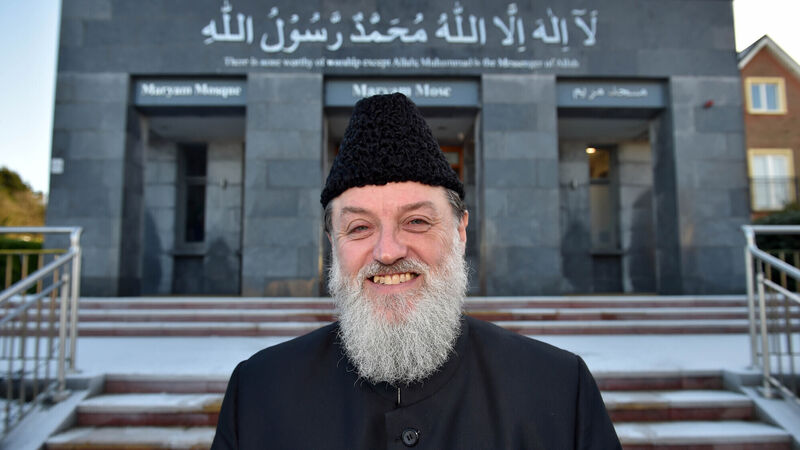
Ibrahim Michael Noonan Imam outside Galway's Maryam Mosque. Last week, it was reported in the 'Irish Examiner' that Irish Muslim Imams said in the wake of the alleged plot to bomb the mosque, Muslims were living both 'on edge' and in fear. Photo: Ray Ryan

November is Islamophobia Awareness Month. The same month an alleged terrorist attack on a mosque in Galway was foiled.
The Gardaí have spoken about the emergence of a violent right-wing extremist organisation, identified as the Irish Defence Army (IDA). The far right has been growing in this country for years in an incremental but undeniable way.
We are learning that rapid cultural change produces a nasty backlash. You could say we would never see in Ireland the emergence of a xenophobic populist movement with credible leaders touting a virulent version of identity politics. Or you could look at America and Europe, and at the growing polarisation, and wonder if there’s a lesson there.
Anti-Muslim and anti-migrant rhetoric have become more commonplace. I have noticed the ease with which some middle-class, educated people are casually anti-Muslim.
Irish people being racist always feels discordant, because we were characterised in deeply racist ways. And despite our education, global outlook, and relative degree of wealth, we continue — albeit to a much lesser extent — to be racially profiled.
At Cowes Week, when newly arrived, I asked a man to mind my suitcase as I went to find an errant relative who typically hadn’t turned up on time to meet me. He said: "There isn’t a bomb in it, is there, darling?"
I was shocked at being casually racially profiled as a terrorist by an Anglo-Saxon ruddy-heeked sailor while his friends brayed like nautical donkeys. Sadly, words failed me.
Cut to a wedding last year in the Home Counties amongst a plethora of public-school men (the former Tory British prime minister Rishi Sunak’s boarding school year), when a man expressed surprise that I was called Sarah, given that I was Irish.
He said: "I thought you would be called something like Bridget." That was only the start of it. His mortified wife, apologising profusely, caught him wearily in her well-worn butterfly net and dragged him away. God love her.
Neither story is palpably from the coalface of being a migrant experiencing racism. Still, they show how racial prejudices which go deep are unleashed after a couple of glasses of vino. Those stereotypes are lurking beneath a thin veneer of civilisation.
The question is what’s lurking beneath the surface here? In July, a protest took place in Dublin against the annual Muslim procession marking the beginning of their new year, but Gardaí said it was small.
In October, much-viewed fake news circulated on social media that Ireland had a larger population of Muslims than people living in Gaeltacht areas. In reality, according to the last census, just in excess of 81,000 men, women, and children identify as Muslim, whereas 106,220 people live in Gaeltacht areas.
What the figure of 81,000 shows, with a significant proportion of those people being born here, is that the perception that being Irish and Muslim are mutually exclusive no longer holds true.
A lot has changed fast in this country. The national identity has changed. Some people find that hard to accept. Others feel optimism and see this as an exciting development.
How we go forward as a multicultural society will inevitably raise questions about balancing deeply-held private beliefs and the implicit values of a Western democracy.
Last month, a new Portuguese bill banning the burqa was perceived in some quarters as racist, anti-migrant, and targeting Muslim women. A similar ban has been proposed by the far-right in Italy. We have decided, in a very liberal country, not to ban full-face coverings.
The wearing of the full-face veil has been banned in certain European countries, with partial bans in others. The European Court of Human Rights upheld the French ban on full-face coverings, endorsing the French State’s submission that the face plays a significant role in social interaction.
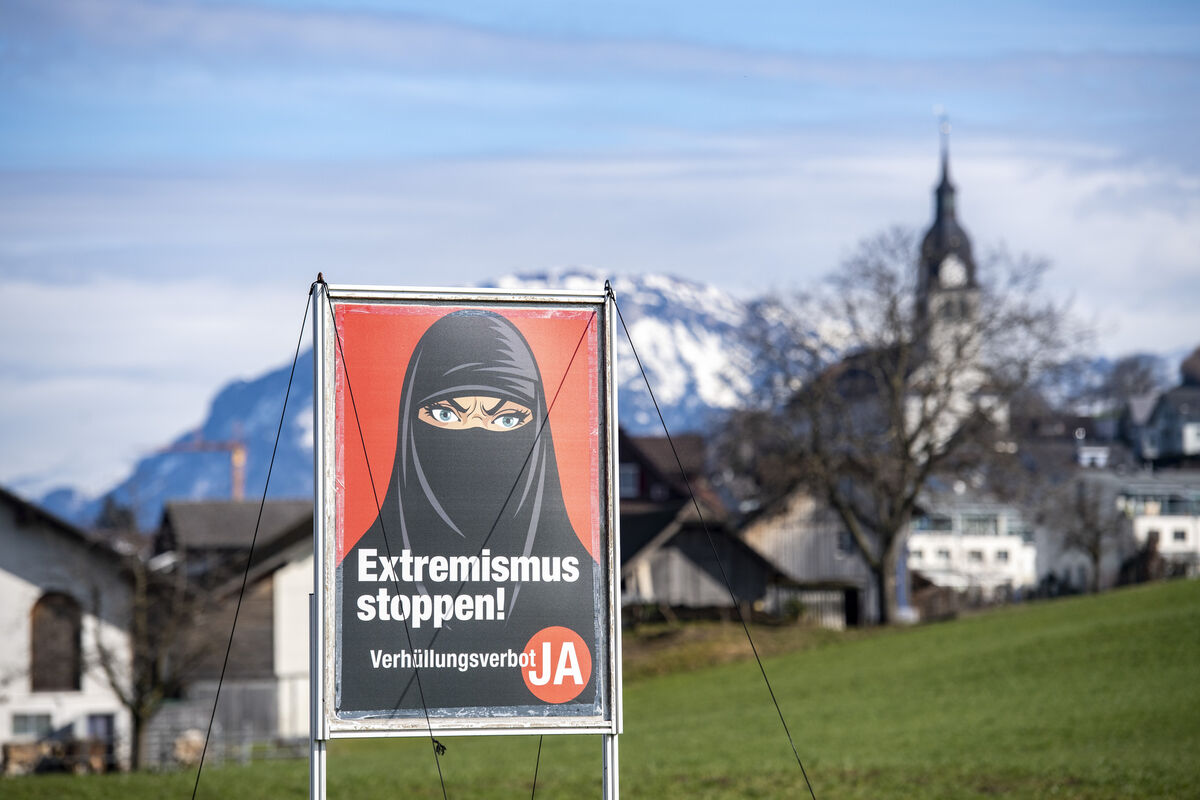
Covering the face has not been a cultural norm in Irish society. Women obviously wore mantillas at one point, but while I personally dislike burqas, which are full-body coverings with a mesh over the face, I view them as a form of freedom of expression and religion.
Fine, unless conducting official business, when identification is necessary, say, when you are passing through airport security (checks can be done in private by someone of the same sex), in court or at a passport office, you must show your face.
However, I know secularists who strongly disagree with allowing anyone to wear a full veil here, viewing it as incompatible with Western norms of equality. It will be interesting to see if this debate ever properly surfaces here.
There is a broader point that has nothing to do with the Muslim community and is more to do with the argument that what Francis Fukuyama, the American political scientist, calls ‘unfettered multiculturalism’ has failed. His thesis is that a version of multiculturalism that neglects integration undermines a stable national identity.
Diversity, he says, must be managed if greater polarisation is to be avoided. You need to retain a foundation of shared values and a common culture while allowing some diversity. Essentially, how do we expand what it means to be Irish while also in certain contexts saying: ‘Dems the rules here’?
I lived in Saudi Arabia, one of the most restrictive Muslim countries. The female members of my family kept the rules unquestioningly. We wore Abayas, covered our hair during Ramadan, and were never in public with a male who wasn’t a direct relative.
Male religious mutawa police scrutinised us (I remember them as stern-looking, wizened, bearded old men) who policed public areas, inspecting us to see if we had deviated dress-wise. There was a diplomatic incident concerning the British Ambassador's wife who got a crack with a Mutawa’s stick in the shopping mall for having shown her bare forearms.
So, while Saudi Arabia is an extreme example, there is inevitably an element of 'when in Rome' in any country. Not all cultural practices travel.
However, Fukuyama recently also said: “It’s important not just to talk to people that agree with you, but to talk to people that you disagree with potentially.” Rather than focusing on a person’s identity, questioning what tribe they belong to, we should understand them as human beings entitled to the same protection of rights as us.
If you come here, you sign up for a modern, democratic, diverse society, and have responsibilities to the Irish State; but you also have rights, including the right to the State's protection.
So, back to the Muslim community. Last week, it was reported in the that Irish Muslim Imams said in the wake of the alleged plot to bomb a mosque, Muslims were living both “on edge” and in fear. No surprise there.
The Imams “urgently” want a national campaign to tackle the spread of hatred. I agree that we need one to dismantle racialised stereotypes of Muslimness through initiatives at both national and local levels.
The only way this campaign will work is to tell people’s stories, because stories are the most powerful medium of all. Stories that show Muslims living among us as functioning members of Irish society, making positive contributions, showing the normalcy of being Irish and Muslim.
CONNECT WITH US TODAY



Be the first to know the latest news and updates