Identity politics: Why transgender children need legal recognition
Under-18s who feel they’re in the wrong body may soon be able to legally change their gender with greater ease, writes
Helen O’Callaghan.
CHILDREN who feel trapped in the wrong body may soon be able to legally change their gender without having to get a go-ahead from the court or letters of approval from doctors.
Advocacy groups for transgender children and young people are hopeful Social Protection Minister Regina Doherty will bring draft legislation to the Oireachtas in the next few months, following findings of a review she commissioned into gender-recognition law.
If enacted, it will open up a legal pathway for transgender children to get a gender recognition cert — which will look like a birth cert — with their new name and preferred, self-identified gender on it.
“We’re talking about legal transitioning only, in relation to changing birth cert, passport, social security details — so trans children have paperwork in their preferred name, gender, and pronoun,” explains executive director of BeLonG To Youth Services Moninne Griffith, adding that medically transitioning is a completely separate journey and process.
The right to get full legal recognition of their self-identified gender has been in place for over-18s since the Gender Recognition Act passed in 2015. The process is a straightforward administrative one, whereby the individual applies through the Department of Social Protection.
“It’s speedy and simple,” says Griffith, who chaired the review group and describes any potential extension of the Act to under-18s as “a big step forward”.
At the moment, it’s not possible for under-16s to get full legal recognition of their gender, but 16 and 17-year-olds can access a gender recognition certificate once they have approval from two doctors, one of whom must be an endocrinologist, psychiatrist, child paediatrician, or psychologist. “This is confusing and conflates medical transitioning with legal transitioning,” says Griffith.
She says these medical requirements, simply to legally transition, are onerous on 16/17-year-olds — they can involve long waiting times to see specialists and are costly if the family goes private. And as the 2015 Act is for over-18s, 16/17-year-olds must also apply to the court for an exemption to the over-18 age requirement of the Act.
“Young people say these requirements are effectively barriers to applying for legal gender recognition — uptake has been low,” says Griffith.
The review group recommended introducing a system of gender recognition for children, with certain requirements:
- Parental consent for child wishing to legally transition;
- Third-party support for child/family;
- A straightforward revocation process, which acknowledges gender identity can be an evolving part of a young person’s identity, so it shouldn’t be made too onerous for them to legally change back to their birth-assigned gender if, later, they want that.
It’s recommended there be no lower age limit for children covered by the proposed new legislation. Sara R Phillips, chair of the Transgender Equality Network Ireland’s (TENI) board of directors, says many people believe children/young people don’t have experience to know what gender is. Yet, says Phillips, there’s clear evidence most of us can identify our gender at a very young age.
“Most trans people will tell you they had a fair understanding at a very young age. They clearly knew they were not the gender assigned at birth or were very confused that they didn’t identify with that gender. I’ve met five-year-olds who were very clear and I’ve also met 10-year-olds who are still unsure how to express who they are. They don’t feel comfortable being a boy or girl but they don’t have words to say what they are.”
Griffith says it’s really important to send a signal to parents and teachers “that we have to believe young people — they’re capable of knowing these things and parents are too”.
A 2017 US study (Epidemiology of Gender Dysphoria and Transgender Identity) estimates one person in 100 identifies as transgender, reports clinical psychologist Dr Lisa Brinkmann, who specialises in sex and gender-related concerns. She says if a young person is transgender or questioning their gender and if they’ve socially transitioned and are living in a different gender to their biological sex, it’s important they can legally change their name and gender marker.
She points out that children and adolescents are asked far more often than adults for identification documents — flashpoints include school enrolment, switching schools, and moving on to college.
“If you have a gender recognition certificate, it changes retrospectively all your legal documents. It would be a forward step if the age limit was brought down, though a note of caution needs to be added – anyone going through a legal name/gender change should be doing so in a supported way,” says Brinkmann.
Schools, informed they have a trans pupil, can reach out to TENI for support. Brinkmann says all the schools she’s worked with, even if hesitant at first when they hear of a trans student, really take this on. So far, supportive schools have only changed trans children’s names in the in-house school system — once official events come along, like State exams, the child will see their birth name on the paper.
For a trans child who has successfully socially transitioned at school, who has gone from Kate to Max or Peter to Emma, this is “jarring and difficult, especially if the child’s a year or two into transitioning”, says Brinkmann.
School play a huge part in children’s lives — and school life would be easier if transgender young people could easily access legal transitioning. From a new teacher getting the child’s name wrong to consent forms for school tours being sent to parents in incorrect names, impact on the child can range from upset to feeling physically ill, says Griffith.
For a trans child, getting a gender recognition certificate would be huge. “They’d feel equally protected and respected by the State, getting their passports, school reports, student cards in their own name.”
While “many schools have taken wonderfully positive steps” to support transgender children, some are less open. “These proposals becoming law would give these schools that extra little nudge they need.”
Griffith believes if trans children had a gender recognition certificate, it would also cut bullying. “A child comes back after the summer holidays, having transitioned. Some schools aren’t great — there’s bullying. We heard of one child getting pushed downstairs, their uniform thrown into the shower, the water turned on.”
Getting the legal side of things right for these children helps awareness and empathy: “So society gets used to the fact that some people are transgender — it’s just a normal part of human experience.”
Professor Donal O’Shea, a consultant endocrinologist, works at the gender dysphoria clinic in St Columcille’s Hospital, Loughlinstown. He welcomes the widening acceptance of gender as a spectrum. “We’re seeing it in our clinic, with increasing numbers questioning what is gender, what does it mean to be male, to be female, with some young people feeling they really fit in with neither binary position.”
In 2005, the clinic had five referrals — by 2017, this had jumped to 209. “Many referrals are adolescents through Crumlin Hospital or through GPs. They’re coming at a younger age,” says O’Shea, who’s concerned about how legislation is done when “we know teenage years are a time of great fluidity”.
He recommends parents encourage children, exploring gender issues, to do so slowly. “I’d encourage them not to rush into anything, like starting hormones or having surgery, because this is relevant for just a small number of people with gender issues.”
O’Shea’s concerned the review group’s proposals, if enacted, could see children with gender recognition certificates get easy access to hormones/surgery. “That’s the concern, that the child will seek and get hormone treatment and surgery when they haven’t fully explored their gender issues. It’s a worry because we know people who go through gender reassignment quickly or at a young age are more likely to regret it — the change-of-mind rate is greater.”
O’Shea wants a gender recognition cert for under-18s to state it’s not to be used for medical purposes.
Brinkmann is working with under-18s who don’t have a gender recognition cert.
“They’re very anxious about applying for college. They’re feeling insecure about it, wondering ‘what’s going to happen after I leave school?’” Simplifying access to their legal transition would make life easier for them, she says.
“It would take away another hurdle on a path that’s already difficult to take.”
“They were very dark days with a lot of upset We had a lot of learning to do”
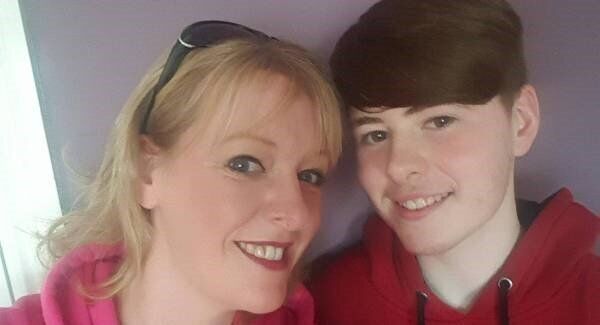
Lucan-based Kirsty Donohue’s son, Dylan, 17, was assigned female at birth.
“Looking back, I can join the dots and it makes sense – during his childhood, we thought he was a tomboy. He never played with dolls, barbies or buggies. He wasn’t into girly screaming, nails or make-up. He’d dress up as Buzz Lightyear. His natural compulsion was towards the masculine end of things.
“It came to a head when he was 13½ – his friends got worried that he was self-harming. They told teachers. He was already asking his friends to call him Dylan and to be referred to as he. We were completely oblivious – you’d think we’d know.”
When Kirsty checked Dylan’s phone about his self-harming, she discovered he was transgender. “The self-harming was my chief worry. I didn’t really understand ‘transgender’. We [she and husband Dara] talked with him about it — because we didn’t understand, it was horrendous. We said he didn’t know what he was talking about, it was his hormones. We said ‘come back at 18 and we’ll discuss it, you’re spending too much time on the Internet’. Basically ‘you haven’t a clue’, whereas we didn’t have a clue.
“They were very dark days with a lot of upset. We had a lot of learning to do. We had to open ourselves up to it. I watched a YouTube video [of transgender person] with tears rolling down my face, thinking this is a real thing, this does actually happen. I thought: oh gosh, this is massive for my child and the fact there’s self-harming means it’s distressing. I
beat myself up — how did I not see the distress he was in?” Mum to two other boys, Kirsty was also thinking what about her little girl? “What about the future we were going to have? I’d been waiting for this tomboy to turn into a young woman. You have a boy – you expect to be standing next to a sports pitch. You think you’ll be helping your daughter with her make-up. I felt robbed of the future I thought I’d have with my daughter.
“It’s an ambiguous loss that’s hard to get your head around: while I miss the future I thought I was going to have, it wasn’t mine to have – now I have a different future with the same child, just the packaging’s different. Being trans is way beyond being lesbian, gay or bisexual – your child’s entire appearance changes. They don’t want to be called by a name/pronoun that doesn’t fit. He started hormone-blockers 18 months ago. Five months ago, he started testosterone — it helps redistribution of fat, so body shape changes. Adam’s apple grows. He’s growing a beard. To watch him on his journey becoming the young man he has always known he is – it’s weird but lovely.
“It’s difficult to navigate life when your child’s trans. The complete lack of gender-recognition for his age group has been a massive headache. Nothing in their paperwork adds up. You’ve nothing to support your child, document-wise. The school doesn’t have to call them by their preferred name or have staff use the right pronoun.
“We changed his name by deed poll. I signed an affidavit saying we’d never again use his birth name on a document – fine ‘til we needed to change his passport. You have to prove – with a letter from school/GP – that he’d been using the name for two years before they’d change it on the passport, so we couldn’t change his passport. We were told we’d have to use the passport and put the ticket in his birth name. This was a non-runner. What if his name was looked up and found no longer valid? If we were asked about it at airport security, we’d have to out our child. For two years, we couldn’t leave Ireland as a family.
“I’m hoping gender-recognition for under-18s is implemented – recognising trans children for who they are, validates them.”
First-year UCD student Jayson Pope, 18, was assigned female at birth but never connected with ‘girl’ or ‘woman’. “When I was nine, my aunt referred to me as a young woman. It seemed really weird to me – it just didn’t add up.”
At 13, on a teen forum, Jayson came across somebody his age, talking about being transgender. “This was news to me. I didn’t know it was a thing – it was possible you could actually transition? It kind of clicked that how I felt wasn’t the norm, I could do something about it, I didn’t have to put up with it.
“I’d always hated teen girl chatter about periods and boobs. A lot of my friends were chilled about how I dressed. By the time I realised I was trans, people around me were just rolling with it, whereas towards the end of primary school boys had a problem with my being masculine – girls didn’t. Early in secondary school, I got my hair cut. Somebody said ‘you look like a boy’ — I was like ‘so why does that matter?’
“By 14, I realised I wanted to medically transition and change my name and gender marker. I spent hours scrolling through websites about surgery and testosterone and how it impacts your body. I looked at the risks, how people felt afterwards.
“At 14½, I told my parents. They were shocked but said it made sense. It was such a big deal for me when they helped me to legally change my name. My 16th birthday present was starting testosterone. It’s a slow process. Three years later, I still see changes in my body. It’s made me feel more confident. Getting my gender marker changed was more complicated. This summer, between finishing Leaving Cert and starting college, I had a double mastectomy.
“Having access to a document that says you are who you are, means having verification. When people try to take you down a notch and say you aren’t the gender you say you are, you can just whip out your ID and say ‘yes I am’.
“Having ID saying I’m male backs me up, keeps me safe. Someone can’t tell me not to use the male bathroom or to use the female changing room. And every time I show my passport, I don’t have to explain I’m transgender.”
CONNECT WITH US TODAY



Be the first to know the latest news and updates