Thames Water crisis deepens as shareholders refuse to pay £500m
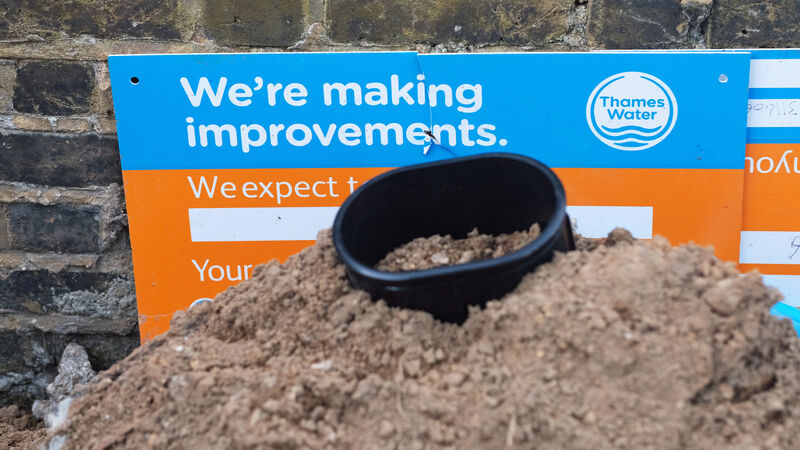
A standoff between the company, its shareholders and the regulator over whether it can hike bills to fund investment in its crumbling network of pipes has left it in financial limbo.
Thames Water, Britain's biggest water utility, said its shareholders had refused to pay £500m (€585m) promised to stabilise its finances, heightening concerns over its survival.
The company, which supplies a quarter of Britain's population in London and its surroundings, said it had until late next year to secure more funding or risk nationalisation.
But a standoff between the company, its shareholders and the regulator over whether it can hike bills to fund investment in its crumbling network of pipes has left it in financial limbo.
Chief executive Chris Weston said Thames Water was not about to collapse, but if it did not receive equity by later next year, then it could be forced into "special administration".
"We are a long way from that point at the moment," he said. Stating the company had £2.4bn of liquidity, he added: "We remain in a solid financial position."
The company has become a poster child for the failures of privatisation in Britain, as the challenge of servicing its £15bn of debt, keeping customer bills at an acceptable level and investing to stop sewage spills has overwhelmed it.
Chancellor of the exchequer Jeremy Hunt said the British government was monitoring the situation "very carefully".
Communities minister Michael Gove blamed "serial mismanagement" for the situation at Thames.
"For years now we've seen the customers of Thames Water taken advantage of by successive management teams that have been taking out profits and not investing," he told reporters.
Thames Water said it had not paid a dividend to external shareholders for five years, but it paid out substantial sums before that. Thames, which says it is "business as usual" for the its 16 million customers, wants to hike bills by 40% over the next five years, and said the regulator's plan was "uninvestible".
Mr Weston, who did not give further details on the tensions between the parties, said Thames would "pursue all options to secure the required equity".
He expects to receive water regulator Ofwat's five-year determination on future bills, investment and returns in June.
"Our current shareholders will have the opportunity to look at it again and decide whether they want to invest, or indeed we can go to the market and see what other providers of equity are out there in the market," he told reporters.
The rise in interest rates over the last two years has heaped pressure on heavily indebted Thames. Mr Weston said Ofwat, which wants to keep prices down for consumers but also oversee a sustainable water system, should recognise the need for investor returns.
"You have to ask yourself the question why would an equity holder who is taking all the risk take on a lower return than buying a bond in the market," he said.
Thames Water's nine shareholders include Ontario Municipal Employees Retirement System, the UK's Universities Superannuation Scheme, a unit of the Abu Dhabi Investment Authority and the China Investment Corporation.
They said in a statement Ofwat had failed to provide regulatory support and they could not provide further funding.
Under a complicated structure, Thames Water is owned by Kemble Water. The shareholders, who own both, said Kemble Water would not be able to repay a £190m facility due on April 30 and it would ask lenders for an extension.
Asked by reporters about what would happen to Thames Water if Kemble went bust, Thames Water said it was ring-fenced, would owe "no residual obligations" to Kemble and could continue as a going concern supplying water to customers.
The shareholders had agreed to invest £750m last July, with £500m expected by the end of this month. Thames Water said at that time it would need further equity of around £2.5bn between 2025-2030.
Ofwat said Thames Water would operate whatever its shareholder issues.
• Reuters
CONNECT WITH US TODAY



Be the first to know the latest news and updates