Netanyahu loses governing majority as Israeli election leaves path to power uncertain
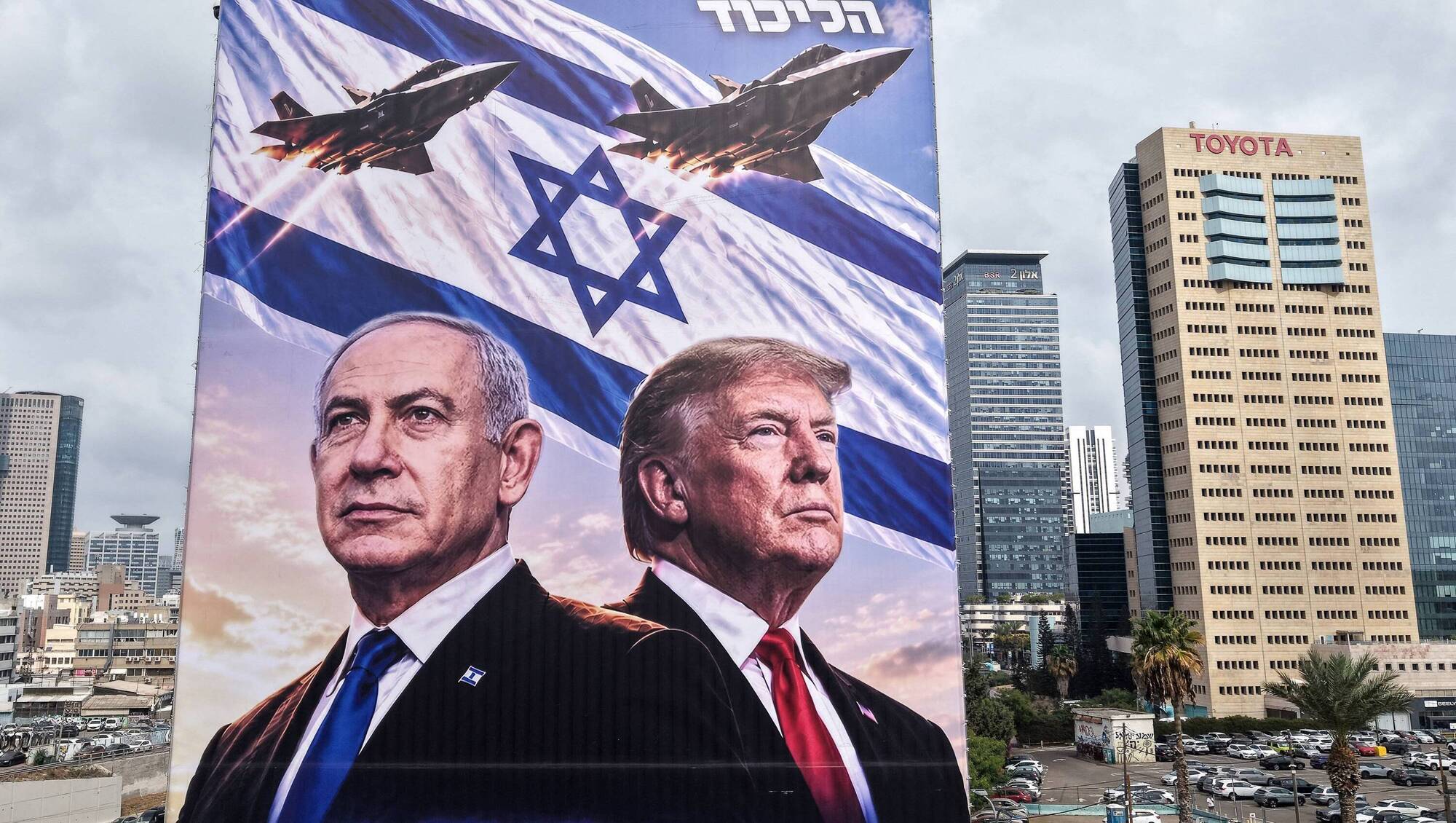
Donald Trump took credit for Netanyahu’s better-than-expected performance so far, claiming his overt backing in the run-up to the vote had made the difference. Picture: JACK GUEZ / AFP via Getty Images
Israel’s future hung in the balance on Wednesday morning as it became clear that Benjamin Netanyahu had lost his governing majority. His political fate now depends on whether opposition Jewish parties are prepared to forge a common front with Palestinian parties, whose support surged in Tuesday’s elections.
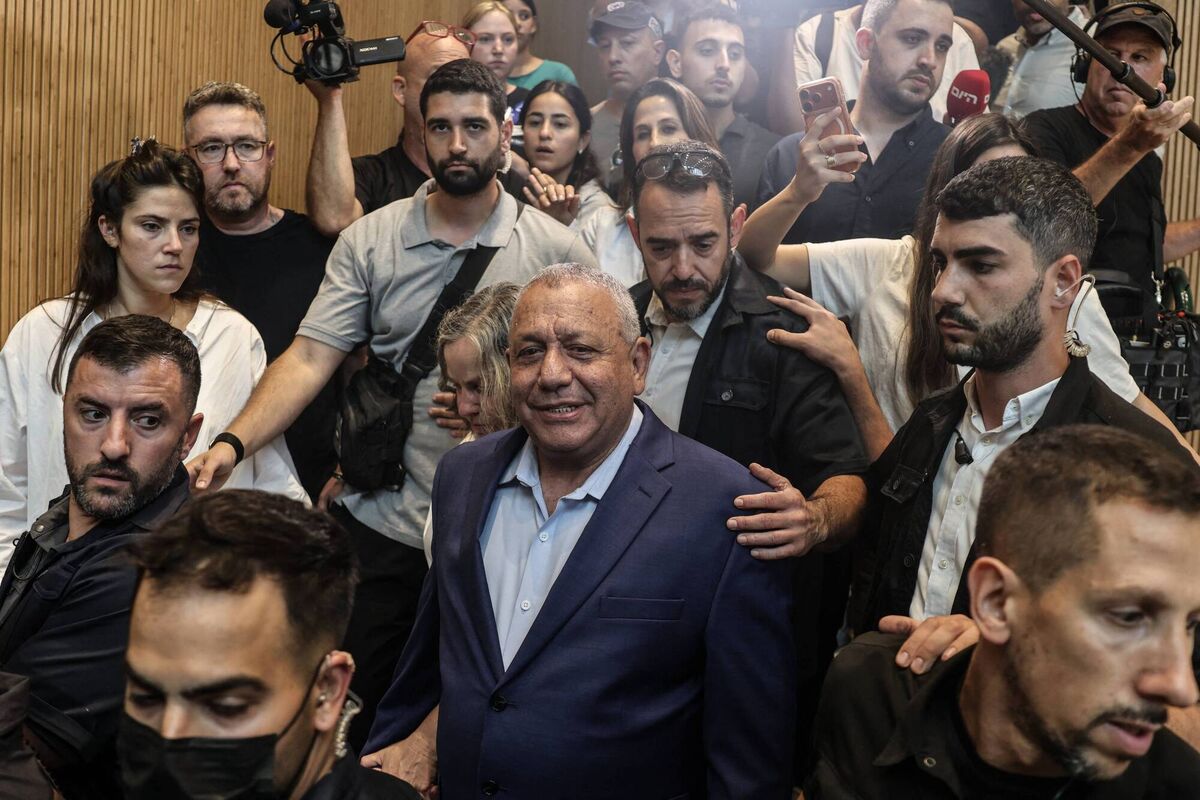
The leader of the Jewish opposition bloc, retired general Gadi Eisenkot, appeared to rule out such a broad coalition in a premature declaration of victory overnight for what he called a “Zionist majority”.
As the vote count continued on Wednesday, initial exit poll projections that Eisenkot’s bloc would hold a narrow lead over Netanyahu’s coalition looked increasingly uncertain. The prime minister’s bloc edged ahead, with votes from deployed soldiers and other absentee ballots yet to be counted.
With 70% of votes counted, both Jewish blocs looked certain to fall short of the 61 Knesset seats needed for a majority government. Eisenkot and his allies therefore faced a clear choice: make a pact with Arab Israeli parties heading for a record result of 16-19 seats, or hand Netanyahu a political lifeline through fresh elections or a unity government.
Donald Trump took credit for Netanyahu’s better-than-expected performance so far, claiming his overt backing in the run-up to the vote had made the difference.
“When the endorsement went out, it helped him a lot,” Trump said, adding that the result appeared to be heading for a stalemate or a Netanyahu win.
Read More
Yair Golan, leader of the centre-left Democrats, a junior partner in Eisenkot’s Change bloc, urged Eisenkot to negotiate with the two Palestinian parties, the Joint List and Ra’am (the United Arab List).
“We have no future here if we don’t stop being afraid. And if we don’t put an end to racism. We can no longer accept Netanyahu’s racist distinction between Jewish and Arab votes,” Golan said in a post on X.
“Anyone who tries to erase the votes of Arab citizens is surrendering to Netanyahu and giving up on Israel,” he added, pointing out that Netanyahu relied on ultra-Orthodox Jewish parties that were non-Zionist and opposed conscription for their constituents.
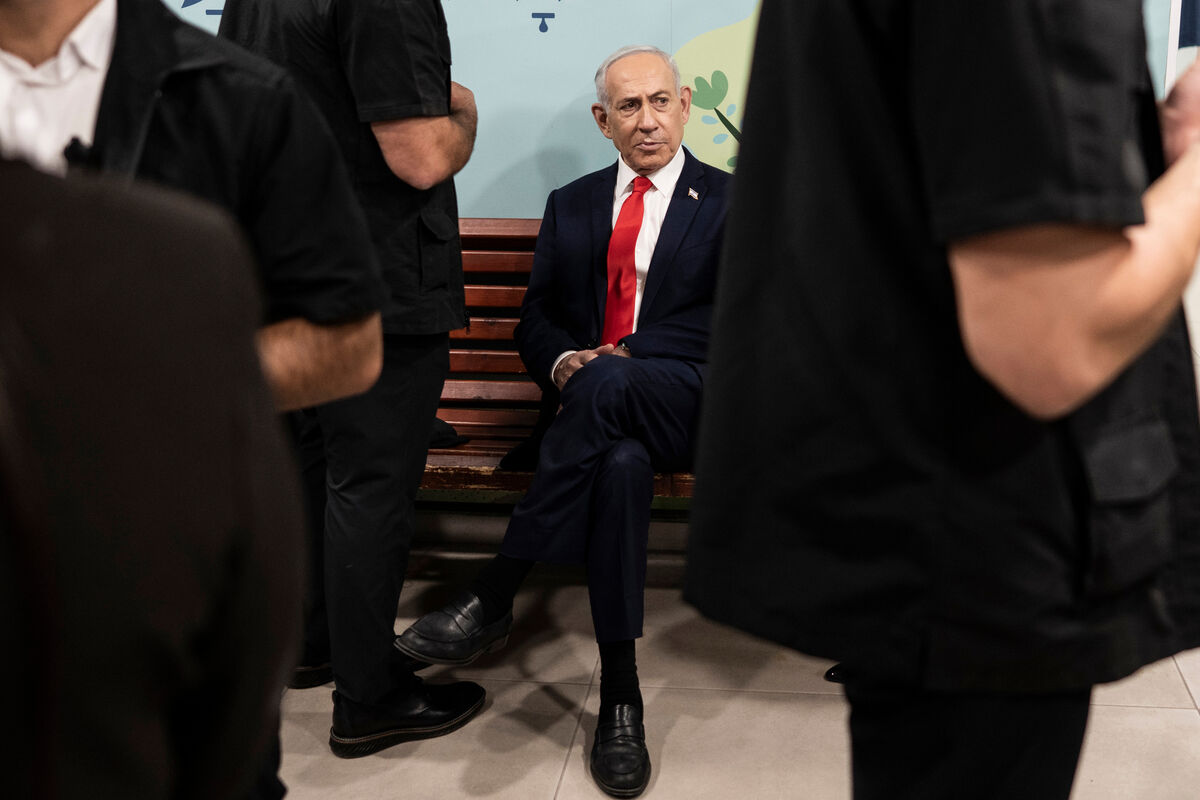
Noa Landau, a commentator writing in Haaretz, argued that Eisenkot had fallen “into the trap Netanyahu laid for him over the course of the election campaign” by making Zionism a condition for forming a coalition and excluding potential partners, while the prime minister had not.
Joint List leader Yousef Jabareen said the party’s strong performance meant it “can’t be ignored under any political scenario”. He said Netanyahu’s government, particularly its far-right national security minister, Itamar Ben-Gvir, “has made life bitter for every Arab citizen”.
“We will be ready to pave the way to oust the government of Netanyahu, Ben-Gvir and Smotrich – and send them home,” Jabareen said.
Another Joint List official described the choice facing the Jewish opposition as “supremacy or building democracy”.
Counting could take another few days, with absentee ballots the last to be tallied. Most are from deployed soldiers. The army vote usually swings to the right, but that broad picture may be complicated by the fact that many older, more moderate reservists are now on active duty.
Once all votes are counted, Israel’s president, Isaac Herzog, will give one of the party leaders six weeks to form a government. If the first choice fails, the opportunity passes to the rival. During the political wrangling likely to follow, both Netanyahu and Eisenkot are expected to try to lure defectors from each other’s camps.
Netanyahu would remain in office in a caretaker capacity until a new majority is formed. He might expect to benefit if the deadlock leads to another election. Tens of thousands of Israelis from the diaspora who returned to vote on Tuesday and were mostly opposed to the governing coalition might not return for another vote, for example.
Tuesday’s election came as Israel faced accusations of genocide in Gaza and ethnic cleansing of Palestinians in the West Bank. Netanyahu is separately wanted by the International Criminal Court for alleged war crimes.
The election was widely seen as a referendum on the 77-year-old leader. Turnout reached 77.7%, the highest since 1999, with a marked increase in the number of serving military personnel voting.
Political deadlock has led to repeated elections in the past. Between 2019 and 2022, Israel held five elections.
Netanyahu is Israel’s longest-serving prime minister, having governed for 19 of the past 30 years, and is one of the country’s most tenacious political survivors. Entangled in a long-running corruption trial, Netanyahu and his far-right coalition had stoked xenophobic fears and suggested Israel would be vulnerable to a nuclear attack without him.
The campaign, febrile even by Israeli standards, included Netanyahu posting a picture of a nuclear explosion devastating Tel Aviv on the eve of polling.
Since the deadly attack launched by Hamas on Israel’s southern communities on October 7, 2023, Israel has devastated Gaza and killed more than 74,000 Palestinians, fought Hezbollah in Lebanon, occupied new territory in Syria and launched a war with the US against Iran.
CONNECT WITH US TODAY



Be the first to know the latest news and updates