Ireland among 46 countries agreeing to send asylum seekers to third‑country hubs
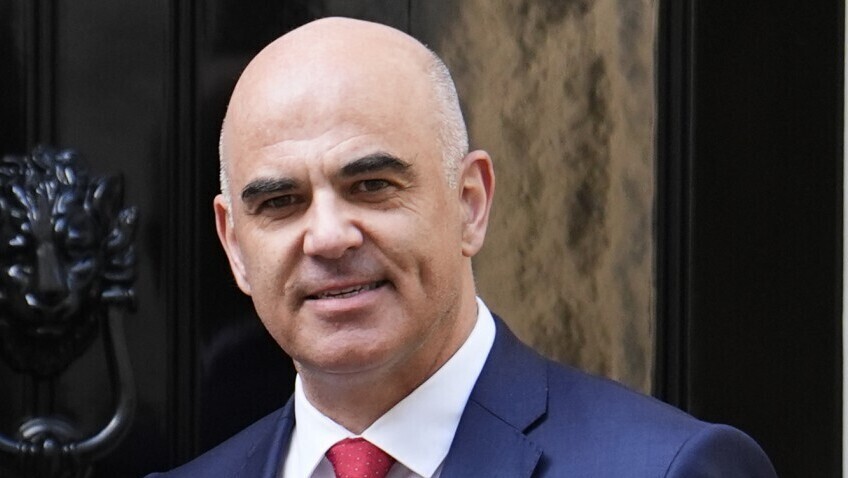
Alain Berset, the secretary general of the Council of Europe, said discussions about removing people who arrived in Europe by irregular routes would take place during the conference 'at a multilateral level'. File picture: Jordan Pettitt/PA
Ireland, the UK, and 44 other European countries have signed an agreement that explicitly endorses plans to send unwanted asylum seekers to third country hubs.
A political declaration from the 46 members of the Council of Europe, the body that oversees the European convention on human rights (ECHR), said states had an “undeniable sovereign right” to control their borders.
According to the seven-page document, countries should be free “to address and potentially deter irregular migration”.
It said: “Amongst the forms of new approaches that have been envisaged by several member states are processing requests for international protection in a third country, third country ‘return hubs’, and co-operation with countries of transit.”
Read More
The agreement also attempts to give more scope for countries to deport people to places where they may be in danger of inhuman or degrading treatment, and to limit courts’ powers to intervene.
“Caution should be exercised… when assessing whether the expulsion or extradition of an individual to a non-state party would violate a state’s obligations under Article 3 of the convention,” states the agreement.
The meeting of Council of Europe foreign ministers took place in Moldova to finalise the agreement, which is named after the capital, Chisinau.
Alain Berset, the secretary general of the Council of Europe, said discussions about removing people who arrived in Europe by irregular routes would take place during the conference “at a multilateral level”.
The EU has voted to allow the possibility of return hubs, with Austria, Denmark, Germany, Greece, and the Netherlands involved in talks.
Discussions have reportedly centred on 11 countries — Armenia, Egypt, Ethiopia, Ghana, Libya, Mauritania, Rwanda, Senegal, Tunisia, Uganda, and Uzbekistan. Montenegro has denied reports that it is considering housing refused asylum seekers.
Prof Eirik Bjorge, a legal academic at the University of Bristol, questioned the effect of the declaration, but “deplored” attempts to modify human rights protections.
“Article 3 is an embodiment of the very object and purpose of the convention and as such cannot be modified through political declarations,” he said.
“In that regard, I deplore the attempt to relativise the notion of inhuman and degrading treatment.”
Human rights organisations said they were concerned by the declaration.
Akiko Hart, the director of Liberty, said: “The Chisinau political declaration on the ECHR is a hugely significant moment.
“We are deeply concerned that changing how the ECHR is used by UK courts will open the door to a gradual weakening of human rights protections.”
CONNECT WITH US TODAY



Be the first to know the latest news and updates