Only time will tell what damage Debrecen debacle does to FAI and Irish team
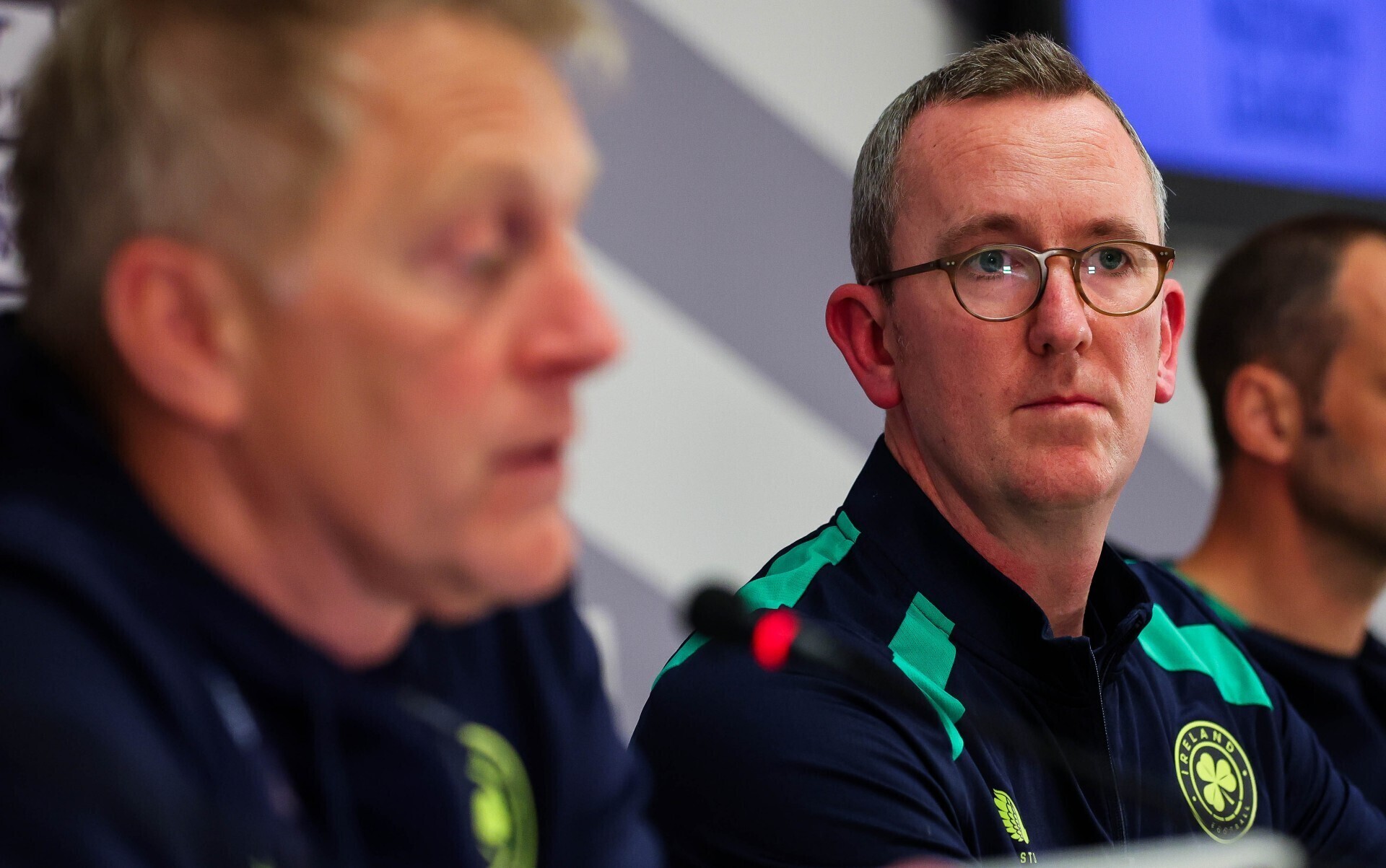
PRESSING MATTERS: FAI CEO David Courell and manager Heimir Hallgrimsson at Saturday's disastrous press conference. Pic: INPHO/Ryan Byrne
Debrecen is known for its variety of religions and we can hope the diversity of opinion in one of its conference rooms doesn’t fracture the Irish football team.
Emotions were high, voices raised and sometimes insults hurled inside the Mercure Hotel as the momentum among players swung towards a potential boycott of a senior international fixture.
This was territory none of the players, even the most experienced, had inhabited.
Over their three meetings between Pristina and Debrecen on Friday and Saturday, players sought direction from the FAI hierarchy on the consequences of them pulling out.
Worryingly, the association was unable to provide a detailed reply, other than the sporting and financial threats they’ve thrown at their General Assembly members who backed a motion to proceed with the fixtures.
All the Irish players knew was they would be mavericks when it came to snubbing Israel.
Three of the 24 were uncapped. Once-capped Rocco Vata was back in the squad following a long layoff while this is the first competitive camp for Jack Moylan.
Yet, here they were, just over 24 hours away from the game, contemplating the biggest decision of their Ireland careers.
Gavin Bazunu’s withdrawal early in the morning had influenced the landscape.
Some of his colleagues, uneasy about squaring up against a team containing former members of the Israeli Defence Forces, became unconvinced that they could go through with involvement.
Families and agents were consulted before they cast their vote; a crude, clinical method for an approach that was supposed to be based on solidarity and uniformity.
That certainly wasn’t the case following an outcome which showed eight were prepared to follow the lead of the substitute goalkeeper.
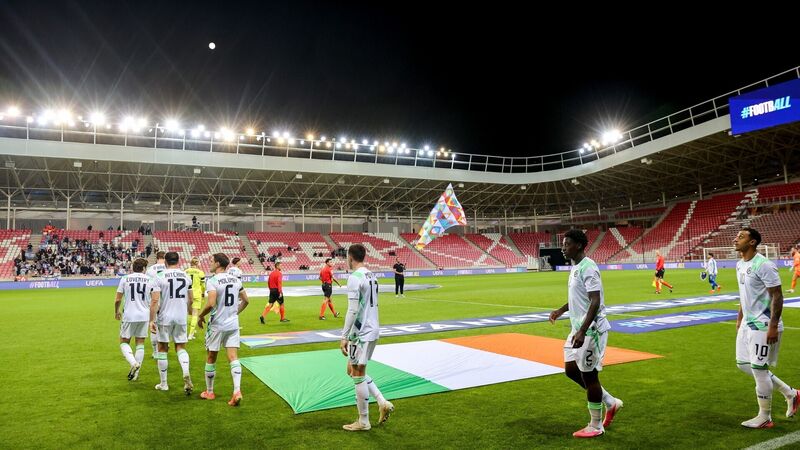
Although clarity was obtained on the fixture proceedings, minds were scrambled at the proximity of the crunch decision.
The FAI might have said before and after the draw in February that fulfilment was the only course of action but it took until the eleventh hour, as the depth of feeling grew back in Ireland, that consciences of players were truly tested.
Just because a binary outcome was reached it doesn’t mean doubts are erased. If anything, they’ve spiked.
Nervous tension intensified as the game loomed, many players still wrestling with their thoughts.
If Bazunu’s statement condoned the killing of innocent civilians, then does partaking imply they’re not likeminded? The mind can play tricks.
“We’ve lot of young players in this squad that we need to take good care of,” began manager Heimir Hallgrímsson, speaking close to kick-off.
“Honestly, there’s a lot of players that have mixed emotions for this game. The preparation has been probably as bad as it can be. It’s our job to try to protect all of the players.”
From the feeling of being left exposed by the FAI, many felt Bazunu’s last-gasp withdrawal threw an unfair spotlight on them. Opting out wasn’t the issue, only the timing. Soundbites from Séamus Coleman and Nathan Collins during camps earlier in the year reflected an undercurrent of discomfort but once the games beckoned and matters came to a head division was the phrase engulfing the squad.
Irish fans will only get to express their views in one game this week, threatening to sour the atmosphere at Lansdowne Road for Thursday’s visit of Austria.
Events over the weekend will ensure that the loudest cheers will be reserved for a player unlikely to see any minutes but one who struck the chord of the nation by downing tools.
Ireland’s players believe they’ve accounted for their actions sufficiently at this stage to the point that they applied an interview blackout once their duties post-Kosovo were completed.
Jason Knight gained respect from the football public for being the first player to declare the games shouldn’t go ahead, yet was understood to be unhappy with the handling of his quote.
These pages last week included a feature lamenting the lack of leadership within the FAI around these contentious games and it came to the fore. A farcical press conference, delayed by five hours and 15 minutes while the crisis talks extended from morning into afternoon, crowned a fine mess of their own making.
Football matches can’t take place without players and for those to be ignored by the FAI when making loud declarations of intent ultimately backfired on them. That they descended into the global news story of this window falls purely upon them for culpability.
Blame has been dished out to Uefa and Fifa for their inaction, while even other nations were cited for leaving Ireland as outliers, but an early call on pursuing a boycott would have enhanced their reputation.
Instead, a battered brand has been further damaged and there’s no saviour of any denomination on the horizon.
CONNECT WITH US TODAY



Be the first to know the latest news and updates