Tommy Martin: FAI counted cost of boycotting Israel. Have they counted cost of playing?
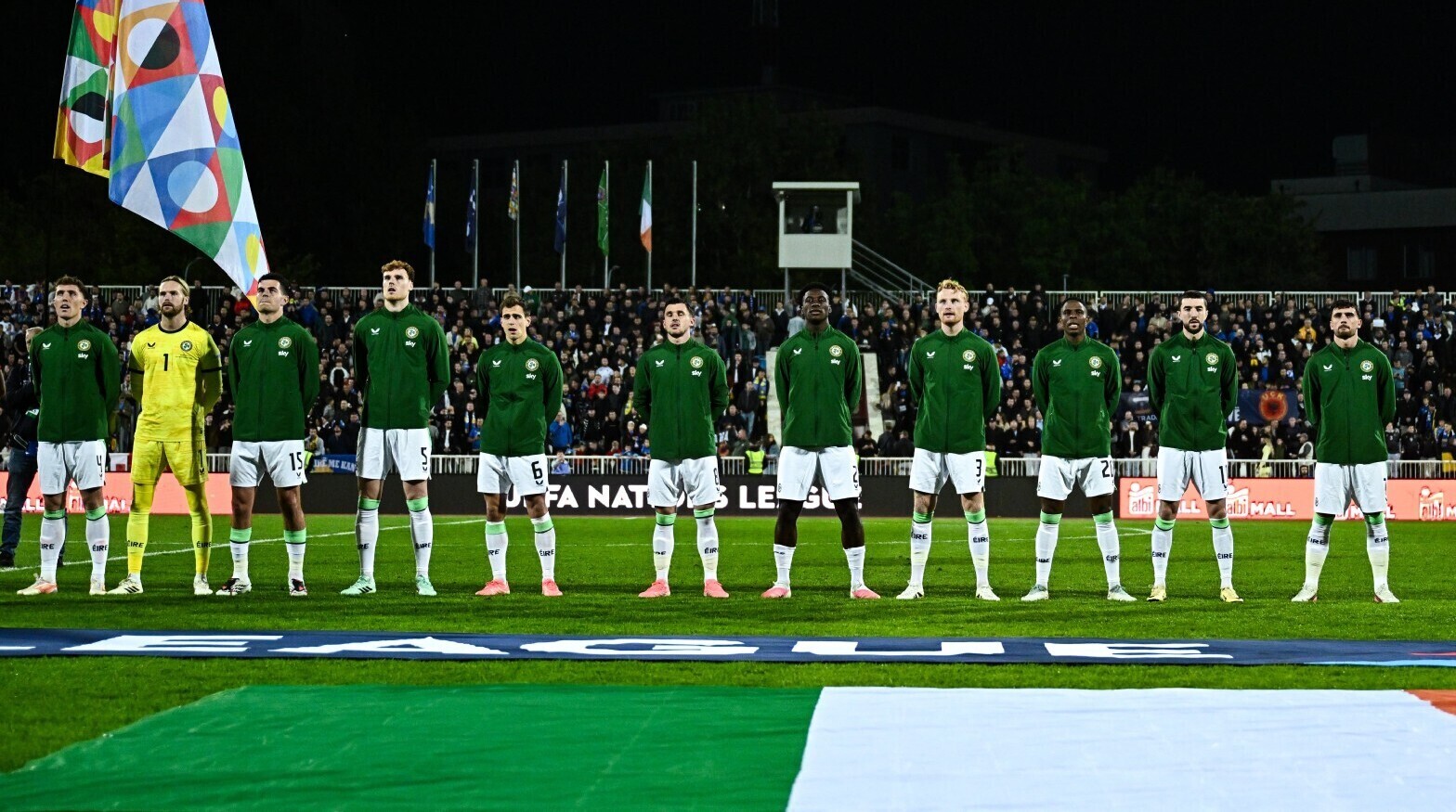
Whether or not it is justified, Ireland's players were always going to be questioned about their actions around the games against Israel. Pic: Ben McShane/Sportsfile
Hey, Republic of Ireland players, you boycotted the wrong game!
Excuse the cheap shot, because if Thursday night’s defeat to Kosovo was good for anything, it was as a reminder of the innocent pain of watching an Ireland team toiling on the pitch rather than in press conferences answering questions about awkward political matters.
Making jokes about an Irish underperformance in the Nations League is an ancient birthright that stretches all the way back to the legendary 2018 campaign under Martin O’Neill in which we scored a single goal, finishing bottom of the table after two goalless draws with Denmark that by rights should have gotten the game of football banned.
It felt warm and nostalgic, seeing our boys short under fire in a concrete bowl in eastern Europe, overrun in midfield and unable to maintain possession, battening down the hatches at the back and trying to hold on for a draw. And then the cruel coup de grace of the late opposition winner, players staring at their shoes during post-match interviews and unconvincing declarations that things will be better next time. Bliss!
Read More
All of this felt like a brief happy interlude in which the Ireland team got to be just an up-and-down, middling, small-nation European football outfit again, and not the central characters in a diplomatic and geopolitical firestorm.
Because once the final whistle went in Pristina and the basic formalities of digesting a 1-0 battering were done, it was all about Israel again. The great boil on the backside of Irish football has come to its throbbing, pustulous head and, without extending the metaphor too much further, what happens next is rarely pretty.
The Irish players, resting their heads in whatever European city this bamboozling international window found them in on Thursday night, would not have had the usual consolation of putting the game behind them and looking forward to putting things right in the upcoming fixtures.
Instead, there was the prospect of a player meeting to decide exactly how they should conduct themselves in the days to come, assessing how to express their personal feelings about playing a nation whose government the United Nations have said are committing a genocide in a way that seems satisfactory and appropriate, while, you know, focusing on getting the three points.
That’s their job, they will say, and there has been a long-brewing sense of indignation about having been put in the position where, even on the eve of the game, their intentions are being questioned. It should have been taken out of their hands, people have said – those above them should have shown leadership.
Well, those above them have shown leadership, just not towards the decision that many would have liked. The FAI’s determination to play these games has been one of the constants in this affair since the dreaded little balls came out of the Uefa bowls to pair the two nations in Group B3 in the first place. Positions on issues like venues, supporter presence and the actual approval of their own legislative chamber have fluctuated, but the principle of playing the games, rightly or wrongly, has been steadfast.
Which means the question was always, eventually, going to fall on the players. Many ex-players have said this is unfair, likening the Boys in Green to footsoldiers who must follow orders. These are young men with careers, the theory goes. Most play in England where feelings about the conflict in question are not as clearcut. Some play for clubs with American owners who may have even less sympathetic views on the Palestinian cause. One of their number, Finn Azaz, is of mixed Irish and Israeli heritage. It’s complicated.
Being a footballer these days is an all-encompassing life choice. It dictates where these men live, what they eat and drink and how they rest. Their entire life is centred around the physical and mental preparations for the bi-weekly grind of competing in a ferociously unforgiving environment. And this has been their lives, for a lot of them, since before they were shaving.
It’s not fair, some say, that they be expected to know the right thing to do about one of the most vexed and long-standing questions in current global and humanitarian affairs.
But life’s not fair. Just ask the estimated 64,000 children killed or injured in Gaza since 2023. That might seem like another cheap shot, but it is intended to bring home why people feel so strongly about this issue. Whether or not it is justified, the players were always going to be questioned about their actions.
They have agency and they carry weight in this country. They are the same boys who made our hearts soar last November and that brings responsibility. They are entitled to make a collective decision, and they are entitled to be respected for it, but it is unavoidable that they will also partially own the consequences, even if the ultimate decision was made above their heads.
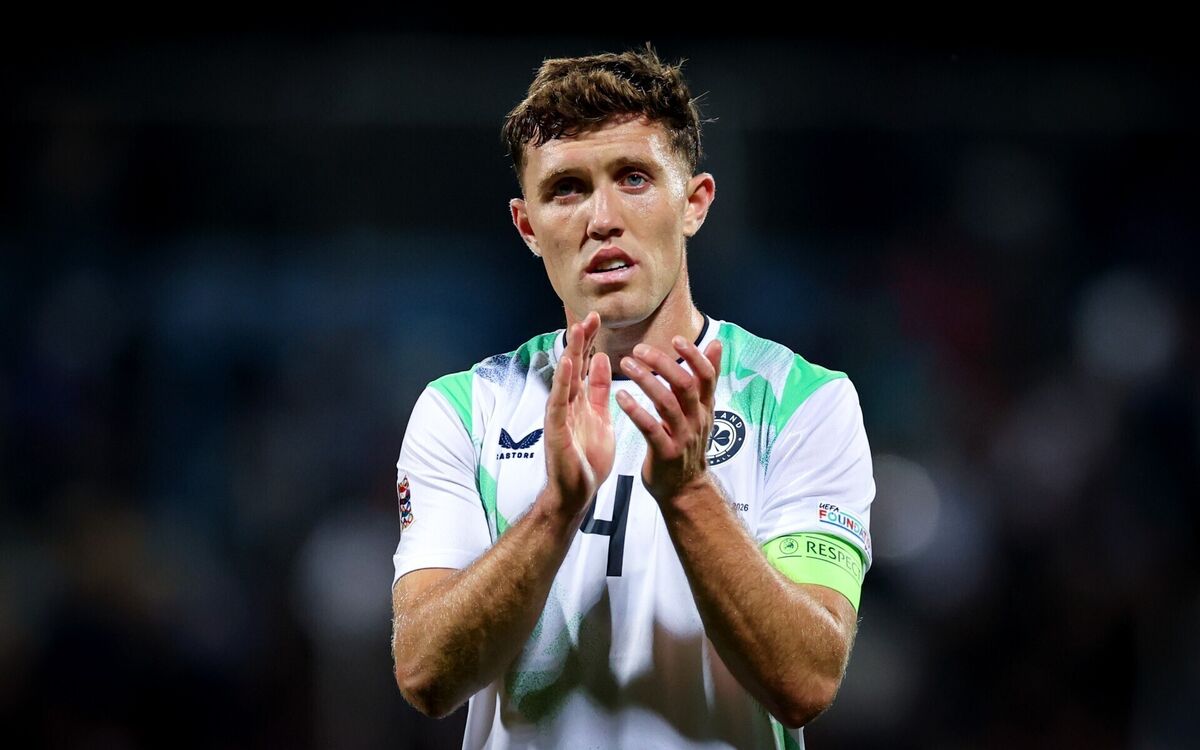
It was a feeling well articulated by the stand-in captain on Thursday night, Dara O’Shea. Admitting the players felt “exposed” by the situation, O’Shea added “we knew that was going to be the case, and this was going to come our way. It’s a difficult situation but we understand the severity of it too.”
Nor was one of their former number, James McClean, for shielding the players from responsibility. “You play the game,” the Derry firebrand said this week, “and history will always remember you as the ones who played the game. If you don’t play the game, you’ve the backing of a full nation and probably beyond the nation.
“You are either going to stand on the right side or the wrong side of history. Until that first whistle goes you still have that opportunity to do the right thing.”
It is only right at this point to widen this question out. The FAI’s decision not to boycott the games against Israel was based on two premises – that a unilateral boycott would be futile and that the interests of Irish football would be grievously damaged by an such action. The former is a matter for conjecture and has been debated by many.
The latter is undoubted. There would be footballing and financial consequences. Exactly what consequences has also been questioned, since Uefa have not spelled it out publicly. FAI CEO David Courell has stood over the claim of an initial hit of over €5 million. For an association €36 million in debt and coming off swinging cuts and redundancies, it’s a serious whack.
But McClean’s words frame the costs differently. Will Irish football’s interests, rather than being served by playing the games, be damaged by the image of lining out alongside Israel in the face of widespread public objection? If, as our own Taoiseach told the UN this week, “the full truth” of Gaza “will shame the world,” what cost to Irish football for being on the wrong side of history in this way?
We don’t know, but like the players, the FAI will own the consequences, even if their own position was also forced by those above. Former international Kevin Kilbane claimed in his column last week that the stain left on Irish football will be akin to that the IRFU wore for playing apartheid South Africa in 1970.
Rather than wiping away the John Delaney era and forging a new, positive identity for the association, Kilbane claimed, “it will forever mark the FAI and leave a renewed sense of distrust among the Irish public towards those governing the game.”
Kilbane and McClean might be proven right, or it could be that this Nations League window will go the way of so many unhappy predecessors, forgotten but for the vague memory of autumnal gloom in a far-flung European outpost. For the FAI and the players, that might be the best result they can expect out of all this.
CONNECT WITH US TODAY



Be the first to know the latest news and updates