The Heimir Hallgrimsson interview: 'I’ve told them the future of Irish football is in their hands'
BEFORE the discussion on creating it, Heimir Hallgrimsson veers tangentially into a history lesson of his own.
Two quirks affixed to the wildcard choice as Ireland manager 18 months were his dentistry side-job and remote origins from an archipelago off Iceland’s south coast.
“Vestmannaeyjar?,” he reasons across the table at Fota Island Hotel. “Yes, also known as the Westman Islands,” he adds. “The Irish found it first.” How true.
Around 875 AD, Irish slaves entitled Westmen fled there after killing Norse master, Hjorleifur Hromarsson. Eventually, Iceland exacted vengeance, Ingolfur Arnarson wiping out the foreign inhabitants.
All these years later an Icelander is at the controls of enlivening an Irish footballing populace beaten down by a decade of failure.
“We’re so close to the World Cup that we can kind of smell it,” Hallgrimsson says of the tantalising prospect of matches in Mexico and USA this June. “I’ve told the players they’re not just playing for the team. The future of Irish football is in their hands.”
Read More
Together, they stirred the nation last November. Victories against Portugal and Hungary over a 66-hour period usurped the latter for the runners-up spot. That stitched three competitive wins together for the first time in nine years. Another, away to Czechia on March 26, would snap a 19-year wait for four in row.
Crucially, victory there sets up a shootout five days later. Win that, against either Denmark or North Macedonia at home, and Ireland would replicate a sequence last experienced for our first World Cup qualification in 1989.
“Some countries, like Denmark, are pissed off to be in the play-offs rather than qualifying directly,” contended Hallgrimsson. “We’re happy with our journey. So it’s just different scenario but momentum can make a difference at this level.”
That they possess in spades. Slaying a Portugal side ranked fifth in the world and following it up by bruising the Magyars in Budapest accumulated the largest ranking points of any among Fifa’s 211 members.
Ireland’s surging climax to the campaign contrasted with an abysmal start. Six games within a 10-week sprint felt like a familiar old soundtrack, the scenes after Troy Parrott’s hat-trick winner in November a world away from the crestfallen bodies sunken to the Yerevan turf in September.
How could a team transform in such a short timeframe from losing to an Armenian side languishing in 105th place of the world rankings to beating one situated 100 places above in the 2-0 win?
A return to favour for captain Séamus Coleman has been cited, and undoubtedly Parrott’s return from injury was instrumental, but conversely Hallgrimsson went into the final window without his marksman, Evan Ferguson. Reigning player of the year Robbie Brady was sidelined for all six games. In the manager’s view, inculcating belief was key.
Portugal was the turning point — not the win in Dublin, the late defeat in Lisbon. Ireland may have left Sporting CP’ ground propping up the table with one point from nine but they brought home a measure of vindication.
Ruben Neves’s stoppage-time winner meant it required something unprecedented, or a miracle as the manager branded it after Armenian anguish.
“That was an eye-opener for us,” the manager explains. “One of the best teams in the world struggled against us at home. After the game, players looked around at each other in the dressing room, knowing what we’re doing is actually working. I’d said from the start that I wanted to make this national team difficult to play against.”
Defensive solidity in itself wouldn’t suffice for this rescue mission. Although toiling past Armenia in the rematch didn’t stir confidence for the final double-header against the top two, Hallgrimsson insists internally they were resolute.
Portugal’s concession of four goals against Hungary offered glimpses of vulnerability. It would take a textbook rehearsed corner to exploit it for Parrott’s opener.
“We used all the clips of the good things we’d done in Lisbon — just needing to improve in possessional bits,” he said. “Tactically, it was almost the perfect game for us. Everything we did was quick. Again, the players believed in what we were doing and believed in each other as well.
“Having those two things in place is where the magic can happen.”
That magic was conjured with a mere 30% of possession and yet laid the platform for another must-win assignment.
Every scenario was planned for. That extended to a Budapest bombardment if the hosts sat back to preserve the point they required to consolidate the playoff spot. Johnny Kenny’s introduction on the hour for his debut formed part of the script.
“Hungary probably played better than us on the day,” he confessed about the 3-2 last-gasp victory at Puskas Arena. “We took a calculated risk, of course, by having three No 9s on the pitch.
“We already decided in the days leading up if we need to do this, we can do that. Because we had explained this in advance to the players, they knew the meaning of the next change, and the next change.
“Our wing backs ended up as wingers. Finn Azaz, usually our No 10, moved deeper to No 6 role in what was a really an attacking minded set-up. It could have blown up in our face but, fortunately, it went for us.”
Three days apart, with one change in personnel, they were customised performances.
Hallgrimsson isn’t proclaiming that the second was a masterclass. All that mattered was victory.
“I still would have been proud with the progress if Troy hadn’t got the winner,” he’s keen to note. “I’ve told coaches at conferences since that I’m a hero when Troy scores in the 96th minute. But if he misses the goal, you’re absolutely not a hero.
“Being successful or unsuccessful is such a marginal game. And that is where we’re educating players to improve — like being switched on for the entire 90 minutes and stoppage time to grab that third goal.”
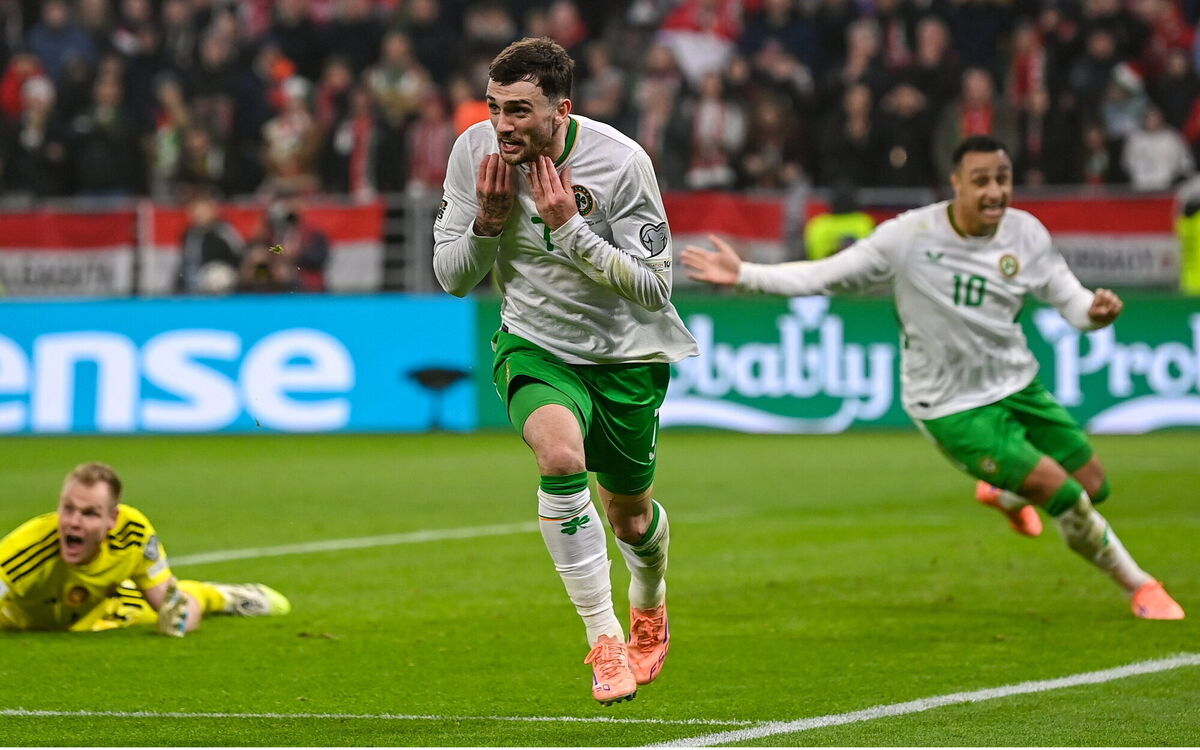
That outstretched connection sparked wild scenes within the small away section but the epic footage was captured on home soil, various venues erupting on a Sunday afternoon.
Hallgrimsson found himself visiting one such hostelry later that night upon the charter’s return to Dublin. Robbie Keane had taken up residence at Gibney’s Pub in Malahide and there the manager maintained the same calm demeanour exuded amid the frenzied finale. An early morning flight option to Reykjavik convinced him to depart early and allow the revelry to continue in his absence. Football sometimes has to be parked.
Switching off doesn’t come easy for everybody. Hallgrimsson’s attempt at changing pace entailed hiking in the serenity of his local mountains, the cliff-edges battered by the winter curdles of the northern sea.
Back in Ireland the noise was different; media converging on Parrott’s Portland Row home for family tales and notions of credit unions being overwhelmed for transatlantic trips.
The man at the helm couldn’t ignore what snowballed into a global story of resilience by his team.
“I’ve always avoided looking at the social media or what is written after the games, whether we win or not,” he outlines. “But it was really tough not to kind of read or see something after the win in Hungary.
“What has surprised me is how emotional the Irish are for the national team. The highs and the lows are really big ones. As a leader, you have to avoid getting the same kind of lows and highs.”
Within three days, he was swapping the snow-capped Icelandic tips for the Swiss Alps. Czechia was the nation Ireland were paired with at the play-off draw at Fifa headquarters in Zurich.
Two weeks later, Hallgrimsson was again suited awaiting the outcome of a draw, this time in Washington for the finals. Whichever of the four nations emerges from Uefa Pathway D will meet South Korea, South Africa, and co-hosts Mexico.
All very tantalising but there was a major personal event to cherish at home in between.
Iceland’s festive period starts on December 12 and in symmetry was the added celebration of Heimir and his wife Iris becoming grandparents for the first time. His eldest’s baby son has yet to be named, in keeping with local tradition.
“It was a good time to spend with the family,” he said. “We stayed in Reykjavik, not where we live, so being in the capital was really nice. Shitty weather, mind.”
Those Icelandic elements had a week earlier conspired against him leaving the island of Heimaey to watch Shamrock Rovers face Breidablik. Being grounded also scuppered a plan to assemble his staff in Dublin for an annual gathering, pre-arranged irrespective of how the final window fared.
Sunnier climes were soon calling in the new year but not for an exotic holiday. Himself, Iris, and their youngest son touched down in India for a six-day visit of the Sport For Life project in Mumbai. Ireland’s manager last summer became a global ambassador and football mentor of the initiative which aims to promote foundation skills in children.
“Football is growing fast in India,” he asserted. “Whereas previously the only sporting interest was cricket, the kids are beginning to catch onto football. I do my best to help.”
His network also introduced him to another project he’s visited in Uganda. During Hallgrimsson’s time as a club manager, he recruited three Ugandan players.
Andy Mwesigwa was the first Ugandan to join IBV, Tonny Mawejje followed him to Kuwaiti side Al-Arabi SC too and there was the tragic case of Abel Dhaira. The goalkeeper was just 28 when he died of cancer. Hallgrimsson addressed the congregation at his funeral.
He’s felt an affinity with the country since to assist Mwesigwa establish a school for impoverished children.
“They invested in this dorm for the kids and I’m helping on the football side,” he explained. “We travel there every second year but support them on regular Zoom calls, trying to hurdle the various obstacles that occur. Both my two sons are probably more engaged than me now.”
Their Dad does have pressing matters to confront. Had all gone to plan, a Californian sun might have been beaming above him during January too. Winter training camps were systematic during his five years with the Icelandic national team and he contends domestic bolters emerged for both Euro 2016 and the World Cup two years later.
It was from talking to other managers at the World Cup draw that Hallgrimsson processed the idea of introducing the concept in Ireland. When questions on planning for the play-offs were asked at the subsequent press conference, the concept was floated.
Within four days, an initial public spat with the Shamrock Rovers manager had its sequel. Stephen Bradley derided the idea as ‘ridiculous’, moreso blaming the lack of communication.
Hallgrimsson insists there was nothing to communicate. “It was in the early stages of planning,” he says. “It was difficult to find good teams to play on the correct dates. There was nothing to discuss but if it had progressed, of course we could talk to the main League of Ireland teams about player releases.”
Training games against Canada was one of the options explored. Jesse Marsch took an experimental squad to the American west coast for a camp that included a friendly against Guatemala. The target audience for the Irish staff wasn’t solely League of Ireland. Three Major Soccer League players, including recent call-up Kevin O’Toole, were in the mix, as were several promising youngsters yet to be involved on the first-team fringes. Benfica’s Jaden Umeh, for example.
Paddy McCarthy’s coaching commitments with Crystal Palace would have ruled him out but a contingency was hatched. “It may have been a good way to bring our U21 head coach in. Jim Crawford would have been ideal — building the relationship between our squads and staff.
“I’ve seen before how this is a chance for players to shine. They get to see our environment and it breaks that four-month gap between the November and March windows. Hopefully it is something the FAI looks at from next year, whether I’m here or not.”
THAT’S a timely topic. Hallgrimsson’s contract would have expired in Budapest but for Parrott’s intervention. The next lapse date is March 31, if his team isn’t heading Stateside.
It’s been clear since November that his employers want the Icelander to stick around for the Nations League and Euro campaigns, the second of which leads to a 2028 tournament Ireland are co-hosting.
The talks he anticipated with the FAI once the “dust settled” in December proceeded as planned. He’ll be in their company again at the Nations League draw in Brussels next Thursday but the sense from the incumbent is a man content in his skin.
“I feel happy with what we have done here,” he says. “And I think consistency is important for this national team because that is what has given us at least this chance to qualify for the World Cup.
“It’s consistency in what we’re doing, how we are playing in our meetings and everything. But it’s never just about a contract. There’s just a lot of things that you need to take into account when committing for the next three years.”
Cobh Ramblers’ all-weather pitch was the place for home truths and the Ireland manager wanted it that way.
With just six weeks remaining before the Czechia showdown, all of the internal analysis is complete.
Hallgrimsson sought another perspective. As an invitee to the latest bloc of Pro License training for the current intake, the participants were set projects by the managers of Ireland’s men’s and women’s team.
Seven breakout groups for seven confirmed or potential opponents over the next four months.
Czechia, Denmark, and North Macedonia for the men, followed by Women’s World Cup group rivals France, Netherlands, and Poland in the women’s.
The one remaining squad to be critically analysed was Hallgrimsson’s Ireland. Leading that subgroup was Noel Hunt, tasked with identifying weaknesses Czechia could expose.
John O’Shea shares the Waterford accent with Hunt but he didn’t have to agree with the observations his former Ireland team-mate gleaned as shaky in their structure.
Cast as Devil’s Advocate, it’s worthless without the devil being in the detail.
“I know it’s difficult on the coaches but it’s an exercise I’ve done in previous jobs and found to be really useful,” he argues. “It’s just good to have outside eyes on some things. They could discover a weakness that we haven’t seen or realised. I saw it as a win-win for everybody involved.”
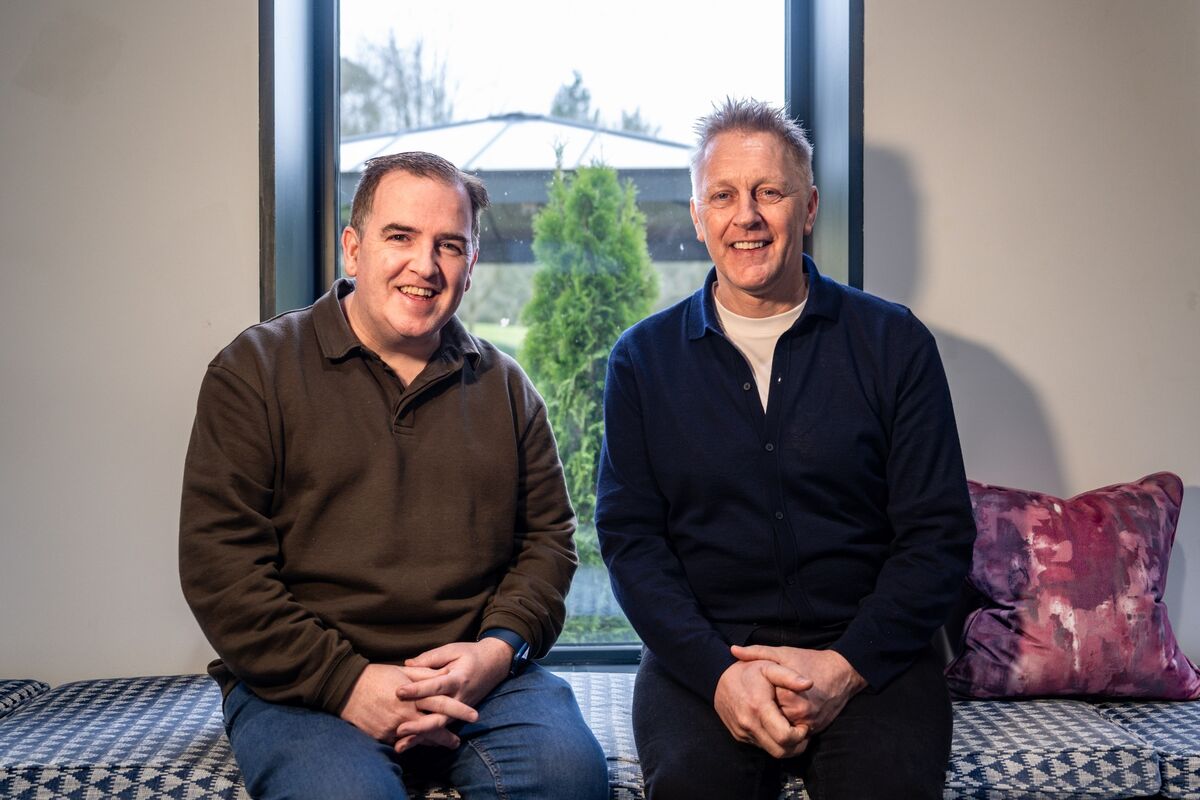
Hallgrimsson will be the final arbiter on such matters. Some commentary throughout his tenure has left him miffed but he could understand how his initial hands-off approach for the opener against England causes surprise.
He could have ripped the previous regime asunder with a new backroom broom.
“It is unusual nowadays to bring just a goalkeeper coach when a manager starts,” he says, rationalising why compatriot Gudmundur Hreidarsson was his only newcomer.
“John and Paddy had been the interim management team. I know people weren’t happy with me allowing them to take the meetings and other tasks. Yet at that time it was, it was the correct way to do it.
“It was probably easy to catch me out on something in the beginning. As an Icelander coming in, it would have been the easiest to expose a lack of knowledge of Irish players. They knew the players best. John was Stephen Kenny’s assistant and they deserve credit for giving the young players their first sniff of senior international football.
“I’ve had nothing but support the staff since. They’re like friends to me.”
Hallgrimsson’s last matchday interaction with his players was the speech he gave in the Budapest dressing-room. He was happy to share the sentiments in the press conference and for the FAI to release the footage on social media.
The essence of his message was to avoid the bandwagoners and embrace the loyalists. That’s the way he felt at the lowest ebb of his era in Armenia, not expunging the memory but learning from it.
“To be honest, we’re still struggling about what happened in Armenia,” he sighs.
“It was only fair that we were criticised because it’s not often that you have a whole team playing so bad as we did there. We made changes to the starting team and subs but none affected the game. It was collective bad.”
From that nadir to a collective national rejoice has brought Ireland to within sight, and smell, of a first World Cup for 24 years.
From the brink of the endgame for the manager to game on. An Ireland team on the grandest world stage is possibly 180 minutes away from reality. Having an extra day between the two matches fuels further optimism of the statistics being bashed.
“I’ve said for a long time that success is not a destination,” he emphasises about the mentality he’ll demand from the Sunday the squad assembles.
“Success is not a date. Success is not reaching the World Cup. Success is a continuous journey.”
Those tears of joy by Troy might never have occurred without our boy off from the Icelandic periphery. And we’ve our ancestors to thank for finding the barren outpost he flees to for sanctuary from the mayhem.
CONNECT WITH US TODAY



Be the first to know the latest news and updates